
City Europe
Glasgow
Glasgow is the biggest city in Scotland. A river called the Clyde flows through it.
Glasgow is a city in Scotland, on the River Clyde. It has had a university since 1451, and around 1900, Universalis says, Glasgow and Clydebank had the largest shipyards in the world. National Records of Scotland estimated 654,330 people in Glasgow City in mid-2025, more than in any other part of Scotland.
Glasgow grew from a small trading and university town into a port and shipbuilding city after 1707. National Records of Scotland estimated 654,330 people in the Glasgow City council area on 30 June 2025, the largest of Scotland's 32 council areas and up 0.6% in a year.
Photo: 瑞丽江的河水, CC BY-SA 4.0, via Wikimedia Commons
Discover Glasgow
Glasgow is a city in Scotland. More people live there than in any other city in Scotland.
The River Clyde flows right through the middle of the city.
Glasgow is in Scotland, part of the United Kingdom, on the River Clyde. Edinburgh is Scotland's capital, but Glasgow has more people.
National Records of Scotland estimated 654,330 people in Glasgow City on 30 June 2025, more than in any of Scotland's other council areas. The population grew by 4,010 in a year, and Glasgow City was one of only two council areas with more births than deaths.
National Records of Scotland (published 14 July 2026) gives the Glasgow City council area 654,330 people at mid-2025, ahead of the City of Edinburgh (531,370) and Fife (373,990), and up 0.6% (4,010 people) on mid-2024. It had 620,756 in Scotland's Census 2022.
Universalis (Claude Moindrot) calls Glasgow the main part of a port and industrial conurbation along the Clyde called Clydeside. UrbanRail.Net gives the metropolitan area about 2 million inhabitants.
- Country
- Scotland, United Kingdom
- People in Glasgow City (estimate, 30 June 2025)
- 654,330
- Growth in one year (to mid-2025)
- 4,010 people (0.6%)
- People in Glasgow City (2022 census)
- 620,756
Bridges over the Clyde
In the photo, train tracks cross the river on a wide bridge. They go into a big station.
Two road bridges cross the river too. They are full of buses and cars.
This photo was taken from a drone above the River Clyde, looking north over the city center. In the middle, the Caledonian Railway Bridge carries every rail line that serves Glasgow Central, the station with the long roofs, which opened in 1879. Old stone piers in the water stand beside it.
On the left, George V Bridge carries a road full of buses and cars, and on the right, Glasgow Bridge carries another road. Far beyond the city, hills line the horizon.
The Commons file (April 2025, a drone at about 146 m above sea level) is filed under the Caledonian Railway Bridge, the approaches to Glasgow Central, Glasgow Bridge, George V Bridge and the River Clyde. Wikidata describes the railway bridge as carrying all the rail lines serving Glasgow Central, and both road bridges as carrying the A77 across the river.
Wikidata also dates Glasgow Central to 1879, the University of Glasgow to 1451, Kelvingrove Art Gallery and Museum to 1901 and the Riverside Museum, a transport museum, to 2011.
- Glasgow Central station
- opened 1879
- Caledonian Railway Bridge
- carries all the rail lines into Glasgow Central
- University of Glasgow
- founded 1451
From a small town to the world's shipyard
Long ago, Glasgow was a small town with a university.
Then it grew and grew. Its shipyards became some of the biggest in the world.
Universalis says Glasgow was founded in the 6th century and got a university in 1451, but stayed a small center of trade and learning for centuries. Its growth began in 1707, when the union of Scotland and England let Glasgow join the trade with England's colonies in America; its wealth was first built on colonial goods such as tobacco and cotton.
In the 19th century, coal and iron ore close to the city fed big iron and steel works. Around 1900, Universalis says, Glasgow and Clydebank had the largest shipyards in the world.
Universalis traces Glasgow's population from 15,000 in 1707 to 75,000 in 1801 and 760,000 in 1901, peaking at nearly 1,300,000 around 1944, as the port, mines and shipyards drew newcomers.
It then describes a decline: shipyards closed one after another, coal exports stopped, and in the 1970s and 1980s the closure of most shipyards and mines hit the city hard. Universalis says the city succeeded in changing its economy by developing advanced industries, and calls it the economic capital of Scotland. Whole Victorian districts were demolished and rebuilt, and some residents moved to new towns such as East Kilbride and Cumbernauld.
- University founded
- 1451
- People in 1707
- about 15,000
- People in 1901
- about 760,000
The Clockwork Orange
Glasgow has an underground train that goes round in a circle. People call it the Clockwork Orange!
It is more than 125 years old.
Glasgow's Subway is a single circle line, 10.4 kilometers long, nicknamed the Clockwork Orange. It opened in 1896, which UrbanRail.Net says makes it one of the oldest metros in the world. A trip all the way round takes about 24 minutes.
Trains run both ways: the Outer Circle goes clockwise and the Inner Circle anti-clockwise. Queen Street station is the main terminus for trains to northern and eastern Scotland, with trains to Edinburgh every 15 minutes, and suburban trains for the south side leave from Glasgow Central.
UrbanRail.Net records the Subway's opening on 14 December 1896. Its trains were first pulled by cables driven by steam engines; the line was electrified on 31 March 1935, closed for a full rebuild on 21 May 1977 and reopened on 16 April 1980, when some stations were renamed.
Between Govan and Ibrox, on the south bank of the Clyde, a tunnel leads to the depot. The Underground was renamed the Subway in 2003, which UrbanRail.Net notes was its original name.
- Glasgow Subway
- opened 14 December 1896
- Length
- 10.4 km, one circle line
- Time for a full circle
- about 24 minutes
Cool, mild and wet
Glasgow's summer days are mild, not hot.
It rains a lot, on about half the days of the year.
The World Meteorological Organization's averages for Glasgow (1981–2010) show cool summers and mild winters. July days average about 19 °C, and January nights about 1 °C, just above freezing.
About 1,124 millimeters of rain fall in an average year, with at least 1 millimeter on about 170 days, close to half the days of the year. October is the wettest month, with about 129 millimeters, and May the driest, with about 61.
The WMO table for Glasgow, 1981–2010, gives average highs from 6.0 °C in January to 19.2 °C in July and average lows from 1.0 °C in December and January to 11.1 °C in July; no month's average low is below freezing.
The monthly rainfall averages add up to about 1,124.2 mm, on about 170 days a year with 1 mm or more. October is wettest (129.4 mm) and May driest (61.4 mm); September to January each bring more than 100 mm.
- July, average high (WMO, 1981–2010)
- 19.2 °C
- January, average low (same period)
- 1.0 °C
- Rainfall in a year (sum of the monthly averages)
- about 1,124 mm
Museums, a university and a river city
Glasgow has big museums. One is full of art. Another is a museum of transport!
Its university is more than 570 years old.
Glasgow has a big art gallery and museum at Kelvingrove, opened in 1901, and the Riverside Museum, a transport museum opened in 2011, about 3 kilometers west of Central station.
National Records of Scotland found that in mid-2025 Scotland's four largest cities, including Glasgow, had the highest shares of people aged 16 to 64, and some of the lowest shares of people aged 65 and over.
Universalis describes Glasgow as the main service center for all of Scotland, with insurance firms, two universities, and shops and hospitals serving the whole west of Scotland, and says renewal of housing, modern roads and the fight against air pollution have had positive effects.
National Records of Scotland reports that in the year to mid-2025 there were more births than deaths in only two council areas, Midlothian and Glasgow City, while Scotland as a whole had more deaths than births.
- Kelvingrove Art Gallery and Museum
- 1901
- Riverside Museum
- transport museum, 2011
- Highest population
- nearly 1,300,000, around 1944
Glasgow on the map
Find the United Kingdom on the globe. Look at Scotland, in the north. Glasgow is in the west of Scotland, beside the River Clyde!
Its river, the Clyde, has bridges for trains, cars and people.
Glasgow is in the west of Scotland at about 56° north, on the River Clyde; Universalis places it on the Clyde's estuary.
Measured from Glasgow Central station, the Caledonian Railway Bridge is about 0.5 kilometers to the south, the University of Glasgow about 2.3 kilometers to the northwest, Kelvingrove Art Gallery and Museum about 2.2 kilometers to the west-northwest, and the Riverside Museum about 3.1 kilometers to the west.
Glasgow lies at about 55.88° N and 4.25° W. Measured from Glasgow Central (Wikidata points): the Caledonian Railway Bridge 0.50 km south, Glasgow Bridge 0.53 km south, Kelvingrove 2.23 km west-northwest, the University of Glasgow 2.29 km northwest and the Riverside Museum 3.06 km west.
The hero photo was taken by a drone in April 2025 from about 0.74 km south of the station (Commons camera location), at about 146 m above sea level, looking north across the Clyde toward the station.
- Latitude
- about 55.9° north
- Longitude
- about 4.3° west
- Glasgow Central to the University of Glasgow
- about 2.3 km northwest
Amazing facts
-
Glasgow's underground train is called the Clockwork Orange!
Glasgow's Subway is nicknamed the Clockwork Orange, and its trains go round a single 10.4-kilometer circle.
UrbanRail.Net notes the nickname Clockwork Orange and that the Subway's direction signs say Outer Circle (clockwise) and Inner Circle (anti-clockwise).
-
Glasgow's first underground trains were pulled by ropes!
When the Subway opened in 1896, its trains were pulled by cables driven by steam engines. It was electrified in 1935.
UrbanRail.Net says the Subway was originally operated by steam engines via cable traction and electrified on 31 March 1935.
-
Long ago, Glasgow had about 15,000 people. By 1901 it had about 760,000!
Glasgow grew from about 15,000 people in 1707 to about 760,000 in 1901, as the port, mines and shipyards drew newcomers.
Universalis gives 15,000 inhabitants in 1707, 75,000 in 1801 and 760,000 in 1901, with a peak of nearly 1,300,000 around 1944.
-
In Glasgow it rains on about half the days of the year.
On average, Glasgow gets at least 1 millimeter of rain on about 170 days a year.
The WMO's 1981–2010 table for Glasgow adds up to about 170 days a year with 1 mm or more of rain, the most in January (17.0 days).
Words to know
- shipyard
- a place where ships are built and repaired
- council area
- one of the 32 areas Scotland is divided into for local government
- subway
- an underground railway in a city
- conurbation
- a big area where several towns and cities have grown into each other
- pier
- a strong pillar that holds up a bridge
- union
- the joining of two or more countries into one
Discovery challenge
-
Which river flows through Glasgow?
Glasgow stands on which river?
Which river gives its name to the Clydeside conurbation around Glasgow?
- The River Thames
- The River Clyde
- The River Liffey
Show the answer
The River Clyde
The River Clyde!
The River Clyde.
The Clyde.
-
What is Glasgow's round underground train called?
What is the nickname of Glasgow's Subway?
Which nickname does UrbanRail.Net give the 10.4 km Glasgow Subway circle, opened in 1896?
- The Clockwork Orange
- The Silver Bullet
- The Blue Snake
Show the answer
The Clockwork Orange
The Clockwork Orange!
The Clockwork Orange.
The Clockwork Orange.
-
What did Glasgow's workers build on the river long ago?
Around 1900, Glasgow and Clydebank had some of the world's largest what?
According to Universalis, what did Glasgow and Clydebank have the world's largest of around 1900?
- Shipyards
- Airports
- Gold mines
Show the answer
Shipyards
Ships!
Shipyards.
Shipyards.
-
Is Glasgow the capital of Scotland?
Which city is Scotland's capital?
Glasgow has the most people of Scotland's council areas, but which city is Scotland's capital?
- Glasgow
- Aberdeen
- Edinburgh
Show the answer
Edinburgh
No, the capital is Edinburgh!
Edinburgh; Glasgow has more people.
Edinburgh.
-
When was the University of Glasgow started?
In which year was the University of Glasgow founded?
Universalis says Glasgow stayed a small trading and university town for centuries. When was its university founded?
- 1451
- 1707
- 1896
Show the answer
1451
In 1451!
1451.
1451.
Nearby places
-
 Watch
Landmark
Forth Bridge
The Forth Bridge carries trains across the Firth of Forth, a wide sea inlet in eastern Scotland, linking Edinburgh and Fife. Built from 1883 to 1890 out of steel, it rests on three huge towers and is painted a red color called Forth Bridge Red. It has been a World Heritage Site since 2015.
-
 Watch
City
Edinburgh
Edinburgh is the capital of Scotland, on the southern shore of the Firth of Forth. Its Old Town runs along a ridge from a castle on a volcanic rock, and its New Town, built from 1767, has straight streets and stone buildings. Scotland's statistics office estimated that 531,370 people lived in the City of Edinburgh in mid-2025.
-
 Watch
Landmark
Balmoral Castle
Balmoral Castle stands in Aberdeenshire, in the Scottish Highlands. Prince Albert bought the estate for Queen Victoria in 1852, and the castle was built from 1853 to 1856 to a design by the Aberdeen architect William Smith. It has been the Highland home of the royal family ever since, and in 2024 visitors could tour inside it for the first time.
-
 Watch
Natural wonder
Giant's Causeway
The Giant's Causeway, on the north coast of Northern Ireland, is made of some 40,000 columns of dark basalt rock, many of them six-sided, packed together like a honeycomb. They formed about 60 million years ago, when a deep pool of lava cooled slowly, shrank and cracked into columns.
-
 Watch
City
Dublin
Dublin, the capital of Ireland, sits where the River Liffey flows into Dublin Bay. Vikings built a town here in the 800s, and its name comes from a "black pool" in the river. Today it is famous for its writers, music, Georgian squares and Trinity College, home of the Book of Kells.
-
 Watch
Natural wonder
Ireland
Ireland is an island in the North Atlantic Ocean with a very long rock story: its oldest rocks are 1.7 billion years old. Ice shaped its mountains and valleys, and the Atlantic Ocean gives it mild, windy weather and many bogs.
-
 Watch
City
Birmingham
Birmingham is the second-biggest city in Britain after London, with an estimated 1,176,960 people in mid-2025. It sits in the middle of the country, where railways, motorways and canals meet, and it grew very fast in the Industrial Revolution as a city of makers.
-
 Watch
City
Galway
Galway, Gaillimh in Irish, is a seaport on the west coast of Ireland, on the north shore of Galway Bay, where the River Corrib meets the sea. The 2022 census counted 84,414 people in the city. It is known for its university, its theaters and its festivals.
Explore next
-
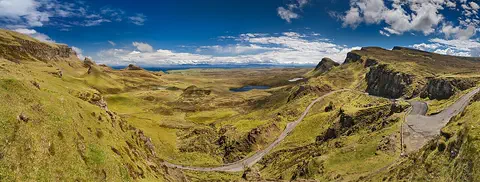 Watch
 Country
United Kingdom
The United Kingdom, or UK, lies on islands off the northwest coast of Europe. It is made up of four parts, England, Scotland, Wales and Northern Ireland, and about 69.5 million people live there. Its capital is London.
-
Watch
City
Edinburgh
Edinburgh is the capital of Scotland, on the southern shore of the Firth of Forth. Its Old Town runs along a ridge from a castle on a volcanic rock, and its New Town, built from 1767, has straight streets and stone buildings. Scotland's statistics office estimated that 531,370 people lived in the City of Edinburgh in mid-2025.
-
 Watch
City
London
London, the capital of the United Kingdom, began as a Roman town almost 2,000 years ago. About 8.8 million people lived in Greater London in 2021. It has the Tower of London, Big Ben, Tower Bridge and the Tube, an underground railway that opened in 1863.
-
Watch
City
Dublin
Dublin, the capital of Ireland, sits where the River Liffey flows into Dublin Bay. Vikings built a town here in the 800s, and its name comes from a "black pool" in the river. Today it is famous for its writers, music, Georgian squares and Trinity College, home of the Book of Kells.
-
Watch
City
Birmingham
Birmingham is the second-biggest city in Britain after London, with an estimated 1,176,960 people in mid-2025. It sits in the middle of the country, where railways, motorways and canals meet, and it grew very fast in the Industrial Revolution as a city of makers.
-
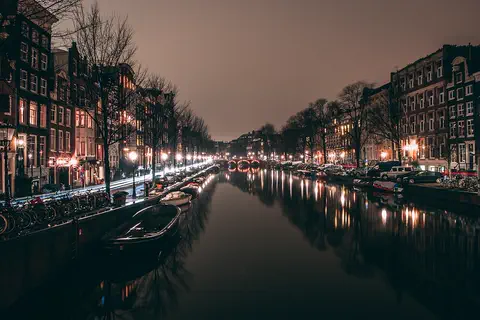 Watch
City
Amsterdam
Amsterdam is the capital of the Netherlands. It began as a fishing village beside a dam on the Amstel River, which gave the city its name. Today about 942,000 people live among its rings of canals, hundreds of bridges, houseboats and bicycles.
-
 Watch
City
Antwerp
Antwerp is a city in Belgium on the Scheldt river, and Universalis calls it the second port of continental Europe, after Rotterdam. Belgium's statistics office estimated 565,615 people in the city on 1 January 2026. In the 1500s it was one of Europe's great trading cities.
-
 Watch
City
Athens
Athens is the capital of Greece and one of the oldest cities in the world. Above it rises the Acropolis, a rocky hill crowned by the marble Parthenon, built about 2,500 years ago. Ancient Athens was home to early democracy, great thinkers and theater.
For parents & teachers
What children will learn
- Locate Glasgow in western Scotland, on the River Clyde.
- Explain how trade, coal and iron turned a small town into a shipbuilding city.
- Compare a city's population over 300 years using real figures.
- Read a cool, wet climate with rain on about half the days of the year.
Recommended ages: 3 to 17 · About 15 minutes
Talk about it
- Glasgow's shipyards closed in the 1970s and 1980s, and the city found new kinds of work. What helps a town when its main job disappears?
- Glasgow has more people than Edinburgh, but Edinburgh is the capital. How do you think a capital city is chosen?
- The Subway has run in a circle since 1896. What are the good and bad points of a metro that only goes round in a ring?
Try at home or in class
- Population graph: plot Glasgow's population in 1707, 1801, 1901, around 1944 and 2025.
- Rain diary: count the rainy days where you live for two weeks and compare with Glasgow's 170 days a year.
- Circle line: draw a circle with 15 stations on it and work out how long a trip between two stations takes if a full circle is 24 minutes.
Key vocabulary: shipyard, council area, subway, conurbation, pier, union
Where these facts come from
- Wikidata , Wikimedia Foundation (CC0 1.0)
- Natural Earth vector data , Natural Earth (NACIS) (Public domain)
- Mid-2025 population estimates (published 14 July 2026) , National Records of Scotland
- Scotland: council areas and localities (census 2001, 2011, 2022) , City Population (Thomas Brinkhoff), from National Records of Scotland
- Glasgow , Encyclopaedia Universalis (Claude Moindrot)
- Glasgow Subway , UrbanRail.Net (Robert Schwandl)
- World Weather Information Service: Glasgow climatological information , World Meteorological Organization
- File:Glasgow - aerial - 2025-04-17 12.jpg (April 2025) , Wikimedia Commons
- Wikimedia Commons , Wikimedia Foundation (Per file (public domain, CC0, CC BY or CC BY-SA); see each media record)
Checked, not yet human-reviewed. Last updated November 1, 2026. Spotted a mistake? Tell us.