 Country
Europe
United Kingdom
The United Kingdom is an island country in Europe. It is made of four parts: England, Scotland, Wales and Northern Ireland.
The United Kingdom, or UK, lies on islands off the northwest coast of Europe. It is made up of four parts, England, Scotland, Wales and Northern Ireland, and about 69.5 million people live there. Its capital is London.
The United Kingdom comprises Great Britain (England, Scotland and Wales) and Northern Ireland, in the north of the island of Ireland. A constitutional monarchy and parliamentary democracy, it had an estimated 69.5 million people in mid-2025, more than four in five of them in England.
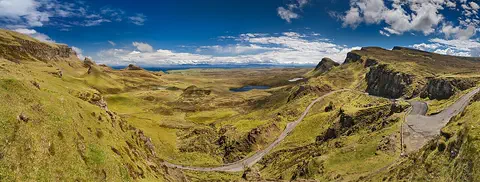
Photo: Stefan Krause, Germany, CC BY-SA 3.0, via Wikimedia Commons
Discover the United Kingdom
The United Kingdom is a country on islands.
It has four parts. They are England, Scotland, Wales and Northern Ireland. The sea is almost all around it. The capital city is London.
The United Kingdom, often called the UK, is an island country off the northwest coast of mainland Europe. It is made of four parts: England, Scotland and Wales, which share the big island of Great Britain, and Northern Ireland, in the north of the island of Ireland.
About 69.5 million people lived in the UK in 2025, and its capital is London, on the River Thames. No place in the UK is more than 120 kilometers from the sea.
The United Kingdom of Great Britain and Northern Ireland holds most of the area and population of the British Isles. Great Britain contains England, occupying most of the south, Scotland in the north and Wales in the west; Northern Ireland occupies the northern part of the island of Ireland. The total area is about 242,500 square kilometers, roughly the size of the U.S. state of Oregon.
The Office for National Statistics estimated the population at 69,483,900 in mid-2025, an increase of 0.3 percent on the year before and the slowest growth since mid-2020. The UK is a constitutional monarchy and parliamentary democracy: the monarch is head of state, while the prime minister, who leads the majority party in the elected House of Commons, heads the government. Its constitution is uncodified, drawn from laws passed by Parliament, court decisions and other sources rather than one written document.
Cities and famous places
London is the biggest city in the UK.
A big river called the Thames flows through it. Tower Bridge goes over the river. Edinburgh is a city in Scotland with a castle on a hill.
London, the capital, is one of the world's leading centers for business and culture, and it had about 8.8 million people at the 2021 census. It stands on the River Thames. Beside the river is the Tower of London, a fortress built around the White Tower, which William the Conqueror built to protect the city.
Each part of the UK has its own capital city: Edinburgh in Scotland, Cardiff in Wales and Belfast in Northern Ireland. Edinburgh has two different historic areas, the Old Town below a medieval castle and the New Town, built from the 1700s onward. Other big cities include Birmingham, Manchester, Liverpool and Glasgow.
London, on the tidal River Thames in southeastern England, is among the world's leading commercial, financial and cultural centers; the city had about 8.8 million people in 2021. UNESCO inscribed the Tower of London in 1988: its massive White Tower, built by William the Conqueror to protect London and assert his power, is a typical example of Norman military architecture, and the later fortress grew around it.
Edinburgh has been Scotland's capital since the 15th century. Its Old Town is dominated by a medieval fortress, while the neoclassical New Town, developed from the 18th century, had a far-reaching influence on European town planning; both became a World Heritage Site in 1995. Cardiff is the capital of Wales and Belfast of Northern Ireland, and Britannica lists Birmingham, Liverpool, Manchester, Glasgow, Swansea and Londonderry among the other major cities.

Highlands, lowlands and weather
The UK has green hills and rocky mountains.
The tallest mountain is Ben Nevis in Scotland. On one coast there are thousands of stone columns. It rains a lot in the mountains in the west.
Great Britain is often split into a highland zone in the north and west and a lowland zone in the south and east. The highest mountain is Ben Nevis in Scotland, about 1,345 meters tall; that is low compared with Europe's big ranges.
On the coast of Northern Ireland, the Giant's Causeway is made of about 40,000 black stone columns. They formed from volcanic activity 50 to 60 million years ago. Rain arrives mostly from the west, so the western mountains are very wet, while parts of eastern England stay much drier.
Great Britain is traditionally divided into a highland zone of older rocks in the north and west and a lowland zone of younger strata in the southeast, roughly along a line from the River Exe to the Tees. Elevations are modest: Ben Nevis, the highest summit, is 1,345 m by Ordnance Survey's 2016 GPS survey (Britannica still gives the older 1,343 m), Snowdon (Yr Wyddfa) reaches 1,085 m in Wales and Scafell Pike 978 m in England. Lough Neagh in Northern Ireland is the largest freshwater lake in the British Isles.
The Giant's Causeway, at the foot of the basalt cliffs of the Antrim plateau, consists of some 40,000 basalt columns formed by volcanic activity in the Tertiary, about 50–60 million years ago; UNESCO inscribed it in 1986. Westerly winds off the relatively warm Atlantic bring most of the rain: the highest peaks can receive up to 5,100 mm a year, while Norfolk, Suffolk and the Thames estuary may get as little as 510 mm. Mean annual temperature ranges from about 8 °C in the Hebrides to 11 °C in southwestern England.

Animals of the United Kingdom
Red deer live in the hills of Scotland.
Badgers, foxes and otters live in the countryside. Hedgehogs live there too. Lots of birds come and go with the seasons.
Long ago, wolves, wild boar and reindeer lived in Britain, but most of the big wild mammals died out. Red deer still live in the Scottish Highlands and on Exmoor, and roe deer live in woods in Scotland and southern England. Badgers, otters, foxes, stoats and weasels live in most country areas, and hedgehogs and moles are widespread.
The UK has only three kinds of snake, and just one, the adder, is venomous. Northern Ireland has no snakes at all. About 200 kinds of birds are found in the UK, and more than half of them migrate.
Britannica notes that most of Britain's formerly abundant larger mammals, such as boars, reindeer and wolves, have become extinct. Red deer survive in the Scottish Highlands and Exmoor Forest and roe deer in the wooded areas of Scotland and southern England, while smaller carnivores (badgers, otters, foxes, stoats and weasels) thrive in most rural areas. The brown hare lives in open lowland country and the mountain hare is native to Scotland.
Amphibians include three species of newt and five of frogs and toads; reptiles are three snakes, of which only the adder is venomous, and three lizards, and there are no snakes in Northern Ireland. The islands lie at a focal point of bird migration routes: some 200 bird species occur, more than half of them migratory, and suburban gardens are estimated to hold a higher density of birds than any kind of woodland. Offshore, the Dogger Bank in the North Sea has long been one of the world's richest fishing grounds.
People, languages and food
About 69 million people live in the UK.
Most of them live in England. Most people speak English. In Wales, many people also speak Welsh. Families from many countries live in the UK.
About 69.5 million people lived in the UK in 2025. Most, about 58.8 million, lived in England, with about 5.5 million in Scotland, 3.2 million in Wales and 1.9 million in Northern Ireland.
English is an official language in every part of the UK, and some older languages are still alive: Welsh is official in Wales too, and Scottish Gaelic in Scotland. About one in five people in Wales can speak Welsh, and Scottish Gaelic is spoken most on islands such as Skye and the Outer Hebrides. Since the 1950s, many people have moved to the UK from the Caribbean, South Asia and other places.
Mid-2025 estimates put England at 58,834,800 people, Scotland at 5,545,500, Wales at 3,175,200 and Northern Ireland at 1,928,400. Net international migration was the main driver of growth; in Wales and Scotland, deaths outnumbered births. The median age was 43.2 in Wales, 43.1 in Scotland and 40.6 in England and Northern Ireland.
Modern English descends mainly from the Germanic dialects of the Angles, Saxons and Jutes, who arrived in the 5th century, and was heavily shaped by Danish and Norman French. Of the Celtic languages, Welsh is strongest, spoken by about one-fifth of the people of Wales; fewer than 2 percent of Scots speak Gaelic. Large West Indian and South Asian communities date from the 1950s and 1960s, and people of Indian, Pakistani and Bangladeshi origin make up more than half of the ethnic minority population.

A long history
People have lived here for a very long time.
Long ago, people set up huge stones in a circle. It is called Stonehenge. Later, a king built a big stone tower in London. Today the UK still has a king.
More than 5,000 years ago, people in what is now England began building great monuments of earth and stone. Over about 2,000 years they made whole landscapes of them, including the stone circles of Stonehenge and Avebury. Much later, William the Conqueror, a Norman king, built the White Tower in London.
The UK was put together over many centuries. Wales was joined with England in the 1500s, Scotland in 1707 and Ireland under the Act of Union of 1800. In 1922 most of Ireland became a separate country, and the northern part stayed in the UK as Northern Ireland. In the 1800s Britain led the Industrial Revolution.
Stonehenge and Avebury in Wiltshire belong to a landscape of Neolithic and Bronze Age ceremonial and burial monuments built and used for about 2,000 years, from around 3700 to 1600 BCE; UNESCO inscribed them in 1986. In the early 10th century CE the Anglo-Saxon king Athelstan won the allegiance of neighboring Celtic kingdoms, and conquest later brought more territory under English rule. Wales was formally united with England by the Acts of Union of 1536 and 1542; Scotland, ruled from London since 1603, joined in 1707 to form the United Kingdom of Great Britain; and Ireland was united with it by the Act of Union of 1800.
The Irish republic gained independence in 1922, while six of Ulster's nine counties remained in the UK as Northern Ireland. Britain spearheaded the 19th-century Industrial Revolution. Devolved assemblies were introduced for Northern Ireland, Scotland and Wales in the late 20th century. The UK joined the European Union in 1973; after 52 percent of voters chose to leave in a 2016 referendum, it left on January 31, 2020.

The United Kingdom on the map
Find the UK on the globe.
Look at the top left of Europe. The UK is on two islands. The biggest island is Great Britain. France is across a narrow sea.
The UK lies off the northwest coast of Europe. Its only land border is with the Republic of Ireland, on the island of Ireland. Everywhere else, it is surrounded by water.
The English Channel separates England from France, the North Sea lies to the east, and the Irish Sea lies between Great Britain and Ireland. From the northern tip of Scotland to the south coast of England is about 1,000 kilometers. Many smaller islands belong to the UK too, such as the Isle of Wight, Anglesey, the Hebrides, Orkney and Shetland.
Apart from the land border with the Republic of Ireland, the United Kingdom is surrounded by sea: the English Channel to the south, the North Sea to the east, the Irish Sea between Great Britain and Ireland, and the Atlantic Ocean facing southwestern England, northwestern Northern Ireland and western Scotland. The narrow North Channel separates Northern Ireland from Scotland.
At its widest the UK measures about 500 km across, and from the north of Scotland to the south coast of England about 1,000 km; no part is more than about 120 km from the sea. Offshore islands include the Isles of Scilly and the Isle of Wight (England), Anglesey (Wales), and the Hebrides, Orkney and Shetland (Scotland). The shallow Strait of Dover and North Sea cover former land links with the European mainland, whose rock structures continue westward under Britain.
- Parts
- England, Scotland, Wales and Northern Ireland
- North to south
- about 1,000 km
- Widest point
- about 500 km
- Farthest from the sea
- no place more than about 120 km
Amazing facts
-
No place in the UK is very far from the sea.
No part of the United Kingdom is more than about 120 kilometers from the sea.
Britannica notes that no point in the UK lies more than 75 miles (about 120 km) from the sea.
-
There are no snakes in Northern Ireland.
The UK has three kinds of snake, but none of them lives in Northern Ireland.
Of the UK's three snake species only the adder is venomous, and Northern Ireland has no snakes at all.
-
Gardens in towns can be full of birds.
Suburban gardens in Britain are thought to hold more birds for their size than any kind of woodland.
It is estimated that suburban gardens in the UK have a higher bird density than any kind of woodland.
-
The Giant's Causeway has thousands of stone columns.
The Giant's Causeway in Northern Ireland is made of about 40,000 basalt columns.
Studies of the Giant's Causeway over the last 300 years helped develop the earth sciences, UNESCO says.
Words to know
- nation
- a large group of people who share a history and identity; the UK is made of four
- basalt
- a dark rock that forms when lava cools
- Neolithic
- the New Stone Age, when people began farming and building large stone monuments
- devolved
- describes power handed from a central government to a region's own parliament or assembly
- constitutional monarchy
- a country with a king or queen whose powers are limited by law, where elected leaders govern
- migrate
- to move from one place to another, often with the seasons
Discovery challenge
-
Which of these is one of the four parts of the UK?
Which of these is one of the four nations of the United Kingdom?
Which of these is a constituent part of the United Kingdom?
- Wales
- Iceland
- Portugal
Show the answer
Wales
Wales is one part. The others are England, Scotland and Northern Ireland.
The four nations are England, Scotland, Wales and Northern Ireland.
England, Scotland and Wales make up Great Britain; with Northern Ireland they form the United Kingdom.
-
What is the capital city of the UK?
Which city is the capital of the United Kingdom?
Which city, on the tidal River Thames, is the UK's capital?
- Edinburgh
- London
- Cardiff
Show the answer
London
London is the capital of the UK.
London is the UK's capital. Edinburgh is Scotland's capital and Cardiff is the capital of Wales.
London is the UK capital; Edinburgh and Cardiff are the capitals of Scotland and Wales.
-
What is the Giant's Causeway made of?
What makes up the Giant's Causeway in Northern Ireland?
What forms the Giant's Causeway on the Antrim coast?
- Ice blocks
- Stone columns
- Coral
Show the answer
Stone columns
It is made of thousands of stone columns by the sea.
It is made of about 40,000 columns of basalt, a volcanic rock.
Some 40,000 basalt columns, formed by Tertiary volcanic activity about 50–60 million years ago.
-
In which part of the UK is Ben Nevis, the tallest mountain?
Ben Nevis, the UK's highest mountain, is in which nation?
In which nation of the UK does Ben Nevis, the highest summit, stand?
- England
- Wales
- Scotland
Show the answer
Scotland
Ben Nevis is in Scotland.
Ben Nevis, about 1,345 meters tall, is in the Scottish Highlands.
Ben Nevis is in Scotland; Wales's highest point is Snowdon (1,085 m) and England's is Scafell Pike (978 m).
-
Which language do many people in Wales speak, as well as English?
Which Celtic language can about one in five people in Wales speak?
Which Celtic language is the strongest in the UK, spoken by about one-fifth of the people of Wales?
- Welsh
- French
- Norwegian
Show the answer
Welsh
Many people in Wales speak Welsh.
About one in five people in Wales can speak Welsh, an old Celtic language.
Welsh, a Brythonic Celtic language, is the strongest Celtic language in the UK.
Places to discover in United Kingdom
-
Watch
City
London
London, the capital of the United Kingdom, began as a Roman town almost 2,000 years ago. About 8.8 million people lived in Greater London in 2021. It has the Tower of London, Big Ben, Tower Bridge and the Tube, an underground railway that opened in 1863.
-
 Watch
Landmark
Big Ben
Big Ben is the nickname of the Great Bell inside the clock tower of the Houses of Parliament in London. The tower, 96 meters tall, was begun in 1843, and its clock started keeping time in 1859. Since 2012 the tower has been called the Elizabeth Tower.
-
 Watch
Landmark
British Museum
The British Museum in London was founded in 1753 and opened in 1759. It holds treasures from all over the world, like the Rosetta Stone, which helped people learn to read Egyptian hieroglyphs. Its grand building with columns was built from 1823 to 1847, and in 2025 it had more than 6.4 million visits.
-
 Watch
Landmark
Buckingham Palace
Buckingham Palace began as a big house built for the Duke of Buckingham. King George III bought it in 1761, and King George IV had the architect John Nash turn it into a palace. Since 1837 it has been the London home of Britain's kings and queens. It has 775 rooms.
-
 Watch
Landmark
London Bridge
London Bridge crosses the River Thames between the City of London and Southwark. Today's bridge, made of concrete, opened in 1973, but bridges have stood here for almost 2,000 years. The stone bridge before it was sold and rebuilt in Arizona, in the United States!
-
 Watch
Landmark
London Eye
The London Eye is a huge observation wheel, 135 meters tall, on the South Bank of the River Thames in London. It was built for the year 2000, the new millennium. Its 32 glass capsules carry up to 25 people each, and the wheel turns so slowly that people step on while it moves.
-
Watch
Landmark
Stonehenge
Stonehenge is a prehistoric monument on Salisbury Plain in England. It began as a round earthwork about 5,000 years ago, and its stone circle went up about 2500 BC. Hundreds of people moved huge stones, some from Wales, and lined them up with the sun.
-
 Watch
Landmark
Tower Bridge
Tower Bridge crosses the River Thames in London, beside the Tower of London. Built from 1886 to 1894, it has two stone-covered towers joined by high walkways, and a road that splits in the middle and swings up like two giant seesaws to let tall ships pass. It still opens about 850 times a year.
-
 Watch
Landmark
Tower of London
The Tower of London is a castle on the River Thames, begun by William the Conqueror after 1066. Its great stone keep, the White Tower, is more than 900 years old. Over the centuries the Tower has been a royal palace, a fortress, a prison, a zoo, a mint for coins and a store for records, and today it guards the Crown Jewels.
-
 Watch
Landmark
Windsor Castle
Windsor Castle stands above the River Thames, west of London. William the Conqueror built the first castle here in the 1070s, and kings and queens have lived in it ever since. It is still a working royal home, and visitors can tour its grand rooms and chapel.
-
Watch
Natural wonder
Giant's Causeway
The Giant's Causeway, on the north coast of Northern Ireland, is made of some 40,000 columns of dark basalt rock, many of them six-sided, packed together like a honeycomb. They formed about 60 million years ago, when a deep pool of lava cooled slowly, shrank and cracked into columns.
Animals of United Kingdom
-
 Watch
Animal
Tawny owl
The tawny owl is a medium-sized woodland owl, about the size of a pigeon, with a round head, big dark eyes and brown, streaky feathers that hide it against tree bark. It hunts mice and voles at night on silent wings, and its hoots are a familiar sound at night.
-
 Watch
3D
Animal
Old World swallowtail
The Old World swallowtail is a large butterfly with yellow wings, black veins, blue spots and a red eyespot near the long tails on its hindwings. It lives across Europe and Asia and in northern North America. Its green and black caterpillar has a hidden orange fork that pops out when it is bothered.
-
 Watch
3D
Animal
Eastern gray squirrel
Eastern gray squirrels are bushy-tailed tree squirrels from the forests of eastern North America, and they are a common sight in parks and gardens. They bury nuts to eat later. People also took them to Britain and other countries; in Britain they cause problems for the native red squirrel.
-
 Watch
3D
Animal
Seven-spot ladybird
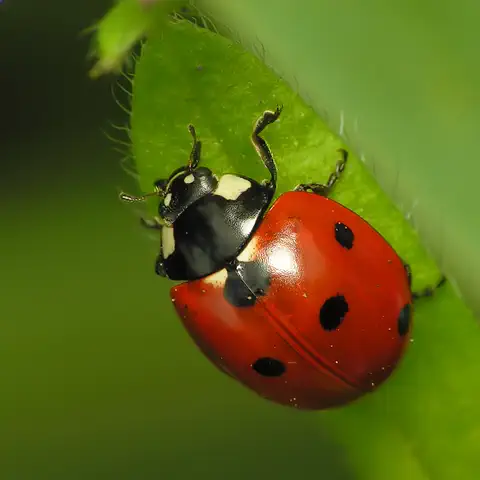
The seven-spot ladybird, or ladybug, is a domed red beetle with seven black spots. Both the young and the adults hunt aphids, small insects that suck plant juices, so gardeners and farmers are glad to see them. Its bright colors warn predators that it tastes horrible.
-
 Watch
3D
Animal
Barn swallow
The barn swallow is a small, speedy bird with a glossy blue back, a reddish throat and a long, deeply forked tail. It catches insects in the air, builds cup-shaped mud nests on barns and bridges, and makes long migrations between the Northern Hemisphere, where it nests, and the Southern Hemisphere, where it spends the winter.
-
 Watch
Animal
Common toad
The common toad is a warty brown amphibian that lives across Europe and into Asia. It spends most of the year on land, hunting slugs, worms and insects at night, then travels back to the pond where it hatched to lay long strings of eggs each spring.
-
 Watch
Animal
Mute swan
The mute swan is among the largest waterfowl, all white with an orange bill topped by a black knob. It is native to Europe and Asia, where it lives on lakes, rivers and park ponds. People took mute swans to North America and other places, where they now live in the wild and can cause problems for native wildlife.
-
 Watch
Animal
Common blackbird
The common blackbird is a thrush found in gardens, parks and woods across Europe, North Africa and parts of Asia. Males are glossy black with a bright yellow-orange bill and eye-ring, females are brown, and on summer evenings males sing a mellow, fluting song from high perches.
-
 Watch
Animal
Osprey
Ospreys are large, fish-eating hawks found near water on every continent except Antarctica. They plunge feet first to grab fish, build huge stick nests and, in many places, migrate thousands of kilometers. After pesticides made them rare, they have made a big comeback.
-
 Watch
Animal
European robin
The European robin is a small songbird of Europe's woods, parks and gardens, famous for its orange-red breast. It sings almost all year round, even at night under streetlights, and it defends its patch fiercely. Young robins have no red breast at all: they are speckled with golden brown.
-
 Watch
3D
Animal
Basking shark
The basking shark is the second-biggest fish in the world, after the whale shark. It swims slowly near the surface with its enormous mouth open, sieving tiny floating animals called zooplankton out of the water. It is gentle and lives mainly in cool seas.
-
 Watch
3D
Animal
Common murre
The common murre is a seabird of cold northern oceans that looks a little like a flying penguin. It dives deep to chase fish, nests in huge crowds on cliff ledges, and its chicks flutter down from the cliff to the sea before they can even fly.
Explore next
-
Watch
City
London
London, the capital of the United Kingdom, began as a Roman town almost 2,000 years ago. About 8.8 million people lived in Greater London in 2021. It has the Tower of London, Big Ben, Tower Bridge and the Tube, an underground railway that opened in 1863.
-
Watch
Landmark
Stonehenge
Stonehenge is a prehistoric monument on Salisbury Plain in England. It began as a round earthwork about 5,000 years ago, and its stone circle went up about 2500 BC. Hundreds of people moved huge stones, some from Wales, and lined them up with the sun.
-
Watch
Landmark
Tower of London
The Tower of London is a castle on the River Thames, begun by William the Conqueror after 1066. Its great stone keep, the White Tower, is more than 900 years old. Over the centuries the Tower has been a royal palace, a fortress, a prison, a zoo, a mint for coins and a store for records, and today it guards the Crown Jewels.
-
Watch
Natural wonder
Giant's Causeway
The Giant's Causeway, on the north coast of Northern Ireland, is made of some 40,000 columns of dark basalt rock, many of them six-sided, packed together like a honeycomb. They formed about 60 million years ago, when a deep pool of lava cooled slowly, shrank and cracked into columns.
-
Watch
Life around the world
A day on the London Underground
The London Underground, or the Tube, began in 1863 as the world's first underground railway. In the year 2025/26, people made about 1.2 billion journeys on its 11 lines. Its famous map, first sketched by Harry Beck in 1931, shows how stations connect rather than how far apart they are.
-
Watch
Animal
Tawny owl
The tawny owl is a medium-sized woodland owl, about the size of a pigeon, with a round head, big dark eyes and brown, streaky feathers that hide it against tree bark. It hunts mice and voles at night on silent wings, and its hoots are a familiar sound at night.
-
Watch
3D
Animal
Old World swallowtail
The Old World swallowtail is a large butterfly with yellow wings, black veins, blue spots and a red eyespot near the long tails on its hindwings. It lives across Europe and Asia and in northern North America. Its green and black caterpillar has a hidden orange fork that pops out when it is bothered.
-
Watch
3D
Animal
Eastern gray squirrel
Eastern gray squirrels are bushy-tailed tree squirrels from the forests of eastern North America, and they are a common sight in parks and gardens. They bury nuts to eat later. People also took them to Britain and other countries; in Britain they cause problems for the native red squirrel.
For parents & teachers
What children will learn
- Name the four nations of the United Kingdom and their capitals, and find them on a map.
- Describe the UK's highland and lowland landscapes and why the west is wetter than the east.
- Outline how the United Kingdom was formed through unions over several centuries.
- Recognize that the UK has several languages and communities from many parts of the world.
Recommended ages: 3 to 17 · About 15 minutes
Talk about it
- Why might people in Scotland, Wales and Northern Ireland want to keep their own traditions and languages?
- The UK is never more than about 120 km from the sea. How might that shape everyday life?
- Stonehenge was built thousands of years ago. How do you think people moved such big stones?
Try at home or in class
- Draw an outline map of the British Isles and color the four nations of the UK in different colors, marking each capital.
- Keep a rain diary for a week with a jar and a ruler, and compare it with how wet the western mountains of Britain can be.
Key vocabulary: nation, basalt, Neolithic, devolved, constitutional monarchy, migrate
Where these facts come from
- Wikidata , Wikimedia Foundation (CC0 1.0)
- Natural Earth vector data , Natural Earth (NACIS) (Public domain)
- UNESCO World Heritage List , UNESCO World Heritage Centre (Linked as a reference; site facts come from Wikidata)
- United Kingdom , Encyclopaedia Britannica
- United Kingdom: The highland zone , Encyclopaedia Britannica
- United Kingdom: The lowland zone (drainage, soils and climate) , Encyclopaedia Britannica
- United Kingdom: Plant and animal life (with ethnic groups and languages) , Encyclopaedia Britannica
- Population estimates for the UK, England, Wales, Scotland and Northern Ireland: mid-2025 , Office for National Statistics
- Great Britain's tallest mountain is taller , Ordnance Survey
- Stonehenge, Avebury and Associated Sites , UNESCO World Heritage Centre
- Giant's Causeway and Causeway Coast , UNESCO World Heritage Centre
- Tower of London , UNESCO World Heritage Centre
- Old and New Towns of Edinburgh , UNESCO World Heritage Centre
- PlayOwl region table, version 1 , PlayOwl (PlayOwl original data)
- flag-icons 7.5.0 , Panayiotis Lipiridis and contributors (MIT)
- Wikimedia Commons , Wikimedia Foundation (Per file (public domain, CC0, CC BY or CC BY-SA); see each media record)
Checked, not yet human-reviewed. Last updated October 24, 2026. Spotted a mistake? Tell us.
Picture credits
- Photo: Stefan Krause, Germany, CC BY-SA 3.0, via Wikimedia Commons · source · license
- Photo: Ilya Grigorik, CC BY-SA 3.0, via Wikimedia Commons · source · license
- Photo: Lindy Buckley from Nanjing, China, CC BY 2.0, via Wikimedia Commons · source · license
- Photo: The original uploader was AlanFord at English Wikipedia., CC BY 2.5, via Wikimedia Commons · source · license
- Photo: Stefan Kühn, CC BY-SA 3.0, via Wikimedia Commons · source · license