
 Country
Asia
Bahrain
Bahrain is a small country made of islands in a warm sea. People once dived for pearls there, and date palms grow by freshwater springs.
Bahrain is a small island country in the Persian Gulf, linked to Saudi Arabia by a long causeway. Long ago it was the center of a trading land called Dilmun, and for centuries its people dived for pearls. About 1.6 million people live there today.
Bahrain, an archipelago in a bay off the southwestern Persian Gulf coast, was the seat of ancient Dilmun, a pearling center for centuries, and in 1932 the first Gulf emirate where oil was found. Independent since 1971 and a constitutional monarchy since 2002, it had about 1.6 million people in 2025 (World Bank), about half of them foreign-born.
Photo: B.alotaby, CC BY-SA 4.0, via Wikimedia Commons
Discover Bahrain
Bahrain is a country made of islands.
The warm sea is all around. Most of the land is flat, dry desert. The capital city is Manama.
Bahrain is a small country made of Bahrain Island and about 30 smaller islands in the Persian Gulf. Its name comes from Arabic words meaning two seas. Saudi Arabia lies to the west and Qatar to the east, and a causeway, a long road over the sea, 24 kilometers long, links Bahrain to Saudi Arabia.
The capital, Manama, is on the northeastern tip of Bahrain Island. About 1.6 million people lived in Bahrain in 2025, and about half of them were born in other countries.
Bahrain is a small Arab state in a bay on the southwestern coast of the Persian Gulf: Bahrain Island and some 30 smaller islands, its name from the Arabic al-bahrayn, two seas. Its land area is slightly greater than Singapore's. The King Fahd Causeway, 24 km long, links it to Saudi Arabia across the Gulf of Bahrain, and the Qatar peninsula lies to the east.
Located in one of the world's chief oil-producing regions, Bahrain has only small petroleum reserves; its economy has long relied on refining crude from neighbors and increasingly on finance, commercial services, communications and tourism. The World Bank put the population at 1,600,366 in 2025. About half of residents are foreign-born, mostly from Iran, India, Pakistan, Britain and the United States, and about one-fifth are under 15.
Cities and ancient places
Manama is a modern city by the sea.
It has tall towers and an old market. Muharraq has narrow, winding streets. Long ago, people built thousands of small hills. Scientists study them today.
Manama is Bahrain's largest city, with a port, banks, hotels and a traditional market called a souk. Muharraq, joined to Bahrain Island by a causeway, has narrow, winding streets. Its old merchants' houses and three oyster beds in the sea are part of a World Heritage Site about pearl diving.
Qal'at al-Bahrain is a huge mound built up by people living on the same spot for about 4,500 years, with a Portuguese fort on top. It was the capital of Dilmun. In the west of the island are thousands of Dilmun burial mounds, about 4,000 years old.
More than one-third of the population lives in Manama and Al-Muharraq. Manama, with its port of Mina Salman, holds the government offices, the business and financial district and a traditional souk; Muharraq is densely built, with narrow winding streets. UNESCO's Pearling, Testimony of an Island Economy (2012) includes seventeen buildings in Muharraq, three offshore oyster beds, part of the seashore and the Qal'at Bu Mahir fortress, from which boats left for the beds.
Qal'at al-Bahrain (UNESCO, 2005) is a 300 × 600 m tell, 12 m high, occupied from about 2300 BCE to the 16th century; about a quarter has been excavated, and a Portuguese fort crowns it. It was the capital of Dilmun, previously known only from Sumerian texts. The Dilmun Burial Mounds (UNESCO, 2019), built between about 2200 and 1750 BCE, number about 11,774 mounds across 21 sites in the west of the island, including royal mounds in the village of A'ali.
Desert islands and hidden springs
Bahrain is hot and dry.
It hardly ever rains. But fresh water bubbles up from under the ground in the north. Date palms and gardens grow there.
Most of Bahrain is flat and dry. In the middle of Bahrain Island is a rocky area with the country's highest point, Al-Dukhan Hill, only 134 meters high. The south and west are sandy plains with salt marshes.
In the north, springs and wells bring up fresh water from deep underground. That water fell as rain on mountains in Saudi Arabia. It lets date palms and vegetable gardens grow. Summers are very hot and humid, and rain falls on only about 10 days a year.
Bahrain has two island groups extending about 50 km north to south: Bahrain Island, seven-eighths of the land, with Al-Muharraq and Sitrah joined by causeways, and the Hawar Islands near Qatar, awarded to Bahrain by the International Court of Justice in 2001. The main island is gently folded limestone, sandstone and marl; its rocky, barren center rises to 134 m at Al-Dukhan Hill.
In the north and northwest a narrow belt of date palms and gardens is watered by prolific artesian springs and wells; Britannica traces this water to rain on the mountains of western Saudi Arabia. Demand has outstripped it, and about three-fifths of the water now comes from seawater desalination plants powered by natural gas. Midday temperatures exceed 32 °C from May to October, often 35 °C or more, with high humidity; December to March means dip to about 21 °C. Rain falls only in winter, about 75 mm a year on about 10 days. The damp northwesterly shamal is the main wind.
Animals of Bahrain
Gazelles and hares live in the desert.
Lizards and little jerboas live in the sand. In spring and autumn, many birds stop to rest. Oysters grow on the sea floor.
The desert limits which animals can live in Bahrain, but gazelles and hares still live there, and lizards and jerboas, small desert rodents, are common. About 200 kinds of desert plants grow on the bare land.
In spring and autumn, many kinds of birds stop to rest on their long migrations. Al-Areen Park is one of the main wildlife conservation areas in the Gulf region, with oryx, gazelles and many waterbirds. Under the sea, beds of pearl oysters supported Bahrain's pearl divers for centuries.
Some 200 species of desert plants grow in the arid parts of the archipelago, while irrigated land supports fruit trees, fodder crops and vegetables. Britannica notes that desert conditions limit animal variety: gazelles and hares survive, lizards and jerboas are common, and the mongoose, probably imported from India, lives in irrigated areas. Birdlife is sparse except in spring and autumn, when many migratory species rest in Bahrain while traveling to and from higher temperate latitudes.
Al-Areen Park, one of the principal wildlife conservation areas of the Gulf, holds indigenous mammals such as the oryx and gazelle and is visited by many waterfowl. Offshore, the oyster beds of the Pearling World Heritage Site preserve the marine resource that shaped the island's economy for millennia; Britannica reports that pollution, much of it from oil spills during the 1990–91 Persian Gulf War, has killed off valuable marine life such as shrimp.

People, languages and food
About 1.6 million people live in Bahrain.
People speak Arabic, and many speak English too. Many meals have fish, rice and dates. Coffee is offered to guests.
About half of the people in Bahrain were born there, and about half came from other countries, such as India, Pakistan, Iran, Britain and the United States. Arabic is the official language, and English is taught in every school. Persian, Urdu, Hindi and Tagalog are spoken too.
Meals often have fish, shrimp, meat, rice and dates. Machbous is fish or meat served with rice. Coffee flavored with cardamom and saffron is offered to welcome guests. Villages are known for crafts such as pottery and baskets woven from palm leaves, and boat builders still make sailing boats called dhows.
Roughly half the population is Arab, mostly native-born Bahrainis; foreign-born residents, about half the total, make up about three-fifths of the labor force. Arabic is official, English is a compulsory second language in all schools, Persian is common at home, and expatriates speak Urdu, Hindi and Tagalog among others. Most people are Muslim, with Shi'a in the majority and a Sunni ruling family; Christians, Jews, Hindus and Baha'is form smaller groups.
Most people live in towns; villages with flat-roofed stone or concrete houses lie among the irrigated gardens of the north. Cuisine features fish, shrimp, meat, rice and dates, with machbous and muhammar, sweet brown rice with sugar or dates; coffee with cardamom and saffron signals hospitality. A'ali is known for ceramics and Karbabad for palm-leaf baskets, dhows are still built at Manama and Muharraq, and fidjeri, songs once sung by pearl divers, are still heard. Football is the most popular modern sport, and horse racing remains a national pastime.
Dilmun, pearls and oil
People have lived in Bahrain for a very long time.
Long ago, it was a busy trading place called Dilmun. Later, people dived for pearls. In 1971, Bahrain became its own country.
About 4,000 years ago, Bahrain was the heart of Dilmun, a rich trading land linking the ancient cities of Sumer with the Indus valley. For a very long time its people dived for pearls in the warm sea, until the 1930s, when cultured pearls from Japan ended the trade.
The Khalifah family has ruled Bahrain since 1783. In 1932 oil was discovered, the first in the Gulf's emirates. Bahrain was under British protection from 1861 and became independent in August 1971.
Bahrain has been inhabited since prehistoric times; as Dilmun it linked Sumer with the Indus valley about 2000 BCE. Persian, Greek and Roman writers mentioned it, and it has been Arab and Muslim since the 7th century, apart from Portuguese rule (1521–1602) and Persian rule (1602–1783). The Khalifah family has ruled since 1783. A first treaty with Britain came in 1820, and British-protected status dates from 1861. UNESCO dates the Gulf pearl trade from the 2nd century to the 1930s, when Japanese cultured pearls caused its sudden collapse; oil was found in 1932.
After Britain decided in 1968 to withdraw from the Gulf, Sheikh Isa ibn Salman Al Khalifah proclaimed independence in August 1971. Bahrain joined the Gulf Cooperation Council in 1981. Under Hamad ibn Isa Al Khalifah, who took power in 1999, a 2001 referendum approved the National Action Charter and a 2002 constitution made Bahrain a constitutional monarchy; in 2006 a woman was elected to parliament for the first time. In 2011 large protests, mostly from the Shi'a community, called for political reforms, and the government declared a state of emergency from March 15 to June 1.
Bahrain on the map
Find Bahrain on the globe.
It is a group of islands in the Persian Gulf. Saudi Arabia is on one side, and Qatar is on the other. A long road over the sea joins it to Saudi Arabia.
Bahrain lies in a bay of the Persian Gulf. Saudi Arabia is to the west, across the Gulf of Bahrain, and the Qatar peninsula is to the east. Bahrain has no land border; the King Fahd Causeway carries a road to Saudi Arabia.
The islands stretch about 50 kilometers from north to south. The small Hawar Islands lie close to the coast of Qatar.
Bahrain occupies a bay on the southwestern coast of the Persian Gulf, with Saudi Arabia to the west across the Gulf of Bahrain and the Qatar peninsula to the east. Its two island groups extend about 50 km north to south and 16 km east to west. Umm al-Na'san is linked by the King Fahd Causeway.
The Hawar Islands, about 19 km southeast of Bahrain Island near the Qatari coast, are small and rocky, home to only a few fishermen and quarry workers. Their ownership was disputed with Qatar until the International Court of Justice awarded them to Bahrain in 2001, which improved relations between the two states.
- Islands
- Bahrain Island and some 30 smaller islands
- King Fahd Causeway to Saudi Arabia
- 24 km
- Highest point
- Al-Dukhan Hill, 134 m
- People (2025)
- 1,600,366
Amazing facts
-
Bahrain means two seas.
The name Bahrain comes from the Arabic word al-bahrayn, which means two seas.
Bahrain's name derives from the Arabic al-bahrayn, two seas.
-
Bahrain's spring water first fell as rain far away.
The fresh water that bubbles up from Bahrain's springs began as rain on the mountains of Saudi Arabia.
Britannica traces the artesian water of northern Bahrain to precipitation on the western mountains of Saudi Arabia.
-
People lived on one spot in Bahrain for thousands of years.
At Qal'at al-Bahrain, people lived on the same spot for about 4,500 years, building a hill 12 meters high out of their towns.
UNESCO describes Qal'at al-Bahrain as almost 4,500 years of more or less unbroken occupation, the largest tell known in Bahrain, with a probable ancient lighthouse, the sea tower.
-
Pearl divers in Bahrain sang special songs.
Songs called fidjeri, once sung by pearl divers, can still be heard in Bahrain.
Fidjeri, the songs of the pearl divers, survive in Bahrain's folk music, and a pearl-diving museum preserves the trade's history.
-
Bahrain found oil before its neighbors.
In 1932 Bahrain became the first emirate in the Gulf where oil was discovered.
Bahrain was the first Gulf emirate to discover oil, in 1932, but its reserves are small, so it has built one of the most diversified economies in the region.
Words to know
- archipelago
- a group or chain of islands
- causeway
- a raised road built across water
- artesian spring
- a place where water from deep underground rises up by itself
- desalination
- removing salt from seawater to make fresh water
- pearl
- a smooth, shiny gem that forms inside an oyster
- tell
- a mound made of the remains of towns built on the same spot over thousands of years
- World Heritage Site
- a place UNESCO lists as important to all people, to be protected
Discovery challenge
-
What is the capital city of Bahrain?
Which city, on the northeastern tip of Bahrain Island, is the capital?
Which city, with the port of Mina Salman, is Bahrain's capital and largest city?
- Muharraq
- Manama
- Doha
Show the answer
Manama
Manama is the capital of Bahrain.
Manama is on the northeastern tip of Bahrain Island.
Manama is the largest city, with the port of Mina Salman, the government offices and the financial district.
-
What did divers in Bahrain look for in the sea?
What did Bahrain's divers gather from oyster beds for centuries?
Which trade shaped Bahrain's economy until it collapsed in the 1930s?
- Pearls
- Gold coins
- Seashell money
Show the answer
Pearls
Divers looked for pearls inside oysters.
Divers gathered pearl oysters until cultured pearls from Japan ended the trade in the 1930s.
Pearling dominated the Gulf economy from the 2nd century to the 1930s, when Japan developed cultured pearls.
-
What joins Bahrain to Saudi Arabia?
What links Bahrain to Saudi Arabia across the sea?
Which 24 km structure links Bahrain to Saudi Arabia across the Gulf of Bahrain?
- A long road over the sea
- A tunnel under the desert
- A cable car
Show the answer
A long road over the sea
A long road over the sea, called a causeway, joins them.
The King Fahd Causeway, 24 kilometers long, links Bahrain to Saudi Arabia.
The King Fahd Causeway, 24 km long, crosses the Gulf of Bahrain to Saudi Arabia.
-
Where does most of Bahrain's water come from today?
Where does most of the water used in Bahrain come from today?
About three-fifths of Bahrain's water now comes from which source?
- Rivers
- Seawater with the salt taken out
- Melting snow
Show the answer
Seawater with the salt taken out
Most water is made from seawater, with the salt taken out.
About three-fifths of Bahrain's water comes from desalination plants that remove salt from seawater.
Demand outstripped the artesian supply, so about three-fifths now comes from desalination plants powered by natural gas.
-
What was Bahrain called long, long ago?
Which ancient trading land had its center in Bahrain about 4,000 years ago?
Qal'at al-Bahrain was the capital of which ancient civilization, known before excavation only from Sumerian texts?
- Dilmun
- Petra
- Carthage
Show the answer
Dilmun
Long ago, Bahrain was the center of Dilmun.
Dilmun traded with Sumer and the Indus valley about 4,000 years ago.
Qal'at al-Bahrain was the capital of Dilmun; its remains are the richest of that civilization yet inventoried.
Animals of Bahrain
-
Watch
Animal
Arabian oryx
The Arabian oryx is a white desert antelope with long, straight horns and a black-and-white face. Hunting wiped it out in the wild, but animals kept in zoos were bred and returned to the deserts of Arabia. Today it lives wild again in five countries.
-
 Watch
3D
Animal
Dromedary camel
The dromedary, or Arabian camel, is the one-humped camel of the deserts of North Africa, the Middle East and India. Its hump stores fat, not water, and its body is full of tricks for saving water. People tamed dromedaries thousands of years ago, and today none live truly wild, except a large feral population in Australia.
Explore next
-
 Watch
 Country
Saudi Arabia
Saudi Arabia covers about four-fifths of the Arabian Peninsula. Most of it is dry desert, including the Empty Quarter, the largest sand area in the world. About 35.3 million people lived there in 2024, most of them in cities such as Riyadh, the capital.
-
 Watch
 Country
Kuwait
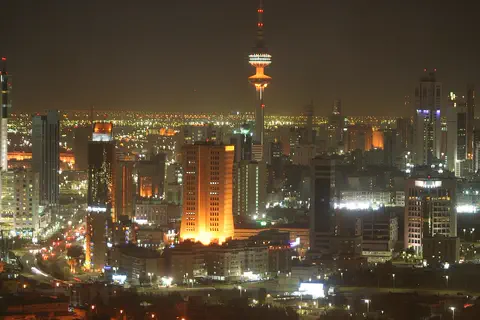
Kuwait is a small desert country at the top of the Persian Gulf, between Iraq and Saudi Arabia. It grew from a trading town on Kuwait Bay into a modern country after oil was found. About 4.9 million people live there, most of them in and around Kuwait City.
-
Watch
Animal
Arabian oryx
The Arabian oryx is a white desert antelope with long, straight horns and a black-and-white face. Hunting wiped it out in the wild, but animals kept in zoos were bred and returned to the deserts of Arabia. Today it lives wild again in five countries.
-
Watch
3D
Animal
Dromedary camel
The dromedary, or Arabian camel, is the one-humped camel of the deserts of North Africa, the Middle East and India. Its hump stores fat, not water, and its body is full of tricks for saving water. People tamed dromedaries thousands of years ago, and today none live truly wild, except a large feral population in Australia.
- Watch Geography Islands An island is a piece of land surrounded by water that is smaller than a continent. Islands form in different ways: some broke away from continents, some were built by volcanoes on the sea floor, and some were made by corals or by waves piling up sand. Because they are cut off by water, islands often have unusual plants and animals.
-
 Watch
 Country
Qatar
Qatar is a small desert country on a peninsula that pokes north into the Persian Gulf. Its people once lived by pearl diving and fishing; today it is one of the world's biggest exporters of natural gas. Its capital, Doha, has a skyline of towers, and about 3.2 million people lived in Qatar at the end of 2025.
-
 Watch
 Country
Afghanistan
Afghanistan is a landlocked country in south-central Asia. The high Hindu Kush mountains run across its middle, sandy deserts lie in the southwest, and the capital, Kabul, sits in a valley about 1,800 meters above sea level.
-
 Watch
 Country
Azerbaijan
Azerbaijan is a country on the southern side of the Caucasus Mountains, along the western shore of the Caspian Sea. It has high mountains, wide lowlands and forests, its capital is Baku, and about 10.3 million people lived there in mid-2026.
For parents & teachers
What children will learn
- Locate Bahrain in the Persian Gulf between Saudi Arabia and Qatar.
- Explain how a desert island gets fresh water from springs and desalination.
- Describe the peoples, languages and foods of Bahrain without treating them as one culture.
- Outline Bahrain's history from Dilmun and pearling to oil and independence in 1971.
Recommended ages: 3 to 17 · About 15 minutes
Talk about it
- Why do you think people have lived on the same spot at Qal'at al-Bahrain for thousands of years?
- What might happen to a town when the one thing it sells, like pearls, is suddenly not needed?
- Why might a country where it hardly rains make fresh water from the sea?
Try at home or in class
- With a grown-up, dissolve salt in warm water in a dish and leave it in the sun; when the water evaporates, salt is left behind, a first step toward understanding desalination.
- Stack layers of colored sand or play dough in a cup to model a tell, then cut it open and 'excavate' the layers from top to bottom.
Key vocabulary: archipelago, causeway, artesian spring, desalination, pearl, tell, World Heritage Site
Where these facts come from
- Wikidata , Wikimedia Foundation (CC0 1.0)
- Natural Earth vector data , Natural Earth (NACIS) (Public domain)
- UNESCO World Heritage List , UNESCO World Heritage Centre (Linked as a reference; site facts come from Wikidata)
- Bahrain (introduction, land, relief, drainage, climate, plant and animal life, people, languages) , Encyclopaedia Britannica
- Bahrain: Religion (settlement, demographic trends, economy) , Encyclopaedia Britannica
- Bahrain: Cultural life (daily life, arts, sports, early history) , Encyclopaedia Britannica
- Bahrain: Domestic and foreign relations since independence , Encyclopaedia Britannica
- Qal'at al-Bahrain – Ancient Harbour and Capital of Dilmun , UNESCO World Heritage Centre
- Pearling, Testimony of an Island Economy , UNESCO World Heritage Centre
- Dilmun Burial Mounds , UNESCO World Heritage Centre
- Population, total: Bahrain , World Bank
- PlayOwl region table, version 1 , PlayOwl (PlayOwl original data)
- flag-icons 7.5.0 , Panayiotis Lipiridis and contributors (MIT)
- Wikimedia Commons , Wikimedia Foundation (Per file (public domain, CC0, CC BY or CC BY-SA); see each media record)
Checked, not yet human-reviewed. Last updated October 28, 2026. Spotted a mistake? Tell us.