How does a kitchen garbage disposal work?
A motor under the sink spins a plate that flings soft food scraps against a rough ring until they are small enough to wash away.
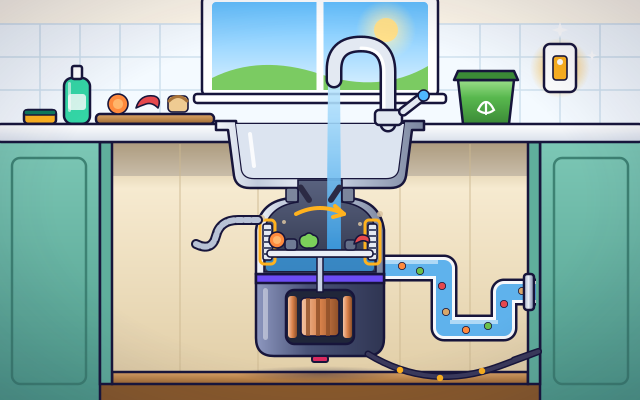
The big idea: A disposal has no knives. A spinning plate flings scraps outward against a ring with sharp grooves. The ring grinds them into bits, and running water carries the bits down the drain.
It's like a salad spinner with a cheese grater for a wall. Spinning throws everything outward, and the rough wall scrapes it into tiny bits.
The interactive parts didn't load. The explanations below still work; try reloading the page.
What happens under the sink
- After dinner, a grown-up scrapes a few soft scraps into the sink. They drop through the drain and out of sight. What is hiding under there?
- Under the sink hangs a garbage disposal. The scraps land on a metal plate inside its top half. The bottom half holds an electric motor.
- First the cold water is turned on. It flows through the chamber and out along the drain pipe. That stream is what will carry everything away.
- A switch starts the motor and the plate spins. Two metal lugs on the plate push the scraps round. The spin flings them outward to the wall.
- The wall is a ring with sharp grooves, like a grater. The lugs push the scraps along it again and again, and the ring grinds them into tiny bits.
- The bits fall through the ring and the water washes them along the pipe. The switch goes off first. The water runs a little longer to clear the pipe.
Look inside a disposal
Tap each part. The round window shows the plate seen from above.
- Splash guard. Rubber flaps sit in the drain hole. Scraps and water push through them, but splashes and bits cannot fly back up.
- Grinding chamber. The top half of the disposal is a strong, round chamber. Scraps collect here, sitting on the plate, until the motor starts.
- Spinning plate. The plate is a metal disc fixed to the motor's shaft. When the motor runs, the plate spins and everything on it is flung outward.
- Impellers. Two metal lugs, called impellers, ride on the plate. They are not sharp. They swing on pins and push the scraps round against the ring.
- Grind ring. The grind ring does not move. It is the wall around the plate, and it has rows of sharp grooves like a cheese grater. This is where the grinding happens.
- Motor. The bottom half is an electric motor. A wall switch sends it electricity, and its shaft spins the plate above.
- Drain outlet. Below the plate, the water and the tiny bits collect and leave through a pipe in the side.
- Pipe bend. The pipe has a U-shaped bend called a trap. A little water always sits in the bend. It blocks smelly air from coming up out of the drain.
Spin, grind and flush
Drop soft scraps in, then use the water and the switch. Watch the plate from the side and from above. What does the water do?
Experiment: What happens if the disposal runs with the water turned off?
- Drop two scraps in. Leave the water off and flip the switch.
- Look at the pipe. Where are the bits?
- Now turn the water on and watch again.
What we found: The plate and the ring do the grinding, so the scraps are still ground up. But the bits just sit there. It is the running water that carries them along the pipe.
Turn on JavaScript to try it yourself.
Sort it, then run it
Sort each scrap: down the sink, or keep it out? Then run the disposal in the right order.
Why a spin can grind
Have you ever been on a roundabout that spins fast? You feel yourself sliding toward the outside edge. Really, your body is trying to keep going in a straight line, and the roundabout keeps turning away underneath you.
A garbage disposal uses that same effect. A motor spins a metal plate about 30 times a second. Scraps on the plate slide outward until they hit the wall. Two blunt lugs on the plate, called impellers, push the scraps along that wall, round and round.
The wall is the clever part. It is a ring that does not move, and it is covered in sharp grooves like a cheese grater. Each time a scrap is pushed along the ring, a little more is scraped off. Soon the pieces are tiny enough to slip through the ring's slots.
Then the water takes over. It washes the tiny bits out of the side of the disposal, through a U-shaped bend and away down the drain. That is why the cold water goes on first and off last. A disposal is a grown-up's machine, and hands never go into the drain. Our salad-spinner picture also has a limit: a salad spinner only throws water off. A disposal breaks the food itself.
Key words
- Impeller
- A blunt metal lug on the plate that pushes the scraps round.
- Grind ring
- The rough ring around the plate that scrapes the scraps into bits.
- Trap
- A U-shaped bend in a drain pipe. It always holds a little water, which blocks smells from the drain.
- Inertia
- The way a moving thing keeps going straight unless something turns it.
- Slurry
- A runny mix of water and tiny solid bits.
Check your thinking
-
Which part does the grinding?
Show the answer
The rough ring around the plate. A disposal has no knives. The spinning plate pushes the scraps along a ring with sharp grooves.
-
Which of these should stay out of a disposal?
Show the answer
A stringy corn husk. Long strings do not break up. They wrap around the plate and can jam it.
-
Why does the cold water run the whole time?
Show the answer
The water carries the ground bits along the pipe. The plate and ring grind. The water is the ride that takes the bits away.
-
Why do the scraps move to the outside of the spinning plate?
Show the answer
They try to keep going straight while the plate turns. Moving things keep going straight unless something turns them. On a turning plate, that carries them to the edge.
-
What is the U-shaped bend under the sink for?
Show the answer
Water sitting in it blocks smells from the drain. The bend always holds a little water. That water is a plug that keeps drain air out of the kitchen.
You're a Home systems expert!
You watched, looked inside, tried it, solved the challenge and went deeper. Pick another question below, or switch the age at the top to see this topic another way.
More about home systems
 #193
Home systems
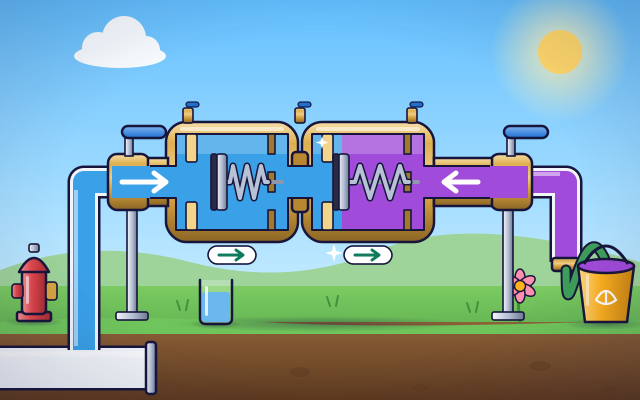
How do backflow preventers protect water supplies?
Change pipe pressures and watch valves prevent unwanted reverse flow.
#193
Home systems
How do backflow preventers protect water supplies?
Change pipe pressures and watch valves prevent unwanted reverse flow.
 #194
Home systems
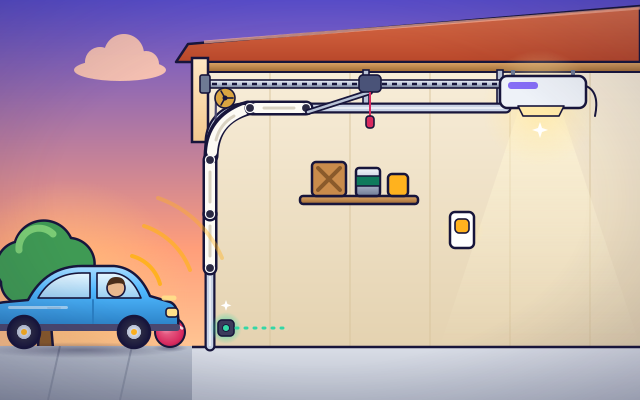
How does an automatic garage door open?
Explore the door's tracks, springs, cables, motor, and obstruction sensors.
#194
Home systems
How does an automatic garage door open?
Explore the door's tracks, springs, cables, motor, and obstruction sensors.
 #183
Home systems
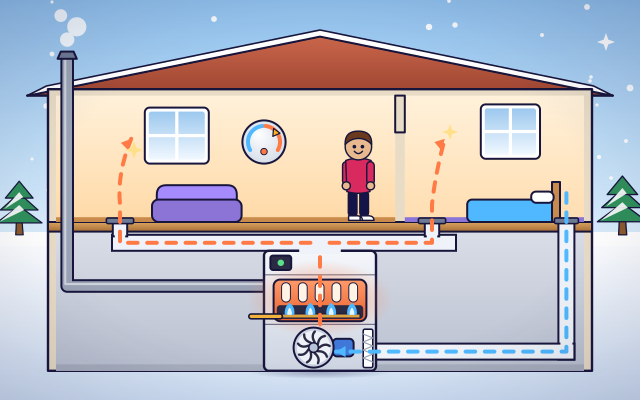
How does a furnace heat a home?
Follow air through heating, filtration, ducts, and vents while adjusting a thermostat.
#183
Home systems
How does a furnace heat a home?
Follow air through heating, filtration, ducts, and vents while adjusting a thermostat.
 #184
Home systems
How does a heat pump warm a home?
Reverse a model refrigeration cycle and follow heat moving indoors.
#184
Home systems
How does a heat pump warm a home?
Reverse a model refrigeration cycle and follow heat moving indoors.
Keep exploring
Games to play next
- Machine RepairFix levers, pulleys, gears and ramps so every contraption works.
- Circuit Workshop 3DWire up batteries, bulbs and switches on a 3D workbench.
- Weather LabPredict the weather in a box, then run a fair test to find out why.
Guide for grown-ups
- How to start homeschooling: a step-by-step guide for familiesA guide for parents · 7 min read
Science games by grade
Science worksheets by grade
- Preschool Science Worksheets
- Pre-K Science Worksheets
- Kindergarten Science Worksheets
- 1st Grade Science Worksheets
- 2nd Grade Science Worksheets
- 3rd Grade Science Worksheets
- 4th Grade Science Worksheets
- 5th Grade Science Worksheets
- 6th Grade Science Worksheets
- 7th Grade Science Worksheets
- 8th Grade Science Worksheets