How does a sump pump keep a basement dry?
A pit, a float and a pump work together to catch water under a house and push it outside before the floor gets wet.
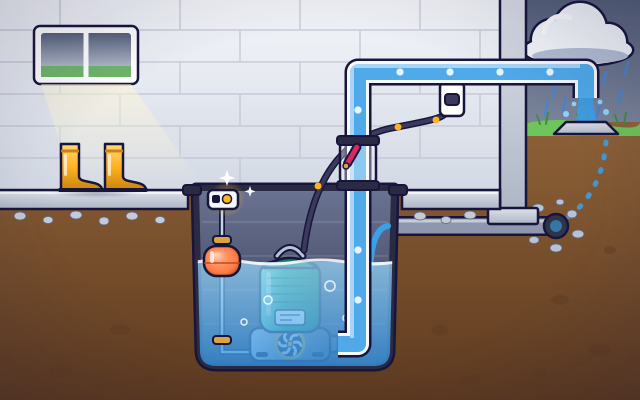
The big idea: Water under a house runs into a pit. When the water lifts a float high enough, the float presses a switch, and a pump pushes the water up a pipe and out of the house.
It's like a toilet tank in reverse. There, a rising float shuts the water off. Here, a rising float switches a pump on to send the water away.
The interactive parts didn't load. The explanations below still work; try reloading the page.
How a basement stays dry
- When it rains hard, water soaks into the ground around a house. The basement sits below ground, so that water presses in around it. What keeps the floor dry?
- The lowest spot in the basement is a pit called a sump. Pipes with holes in them run around the house and lead the water into the pit.
- A float sits on the water. As the pit fills, the float rides up its rod. At the top it pushes a stop, and the stop flips a switch. Click!
- The switch sends electricity to a motor. The motor spins a wheel with curved blades, called an impeller. It flings the water outward and pushes it up the pipe.
- Inside the pipe is a flap called a check valve. Water going up pushes it open. When the pump stops, the water tries to fall back and pushes the flap shut.
- The water pours out onto the yard, away from the house. The pit empties, the float drops, and the switch turns the pump off until the water rises again.
Look inside a sump pit
Tap each part. Watch what it does when you find it.
- Sump pit. The pit, or basin, is the lowest spot in the basement. Water collects here, where the pump can reach it, and not on the floor.
- Drain pipe. A pipe with holes runs around the bottom of the house. Water in the soil seeps into it and flows downhill into the pit.
- Float. The float is hollow, so it sits on top of the water. When the water rises, the float rises too. It is how the pump knows how deep the water is.
- Switch and stops. Two stops sit on the rod. The float pushes the top stop to switch the pump on. Later it rests on the bottom stop and switches the pump off.
- Motor. The motor is sealed so it can work under water. When the switch turns on, electricity makes the motor spin.
- Impeller. The impeller is a wheel with curved blades. It spins very fast and flings water outward, which pushes the water into the pipe.
- Check valve. The check valve is a one-way door for water. Water going up pushes the flap open. Water trying to fall back pushes it shut.
- Discharge pipe. The discharge pipe carries the water up, through the wall and out onto the yard, far enough away that it does not run straight back.
Rain, float and pump
Make it rain and watch the pit. You can also lift the float with your finger. What switches the pump on, and what switches it off?
Experiment: What changes when it rains harder?
- Set the rain to a drizzle. Count slowly from one pump start to the next.
- Now set a downpour and count again.
- Press Record each time to save the time between starts.
What we found: The pump always works at the same speed. Heavier rain fills the pit sooner, so the float reaches the top stop sooner and the pump switches on more often.
Turn on JavaScript to try it yourself.
Ready for the storm
A big storm is coming. Choose a pump and set the float stop, then start the storm. Keep the floor dry.
Why the pump knows when to work
Soil can hold a lot of water. After heavy rain or melting snow, the ground around a house is soaked, a bit like a wet sponge. A basement is a room dug into that wet ground, so water tries to creep in through the floor and walls.
Builders give the water an easier place to go. Pipes with small holes run around the bottom of the house. Water seeps into them and flows downhill to a pit in the basement floor called a sump. Because the pit is the lowest spot, it fills up before the floor gets wet.
In the pit, a hollow float rides on the water. When the water lifts the float to the top stop, a switch clicks on and a motor spins a wheel called an impeller. The spinning wheel flings the water outward and pushes it up a pipe, through a one-way flap and out to the yard.
When the pit is nearly empty, the float sinks to the bottom stop and the switch clicks off. Nobody has to watch it. The float does the watching, even in the middle of the night. Our duck-in-a-bucket picture is not perfect, though: a real float does not scoop any water. It only flips a switch, and the pump does the hard work.
Key words
- Sump
- A pit at the lowest spot, where water collects.
- Float switch
- A switch worked by a float that rises and falls with the water.
- Impeller
- The spinning wheel with curved blades inside a pump. It flings water outward.
- Check valve
- A one-way valve. Flow in the right direction opens it, and flow the wrong way shuts it.
- Water table
- The level in the ground below which the soil is full of water.
- Head
- How high a pump has to lift the water.
Check your thinking
-
What switches a sump pump on?
Show the answer
Rising water lifts a float, and the float presses a switch. The float is the pump's lookout. When the water lifts it to the top stop, the switch turns on.
-
Why does the pipe let the water out far from the house?
Show the answer
So the water does not soak straight back down to the basement. Water poured next to the wall would sink into the soil and run back to the drain pipes.
-
The pump stops. What keeps the water in the pipe from falling back into the pit?
Show the answer
The check valve flap shuts. The falling water pushes the flap shut. It is a one-way door.
-
It rains harder and harder. What does the pump do?
Show the answer
It switches on more often. The pump has one speed. Heavier rain fills the pit sooner, so the float trips the switch more often.
-
Why is there a gap between the switch-on level and the switch-off level?
Show the answer
So the motor makes a few long runs and not many short ones. With no gap, the pump would flick on and off as the level wobbled around one height. Every start heats and wears the motor.
-
Why does the float rise when the water rises?
Show the answer
It is hollow and light, so it stays on top of the water. Things that are lighter than the water they push aside float on top. The float is full of air.
You're a Home systems expert!
You watched, looked inside, tried it, solved the challenge and went deeper. Pick another question below, or switch the age at the top to see this topic another way.
More about home systems
 #192
Home systems
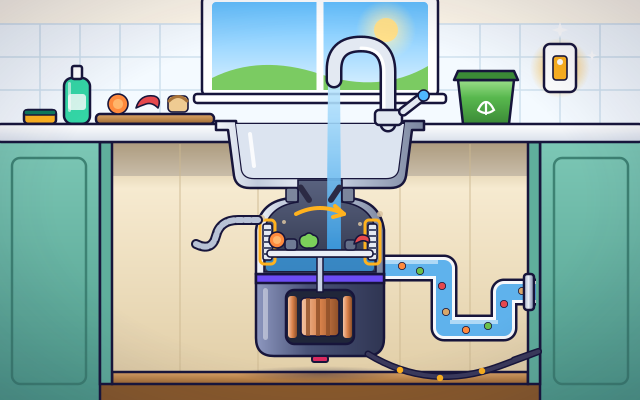
How does a kitchen garbage disposal work?
Observe impellers pushing suitable food scraps against a grinding ring beneath a sink.
#192
Home systems
How does a kitchen garbage disposal work?
Observe impellers pushing suitable food scraps against a grinding ring beneath a sink.
 #193
Home systems
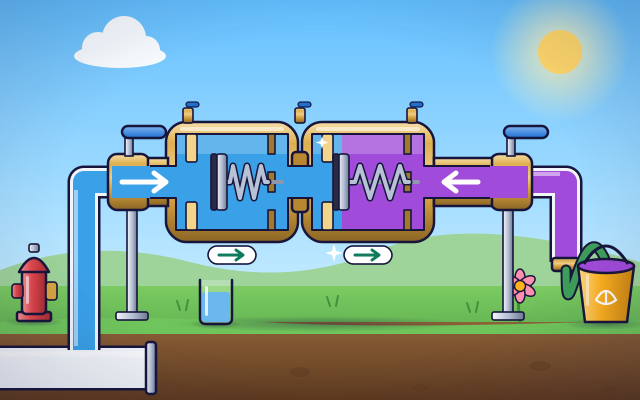
How do backflow preventers protect water supplies?
Change pipe pressures and watch valves prevent unwanted reverse flow.
#193
Home systems
How do backflow preventers protect water supplies?
Change pipe pressures and watch valves prevent unwanted reverse flow.
 #194
Home systems
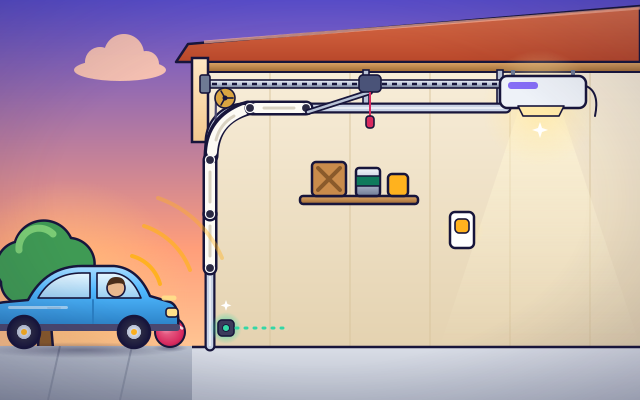
How does an automatic garage door open?
Explore the door's tracks, springs, cables, motor, and obstruction sensors.
#194
Home systems
How does an automatic garage door open?
Explore the door's tracks, springs, cables, motor, and obstruction sensors.
 #183
Home systems
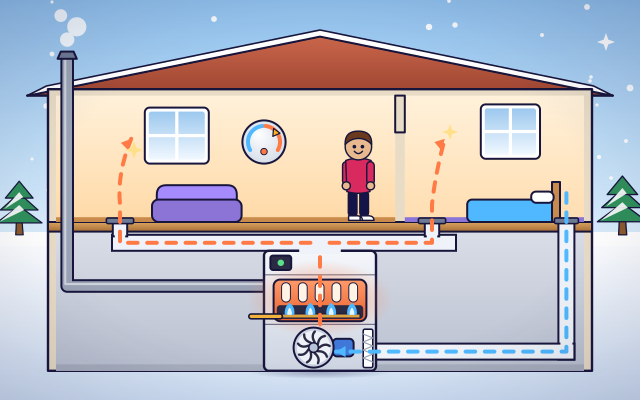
How does a furnace heat a home?
Follow air through heating, filtration, ducts, and vents while adjusting a thermostat.
#183
Home systems
How does a furnace heat a home?
Follow air through heating, filtration, ducts, and vents while adjusting a thermostat.
Keep exploring
Games to play next
- Machine RepairFix levers, pulleys, gears and ramps so every contraption works.
- Circuit Workshop 3DWire up batteries, bulbs and switches on a 3D workbench.
- Weather LabPredict the weather in a box, then run a fair test to find out why.
Guide for grown-ups
- How to start homeschooling: a step-by-step guide for familiesA guide for parents · 7 min read
Science games by grade
Science worksheets by grade
- Preschool Science Worksheets
- Pre-K Science Worksheets
- Kindergarten Science Worksheets
- 1st Grade Science Worksheets
- 2nd Grade Science Worksheets
- 3rd Grade Science Worksheets
- 4th Grade Science Worksheets
- 5th Grade Science Worksheets
- 6th Grade Science Worksheets
- 7th Grade Science Worksheets
- 8th Grade Science Worksheets