How does a dehumidifier remove moisture?
Watch invisible water in the air turn into drops on a cold coil and trickle into a bucket.
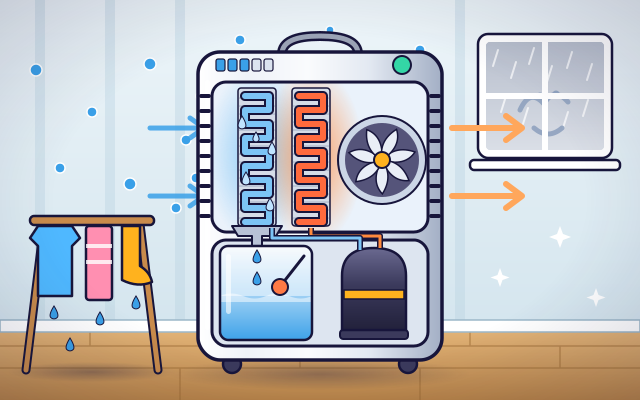
The big idea: Air holds invisible water called water vapor. When damp air touches a surface that is cold enough, the vapor turns back into liquid water. A dehumidifier does this on a cold coil and collects the drips.
It's like the outside of a cold drink glass, or a bathroom mirror after a shower: damp air touches something cold and leaves drops of water behind.
The interactive parts didn't load. The explanations below still work; try reloading the page.
Drying out a damp room
- On a rainy day, wet washing dries slowly and the window fogs up. The water has not vanished. It is floating in the air as an invisible gas called water vapor.
- You have seen the trick already. A cold glass gets wet on the outside. Water vapor in the air touches the cold glass, cools down and turns back into liquid drops.
- A dehumidifier uses the same trick on purpose. A fan pulls damp room air across a coil of pipe that is kept very cold, like the inside of a fridge.
- Vapor turns into drops all over the cold coil. The drops grow, run down the metal fins and drip into a tray that leads to the bucket.
- The air has lost its water, but now it is cold. So it passes a second coil, a warm one, and leaves the machine dry and slightly warmer than it went in.
- Little by little, the room air dries. The window clears, the washing dries, and the bucket fills with water that used to be floating in the air.
Look inside a dehumidifier
Tap each part. Follow the air across the cold coil and the warm coil, and the water down to the bucket.
- Air filter. Room air enters through the grille and a simple filter that keeps dust and fluff off the coils.
- Cold coil. This coil is kept just above freezing. Damp air touching it cools down, and its water vapor turns into drops on the metal.
- Warm coil. The dried, chilly air passes this warm coil next, so it leaves the machine cozy instead of cold.
- Fan. The fan pulls room air across both coils and blows it back into the room.
- Compressor. This pump squeezes a special liquid around a loop of pipe. That is what makes one coil cold and the other warm, just as in a fridge.
- Water bucket. All the drips collect here. When the bucket is full, someone slides it out and pours the water away.
- Float switch. A float rides on the water. When the bucket is nearly full it lifts a switch that turns the machine off, so the water never spills.
- Humidity control. A sensor measures how damp the air is. You choose a setting, and the machine switches itself off when the air is dry enough.
When do drops form?
Drag the snowflake knob to make the coil colder or warmer. Watch the water vapor in the air. When do drops form on the coil?
Experiment: Damp air blows across the coil. When do water drops form on it?
- Start with the coil warm. Do any drops form?
- Drag the knob down, a little at a time. Watch for the first drops.
- Keep going until the coil is icy. What happens to the drips now?
What we found: A warm coil stayed dry however much air blew past. Drops appeared only when the coil was cold enough, and a colder coil caught more. But below freezing the water turned to ice and blocked the air.
Turn on JavaScript to try it yourself.
Dry the damp room
Bring the damp room down to the green zone on the dial. Switch the machine on, keep the bucket emptied, and stop damp air from getting in.
Water you cannot see
When a puddle dries up, the water does not disappear. It evaporates: it turns into a gas called water vapor and mixes into the air. You cannot see water vapor, but it is all around you. Air that holds a lot of it feels damp and sticky.
Warm air can hold more water vapor than cold air. So if damp air is cooled, it reaches a point where it cannot hold all its water any longer. The extra vapor turns back into liquid. That is why a cold glass gets wet, why bathroom mirrors fog up and why grass is covered in dew on a cool morning.
A dehumidifier makes this happen on purpose. Inside is a pump that drives a special liquid around a loop of pipe, just as in a fridge. One part of the loop, the cold coil, gets very cold. A fan pulls room air across it, drops form on the metal, and the drops trickle into a bucket.
The air is now dry but chilly, so it flows across the warm part of the loop before it leaves. The cold-glass comparison stops here: a glass of juice slowly warms up, but the machine keeps its coil cold for as long as it runs. If the room is very cold, the drops can freeze on the coil, so the machine has to stop and let the ice melt.
Key words
- Water vapor
- Water in the form of an invisible gas, mixed into the air.
- Condensation
- Water vapor turning back into drops of liquid water.
- Humidity
- How much water vapor is in the air.
- Dew point
- How cold something must be before drops form on it.
- Compressor
- A pump that squeezes the refrigerant and drives it around the loop of pipes.
- Evaporator and condenser
- The cold coil, where the refrigerant takes in heat, and the warm coil, where it gives heat out.
Check your thinking
-
Where does the water in the bucket come from?
Show the answer
From water vapor in the room air. The vapor in the air turns back into liquid on the cold coil and drips into the bucket.
-
Why does the coil have to be cold?
Show the answer
Cold air cannot hold as much water vapor, so the vapor turns into drops. Cooling the air next to the coil squeezes the water vapor out as liquid.
-
The coil is warmer than the room. What happens?
Show the answer
No drops form. Drops only form on a surface that is cold enough. A warm coil stays dry.
-
Why does the air pass a warm coil before it leaves?
Show the answer
To warm the dried air up again. The cold coil chills the air, so the warm coil puts the heat back.
-
What goes wrong if the cold coil drops below 0 °C?
Show the answer
The water freezes on the coil and blocks the airflow. Ice builds up between the fins, so less and less air can pass. The machine has to defrost.
-
Why can a dehumidifier not dry a room with the window wide open on a rainy day?
Show the answer
Damp outdoor air keeps replacing the air it has dried. The machine removes water at a limited rate. If humid air flows in faster than that, the humidity cannot fall.
You're a Home systems expert!
You watched, looked inside, tried it, solved the challenge and went deeper. Pick another question below, or switch the age at the top to see this topic another way.
More about home systems
 #190
Home systems
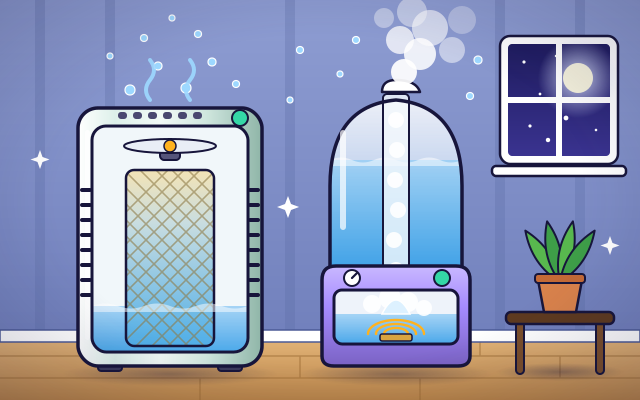
How does a humidifier add moisture?
Compare evaporative and ultrasonic designs and follow water into the surrounding air.
#190
Home systems
How does a humidifier add moisture?
Compare evaporative and ultrasonic designs and follow water into the surrounding air.
 #191
Home systems
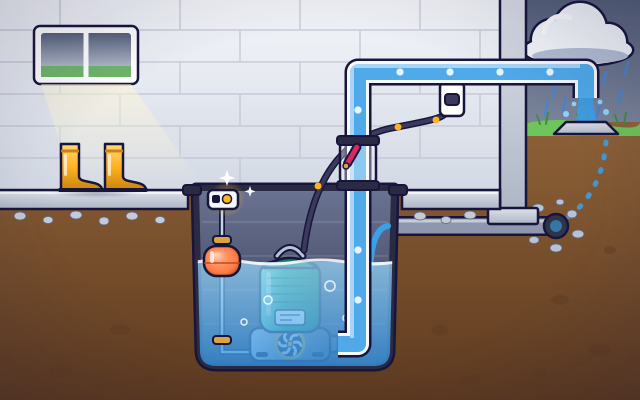
How does a sump pump keep a basement dry?
Raise water in a model sump and watch a float activate the pump.
#191
Home systems
How does a sump pump keep a basement dry?
Raise water in a model sump and watch a float activate the pump.
 #192
Home systems
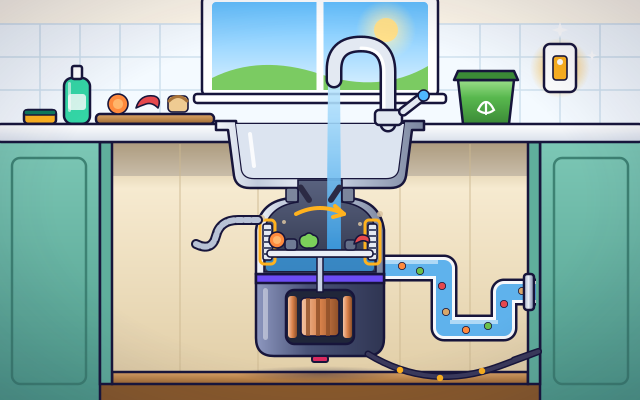
How does a kitchen garbage disposal work?
Observe impellers pushing suitable food scraps against a grinding ring beneath a sink.
#192
Home systems
How does a kitchen garbage disposal work?
Observe impellers pushing suitable food scraps against a grinding ring beneath a sink.
 #193
Home systems
How do backflow preventers protect water supplies?
Change pipe pressures and watch valves prevent unwanted reverse flow.
#193
Home systems
How do backflow preventers protect water supplies?
Change pipe pressures and watch valves prevent unwanted reverse flow.
Keep exploring
Games to play next
- Weather LabPredict the weather in a box, then run a fair test to find out why.
- Machine RepairFix levers, pulleys, gears and ramps so every contraption works.
- Circuit Workshop 3DWire up batteries, bulbs and switches on a 3D workbench.
Guide for grown-ups
- How to start homeschooling: a step-by-step guide for familiesA guide for parents · 7 min read
Science games by grade
Science worksheets by grade
- Preschool Science Worksheets
- Pre-K Science Worksheets
- Kindergarten Science Worksheets
- 1st Grade Science Worksheets
- 2nd Grade Science Worksheets
- 3rd Grade Science Worksheets
- 4th Grade Science Worksheets
- 5th Grade Science Worksheets
- 6th Grade Science Worksheets
- 7th Grade Science Worksheets
- 8th Grade Science Worksheets