How do buildings use emergency backup power?
When the city's power fails, a battery, a generator and one clever switch keep a building's most important things running.
The big idea: A battery takes over at once, a generator starts in a few seconds, and a switch moves only the most important things onto the generator.
It's like a relay race. When the first runner has to stop, the next runner is already waiting to grab the baton and keep it moving.
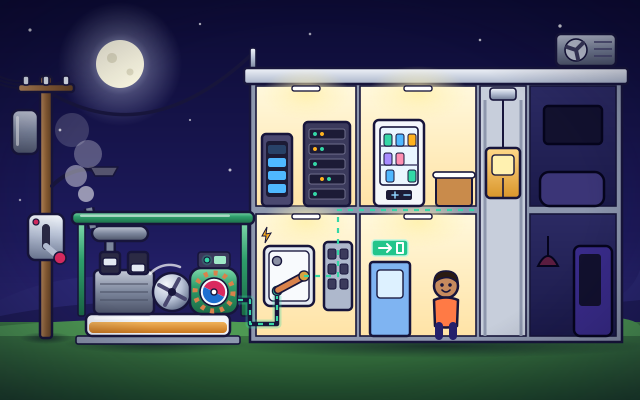
The interactive parts didn't load. The explanations below still work; try reloading the page.
From power cut to backup power
- On a normal evening, electricity arrives along wires from the city's power grid. It runs the lights, the lift, the medicine fridge, the computers, the TV and the snack machine.
- Far away, a branch falls on a power line and the grid goes dead. The lights go out and the lift stops. But look: the computers are still on. How?
- Next to the computers sits a big battery that is always charged. The instant the grid fails, the battery takes over, so the computers never even flicker. But a battery only lasts a little while.
- A small controller noticed the power was gone, and it tells the generator to start. An engine burns fuel and spins. The spinning turns a magnet inside coils of wire, and that makes electricity.
- Now the transfer switch flips over. It lets go of the dead city wires and grabs the generator instead. The lights, the fridge and the lift come back. The TV and the snack machine can wait.
- When the grid comes back and stays steady, the switch flips back to the city side. The generator runs a little longer to cool down, then stops. Everything is on again, and the battery tops itself up.
Look inside a backup power system
Tap each part. Watch what it does when the city's power stops.
- City power line. Most of the time, all the building's electricity comes along these wires from the city's power grid. The grey can on the pole is a transformer. It makes the power safe for buildings to use.
- Controller. The controller is like a guard that never sleeps. It checks the city's power many times every second. If the power stops, it tells the generator to start.
- Transfer switch. The transfer switch connects the important circuits to the city's wires or to the generator, but never to both at once. It flips over by itself when the generator is ready.
- Engine. The engine works like a truck engine that stays in one place. It burns fuel to push pistons up and down, and they turn a heavy wheel round and round.
- Alternator. The engine spins a magnet inside coils of copper wire. A moving magnet pushes electricity along a wire, so the fast spinning makes power for the building.
- Fuel tank. The tank under the generator holds its fuel. The more things the generator has to power, the faster the fuel goes down, so someone must check that the tank is full.
- Battery backup. This cabinet of batteries is always charged and always connected. When the grid fails, it powers the computers during the seconds the generator needs to start.
- Essential panel. Only the circuits in this panel get generator power: the emergency lights, the medicine fridge, the lift and the computers. Things people can do without for a while are wired to a different panel.
Cut the power and watch
Tap the switch on the pole to cut the city's power. Watch the order things happen in. Then take the battery away and try again.
Experiment: The generator needs about 10 seconds to start. What keeps the computers on during those seconds?
- Leave the battery in. Tap the switch on the pole and watch the computers.
- Wait for the generator, then bring the city's power back.
- Take the battery out and cut the power again. What is different?
What we found: A generator needs a few seconds to start, so for a moment nothing powers the lights. A battery has no engine to start: it takes over at once and keeps the computers on until the generator is ready. Without the battery, the computers go dark too.
Turn on JavaScript to try it yourself.
What gets backup power?
The generator can make 20 kilowatts, not enough for everything. Tap the things that must keep running to plug them into the generator. Then test with a power cut.
How backup power takes over
Most buildings get all their electricity from the power grid, a huge web of wires that joins power stations to towns. Usually it works so well that you never think about it. But a storm, a fallen tree or a repair can cut the power for minutes or hours.
For some buildings that is a real problem. A hospital, a fire station or a tall building with lifts cannot simply wait in the dark. So these buildings keep their own small power station ready: a generator. It has an engine that burns fuel and spins a magnet inside coils of wire, and that spinning makes electricity.
An engine cannot start in an instant. It needs several seconds to spin up to speed. A battery fills that gap. Batteries need no time to start, so they keep computers and other fussy machines running until the generator is ready. Then a transfer switch flips the important circuits from the city's wires to the generator.
A generator big enough for a whole building would be huge and would burn a lot of fuel. So engineers choose. Emergency lights, lifts, medicine fridges and alarms are essential and get backup power. Televisions and snack machines can wait. Our relay race picture fits well, with one difference: in a real relay only one baton is passed, but here the building decides which of its many batons are worth carrying.
Key words
- Power grid
- The network of power stations and wires that brings electricity to buildings.
- Generator
- A machine with an engine that makes electricity by spinning a magnet inside coils of wire.
- Transfer switch
- A switch that connects a building to city power or to its generator, never both.
- UPS
- Short for uninterruptible power supply: a battery that takes over instantly so the power never blinks.
- Essential load
- Something that must keep working in a power cut, such as emergency lights, lifts and medicine fridges.
- Kilowatt
- A measure of how much electricity something uses at one moment. A kettle uses about 2 kilowatts.
Check your thinking
-
What makes the electricity in a backup generator?
Show the answer
An engine spinning a magnet inside coils of wire. Burning fuel turns the engine, the engine spins a magnet, and a moving magnet pushes electricity along the wires.
-
A generator cannot power everything. Which of these should get backup power?
Show the answer
The medicine fridge. Medicine can spoil if it gets warm. A TV or a snack machine can simply wait.
-
Why does a building with a generator still need a battery for its computers?
Show the answer
The generator needs a few seconds to start, and the battery fills that gap. An engine has to spin up to speed. A battery can deliver power at once.
-
What does the transfer switch do?
Show the answer
It moves the important circuits from the city's wires to the generator. The switch chooses which source feeds the essential panel: the grid or the generator.
-
A generator rated 20 kilowatts feeds loads of 2, 1, 10 and 3 kilowatts. Someone adds a 15 kilowatt air conditioner. What happens?
Show the answer
The load becomes 31 kilowatts, more than the rating, so the generator's breaker trips. 2 + 1 + 10 + 3 + 15 = 31 kilowatts. A generator cannot safely supply more than its rating, so its breaker disconnects it.
-
The grid comes back. What happens next?
Show the answer
The switch flips back to city power and the generator cools down and stops. The system puts everything back and gets ready for next time. The battery recharges too.
You're a Buildings & city systems expert!
You watched, looked inside, tried it, solved the challenge and went deeper. Pick another question below, or switch the age at the top to see this topic another way.
More about buildings & city systems
 #372
Buildings & city systems
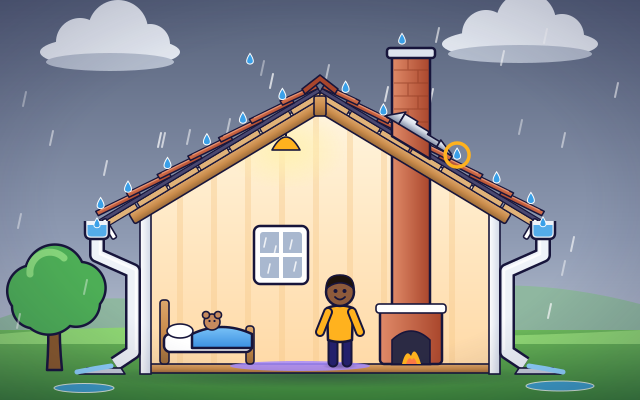
How do roofs keep rain out?
Layer materials, add flashing and drainage, and trace raindrops around joints.
#372
Buildings & city systems
How do roofs keep rain out?
Layer materials, add flashing and drainage, and trace raindrops around joints.
 #373
Buildings & city systems
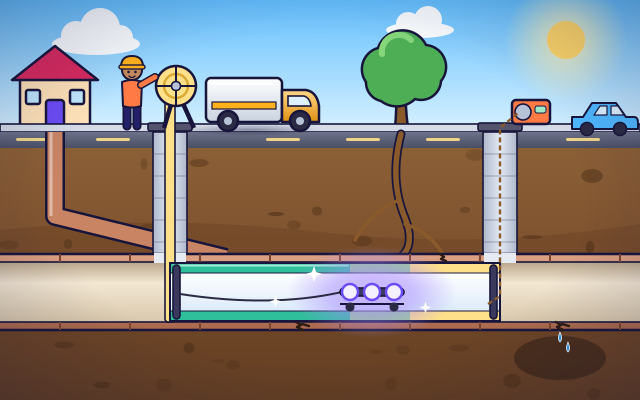
How can underground pipes be repaired without digging up a street?
Insert a virtual lining and watch a repaired passage form inside a damaged pipe.
#373
Buildings & city systems
How can underground pipes be repaired without digging up a street?
Insert a virtual lining and watch a repaired passage form inside a damaged pipe.
 #374
Buildings & city systems
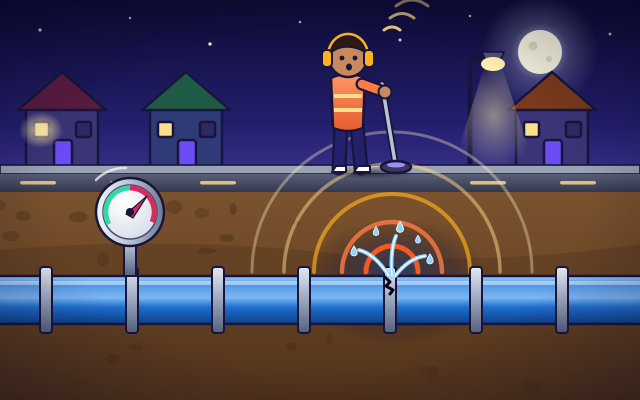
How do utilities find hidden water leaks?
Compare flow readings across a network and narrow down where water escapes.
#374
Buildings & city systems
How do utilities find hidden water leaks?
Compare flow readings across a network and narrow down where water escapes.
 #375
Buildings & city systems
How do airport passenger bridges connect to airplanes?
Adjust height, direction, and extension to meet different aircraft doors.
#375
Buildings & city systems
How do airport passenger bridges connect to airplanes?
Adjust height, direction, and extension to meet different aircraft doors.
Keep exploring
Games to play next
- Bridge LabBuild a bridge from beams, brace it with triangles, and stay on budget.
- Area ArchitectDesign rooms that hit the area and perimeter on the blueprint.
- Route PlannerFind the shortest way around town, dodge closed roads, and measure trips with a scale bar.
Guide for grown-ups
- How to start homeschooling: a step-by-step guide for familiesA guide for parents · 7 min read
Science games by grade
Science worksheets by grade
- Preschool Science Worksheets
- Pre-K Science Worksheets
- Kindergarten Science Worksheets
- 1st Grade Science Worksheets
- 2nd Grade Science Worksheets
- 3rd Grade Science Worksheets
- 4th Grade Science Worksheets
- 5th Grade Science Worksheets
- 6th Grade Science Worksheets
- 7th Grade Science Worksheets
- 8th Grade Science Worksheets