How can underground pipes be repaired without digging up a street?
Crews mend a cracked pipe from the inside: they slide in a soft liner, blow it up and harden it into a brand new pipe.
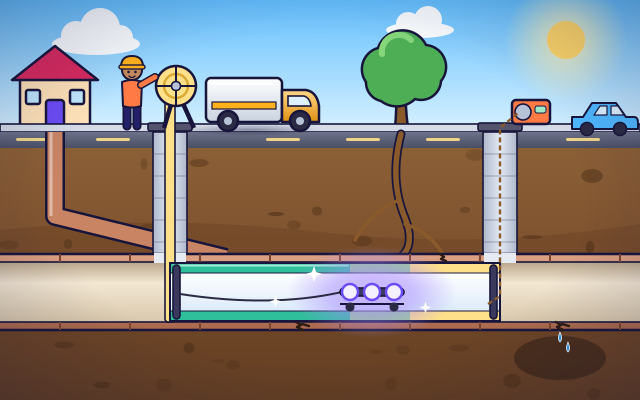
The big idea: Instead of digging the old pipe out, workers build a new pipe inside it. A soft liner soaked in glue is pressed against the old walls and hardened there.
It's like a plaster cast on a broken arm. It goes on soft and wet, takes the right shape, then sets hard and strong.
The interactive parts didn't load. The explanations below still work; try reloading the page.
A new pipe inside the old one
- Deep under this street runs a pipe that carries used water away from the houses. It is very old. It has cracks, and a tree root has pushed inside. Water is leaking into the ground.
- The old way to fix it is to dig a long trench, lift out the broken pipe and lay a new one. That closes the street for days, and it is noisy, muddy and expensive.
- There is a smarter way, and it starts at a manhole. A small robot with a camera and a light drives through the pipe. On a screen, the crew sees every crack. Then a water jet washes the pipe clean.
- Next comes the liner: a long, soft tube of fabric soaked in a special liquid glue called resin. A winch pulls it through the old pipe, from one manhole to the next. It lies flat and floppy.
- Air is pumped in, and the liner swells like a long balloon until it presses tightly against the old pipe. Then a train of bright lamps rolls through. The light makes the resin set hard, like glue drying.
- The air is let out, but the liner stays round, because now it is hard. A robot cuts a hole where the house's pipe joins. Water flows again with no leaks, and the street never closed.
The repair, step by step
Step through the repair and watch what happens inside the pipe each time.
- 1. Look inside. A camera robot drives through the pipe on little wheels. The crew watches its pictures on a screen and notes where the cracks, roots and side pipes are.
- 2. Wash it clean. A nozzle sprays powerful jets of water. They cut the tree root away and wash the grit out, so the liner can lie smoothly against the walls.
- 3. Pull the liner in. The liner is a soft fabric tube soaked in liquid resin. A winch at the far manhole pulls it through, like threading a lace through a tunnel.
- 4. Blow it up. The ends are closed and air is pumped in. The liner swells until it presses against the old pipe everywhere, covering every crack.
- 5. Make it hard. A row of very bright lamps is pulled slowly through the liner. Their light makes the resin set, turning the soft fabric into a hard shell. Hot water or steam can do the same job.
- 6. Cut the side pipe open. The liner has covered the place where the house's pipe joins. A robot with a spinning cutter drives to the right spot and cuts a neat round hole.
- 7. Let the water run. The air is out, and water runs through the smooth new pipe. It has no joints, so there is nowhere for water to leak out or roots to get in.
Line the pipe yourself
Pull the liner through, pump air in and switch on the curing light. Then let the air out. What happens if you let the air out too soon?
Experiment: The liner is in place and full of air, but it has not been hardened yet. What happens if you let the air out?
- Pull the liner all the way through and pump air in.
- Let the air out without using the light. Watch the liner.
- Pump the air in again, switch on the light, wait for it to finish, then let the air out.
What we found: Before the light, the liner is only wet fabric, so it flops as soon as the air stops holding it up. After the light, the resin has set hard and the liner keeps its round shape by itself. The air is only a helper: it holds the shape until the resin can.
Turn on JavaScript to try it yourself.
Run the repair crew
You are in charge. Tap the six jobs in the right order to mend the pipe. Each job only works when the pipe is ready for it.
Mending pipes without digging
Under every town lies a hidden web of pipes. Some bring clean water, and others, called sewers, carry used water away. Many of them are older than your grandparents. Over the years the ground shifts, heavy trucks rumble overhead and tree roots search for water. Pipes crack.
Digging a pipe up is a huge job. The street has to close, the hole is deep, and other pipes and cables are in the way. So engineers found a way to mend a pipe from the inside, working through the manholes that are already there.
First a camera robot looks inside, and a water jet washes the pipe. Then the crew pulls in a liner, a soft fabric tube soaked in liquid resin. Air blows it up until it presses on the old pipe, and bright lamps or hot steam make the resin set hard. It is a little like a plaster cast: soft at first, then strong once it has set.
When the air is let out, a smooth new pipe is left inside the old one, with no joints for roots to get through. A robot cuts open the places where house pipes join. A plaster cast comes off when the arm has healed, though. The liner never comes out: it is the new pipe.
Key words
- Sewer
- An underground pipe that carries used water away from buildings.
- Manhole
- A covered shaft in the street that lets workers and tools reach the pipes below.
- Liner
- A soft fabric tube, soaked in resin, that becomes the new pipe.
- Resin
- A liquid glue that sets into a hard plastic.
- Curing
- Making the resin set hard, using light or heat.
- Trenchless
- Done without digging a long trench along the pipe.
Check your thinking
-
How do workers reach the pipe without digging up the street?
Show the answer
Through the manholes that are already there. Manholes give access to both ends of the pipe, so everything can go in from there.
-
Why is air pumped into the liner?
Show the answer
To press it against the old pipe and hold its shape until it is hard. The soft liner cannot hold itself up. Air presses it into place until the resin sets.
-
What would happen if the air were let out before the light was used?
Show the answer
The soft liner would flop down inside the pipe. Until the resin sets, the liner is only wet fabric. It needs the air to hold it up.
-
Why must the pipe be washed before the liner goes in?
Show the answer
So the liner can lie smoothly against the walls. Roots and grit left inside would make lumps and wrinkles in the new pipe.
-
A liner 30 meters long is cured by lamps moving at 0.6 meters a minute. How long does the cure take?
Show the answer
50 minutes. Time is distance divided by speed: 30 divided by 0.6 is 50 minutes.
-
After lining, why does a robot cut a hole in the new pipe?
Show the answer
To reopen the place where a house's pipe joins. The liner covers every side opening. Each one has to be cut open again from the inside.
You're a Buildings & city systems expert!
You watched, looked inside, tried it, solved the challenge and went deeper. Pick another question below, or switch the age at the top to see this topic another way.
More about buildings & city systems
 #374
Buildings & city systems
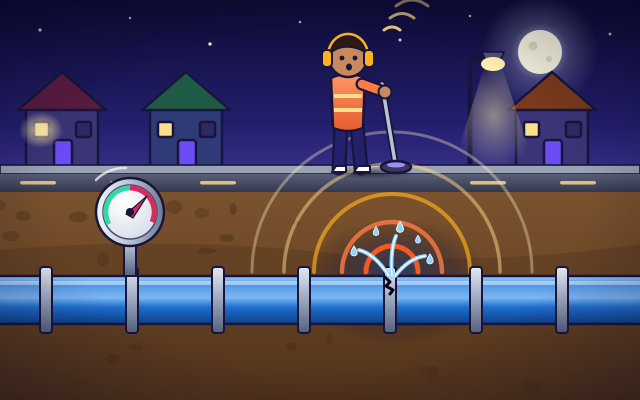
How do utilities find hidden water leaks?
Compare flow readings across a network and narrow down where water escapes.
#374
Buildings & city systems
How do utilities find hidden water leaks?
Compare flow readings across a network and narrow down where water escapes.
 #375
Buildings & city systems
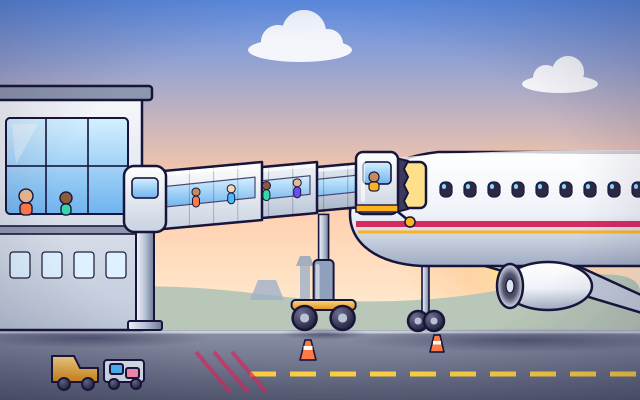
How do airport passenger bridges connect to airplanes?
Adjust height, direction, and extension to meet different aircraft doors.
#375
Buildings & city systems
How do airport passenger bridges connect to airplanes?
Adjust height, direction, and extension to meet different aircraft doors.
 #59
Buildings & city systems
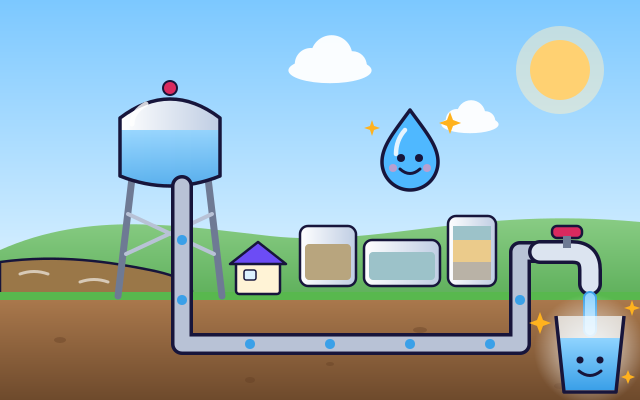
How does clean water reach our taps?
Follow water through treatment, storage, and underground pipes. Explore the removal of visible and microscopic contaminants, then connect a neighborhood's water supply.
#59
Buildings & city systems
How does clean water reach our taps?
Follow water through treatment, storage, and underground pipes. Explore the removal of visible and microscopic contaminants, then connect a neighborhood's water supply.
 #60
Buildings & city systems
How do elevators work?
Add passengers and watch the motor, cables, elevator car, and counterweight move together. Deliver people to different floors in a transparent building.
#60
Buildings & city systems
How do elevators work?
Add passengers and watch the motor, cables, elevator car, and counterweight move together. Deliver people to different floors in a transparent building.
Keep exploring
Games to play next
- Bridge LabBuild a bridge from beams, brace it with triangles, and stay on budget.
- Area ArchitectDesign rooms that hit the area and perimeter on the blueprint.
- Route PlannerFind the shortest way around town, dodge closed roads, and measure trips with a scale bar.
Guide for grown-ups
- How to start homeschooling: a step-by-step guide for familiesA guide for parents · 7 min read
Science games by grade
Science worksheets by grade
- Preschool Science Worksheets
- Pre-K Science Worksheets
- Kindergarten Science Worksheets
- 1st Grade Science Worksheets
- 2nd Grade Science Worksheets
- 3rd Grade Science Worksheets
- 4th Grade Science Worksheets
- 5th Grade Science Worksheets
- 6th Grade Science Worksheets
- 7th Grade Science Worksheets
- 8th Grade Science Worksheets