How does clean water reach our taps?
See how a treatment plant cleans river water and how pipes carry it to every home.
The big idea: A water treatment plant cleans water step by step, from big leaves down to tiny germs. Then a water tower and underground pipes deliver it to homes.
It's like
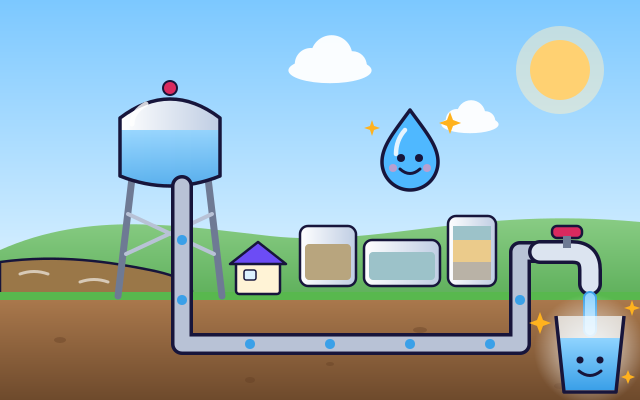
The interactive parts didn't load. The explanations below still work; try reloading the page.
From river to tap
- Rain runs off the hills into rivers and lakes. That water carries mud, leaves and germs, so a treatment plant cleans it before anyone drinks it.
- At the intake, river water flows through screens made of metal bars and mesh. They catch leaves, sticks and trash, and help keep fish out.
- Next, a chemical called a coagulant is mixed in. It makes tiny bits of mud stick together into bigger, fluffy clumps called floc.
- In a big, calm settling tank, the heavy floc slowly sinks to the bottom as sludge. Most of the mud is gone now.
- Then the water trickles down through layers of sand and gravel. The tiny bits that are left get stuck between the grains.
- Water can look clear and still have germs too small to see. A small amount of chlorine, or ultraviolet light, kills them.
- Pumps push the clean water into a storage tank and up into a tall water tower. It waits there until people need it.
- Gravity pushes water from the tower through big pipes under the street, then smaller pipes into each home. Turn the tap, and out it comes!
Inside a water treatment plant
Follow the water from the river to your tap. Tap each part to see it work.
- Intake and screen. A pipe draws water from the river. Metal bars and mesh screens catch leaves, sticks and trash.
- Mixing tank. A coagulant chemical is added and stirred in. Tiny bits of dirt clump together into fluffy floc.
- Settling tank. Water moves slowly here, so the heavy floc sinks. The muddy sludge on the bottom is scraped away.
- Sand filter. Layers of sand and gravel trap the tiny particles that did not sink.
- Disinfection tank. Chlorine (or ultraviolet light) kills germs too small to see. The water stays in this tank long enough for it to work.
- Storage tank and pump. Clean water is stored in a covered tank. A pump pushes it up into the water tower.
- Water tower. The tower holds water high above the town. Gravity pushes it down and out through the pipes.
- Pipes under the street. Big pipes called water mains run under the streets. Smaller pipes branch off to each building.
- Your tap. Inside your home, pipes lead to every tap. Opening a tap lets the pushed-on water rush out.
Water lab: from muddy to safe
Turn the treatment steps on one at a time. Watch the glass and the microscope. Does clear water always mean safe water?
Experiment: If the water looks clear after filtering, is it safe to drink?
- Turn on the screen, Clump and settle, and the sand filter.
- Look at the glass and at the microscope view.
- Now turn on Disinfect and look again.
What we found: Settling and filtering made the water look clear, but the microscope still found germs. Only disinfection made it safe. Clear water is not always clean water!
Turn on JavaScript to try it yourself.
Connect the neighborhood
Turn the pipes to connect the water tower to every house with no leaks. Pick a tower tall enough for the house on the hill.
Cleaning water step by step
River and lake water can look fine, but it carries mud, leaves, tiny living things and germs. A water treatment plant cleans it in steps, starting with the biggest things and finishing with the smallest.
Screens catch leaves and sticks. Then a chemical called a coagulant makes tiny bits of mud stick together into clumps called floc. The clumps are heavy, so they sink in a calm settling tank. Sand and gravel filters catch the little bits that are left.
Even when water looks perfectly clear, it can still hold germs that are far too small to see. That's why plants add a small, safe amount of chlorine, or shine ultraviolet light through the water. A tiny bit of chlorine stays in the water to keep it clean in the pipes.
Finally, pumps push the clean water into storage tanks and water towers. Because the tower is high up, gravity pushes the water through pipes under the streets, so it rushes out as soon as you open your tap.
Key words
- Turbidity
- How cloudy water is, because of tiny bits floating in it.
- Coagulant
- A chemical that makes tiny bits of dirt stick together.
- Floc
- Fluffy clumps of particles that are heavy enough to sink.
- Disinfection
- Killing germs in water, often with chlorine or ultraviolet light.
- Chlorine residual
- The small amount of chlorine left in treated water to keep protecting it in the pipes.
- Water main
- A large pipe under the street that carries water to smaller pipes for each building.
Check your thinking
-
Which step removes leaves and sticks?
Show the answer
Screening. Screens at the intake work like a giant strainer.
-
Why do plants add chlorine even after the water looks clear?
Show the answer
Germs too small to see can still be there. Germs are microscopic, so water can look clear and still not be safe.
-
What helps tiny bits of mud sink faster?
Show the answer
Clumping them together into floc. Big, heavy clumps sink much faster than tiny separate bits.
-
Why are water towers built so high?
Show the answer
Height lets gravity push water through the pipes. The higher the water, the harder gravity pushes it through the pipes.
-
Why do water utilities keep a small chlorine residual in the pipes?
Show the answer
To keep protecting the water on its way to taps. Germs could get in through a leak or grow in the pipes; a residual keeps inactivating them all the way to your tap.
You're a Buildings & city systems expert!
You watched, looked inside, tried it, solved the challenge and went deeper. Pick another question below, or switch the age at the top to see this topic another way.
More about buildings & city systems
 #60
Buildings & city systems
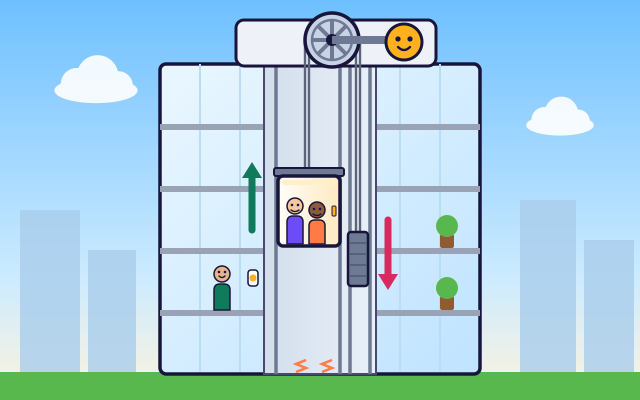
How do elevators work?
Add passengers and watch the motor, cables, elevator car, and counterweight move together. Deliver people to different floors in a transparent building.
#60
Buildings & city systems
How do elevators work?
Add passengers and watch the motor, cables, elevator car, and counterweight move together. Deliver people to different floors in a transparent building.
 #61
Buildings & city systems
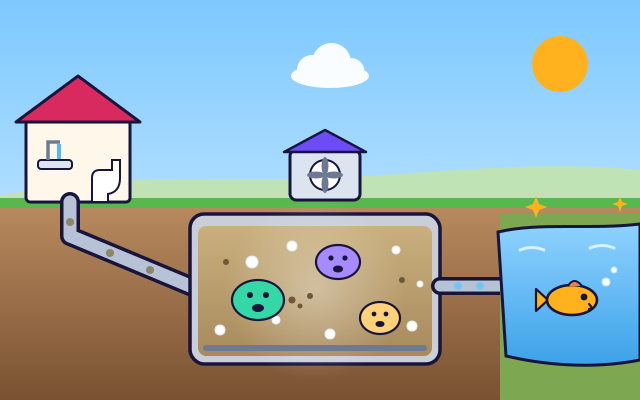
What happens to water after it goes down the drain?
Follow wastewater through sewers, screens, settling tanks, and biological treatment. Operate a model treatment plant and investigate each stage's purpose.
#61
Buildings & city systems
What happens to water after it goes down the drain?
Follow wastewater through sewers, screens, settling tanks, and biological treatment. Operate a model treatment plant and investigate each stage's purpose.
 #62
Buildings & city systems
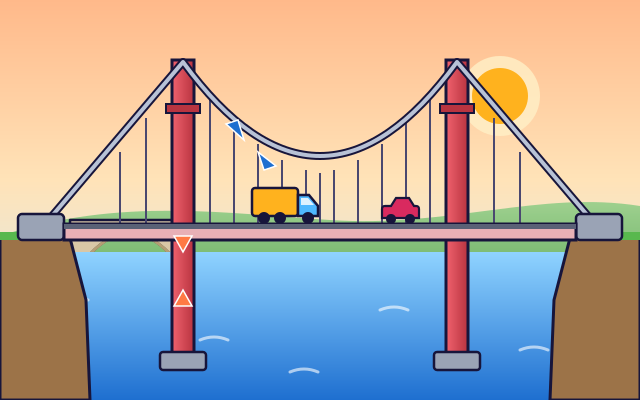
How do bridges hold so much weight?
Compare beam, arch, and suspension bridges. Add virtual traffic, watch simplified force arrows, and strengthen a bridge by changing its supports.
#62
Buildings & city systems
How do bridges hold so much weight?
Compare beam, arch, and suspension bridges. Add virtual traffic, watch simplified force arrows, and strengthen a bridge by changing its supports.
 #63
Buildings & city systems
How do skyscrapers stay standing?
Explore foundations, columns, bracing, and structural cores. Build a model tower and compare how different designs respond to weight and wind.
#63
Buildings & city systems
How do skyscrapers stay standing?
Explore foundations, columns, bracing, and structural cores. Build a model tower and compare how different designs respond to weight and wind.
Keep exploring
Games to play next
- River MysterySomething changed the river. Sample sites with a limited budget, follow the evidence and find where the change begins.
- Bridge LabBuild a bridge from beams, brace it with triangles, and stay on budget.
- Area ArchitectDesign rooms that hit the area and perimeter on the blueprint.
Guide for grown-ups
- How to start homeschooling: a step-by-step guide for familiesA guide for parents · 7 min read
Science games by grade
Science worksheets by grade
- Preschool Science Worksheets
- Pre-K Science Worksheets
- Kindergarten Science Worksheets
- 1st Grade Science Worksheets
- 2nd Grade Science Worksheets
- 3rd Grade Science Worksheets
- 4th Grade Science Worksheets
- 5th Grade Science Worksheets
- 6th Grade Science Worksheets
- 7th Grade Science Worksheets
- 8th Grade Science Worksheets