How do elevators work?
A motor, steel ropes and a heavy counterweight lift people safely to every floor.
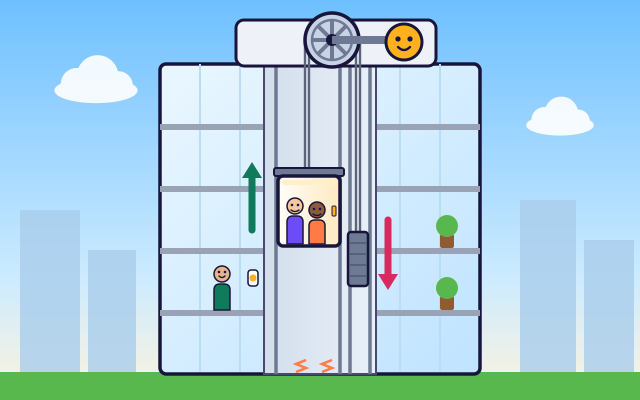
The big idea: An elevator car hangs from steel ropes that loop over a wheel turned by a motor. A heavy counterweight on the other end balances the car, so the motor only has to do a little work.
It's like
The interactive parts didn't load. The explanations below still work; try reloading the page.
Inside an elevator shaft
- You press the call button. A computer called the controller gets the message and sends the elevator car to your floor.
- Behind the walls is a tall shaft. The car hangs from several steel ropes that go up to a big wheel at the top.
- The other ends of the ropes hold a heavy counterweight. When the car goes up, the counterweight goes down, like two kids on a seesaw.
- An electric motor turns the wheel. Its grooves grip the ropes, so as the wheel turns, the ropes move and the car rises. The counterweight helps with the lifting.
- Elevators have lots of safety parts. If the car ever moved too fast, a speed checker would set off brakes that grip the rails. Springs at the bottom are a soft cushion.
- Sensors tell the controller where the car is, so it slows down and stops level with the floor. The doors open, and in you go!
Inside the elevator shaft
This building is see-through! Tap each part of the elevator to watch it work.
- Motor. An electric motor at the top turns the drive wheel. A brake holds the wheel still whenever the car stops.
- Drive wheel (sheave). The ropes sit in grooves around this wheel. When it turns, it pulls the ropes along by friction.
- Steel ropes. Several steel ropes, each made of many twisted wires, hold the car. Together they are many times stronger than they need to be.
- Elevator car. The car is the little room you ride in. It has buttons, lights and a sensor that weighs the load.
- Counterweight. A stack of heavy metal blocks on the other end of the ropes. It balances the car, so the motor works less.
- Guide rails. Steel rails run up the shaft. Rollers on the car and counterweight follow them, so nothing swings.
- Speed governor. A loop of rope turns this wheel as the car moves. If the car went too fast, it would set off the safety brakes.
- Buffers. Springs or oil-filled pistons in the pit would cushion the car or counterweight if it ever went too low.
- Doors. The car doors and the floor doors open together. Locks keep floor doors shut unless the car is right there.
- Buttons and controller. Buttons send calls to the controller, a computer that decides where the car goes next.
Car versus counterweight
Add riders, send the car to different floors and watch how hard the motor works. Then take the counterweight off. What changes?
Experiment: What happens to the motor's job if you take the counterweight away?
- Add a few riders and send the car to the top floor.
- Watch the motor effort meter and the balance.
- Turn off the counterweight and send the car again.
What we found: With the counterweight, the car and the weight nearly balance, so the motor only lifts the small difference. Without it, the motor has to lift the whole car and everyone inside!
Turn on JavaScript to try it yourself.
Elevator operator
Deliver all 7 riders to their floors. The car holds 4 people at a time. Tap floors to plan your stops.
The secret of the counterweight
Most tall buildings use traction elevators. The car hangs from steel ropes that loop over a grooved wheel at the top of the shaft. The other ends of the ropes hold a counterweight. An electric motor turns the wheel, and the grooves grip the ropes, so the car moves up or down.
The counterweight is the clever part. It weighs about as much as the car plus half a full load of people. Because the car and the counterweight balance each other like a seesaw, the motor only has to lift the difference. That saves a lot of energy.
Elevators are among the safest ways to travel. Several ropes share the load, and together they are many times stronger than they need to be. A speed governor checks how fast the car moves, and if it ever went too fast, safety brakes would grip the rails. Doors open only when the car is at the floor.
A computer called the controller decides where the car goes. Usually it keeps going in one direction while anyone needs to go that way, then turns around. Short buildings sometimes use hydraulic elevators instead, which push the car up with a piston.
Key words
- Counterweight
- A heavy weight on the other end of the ropes that balances the car.
- Sheave
- The grooved wheel that the motor turns to move the ropes.
- Traction
- The grip between the ropes and the grooved wheel.
- Speed governor
- A device that senses if the car goes too fast and sets off the safety brakes.
- Rated load
- The heaviest load an elevator is designed to carry, such as 630 kg or 8 people.
Check your thinking
-
What does the counterweight do?
Show the answer
Balances the car so the motor works less. The counterweight balances the car, so the motor only lifts the difference.
-
What lets the wheel move the ropes?
Show the answer
Friction in the grooves of the wheel. The grooves grip the ropes, so they move when the wheel turns.
-
What would stop a car that moves too fast?
Show the answer
A speed governor sets off brakes on the rails. The governor senses the speed and makes the safety brakes grip the rails.
-
With 315 kg of imbalance at 1.6 m/s, about how much power must the motor supply (ignoring losses)?
Show the answer
About 5 kW. P = F × v = 315 × 9.81 × 1.6 ≈ 4,900 W, which is about 5 kW.
-
Why do elevators usually finish going one way before turning around?
Show the answer
It saves time and energy for everyone. Stopping on the way and then turning around means fewer back-and-forth trips.
You're a Buildings & city systems expert!
You watched, looked inside, tried it, solved the challenge and went deeper. Pick another question below, or switch the age at the top to see this topic another way.
More about buildings & city systems
 #61
Buildings & city systems
What happens to water after it goes down the drain?
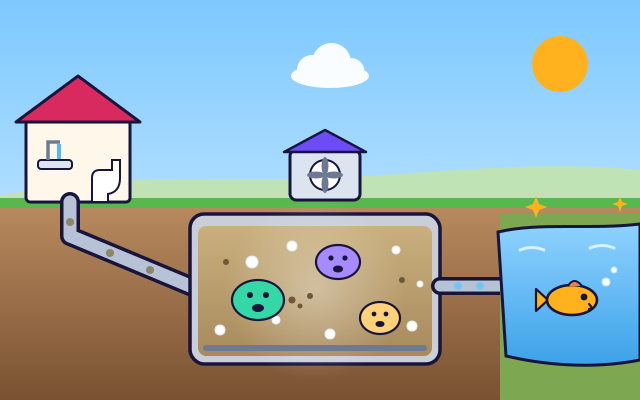
Follow wastewater through sewers, screens, settling tanks, and biological treatment. Operate a model treatment plant and investigate each stage's purpose.
#61
Buildings & city systems
What happens to water after it goes down the drain?
Follow wastewater through sewers, screens, settling tanks, and biological treatment. Operate a model treatment plant and investigate each stage's purpose.
 #62
Buildings & city systems
How do bridges hold so much weight?
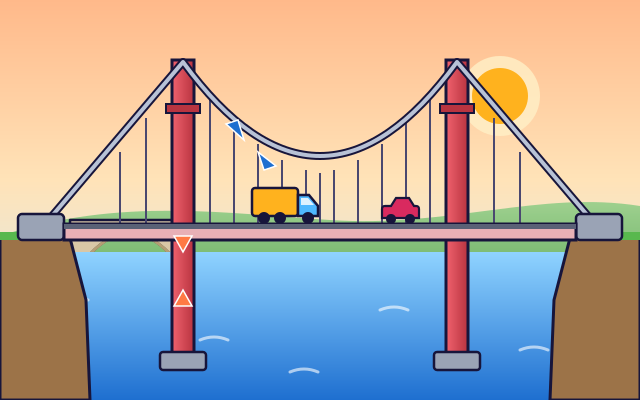
Compare beam, arch, and suspension bridges. Add virtual traffic, watch simplified force arrows, and strengthen a bridge by changing its supports.
#62
Buildings & city systems
How do bridges hold so much weight?
Compare beam, arch, and suspension bridges. Add virtual traffic, watch simplified force arrows, and strengthen a bridge by changing its supports.
 #63
Buildings & city systems
How do skyscrapers stay standing?
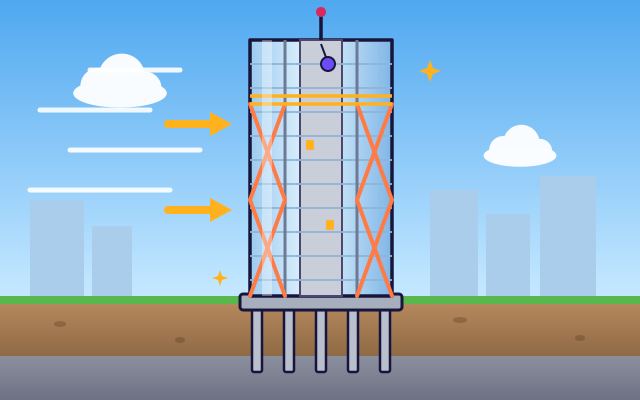
Explore foundations, columns, bracing, and structural cores. Build a model tower and compare how different designs respond to weight and wind.
#63
Buildings & city systems
How do skyscrapers stay standing?
Explore foundations, columns, bracing, and structural cores. Build a model tower and compare how different designs respond to weight and wind.
 #64
Buildings & city systems
How do traffic lights manage busy roads?
Program signals at an intersection and include pedestrian crossings. Compare how different timings affect queues and help everyone move through safely.
#64
Buildings & city systems
How do traffic lights manage busy roads?
Program signals at an intersection and include pedestrian crossings. Compare how different timings affect queues and help everyone move through safely.
Keep exploring
Games to play next
- Area ArchitectDesign rooms that hit the area and perimeter on the blueprint.
- Bridge LabBuild a bridge from beams, brace it with triangles, and stay on budget.
- Route PlannerFind the shortest way around town, dodge closed roads, and measure trips with a scale bar.
Guide for grown-ups
- How to start homeschooling: a step-by-step guide for familiesA guide for parents · 7 min read
Science games by grade
Science worksheets by grade
- Preschool Science Worksheets
- Pre-K Science Worksheets
- Kindergarten Science Worksheets
- 1st Grade Science Worksheets
- 2nd Grade Science Worksheets
- 3rd Grade Science Worksheets
- 4th Grade Science Worksheets
- 5th Grade Science Worksheets
- 6th Grade Science Worksheets
- 7th Grade Science Worksheets
- 8th Grade Science Worksheets