How do skyscrapers stay standing?
Foundations, columns, bracing and cores keep skyscrapers standing against their weight and the wind.
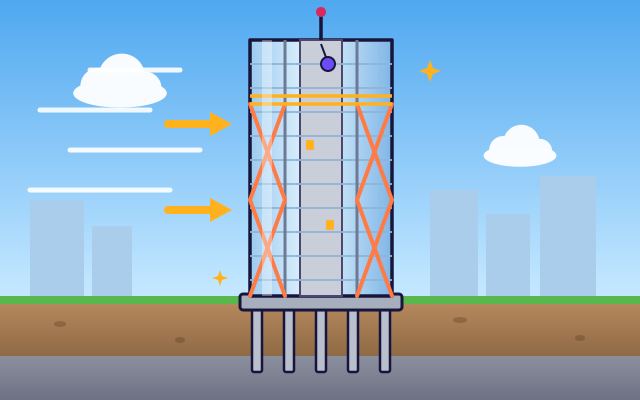
The big idea: A skyscraper's weight flows down through columns into deep foundations. To stand up to the wind, it uses diagonal braces and a strong concrete core that stop it from swaying too much.
It's like
The interactive parts didn't load. The explanations below still work; try reloading the page.
How skyscrapers stand tall
- A skyscraper has two big jobs: hold up its enormous weight, and stand up to the wind pushing on its side.
- First, builders dig deep. Long piles reach down to hard rock, and a thick concrete slab spreads the weight so the tower won't sink.
- Steel and concrete columns carry the weight of every floor down to the foundation. They are squeezed: that's compression.
- Wind pushes on the side of the tower. A frame of only columns and beams can lean over, like a stack of rectangles being pushed.
- Diagonal braces make triangles, and triangles can't squash out of shape. A concrete core in the middle stiffens the whole tower like a backbone.
- Even strong towers sway a little in a storm. Some have a giant heavy weight near the top that swings the other way and calms the motion.
Inside a skyscraper
Tap each part, from the deep foundation to the top, to see how it helps.
- Piles. Long concrete or steel piles reach down through soft soil to hard rock.
- Foundation slab. A thick concrete slab, called a raft or mat, ties the piles together and spreads the weight.
- Columns. Columns carry the weight of the floors down to the foundation. The ones at the bottom carry the most.
- Floors and beams. Beams and concrete slabs make each floor. They pass the weight of people and furniture to the columns.
- Concrete core. A thick concrete tube runs up the middle. Elevators and stairs are inside, and it keeps the tower from bending in the wind.
- Diagonal braces. Diagonal braces make triangles. Triangles don't change shape, so the frame can't lean over.
- Outrigger. An extra-strong floor ties the core to the outer columns, so they all work together against the wind.
- Tuned mass damper. A huge weight near the top swings the opposite way when the tower sways, so the building moves less.
- Glass walls. The glass walls, called the curtain wall, hang on the frame. They keep out wind and rain, but they don't hold the building up.
Wind and weight test lab
Set the height and the wind. Try braces, a core and a deep foundation. Which design sways the least, and which foundation stops the tower from sinking?
Experiment: In a strong wind, which tower sways the least?
- Set a strong wind and a tall tower.
- Look at the sway with no braces and no core.
- Turn on the braces, then the core, and compare.
What we found: The bare frame leaned a lot, because rectangles can be pushed out of shape. Braces make triangles, and a core acts like a backbone, so the tower with both swayed the least.
Turn on JavaScript to try it yourself.
Design a storm-proof tower
Build at least 25 floors that pass the weight test and the storm test. You have 12 coins for braces, a core and piles.
Weight and wind
A skyscraper has to do two things at once. It must hold up its own huge weight, plus everyone and everything inside, and it must stand up to the wind pushing on its side.
The weight flows down through floors and beams into columns, then into the foundation. The columns are squeezed, so they are made of strong steel or concrete. On soft ground, long piles carry the weight down to hard rock so the building doesn't sink or tilt.
Wind is the bigger challenge for very tall buildings, because it blows harder higher up and the building acts like a giant lever. Diagonal braces make triangles that can't be pushed out of shape, and a concrete core in the middle works like a strong backbone.
Even the strongest skyscrapers sway a little in a storm, and that's normal. Engineers keep the sway small so people inside stay comfortable. Some towers have a giant weight near the top that swings against the sway to calm it.
Key words
- Foundation
- The part of a building below ground that spreads its weight into the soil or rock.
- Pile
- A long column driven or drilled deep into the ground to reach firm soil or rock.
- Column
- An upright post that carries weight down in compression.
- Bracing
- Diagonal members that form triangles so a frame can't lean out of shape.
- Core
- A stiff concrete tube in the middle of a tower, around the elevators and stairs.
- Drift
- How far the top of a tower sways sideways in the wind.
Check your thinking
-
What does a pile foundation do?
Show the answer
Carries the weight down to strong rock. Piles pass the weight through soft soil to firm rock below.
-
Why do diagonal braces stop a frame from leaning?
Show the answer
They make triangles, which can't change shape. A rectangle can squash into a slanted shape, but a triangle can't.
-
What is inside a skyscraper's concrete core?
Show the answer
Elevators and stairs. The strong concrete tube surrounds the elevators and stairs.
-
A 140 m tower has a drift limit of H/400. What is the largest allowed sway at the top?
Show the answer
35 cm. 140 m ÷ 400 = 0.35 m, which is 35 cm.
-
What does a tuned mass damper do?
Show the answer
Swings against the sway to calm it. The heavy weight moves the opposite way, so the building sways less.
You're a Buildings & city systems expert!
You watched, looked inside, tried it, solved the challenge and went deeper. Pick another question below, or switch the age at the top to see this topic another way.
More about buildings & city systems
 #64
Buildings & city systems
How do traffic lights manage busy roads?
Program signals at an intersection and include pedestrian crossings. Compare how different timings affect queues and help everyone move through safely.
#64
Buildings & city systems
How do traffic lights manage busy roads?
Program signals at an intersection and include pedestrian crossings. Compare how different timings affect queues and help everyone move through safely.
 #65
Buildings & city systems
How does a recycling center sort materials?
Send materials along a conveyor and explore magnets, screens, and sorting equipment. Follow selected paper, metal, and plastic items into processing.
#65
Buildings & city systems
How does a recycling center sort materials?
Send materials along a conveyor and explore magnets, screens, and sorting equipment. Follow selected paper, metal, and plastic items into processing.
 #66
Buildings & city systems
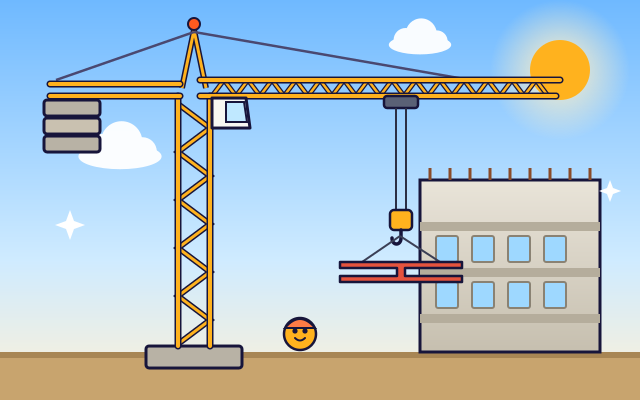
How do construction cranes lift heavy things?
Explore the boom, cables, pulleys, and counterweights. Move virtual loads while investigating how their position affects the crane's balance.
#66
Buildings & city systems
How do construction cranes lift heavy things?
Explore the boom, cables, pulleys, and counterweights. Move virtual loads while investigating how their position affects the crane's balance.
 #67
Buildings & city systems
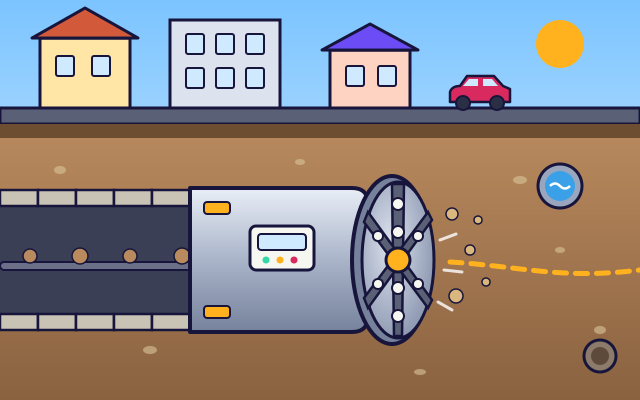
How are tunnels built underground?
Look inside a tunnel-boring machine and follow excavation, soil removal, and tunnel lining. Guide construction around underground obstacles in a model city.
#67
Buildings & city systems
How are tunnels built underground?
Look inside a tunnel-boring machine and follow excavation, soil removal, and tunnel lining. Guide construction around underground obstacles in a model city.
Keep exploring
Games to play next
- Bridge LabBuild a bridge from beams, brace it with triangles, and stay on budget.
- Geometry Architect 3DCount, build and fold solids like a real architect.
- Area ArchitectDesign rooms that hit the area and perimeter on the blueprint.
Guide for grown-ups
- How to start homeschooling: a step-by-step guide for familiesA guide for parents · 7 min read
Science games by grade
Science worksheets by grade
- Preschool Science Worksheets
- Pre-K Science Worksheets
- Kindergarten Science Worksheets
- 1st Grade Science Worksheets
- 2nd Grade Science Worksheets
- 3rd Grade Science Worksheets
- 4th Grade Science Worksheets
- 5th Grade Science Worksheets
- 6th Grade Science Worksheets
- 7th Grade Science Worksheets
- 8th Grade Science Worksheets