What happens to water after it goes down the drain?
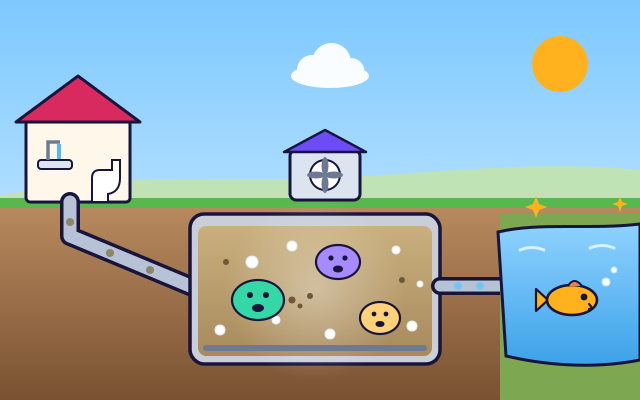
Follow used water through sewers, screens, settling tanks and a tank full of hungry microbes.
The big idea: Wastewater flows through sewer pipes to a treatment plant. Screens and settling tanks remove the solid stuff, helpful microbes eat the dirt you can't see, and the clean water goes back to the river.
It's like
The interactive parts didn't load. The explanations below still work; try reloading the page.
The journey of used water
- Every time you wash your hands, take a bath or flush, the used water, called wastewater, goes down the drain into pipes under your home.
- Sewer pipes under the street slope gently downhill, so gravity carries the wastewater along. Where the land rises, pumps lift it up.
- At the plant, screens catch rags, wipes and plastic. Then the water slows down in a grit tank, where sand and gravel sink to the bottom.
- In big, calm settling tanks, heavier solids sink to the bottom as sludge, and grease floats to the top. Scrapers and skimmers remove both.
- In the aeration tank, billions of tiny microbes eat the dissolved dirt. Air bubbles give them the oxygen they need to do their job.
- In a final settling tank the microbes clump together and sink. Ultraviolet light stops germs, and the clean water flows back to the river.
- The leftover sludge goes into big digester tanks. Microbes there break it down without air and make biogas, which can help power the plant.
Inside a wastewater treatment plant
Follow the water from the drain to the river. Tap each part to see what it does.
- Sewer pipes. Sloping pipes under the street carry wastewater from every building to the plant, pulled along by gravity.
- Bar screen. Metal bars catch rags, wipes and plastic. A rake lifts the trash out into a bin.
- Grit chamber. The water slows down so sand and gravel sink. Grit would wear out the pumps.
- Settling tank. In this calm tank, solids sink to the bottom as sludge and grease floats to the top. Both are scraped away.
- Aeration tank. Blowers push air through holes in the bottom. The bubbles mix the tank and give the microbes oxygen.
- Helpful microbes. Bacteria and other tiny living things eat the dissolved dirt and turn it into carbon dioxide, water and more microbes.
- Final settling tank. The microbes clump together and sink. Some are sent back to the aeration tank to keep working.
- UV disinfection. Ultraviolet lamps shine through the water and stop germs from multiplying.
- Back to the river. The cleaned water, called effluent, flows back into a river or the sea. Some cities reuse it to water parks.
- Digester. Sludge goes into big closed tanks. Microbes that live without air break it down and make biogas.
Feed the microbes air
Change the air and the time the water stays in the tank. Watch the microbes and the 'out' jar. What do the microbes need to clean the water?
Experiment: What do the microbes need to clean the water?
- Turn the air all the way off and watch the microbes.
- Now turn the air up.
- Compare the water in the 'out' jar.
What we found: With no air, the microbes can't breathe, so they hardly eat and the water stays dirty. With air bubbles, they eat the dissolved dirt quickly and the water comes out clean. Microbes need oxygen, just like you!
Turn on JavaScript to try it yourself.
Build the treatment plant
Put the six stages in the right order, choose how much air the microbes get, and run the plant. Make the river fish happy!
How used water gets clean
When water goes down a drain or a toilet is flushed, it doesn't disappear. Pipes carry it to sewers under the street, which slope downhill so gravity can move it. In the end it reaches a wastewater treatment plant.
The plant cleans the water in steps, from big things to tiny things. Screens catch trash such as wipes and plastic. A grit tank lets sand settle. Big, calm settling tanks let heavier solids sink and grease float to the top.
Next comes the most surprising step: microbes do the cleaning! In the aeration tank, air bubbles give oxygen to billions of tiny bacteria, which eat the dissolved dirt. Later they clump together and sink, and some go back to keep working.
Finally, ultraviolet light stops germs, and the clean water flows back to a river. The leftover sludge goes to digesters, where microbes make biogas that can help power the plant. You can help too: only flush toilet paper, and never pour grease down the sink.
Key words
- Wastewater
- Used water from sinks, showers, toilets and washing machines.
- Sewer
- A pipe under the street that carries wastewater to the treatment plant.
- Sludge
- The solid material that settles out of wastewater in the tanks.
- Activated sludge
- A mix of water and helpful microbes that eat the dissolved dirt.
- BOD
- Biochemical oxygen demand: how much oxygen microbes would use to break down the organic matter in water.
- Effluent
- The treated water that leaves the plant.
Check your thinking
-
Why shouldn't you flush wipes?
Show the answer
They don't break apart and can clog pipes and screens. Toilet paper falls apart in water, but wipes stay strong and tangle into clogs.
-
What do microbes do in the aeration tank?
Show the answer
Eat the dissolved dirt. They use the dissolved dirt as food and turn it into harmless gas, water and more microbes.
-
What happens to the leftover sludge?
Show the answer
Digesters turn it into biogas. Microbes in digesters break it down without air and make biogas for energy.
-
Raising dissolved oxygen from 2 to 4 mg/L barely speeds up BOD removal. Why?
Show the answer
The microbes are already close to oxygen-saturated, so oxygen is no longer the limit. The rate follows DO ÷ (K + DO). With K around 0.5 mg/L, going from 2 to 4 mg/L only raises the rate from about 80 to 89 percent of its maximum.
-
Why must wastewater be cleaned before it reaches a river?
Show the answer
Otherwise microbes in the river use up the oxygen fish need. Dirty water feeds river microbes, and they use up the oxygen that fish breathe.
You're a Buildings & city systems expert!
You watched, looked inside, tried it, solved the challenge and went deeper. Pick another question below, or switch the age at the top to see this topic another way.
More about buildings & city systems
 #62
Buildings & city systems
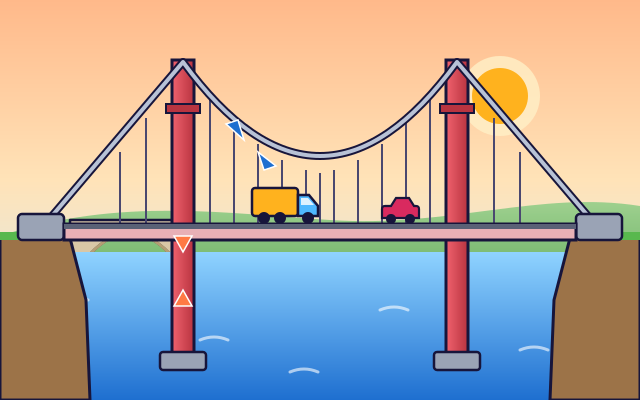
How do bridges hold so much weight?
Compare beam, arch, and suspension bridges. Add virtual traffic, watch simplified force arrows, and strengthen a bridge by changing its supports.
#62
Buildings & city systems
How do bridges hold so much weight?
Compare beam, arch, and suspension bridges. Add virtual traffic, watch simplified force arrows, and strengthen a bridge by changing its supports.
 #63
Buildings & city systems
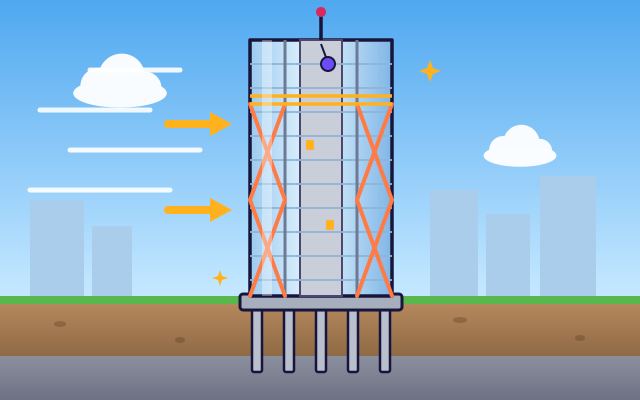
How do skyscrapers stay standing?
Explore foundations, columns, bracing, and structural cores. Build a model tower and compare how different designs respond to weight and wind.
#63
Buildings & city systems
How do skyscrapers stay standing?
Explore foundations, columns, bracing, and structural cores. Build a model tower and compare how different designs respond to weight and wind.
 #64
Buildings & city systems
How do traffic lights manage busy roads?
Program signals at an intersection and include pedestrian crossings. Compare how different timings affect queues and help everyone move through safely.
#64
Buildings & city systems
How do traffic lights manage busy roads?
Program signals at an intersection and include pedestrian crossings. Compare how different timings affect queues and help everyone move through safely.
 #65
Buildings & city systems
How does a recycling center sort materials?
Send materials along a conveyor and explore magnets, screens, and sorting equipment. Follow selected paper, metal, and plastic items into processing.
#65
Buildings & city systems
How does a recycling center sort materials?
Send materials along a conveyor and explore magnets, screens, and sorting equipment. Follow selected paper, metal, and plastic items into processing.
Keep exploring
Games to play next
- River MysterySomething changed the river. Sample sites with a limited budget, follow the evidence and find where the change begins.
- Bridge LabBuild a bridge from beams, brace it with triangles, and stay on budget.
- Area ArchitectDesign rooms that hit the area and perimeter on the blueprint.
Guide for grown-ups
- How to start homeschooling: a step-by-step guide for familiesA guide for parents · 7 min read
Science games by grade
Science worksheets by grade
- Preschool Science Worksheets
- Pre-K Science Worksheets
- Kindergarten Science Worksheets
- 1st Grade Science Worksheets
- 2nd Grade Science Worksheets
- 3rd Grade Science Worksheets
- 4th Grade Science Worksheets
- 5th Grade Science Worksheets
- 6th Grade Science Worksheets
- 7th Grade Science Worksheets
- 8th Grade Science Worksheets