How do construction cranes lift heavy things?
A tower crane uses cables, pulleys and a heavy counterweight to lift loads high into the sky without tipping over.
The big idea: A load far out on the crane's arm has a big turning effect. A heavy counterweight on the other side turns the crane the other way, so it stays balanced, just like a seesaw.
It's like
The interactive parts didn't load. The explanations below still work; try reloading the page.
How a tower crane keeps its balance
- On a building site, a tower crane lifts heavy steel beams high into the air. But the crane is tall and thin. Why doesn't it fall over?
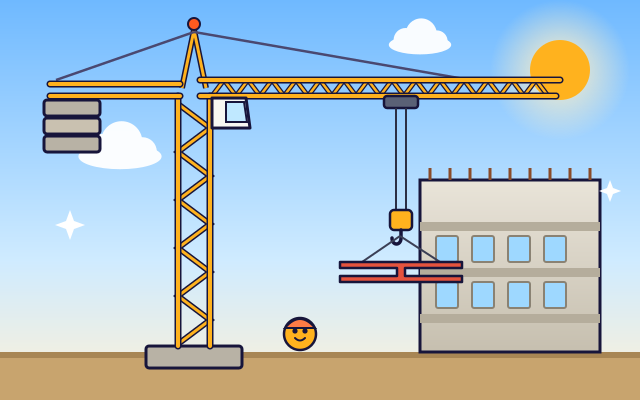
- The crane has a tall tower, a long arm called the jib, a short back arm with heavy concrete counterweights, a trolley that rolls along the jib, a hook and a cab for the operator.
- Think of a seesaw. A heavy friend near the middle can balance a light friend far from the middle. Weight and distance both matter.
- As the trolley carries the load out along the jib, its turning effect grows, and the crane starts to lean forward. Moving the counterweight back balances it again.
- The hook hangs from a steel rope that loops around pulleys. With more loops, each part of the rope carries less of the load, so the winch pulls more gently, but the hook rises more slowly.
- Cranes have a safety system that measures the load and how far out it is. If the crane gets close to tipping, a light flashes and the trolley stops until it is safe again.
The parts of a tower crane
Tap each part of the crane. Many of them move when you find them!
- Jib (boom). The jib is the crane's long arm. It is built from a lattice of steel triangles, which makes it strong but light.
- Hoist cable and winch. A motor turns a drum on the back arm. As the drum winds in the steel rope, the hook goes up. Unwinding it lets the hook go down.
- Pulleys and hook block. The rope loops around pulleys in the trolley and the hook block. More loops share the weight, so lifting heavy loads is easier.
- Counterweight. Big concrete blocks hang on the back arm. Their weight turns the crane the opposite way to the load, keeping it balanced.
- Trolley. The trolley rolls along the jib on wheels. It carries the hook closer to the tower or farther out.
- Tower (mast). The mast is a tall tower made of stacked steel sections. As the building grows, workers can add more sections to make the crane taller.
- Operator's cab. The operator sits high in the cab, using joysticks to lift, lower, move the trolley and turn the crane. A helper on the ground gives signals by radio.
- Slewing ring. The slewing ring is a giant bearing. Motors turn it so the jib can swing around in a full circle.
- Foundation. The crane stands on a huge concrete block buried in the ground, held by strong bolts. It stops the crane from sliding or tipping.
The balance lab
Move the load in and out and slide the counterweight. Watch the balance meter. Can you balance each load?
Experiment: If you move the load twice as far from the tower, where must the counterweight go to balance it?
- Choose the bricks. Put the load at 10 m and balance the crane.
- Move the load out to 20 m. Where must the counterweight go now?
- Try the other loads and press Record when the crane is balanced.
What we found: The farther out the load goes, the bigger its turning effect, so the counterweight has to move farther back. Twice as far out needs about twice as far back. A heavier load needs it farther back still.
Turn on JavaScript to try it yourself.
Deliver the loads
Deliver 4 loads to the pads on the building. The safety limiter stops the crane whenever it starts to tip. For 3 stars, finish with no safety stops.
Turning effects and balance
A tower crane is like a giant seesaw balanced on a tall tower. On one side, the long jib holds the load. On the other side, the short counter-jib holds heavy concrete blocks called counterweights.
Every weight on an arm has a turning effect. A heavy load turns the crane more than a light one, and a load far out turns it more than the same load close in. That is why a crane can lift much less at the tip of its arm than near the tower.
The counterweight turns the crane the other way. When the two turning effects match, the crane is balanced. Crane operators use a chart that tells them how heavy a load can be at each distance, and a safety system stops the crane if it gets close to tipping.
The hook hangs from a steel rope that loops around pulleys. More loops mean each part of the rope carries less of the load, so the winch can lift very heavy things, but the hook rises more slowly.
Key words
- Moment
- The turning effect of a weight: how heavy it is times how far it is from the pivot.
- Counterweight
- Heavy blocks that turn the crane the opposite way to the load.
- Jib
- The long horizontal arm of a tower crane that carries the trolley and hook.
- Load chart
- A table that shows how heavy a load can be at each distance from the tower.
- Reeving
- How the rope is looped around the pulleys.
Check your thinking
-
Why does a tower crane have heavy blocks on its short back arm?
Show the answer
To balance the turning effect of the load. The counterweight turns the crane the opposite way to the load, so the turning effects balance.
-
Where can a crane lift its heaviest load?
Show the answer
Close to the tower. A load close to the tower has a small turning effect, so it can be heavier.
-
What happens when the hoist rope loops around more pulleys?
Show the answer
Lifting is easier but slower. Each part of the rope carries less of the weight, but the winch must reel in more rope.
-
What does a crane's safety limiter do when the crane gets close to tipping?
Show the answer
Flashes a warning and stops the risky movement. It only allows moves that make the crane safer, like bringing the load closer.
-
Why is the jib built from a lattice of triangles?
Show the answer
Triangles are strong and light. Triangles keep their shape, so a lattice is stiff without using lots of heavy steel.
You're a Buildings & city systems expert!
You watched, looked inside, tried it, solved the challenge and went deeper. Pick another question below, or switch the age at the top to see this topic another way.
More about buildings & city systems
 #67
Buildings & city systems
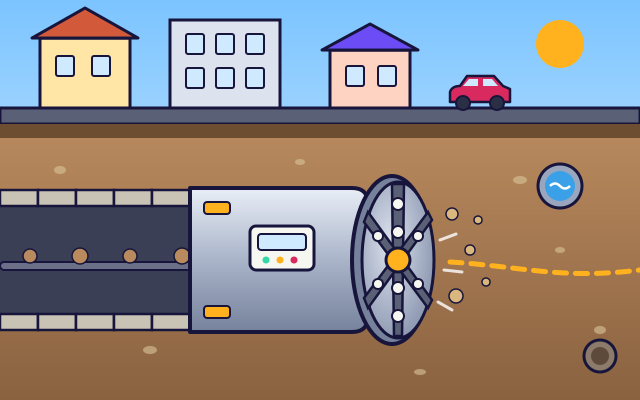
How are tunnels built underground?
Look inside a tunnel-boring machine and follow excavation, soil removal, and tunnel lining. Guide construction around underground obstacles in a model city.
#67
Buildings & city systems
How are tunnels built underground?
Look inside a tunnel-boring machine and follow excavation, soil removal, and tunnel lining. Guide construction around underground obstacles in a model city.
 #68
Buildings & city systems
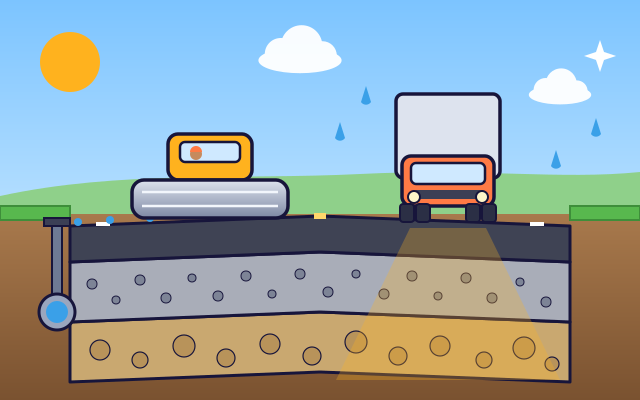
How are roads built?
Build a layered model road, compact the surface, and add drainage. Explore how traffic, water, and temperature contribute to wear and potholes.
#68
Buildings & city systems
How are roads built?
Build a layered model road, compact the surface, and add drainage. Explore how traffic, water, and temperature contribute to wear and potholes.
 #158
Buildings & city systems
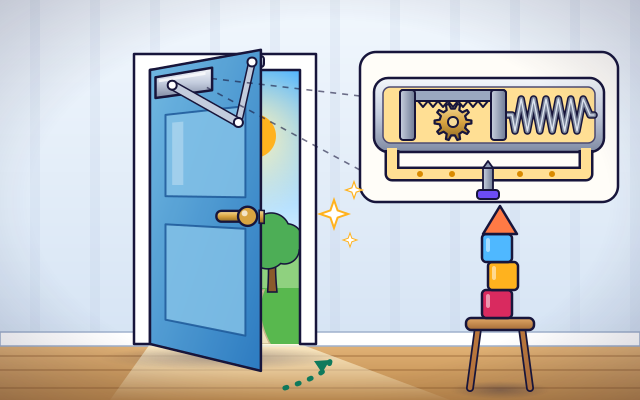
How do door closers shut doors gently?
Adjust spring tension and damping to control a model door's return.
#158
Buildings & city systems
How do door closers shut doors gently?
Adjust spring tension and damping to control a model door's return.
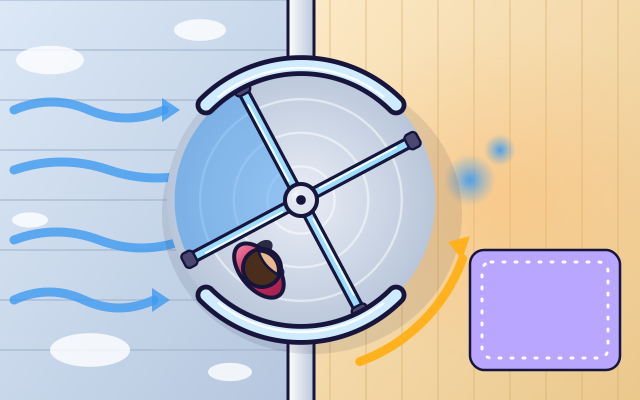 #198
Buildings & city systems
How do revolving doors help control airflow?
Compare air movement through rotating compartments with an ordinary open doorway.
#198
Buildings & city systems
How do revolving doors help control airflow?
Compare air movement through rotating compartments with an ordinary open doorway.
Keep exploring
Games to play next
- Bridge LabBuild a bridge from beams, brace it with triangles, and stay on budget.
- Area ArchitectDesign rooms that hit the area and perimeter on the blueprint.
- Route PlannerFind the shortest way around town, dodge closed roads, and measure trips with a scale bar.
Guide for grown-ups
- How to start homeschooling: a step-by-step guide for familiesA guide for parents · 7 min read
Science games by grade
Science worksheets by grade
- Preschool Science Worksheets
- Pre-K Science Worksheets
- Kindergarten Science Worksheets
- 1st Grade Science Worksheets
- 2nd Grade Science Worksheets
- 3rd Grade Science Worksheets
- 4th Grade Science Worksheets
- 5th Grade Science Worksheets
- 6th Grade Science Worksheets
- 7th Grade Science Worksheets
- 8th Grade Science Worksheets