How are tunnels built underground?
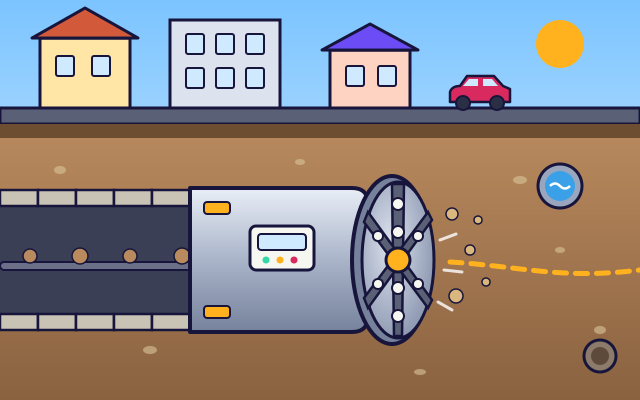
A tunnel-boring machine digs under the city, carries the soil away and builds a strong concrete tunnel as it goes.
The big idea: A tunnel-boring machine is a moving factory. Its spinning front cuts the ground, a screw and belts carry the soil out, and behind it a ring of concrete pieces holds the tunnel open.
It's like
The interactive parts didn't load. The explanations below still work; try reloading the page.
Digging a tunnel under the city
- Under a city street, the ground is crowded with water pipes, sewers and building basements. A new train tunnel has to find a safe path between them.
- Workers dig a deep hole called a shaft. A crane lowers the tunnel-boring machine down in huge pieces, and it is put together at the bottom.
- The front of the machine is a giant spinning wheel called the cutterhead. Its teeth and steel discs scrape and crack the ground as the machine pushes forward.
- The dug-out soil collects behind the cutterhead. A giant screw lifts it out, and a conveyor belt carries it back through the tunnel to the shaft.
- Inside the machine, a robot arm places curved concrete pieces to build a ring. Ring after ring makes the tunnel wall. The machine pushes against the newest ring to move forward.
- After months of digging, the cutterhead breaks through the wall of the far shaft, exactly where it was aimed. The tunnel is ready for tracks and trains.
Inside a tunnel-boring machine
Tap each part of the machine. Watch it work when you find it!
- Cutterhead. The cutterhead is a giant spinning wheel covered in teeth and steel discs. It scrapes and cracks the ground at the front of the machine.
- Excavation chamber. The dug-out soil fills this space behind the cutterhead. Keeping it packed full helps hold up the ground in front.
- Screw conveyor. A giant turning screw lifts the soil out of the chamber. Turning it faster or slower controls how much soil leaves.
- Shield. The shield is a huge steel tube around the front of the machine. It holds back the ground until the concrete ring is built.
- Thrust jacks. Powerful pushers called jacks press against the last concrete ring to shove the machine forward. Pushing harder on one side steers it.
- Segment erector. The erector is a rotating robot arm. It picks up each heavy concrete piece and sets it into the ring.
- Lining segments. The tunnel wall is made of rings, and each ring is made of curved concrete pieces called segments. They hold the tunnel open and keep water out.
- Conveyor belt. The conveyor belt carries the soil from the screw back through the machine and along the tunnel to the shaft.
- Guidance laser. A laser in the tunnel shines onto a target on the machine. It shows the driver exactly where the machine is pointing.
- Back-up train. A long train of equipment follows the machine: the control cabin, electric power, grout tanks and fresh air for the workers.
Balance the soil pressure
Change how hard the machine pushes and how fast the screw takes soil out. Watch the pressure gauge and the street above.
Experiment: What happens to the street if the screw takes soil out faster than the machine digs?
- Make the screw fast and watch the gauge and the road.
- Now make the screw slow.
- Find the screw speed that keeps the road flat.
What we found: The soil in the chamber holds back the ground in front. Take soil out too fast and the pressure drops, the ground slumps in and the street sinks. Take it out too slowly and the packed soil pushes the ground up. Just right keeps the street flat.
Turn on JavaScript to try it yourself.
Steer under the city
Steer the machine from the launch shaft to the green target, passing every pipe, the basement and the boulder without touching them.
How a tunnel-boring machine works
Digging a tunnel under a city is tricky. The ground is full of pipes, cables and building basements, and the streets and houses above must not move. So engineers use a tunnel-boring machine, a giant machine as long as a train that digs and builds at the same time.
At the front is the cutterhead, a huge spinning wheel with teeth. As strong pushers called jacks press the machine forward, the cutterhead scrapes away the ground. The soil collects in a chamber, and a big screw and conveyor belts carry it out of the tunnel.
The soil in the chamber does an important job: it pushes back against the ground in front. If too much soil is taken out, the ground can slump and the street above can sink. If too little is taken out, the ground gets pushed up. The crew keeps it just right.
Behind the cutterhead, a robot arm builds the tunnel wall from curved concrete pieces. Each ring is strong, like an arch all the way around. A laser shows the driver exactly where the machine is, so it can steer gently around obstacles and come out in the right place.
Key words
- Tunnel-boring machine (TBM)
- A machine that digs a round tunnel and builds its lining as it moves forward.
- Cutterhead
- The rotating wheel of cutting tools at the front of the machine.
- Face
- The wall of ground right in front of the machine.
- Lining
- The concrete rings that form the tunnel wall.
- Settlement
- When the ground above a tunnel sinks a little.
- Shaft
- A deep vertical hole used to lower the machine and take soil out.
Check your thinking
-
What is the job of the cutterhead?
Show the answer
It scrapes and cracks the ground at the front. The spinning cutterhead cuts the ground while the jacks push the machine forward.
-
What happens to the street if too much soil is taken out too quickly?
Show the answer
The ground slumps and the street can sink. With too little soil pushing back, the ground in front slides into the gap, and the surface settles.
-
What does the machine push against to move forward?
Show the answer
The last concrete ring it built. The jacks press on the newest ring, so every ring also helps the machine move on.
-
How does the driver know exactly where the machine is underground?
Show the answer
A laser shines on a target on the machine. The laser guidance system shows the machine's position and which way it points.
-
Why is a ring a good shape for a tunnel wall?
Show the answer
It is strong all the way around, like an arch. The ground squeezes from every side, and a ring pushes back evenly, just like an arch.
You're a Buildings & city systems expert!
You watched, looked inside, tried it, solved the challenge and went deeper. Pick another question below, or switch the age at the top to see this topic another way.
More about buildings & city systems
 #68
Buildings & city systems
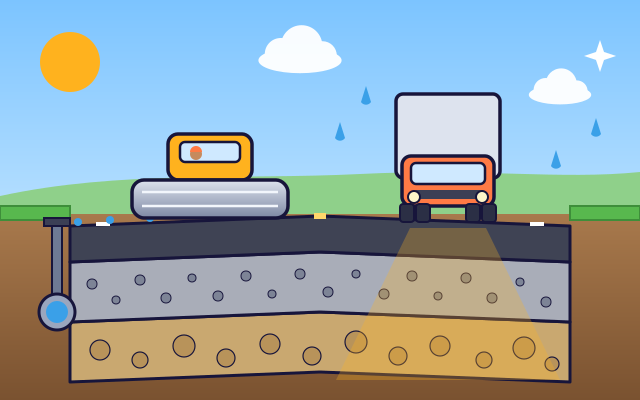
How are roads built?
Build a layered model road, compact the surface, and add drainage. Explore how traffic, water, and temperature contribute to wear and potholes.
#68
Buildings & city systems
How are roads built?
Build a layered model road, compact the surface, and add drainage. Explore how traffic, water, and temperature contribute to wear and potholes.
 #158
Buildings & city systems
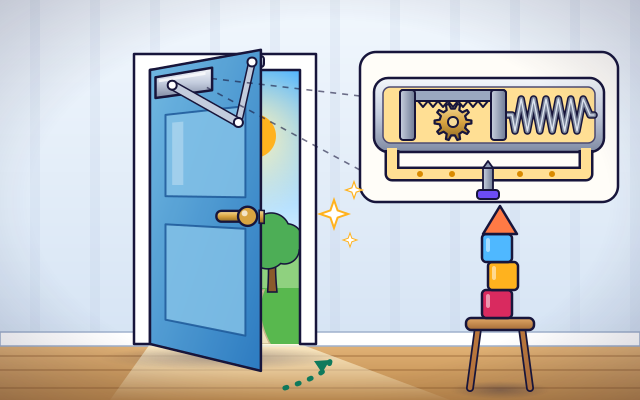
How do door closers shut doors gently?
Adjust spring tension and damping to control a model door's return.
#158
Buildings & city systems
How do door closers shut doors gently?
Adjust spring tension and damping to control a model door's return.
 #198
Buildings & city systems
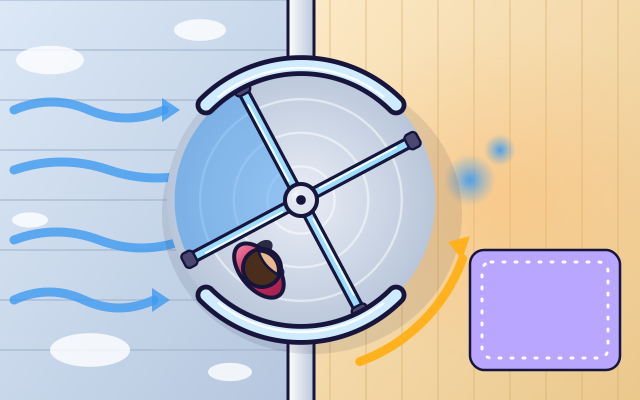
How do revolving doors help control airflow?
Compare air movement through rotating compartments with an ordinary open doorway.
#198
Buildings & city systems
How do revolving doors help control airflow?
Compare air movement through rotating compartments with an ordinary open doorway.
 #199
Buildings & city systems
How do automatic fire sprinklers release water?
Warm a model sprinkler's heat-sensitive element and watch that individual sprinkler open.
#199
Buildings & city systems
How do automatic fire sprinklers release water?
Warm a model sprinkler's heat-sensitive element and watch that individual sprinkler open.
Keep exploring
Games to play next
- Bridge LabBuild a bridge from beams, brace it with triangles, and stay on budget.
- Area ArchitectDesign rooms that hit the area and perimeter on the blueprint.
- Route PlannerFind the shortest way around town, dodge closed roads, and measure trips with a scale bar.
Guide for grown-ups
- How to start homeschooling: a step-by-step guide for familiesA guide for parents · 7 min read
Science games by grade
Science worksheets by grade
- Preschool Science Worksheets
- Pre-K Science Worksheets
- Kindergarten Science Worksheets
- 1st Grade Science Worksheets
- 2nd Grade Science Worksheets
- 3rd Grade Science Worksheets
- 4th Grade Science Worksheets
- 5th Grade Science Worksheets
- 6th Grade Science Worksheets
- 7th Grade Science Worksheets
- 8th Grade Science Worksheets