How can one heating plant warm a neighborhood?
A heating plant heats water once. Insulated pipes under the streets carry it to every building, where a heat exchanger takes the heat and sends the water back.
The big idea: Water is a great carrier of heat. A plant heats it, wrapped pipes keep it hot on the way, each building takes the heat out through a metal wall, and the cooler water returns to be heated again.
It's like warming your hands on a mug of cocoa: the heat goes into your hands, but the cocoa stays in the mug. The building takes the heat, not the water.
The interactive parts didn't load. The explanations below still work; try reloading the page.
One plant, many warm homes
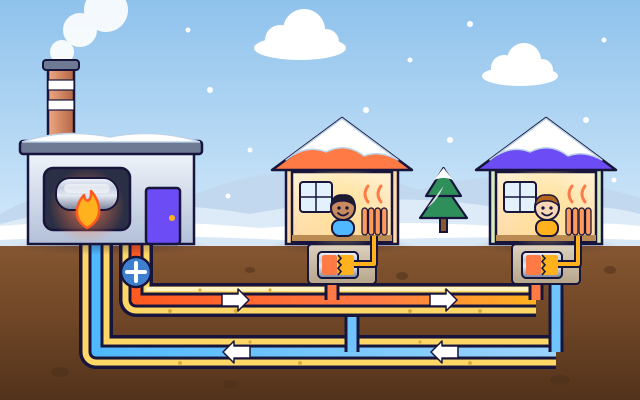
- It is a freezing day, and none of these homes has its own furnace. Look under the street. Two pipes run from house to house, all the way from that big building.
- At the heating plant, a giant boiler heats water until it is very hot, about as hot as tea from a kettle. A big pump pushes the hot water out into the pipes.
- The hot water races through the supply pipe under the street. A thick wrap of foam, called insulation, keeps the heat inside. A second pipe brings the water back.
- In the basement is a heat exchanger. Hot water from the street flows past thin metal plates. The home's own water flows on the other side. Heat crosses the metal, but the two waters never mix.
- The home's water, now warm, flows up to the radiators. They warm the air in the room. The same heat can also warm the water for a shower.
- The water has given away its heat, so it is cooler. It flows back through the return pipe to be heated again. One plant keeps the whole neighborhood warm, and the same water goes round and round.
Look inside a district heating network
Tap each part. Follow the heat from the plant, under the street and into a home.
- Heating plant. The heating plant heats water for the whole neighborhood. One big, clean boiler does the job of hundreds of small ones.
- Circulation pump. The pump pushes the water through the pipes, out to the last house and all the way back.
- Supply pipe. The supply pipe carries hot water from the plant to every building along the street.
- Insulation. Each pipe wears a thick coat of foam inside a plastic shell. Foam is full of tiny gas bubbles, and heat crosses them very slowly.
- Heat exchanger. The heat exchanger passes heat from the street's water to the home's own water through thin metal plates. The two waters never touch.
- Radiator. The home's warm water flows through the radiator. The radiator warms the air, and warm air rises and spreads around the room.
- Return pipe. The return pipe carries the cooler water back to the plant to be heated again. No water is used up.
Does the heat reach the far house?
Tap a stretch of pipe to wrap or unwrap it. Watch the snow, the color of the water and the three homes. Which home feels a bare pipe the most?
Experiment: The pipes have no wrap. Which home will be the coldest?
- Start with all three pipes bare. Look at each home.
- Wrap the pipes one at a time and watch the far home.
- Unwrap one pipe again. Where does the snow melt?
What we found: A bare pipe leaks heat into the cold ground all the way along, so the water is a little cooler at every home it passes. The far home gets the coolest water and stays cold. Wrapped pipes keep the heat in, so even the last home is cozy.
Turn on JavaScript to try it yourself.
Two rolls of insulation
You have only 2 rolls of insulation for 3 pipes. Wrap two, set the plant, then send the heat. Make all three homes cozy.
Carrying heat with water
Water can hold a lot of heat. That is why a hot water bottle stays warm for hours. District heating uses this: a plant heats water, and the water carries the heat through pipes to every building in the neighborhood.
Heat always moves from hot things to colder things. So a hot pipe in cold ground loses heat all the way along. To stop that, each pipe is wrapped in thick foam. Foam is full of tiny bubbles of gas, and heat crosses them very slowly. A winter coat works the same way.
In each building, a heat exchanger takes the heat. The street's hot water flows on one side of thin metal plates and the building's own water flows on the other. Metal lets heat through easily, so the building's water warms up and the street's water cools down. The two never mix.
The cooler water flows back to the plant and is heated again. One big plant can be cleaner and waste less than a furnace in every house, and it can use heat that would be thrown away. Here the hot water bottle idea stops working: a bottle slowly goes cold, but this water is reheated again and again.
Key words
- District heating
- Heating many buildings from one plant, using hot water in pipes.
- Insulation
- A material that slows heat down, such as the foam around a pipe or the padding in a coat.
- Heat exchanger
- A device that passes heat from one liquid to another through metal, without mixing them.
- Supply and return
- The two pipes of the loop: hot water out to the buildings, cooler water back to the plant.
- Specific heat capacity
- How much energy it takes to warm one kilogram of a material by one degree. Water's is very high.
Check your thinking
-
How does heat get from the plant to a home far down the street?
Show the answer
Hot water flows there through a pipe under the street. Water holds a lot of heat, so pumping hot water carries heat to every building.
-
Why are the pipes wrapped in foam?
Show the answer
So less heat leaks into the cold ground on the way. Heat moves from hot to cold. Foam slows it down, so the water arrives hot.
-
In the heat exchanger, what crosses the thin metal plates?
Show the answer
Only heat. The two waters stay apart. Metal lets heat through but keeps the two waters separate, like a mug warming your hands.
-
Snow has melted in a stripe along one street. What does that tell you?
Show the answer
A pipe below is leaking heat because its wrap is poor. Heat leaking up from a badly wrapped pipe warms the ground and melts the snow above it.
-
With bare pipes, why does the water cool most in the last section before the far house?
Show the answer
Little water flows there, so each liter spends longer losing heat. Only one building's share of the flow is left in the last section, so the same loss per meter cools it more.
-
What happens to the water after it has warmed a home?
Show the answer
It flows back to the plant to be heated again. The water travels in a loop. The same water is heated again and again.
You're a Buildings & city systems expert!
You watched, looked inside, tried it, solved the challenge and went deeper. Pick another question below, or switch the age at the top to see this topic another way.
More about buildings & city systems
 #363
Buildings & city systems
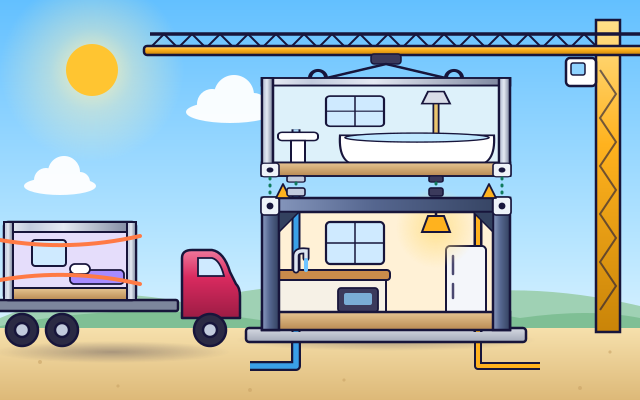
How do prefabricated buildings fit together?
Assemble factory-made sections and match their structural, plumbing, and electrical connections.
#363
Buildings & city systems
How do prefabricated buildings fit together?
Assemble factory-made sections and match their structural, plumbing, and electrical connections.
 #364
Buildings & city systems
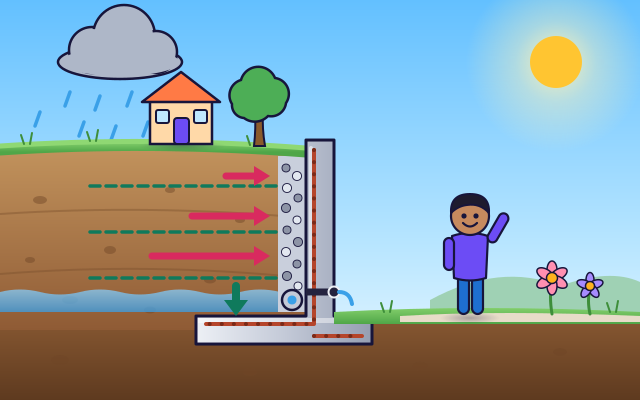
How do retaining walls hold back soil?
Compare wall shape, drainage, and reinforcement under different simulated loads.
#364
Buildings & city systems
How do retaining walls hold back soil?
Compare wall shape, drainage, and reinforcement under different simulated loads.
 #365
Buildings & city systems
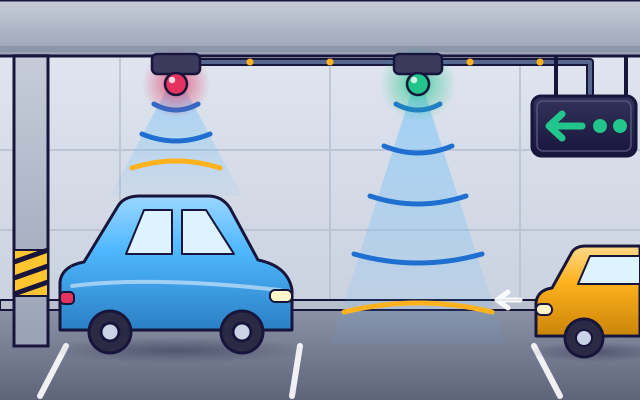
How do parking garages identify empty spaces?
Move cars between bays and watch sensors update guidance signs.
#365
Buildings & city systems
How do parking garages identify empty spaces?
Move cars between bays and watch sensors update guidance signs.
 #366
Buildings & city systems
How do railway signals keep trains separated?
Divide track into sections and operate signals as trains enter and leave.
#366
Buildings & city systems
How do railway signals keep trains separated?
Divide track into sections and operate signals as trains enter and leave.
Keep exploring
Games to play next
- River MysterySomething changed the river. Sample sites with a limited budget, follow the evidence and find where the change begins.
- Bridge LabBuild a bridge from beams, brace it with triangles, and stay on budget.
- Area ArchitectDesign rooms that hit the area and perimeter on the blueprint.
Guide for grown-ups
- How to start homeschooling: a step-by-step guide for familiesA guide for parents · 7 min read
Science games by grade
Science worksheets by grade
- Preschool Science Worksheets
- Pre-K Science Worksheets
- Kindergarten Science Worksheets
- 1st Grade Science Worksheets
- 2nd Grade Science Worksheets
- 3rd Grade Science Worksheets
- 4th Grade Science Worksheets
- 5th Grade Science Worksheets
- 6th Grade Science Worksheets
- 7th Grade Science Worksheets
- 8th Grade Science Worksheets