How do dry docks make ship repairs possible?
A dry dock is a basin with a gate. Float a ship in, close the gate and pump out the water, and the whole hull is left standing dry for repairs.
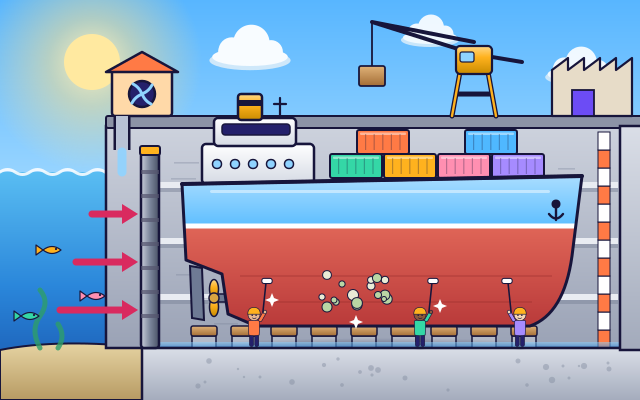
The big idea: A ship floats into the dock on the sea's own water. When the gate is shut and the water is pumped out, the ship sinks down with it and comes to rest on blocks, dry.
It's like a toy boat in a bathtub: pull the plug and the boat goes down with the water until it rests on the bottom, high and dry.
The interactive parts didn't load. The explanations below still work; try reloading the page.
From the sea to dry land
- After years at sea, a ship's bottom is covered in barnacles and weed, and here a rope has caught in the propeller. All of it is underwater. How can anyone get there to fix it?
- A dry dock is a long basin beside the sea. With the gate open it is full of sea water, so the ship simply floats in and stops above a row of blocks on the floor.
- The gate swings up and shuts the entrance. Now the water in the dock is cut off from the sea. Later, the sea pushing on the gate will press it even tighter.
- Powerful pumps send the dock's water back to the sea. A floating ship always sits the same depth in the water, so it sinks with the falling water until its keel rests on the blocks.
- Now the dock is dry and the whole hull is in the open. Workers scrape off the barnacles, repaint the bottom, mend the scrape and free the propeller. A crane lifts heavy parts in and out.
- When the work is done, valves let the sea back in. The rising water lifts the ship off the blocks. Once the water is level on both sides, the gate opens and the ship floats out.
Look inside a dry dock
This dock has been cut open so you can see everything. Tap each part to find out what it does.
- Ship's bottom. The red part of the hull normally sits underwater. Its special paint slows down barnacles and weed. In the dock, workers can reach every bit of it.
- Keel blocks. A row of strong blocks runs along the dock floor. The ship's keel, the long spine along its bottom, comes down to rest on them, with space underneath for people to work.
- Stepped walls. The walls and floor are thick concrete or stone, built like giant steps. The steps give workers a way down, and painted marks on the wall show how deep the water is.
- Dock gate. The gate is a huge steel door across the entrance. When the dock is empty, the sea pushes hard on the gate and presses it tightly shut.
- Flood valve. A tunnel through the wall joins the dock to the sea. Opening its valve lets sea water rush in to fill the dock again, with no pumping needed.
- Pump house. Big electric pumps suck water from a pit in the dock floor and push it up and out to the sea. Emptying a large dock takes a few hours.
- Crane. A crane on the dock side lowers tools, paint and spare parts to the workers, and lifts out heavy pieces such as a propeller that needs mending.
Lower the water
Float the ship in, tap the gate to close it, then slide the water down. Watch the ship. Then bring the water back.
Experiment: The gate is closed and the pumps start. What happens to the ship as the water goes down?
- Float the ship in and tap the gate to close it.
- Slide the water down and watch where the ship goes.
- Slide the water back up. When does the ship lift off?
What we found: A floating ship always sits the same depth in the water, so it goes down as the water goes down. When its keel reaches the blocks it stops, and the water carries on falling until the hull is dry. Letting the water back in lifts the ship off again.
Turn on JavaScript to try it yourself.
Dock, repair, refloat
This ship needs three repairs under the waterline. Dock it, pump the dock dry, repair every glowing spot, then flood the dock and send the ship back to sea.
How a dry dock works
The bottom of a ship spends years underwater. Barnacles and weed grow on it, the paint wears thin, and the propeller and rudder need checking. Divers can do small jobs, but for big ones the ship has to come out of the water. A ship is far too heavy to lift, so instead the water is taken away from the ship.
A dry dock is a long basin dug beside the sea, with thick walls and a gate at one end. With the gate open, the dock is full of sea water and the ship floats in. Then the gate is closed and pumps send the water back to the sea.
A floating ship always sits the same depth in the water. So as the water goes down, the ship goes down with it, until its keel rests on a row of blocks on the floor. The water keeps falling, and the hull is left standing dry.
When the repairs are finished, valves let the sea back in. The water lifts the ship off the blocks, the gate opens and the ship sails away. It works like a toy boat in a bathtub when you pull the plug, with one difference: a real ship must land exactly on its blocks, so it is lined up very carefully first.
Key words
- Dry dock
- A basin that can be flooded to float a ship in and pumped dry so people can work on its hull.
- Keel
- The strong spine along the very bottom of a ship.
- Draft
- How deep a ship sits in the water.
- Buoyancy
- The upward push of water that makes things float.
- Fouling
- Barnacles, weed and other sea life that grow on a ship's hull and slow it down.
- Sump
- A pit at the lowest point of the dock floor, where the pumps collect the water.
Check your thinking
-
How does a dry dock get a ship out of the water?
Show the answer
It shuts the sea out and pumps the water away. The gate keeps the sea out while pumps empty the dock, so the ship is left standing dry.
-
Why must the gate be closed before the pumps start?
Show the answer
Otherwise the sea just flows back in. With the gate open the dock is part of the sea, so pumping would never lower the water.
-
The water in the dock drops by one meter while the ship is still floating. What does the ship do?
Show the answer
It drops one meter too. A floating ship always sits the same depth in the water, so it follows the surface down.
-
The dock is dry and the sea is high outside. Why will the gate not open?
Show the answer
The sea is pressing on it with a huge force. All that sea water pushes on one side of the gate with nothing pushing back. Fill the dock first, and the pushes balance.
-
Where on a closed dock gate is the water pressure greatest?
Show the answer
At the bottom. Pressure grows with depth, by about 10 kilopascals for each meter of water above.
-
Why does the ship rest on blocks instead of the flat floor?
Show the answer
So workers can get underneath, and the strong keel takes the weight. The blocks hold the ship up off the floor and support it along the keel, its strongest part.
You're a Buildings & city systems expert!
You watched, looked inside, tried it, solved the challenge and went deeper. Pick another question below, or switch the age at the top to see this topic another way.
More about buildings & city systems
 #369
Buildings & city systems
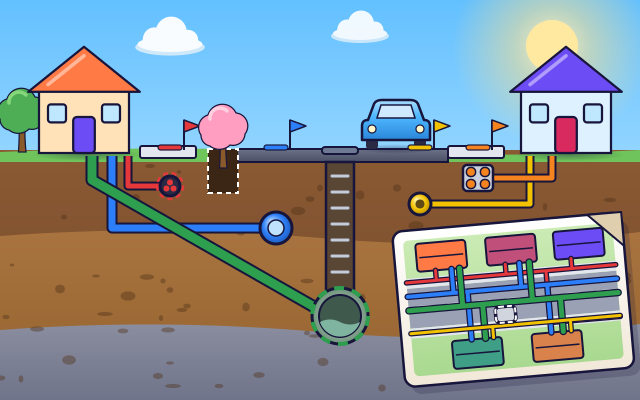
How do utility maps show what is underground?
Switch between pipe and cable layers before planning a simulated excavation.
#369
Buildings & city systems
How do utility maps show what is underground?
Switch between pipe and cable layers before planning a simulated excavation.
 #370
Buildings & city systems
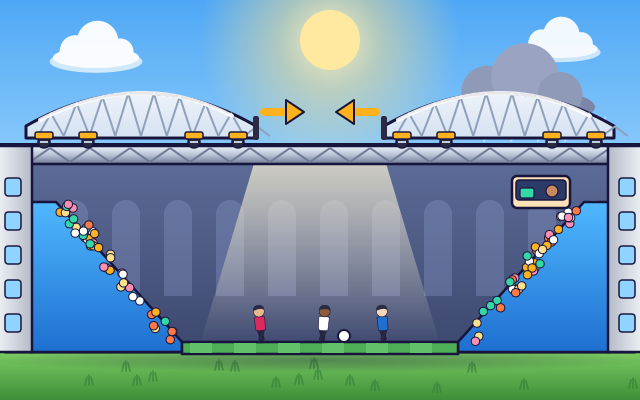
How does a stadium open and close its roof?
Coordinate movable roof sections as they travel along their tracks.
#370
Buildings & city systems
How does a stadium open and close its roof?
Coordinate movable roof sections as they travel along their tracks.
 #371
Buildings & city systems
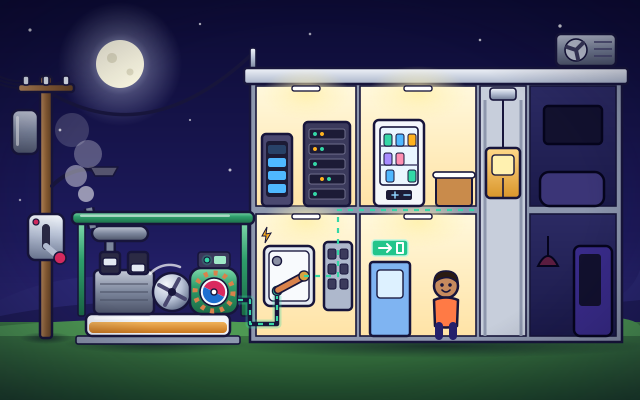
How do buildings use emergency backup power?
Simulate an interruption and watch essential equipment transfer to a backup supply.
#371
Buildings & city systems
How do buildings use emergency backup power?
Simulate an interruption and watch essential equipment transfer to a backup supply.
 #372
Buildings & city systems
How do roofs keep rain out?
Layer materials, add flashing and drainage, and trace raindrops around joints.
#372
Buildings & city systems
How do roofs keep rain out?
Layer materials, add flashing and drainage, and trace raindrops around joints.
Keep exploring
Games to play next
- Bridge LabBuild a bridge from beams, brace it with triangles, and stay on budget.
- Area ArchitectDesign rooms that hit the area and perimeter on the blueprint.
- Route PlannerFind the shortest way around town, dodge closed roads, and measure trips with a scale bar.
Guide for grown-ups
- How to start homeschooling: a step-by-step guide for familiesA guide for parents · 7 min read
Science games by grade
Science worksheets by grade
- Preschool Science Worksheets
- Pre-K Science Worksheets
- Kindergarten Science Worksheets
- 1st Grade Science Worksheets
- 2nd Grade Science Worksheets
- 3rd Grade Science Worksheets
- 4th Grade Science Worksheets
- 5th Grade Science Worksheets
- 6th Grade Science Worksheets
- 7th Grade Science Worksheets
- 8th Grade Science Worksheets