How do rain gardens reduce runoff?
A shallow, planted bowl catches the rain from a roof and lets it soak into the ground instead of rushing down the storm drain.
The big idea: Pavement sends rain straight to the drain. A rain garden holds it in a shallow bowl while loose soil and deep roots let it soak into the ground.
It's like a bowl with a sponge in the bottom. The bowl catches the water so it cannot run away, and the sponge slowly soaks it up.
The interactive parts didn't load. The explanations below still work; try reloading the page.
A bowl for the rain
- Rain runs off a roof, down the downspout and across the paved yard. None of it can soak in, so all of it rushes to the storm drain at once.
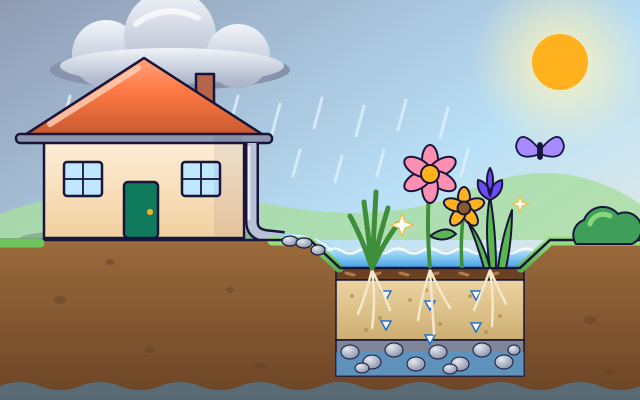
- On this side the downspout points at a rain garden: a shallow bowl dug in the lawn. The water collects in the bowl instead of running away.
- Under the bowl the soil is loose and sandy, with stones below. Water trickles down through the gaps between the grains and soaks into the ground.
- The plants matter too. Their deep roots open paths through the soil for water to follow. The plants drink some of it and breathe it out through their leaves.
- Rain picks up dust and oil from roofs and driveways. The mulch and soil trap that dirt as the water seeps through, so cleaner water reaches the ground below.
- A day later the bowl is empty again. Compare the two sides: the paved yard sent nearly all its rain to the drain, and the garden sent almost none.
Look inside a rain garden
The ground is cut open. Tap each part to see what it does to the rain.
- Downspout. Gutters catch rain at the edge of the roof and the downspout carries it to the ground. Here its end points toward the garden.
- Bowl. The garden is dug a little lower than the lawn. Rain collects here in a shallow pool and waits while it soaks in.
- Plants. The plants are chosen to cope with a soaking and with dry weeks in between. Their stems slow the water down, and their flowers feed bees and butterflies.
- Deep roots. Roots push through the soil and leave small tunnels. Water follows those paths down, so soil with roots in it soaks up rain faster.
- Mulch. A layer of wood chips covers the soil. It catches dirt, keeps weeds down and stops the soil from drying into a hard crust.
- Sandy soil mix. This soil is mixed with lots of sand. The big gaps between sand grains let water sink through quickly, and the compost in the mix feeds the plants.
- Gravel layer. A bed of small stones lies under the soil. Water collects in the spaces between the stones and then seeps slowly into the ground below.
- Overflow. In a really big storm the bowl fills to the brim. A low spot in the rim lets the extra water spill safely toward the storm drain.
Paved yard and rain garden
Choose the soil and tap the spots to plant. Then start the rain and compare the two measuring tanks.
Experiment: What happens if the garden is dug in hard clay instead of the sandy soil mix?
- Choose the sandy mix and plant at least three spots. Start the rain.
- Watch the bowl and the right-hand tank until the rain stops.
- Now choose clay and start the rain again. What changes?
What we found: In clay the water has almost nowhere to go, so the bowl fills up and the extra spills to the drain. In the sandy mix it keeps sinking away, so the bowl never overflows. The bowl catches the rain, but the soil is what empties it.
Turn on JavaScript to try it yourself.
Catch the storm
Build a garden that sends less than 100 liters to the drain in this storm. Choose its size, soil and plants, then press Start the storm.
How a rain garden works
When rain lands on a roof or a driveway it cannot soak in, so it runs off. In a town, all that water reaches the storm drains at the same time. The pipes can overflow, and streams get a sudden rush of dirty water.
A rain garden gives the water somewhere better to go. It is a shallow bowl dug in a lawn, a few big steps from the house. The downspout from the roof is pointed toward it. Rain collects in the bowl as a pool about as deep as your hand is long.
Then the soil goes to work. Sandy soil has big gaps between its grains, so water sinks through quickly. Clay has tiny gaps, so water sits on top. Deep roots help by opening little tunnels. The mulch and soil also trap dirt and oil, so the water that reaches the ground below is cleaner.
A good rain garden is empty again within a day or two. It is not a pond, and it dries too fast for mosquitoes to grow. In a huge storm, the extra water spills out at a low spot in the rim and goes to the storm drain as before.
Key words
- Runoff
- Rain that flows over the ground instead of soaking in.
- Infiltration
- Water soaking down into the soil.
- Downspout
- The pipe that carries rain from a roof gutter to the ground.
- Mulch
- A layer of wood chips or leaves spread over soil to protect it.
- Transpiration
- Plants taking up water through their roots and releasing it into the air from their leaves.
- Groundwater
- Water stored underground in the spaces within soil and rock.
Check your thinking
-
The same rain falls on a paved yard and on a rain garden. Which sends more water to the storm drain?
Show the answer
The paved yard, because none of its rain can soak in. Pavement cannot soak up water, so it all runs off. The garden holds the rain and lets it sink in.
-
How do the plants help a rain garden soak up water?
Show the answer
Their roots open paths in the soil, and the plants drink some of the water. Roots leave tunnels for water to follow, and plants take water up and breathe it out through their leaves.
-
A rain garden is dug in hard clay. What is likely to happen in a long storm?
Show the answer
The bowl fills up and the extra spills to the drain. Clay has tiny gaps, so water sinks through very slowly. The bowl fills faster than it can empty.
-
Why is a rain garden not a good home for mosquitoes?
Show the answer
It is empty again in a day or two, before they can grow. Young mosquitoes need still water for many days. A rain garden soaks away long before that.
-
A 40 m² roof receives 25 mm of rain in an hour. How much water is that?
Show the answer
1,000 liters. One millimeter on one square meter is one liter, so 25 mm × 40 m² = 1,000 L.
You're a Buildings & city systems expert!
You watched, looked inside, tried it, solved the challenge and went deeper. Pick another question below, or switch the age at the top to see this topic another way.
More about buildings & city systems
 #359
Buildings & city systems
How do fire hydrants supply water?
Look beneath a street and follow water through an opened hydrant.
#359
Buildings & city systems
How do fire hydrants supply water?
Look beneath a street and follow water through an opened hydrant.
 #360
Buildings & city systems
How do water towers maintain pressure?
Change tank height and water level and observe pressure across a model neighborhood.
#360
Buildings & city systems
How do water towers maintain pressure?
Change tank height and water level and observe pressure across a model neighborhood.
 #361
Buildings & city systems
How do desalination plants remove salt from seawater?
Explore a simplified membrane system and compare its freshwater and concentrated saltwater outputs.
#361
Buildings & city systems
How do desalination plants remove salt from seawater?
Explore a simplified membrane system and compare its freshwater and concentrated saltwater outputs.
 #362
Buildings & city systems
How can one heating plant warm a neighborhood?
Follow heat through insulated district pipes and building heat exchangers.
#362
Buildings & city systems
How can one heating plant warm a neighborhood?
Follow heat through insulated district pipes and building heat exchangers.
Keep exploring
Games to play next
- River MysterySomething changed the river. Sample sites with a limited budget, follow the evidence and find where the change begins.
- Bridge LabBuild a bridge from beams, brace it with triangles, and stay on budget.
- Area ArchitectDesign rooms that hit the area and perimeter on the blueprint.
Guide for grown-ups
- How to start homeschooling: a step-by-step guide for familiesA guide for parents · 7 min read
Science games by grade
Science worksheets by grade
- Preschool Science Worksheets
- Pre-K Science Worksheets
- Kindergarten Science Worksheets
- 1st Grade Science Worksheets
- 2nd Grade Science Worksheets
- 3rd Grade Science Worksheets
- 4th Grade Science Worksheets
- 5th Grade Science Worksheets
- 6th Grade Science Worksheets
- 7th Grade Science Worksheets
- 8th Grade Science Worksheets