How do water towers maintain pressure?
A tank of water high in the air pushes water through the pipes to every tap in town, using nothing but its own weight.
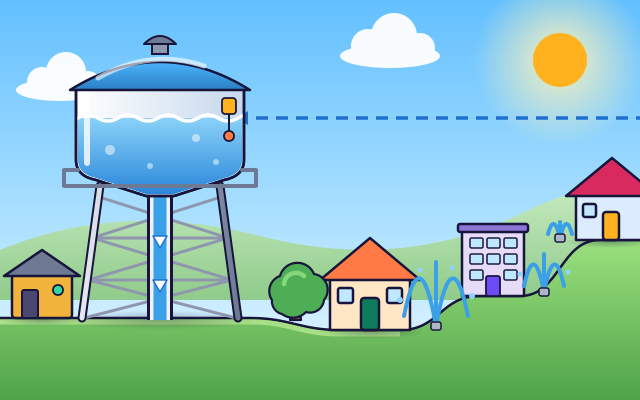
The big idea: The weight of the water in a tall tower presses down on the water in the pipes. The higher the water's surface is above your tap, the stronger the push.
It's like holding a juice box high above your head with a long bendy straw: the higher you lift it, the harder the juice squirts out of the bottom end.
The interactive parts didn't load. The explanations below still work; try reloading the page.
Why towns put water up high
- It is morning, and the whole town turns on its taps and showers at the same time. Water rushes out of every one. What is pushing it?
- The push comes from the water tower: a big tank on tall legs, standing above the rooftops. A pump at the bottom sends clean water up a pipe to fill it.
- Water is heavy. A tall column of it presses down hard on the water at the bottom. The taller the column, the bigger the push. That push is called pressure.
- Imagine a line across town at the height of the water in the tank. Water can never rise above that line. Homes far below it get strong pressure, and a home close to it gets weak pressure.
- In the busy morning the town uses water faster than the pump can supply it, so the level in the tank drops. At night, when few taps are on, the pump fills it again.
- If the electricity goes off, the pump stops. But the water is already up high, and gravity never switches off. The taps keep running until the tank is empty.
Look inside a water tower
The tank is cut open. Tap each part to see how the tower fills and how it feeds the town.
- Tank. The tank stores clean water high above the town. It can hold enough for about a day, so there is always some ready for the busy hours.
- Riser pipe. One big pipe runs up the middle of the tower. The pump pushes water up it to fill the tank, and water comes back down it to the town.
- Pump. The pump takes clean water from the treatment plant and pushes it up into the tank. It does most of its work at night.
- Level sensor. A sensor measures how full the tank is. When the level drops, it switches the pump on. When the tank is full, it switches the pump off.
- Vent. As the water level goes down, air has to come in to take its place. The vent lets air in and out. A fine screen keeps birds and insects out.
- Overflow pipe. If the pump does not stop in time, the extra water spills into this pipe and runs safely down to the ground instead of pouring off the roof.
- Water main. The main is the big pipe under the street that carries water from the tower to every home, school and fire hydrant.
Tower height and water pressure
Drag the tank up and down and change how full it is. Watch the level line and the three pressure gauges.
Experiment: You raise the tank higher. What happens to the water pressure in the homes?
- Drag the tank all the way down. Look at the hill house.
- Now drag it up slowly. Watch the level line pass each home.
- Find a height where all three gauges are green.
What we found: Raising the tank raises the pressure at every tap. What counts is how far a tap is below the water's surface: the valley house gets the most, the hill house the least, and a home level with the surface gets none.
Turn on JavaScript to try it yourself.
Just right for everyone
Set the tower so all three homes are in the green: strong enough on the hill, not too strong in the valley. Then press Test.
How a water tower pushes water
Turn on a tap and water rushes out. Something is pushing it, all day and all night. In many towns that push comes from a water tower: a big tank of clean water held high in the air on a hill or on tall legs.
Water is heavy. A bucketful is hard to carry! In a tower, all that weight presses down on the water in the pipe below. The push is called pressure. The taller the column of water above your tap, the stronger the pressure. A wider tank does not push harder; only height counts.
Imagine a line across the town at the height of the water in the tank. A house far below that line gets a strong flow. A house on a hill, close to the line, gets a weaker one. Water cannot climb higher than the line by itself, so very tall buildings need pumps of their own.
The tower is also a store. In the morning and evening, people use water faster than the pumps supply it, and the tank's level drops. At night the pumps fill it again. And if the electricity fails, the tower keeps working, because gravity does not need a plug.
Key words
- Pressure
- How hard water pushes. More pressure means a stronger flow from the tap.
- Head
- The height of the water surface above a point. Engineers often state pressure as meters of head.
- Riser
- The pipe that runs up a water tower between the main and the tank.
- Peak demand
- The time of day when a town uses water fastest, usually early morning and early evening.
- Water main
- A large underground pipe that carries water along a street.
Check your thinking
-
Why is a water tower's tank so high above the ground?
Show the answer
Height gives the water the push that sends it to every tap. The weight of the water above presses on the water in the pipes. More height means more push.
-
Three homes share one tower. Which one has the strongest water pressure?
Show the answer
The one in the valley, farthest below the water's surface. Pressure depends on how far the tap is below the surface of the water in the tank.
-
The power goes off, so the pumps stop. What happens at your tap?
Show the answer
Water keeps flowing until the tank runs low. The water is already up high. Gravity keeps pushing it without any electricity.
-
A tank is swapped for one that is twice as wide but filled to the same height. What happens to the pressure?
Show the answer
It stays the same, because the height is the same. Only the height of the water above the tap matters. A wider tank just lasts longer.
-
A tower's water surface is 45 m above the valley floor. A hilltop tap is 25 m above the valley floor. During the rush, friction takes 40 kPa. What pressure does that tap get?
Show the answer
About 156 kPa. The tap is 45 − 25 = 20 m below the surface: 20 × 9.8 = 196 kPa. Friction removes 40 kPa, leaving about 156 kPa.
You're a Buildings & city systems expert!
You watched, looked inside, tried it, solved the challenge and went deeper. Pick another question below, or switch the age at the top to see this topic another way.
More about buildings & city systems
 #361
Buildings & city systems
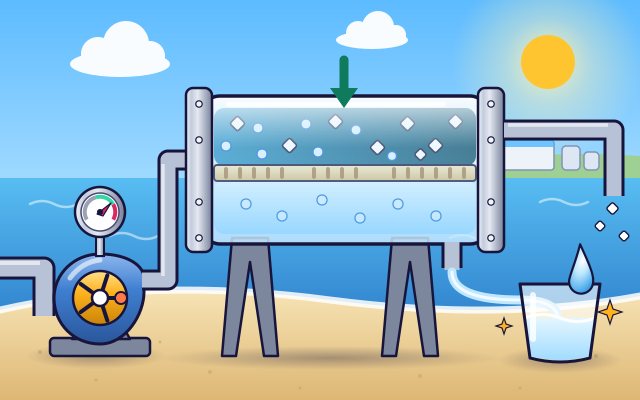
How do desalination plants remove salt from seawater?
Explore a simplified membrane system and compare its freshwater and concentrated saltwater outputs.
#361
Buildings & city systems
How do desalination plants remove salt from seawater?
Explore a simplified membrane system and compare its freshwater and concentrated saltwater outputs.
 #362
Buildings & city systems
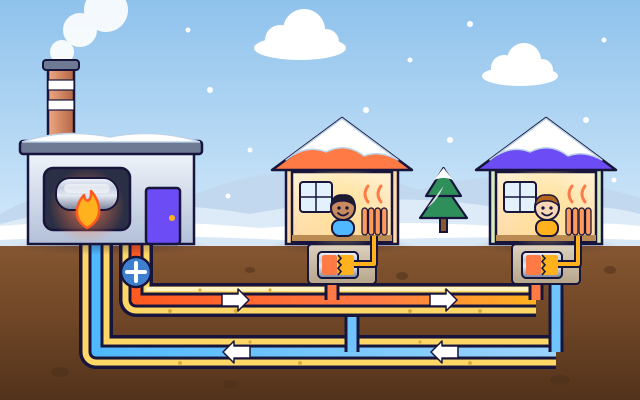
How can one heating plant warm a neighborhood?
Follow heat through insulated district pipes and building heat exchangers.
#362
Buildings & city systems
How can one heating plant warm a neighborhood?
Follow heat through insulated district pipes and building heat exchangers.
 #363
Buildings & city systems
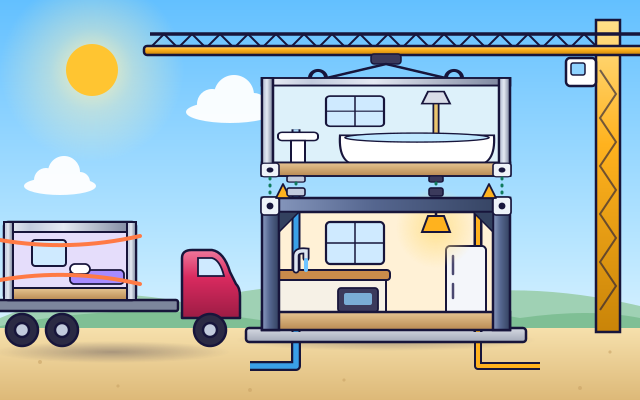
How do prefabricated buildings fit together?
Assemble factory-made sections and match their structural, plumbing, and electrical connections.
#363
Buildings & city systems
How do prefabricated buildings fit together?
Assemble factory-made sections and match their structural, plumbing, and electrical connections.
 #364
Buildings & city systems
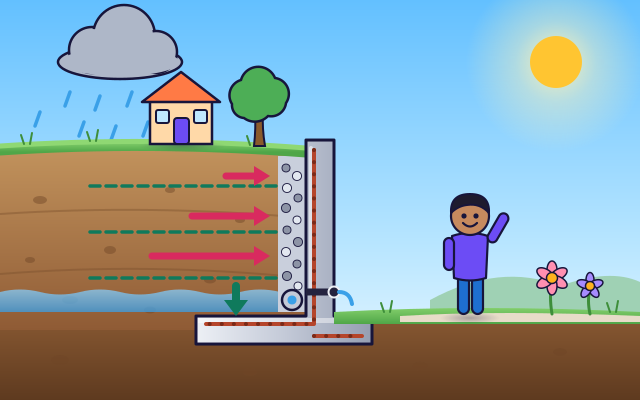
How do retaining walls hold back soil?
Compare wall shape, drainage, and reinforcement under different simulated loads.
#364
Buildings & city systems
How do retaining walls hold back soil?
Compare wall shape, drainage, and reinforcement under different simulated loads.
Keep exploring
Games to play next
- Bridge LabBuild a bridge from beams, brace it with triangles, and stay on budget.
- River MysterySomething changed the river. Sample sites with a limited budget, follow the evidence and find where the change begins.
- Area ArchitectDesign rooms that hit the area and perimeter on the blueprint.
Guide for grown-ups
- How to start homeschooling: a step-by-step guide for familiesA guide for parents · 7 min read
Science games by grade
Science worksheets by grade
- Preschool Science Worksheets
- Pre-K Science Worksheets
- Kindergarten Science Worksheets
- 1st Grade Science Worksheets
- 2nd Grade Science Worksheets
- 3rd Grade Science Worksheets
- 4th Grade Science Worksheets
- 5th Grade Science Worksheets
- 6th Grade Science Worksheets
- 7th Grade Science Worksheets
- 8th Grade Science Worksheets