How does a recycling center sort materials?
A recycling center sorts one big mixed load with screens, magnets, spinning magnets and air jets, so every material can become something new.
The big idea: Every material is different. Paper is flat, steel sticks to magnets, aluminum can be pushed by spinning magnets and plastic bottles can be spotted by a camera. Sorting machines use those differences to separate a mixed load.
It's like
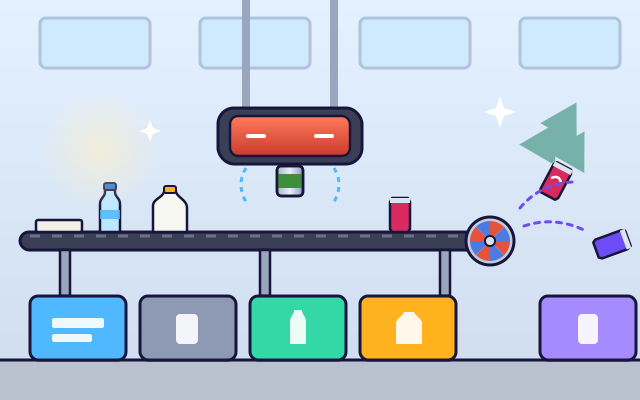
The interactive parts didn't load. The explanations below still work; try reloading the page.
The journey of your recycling
- At home, paper, cans and bottles all go into one recycling bin. Once a week a truck collects it. But where does all that mixed-up recycling go?
- The truck tips the load onto a big floor at the recycling center. A loader pushes it onto a conveyor belt, which carries it up to the sorting line.
- First comes a screen made of spinning discs. Flat paper and cardboard ride over the top, while cans and bottles drop through the gaps.
- Next, a strong magnet hangs over the belt. It lifts steel cans, because steel has iron in it. Aluminum cans are metal too, but magnets don't pull them.
- At the end of the belt, a drum full of magnets spins very fast. It makes tiny swirling electric currents in aluminum cans, which push the cans away, so they fly into their own bin.
- A special camera looks at each piece of plastic and knows what kind it is. When it sees a clear bottle, a quick puff of air blows it into the bottle bin.
- Finally, each material is squashed into a big block called a bale. The bales go to factories that turn them into new paper, new cans and even fleece jackets.
Follow the sorting line, step by step
Follow the recycling through each station of the line. Press Next to move on.
- Tipping floor. Trucks tip their loads onto the tipping floor. Loaders push the mixed recycling onto a conveyor belt.
- Pre-sort. Workers pull out things that don't belong, like plastic bags and hoses. These would wrap around the spinning machines and jam them.
- Disc screen. Rows of spinning discs bounce the stream along. Flat paper rides over the top into the paper bin, and round cans and bottles fall through the gaps.
- Overhead magnet. A strong magnet over the belt lifts steel cans and drops them into the steel bin. Aluminum isn't magnetic, so it stays on the belt.
- Eddy current separator. A drum of magnets spins very fast inside the end of the belt. It makes swirling electric currents inside aluminum cans, which push them away into their own bin.
- Optical sorter and air jets. A camera that sees invisible light tells different plastics apart. When it spots a clear bottle, a quick puff of air blows it into the bottle bin.
- Baler. A baler squashes each material into a tight block called a bale, which is easy to stack and ship.
- New things. Paper is soaked into pulp and made into new paper. Cans are melted into new cans. Bottles are chopped into flakes and made into new bottles or fleece.
Magnets on the line
Turn the magnet and the eddy current separator on and off. Which cans does each one move? Tap an item to follow it to its next life.
Experiment: Will the magnet pick up the aluminum soda cans?
- Turn on the magnet. Watch the gray steel cans and the red aluminum cans.
- Now turn on the eddy current separator.
- Press Record to note where each kind of can lands.
What we found: The magnet only lifts steel cans, because steel has iron in it. Aluminum is a metal too, but it isn't magnetic, so it rolls right past. The eddy current separator's spinning magnets push the aluminum away and fling it into its own bin.
Turn on JavaScript to try it yourself.
Tune the sorting line
A mixed load of 30 items is coming. Tune all four stations so at least 26 items land in the right bin. For 3 stars, sort all 30.
How machines tell materials apart
When you put paper, cans and bottles into one recycling bin, they arrive at the recycling center all mixed up. Before they can be made into new things, they have to be sorted again. People help, but most of the sorting is done by clever machines.
Each machine uses a difference between materials. A disc screen uses shape: flat paper rides over its spinning discs, while round cans and bottles fall through. A magnet uses magnetism: it lifts steel cans, because steel contains iron, but it can't lift aluminum.
Aluminum is sorted by an eddy current separator. A drum of magnets spins so fast that it makes swirling electric currents inside the aluminum, and those currents push the cans away. Plastic bottles are spotted by a camera that sees light our eyes can't, and quick puffs of air blow them into their bin.
Sorting works best when you recycle the right things. Clean, empty containers help. Plastic bags tangle the spinning discs, and food or liquids spoil the paper. A cleaner bale of material can be made into better new products.
Key words
- Single stream
- Recycling where paper, metal and plastic all go into one bin together.
- Disc screen
- Rows of spinning discs that let cans and bottles drop while paper rides over.
- Ferrous
- Containing iron, so a magnet attracts it, like steel.
- Eddy current
- A swirl of electric current made inside metal by a moving magnet.
- Bale
- A tightly squashed block of one sorted material.
- Contamination
- Wrong items mixed into a bale, which lowers its quality.
Check your thinking
-
Why does the magnet lift steel cans but not aluminum cans?
Show the answer
Steel has iron in it, and aluminum doesn't. Magnets attract iron. Aluminum is a metal, but it has no iron, so magnets don't pull it.
-
What happens on the disc screen?
Show the answer
Flat paper rides over, and cans and bottles fall through. The discs bounce the stream along. Flat paper stays on top while round containers drop through the gaps.
-
How does the eddy current separator move aluminum cans?
Show the answer
Spinning magnets make currents in the can that push it away. The fast-changing magnetic field makes swirling currents in the aluminum, and those currents push back.
-
Why shouldn't plastic bags go in the recycling bin at most recycling centers?
Show the answer
They wrap around the spinning machines and jam them. Bags and film wind around the disc screen shafts, and workers have to stop the line to cut them free.
-
What can old plastic bottles be turned into?
Show the answer
New bottles or fleece clothing. PET bottles are washed, chopped into flakes and melted into new bottles or polyester fleece.
You're a Buildings & city systems expert!
You watched, looked inside, tried it, solved the challenge and went deeper. Pick another question below, or switch the age at the top to see this topic another way.
More about buildings & city systems
 #66
Buildings & city systems
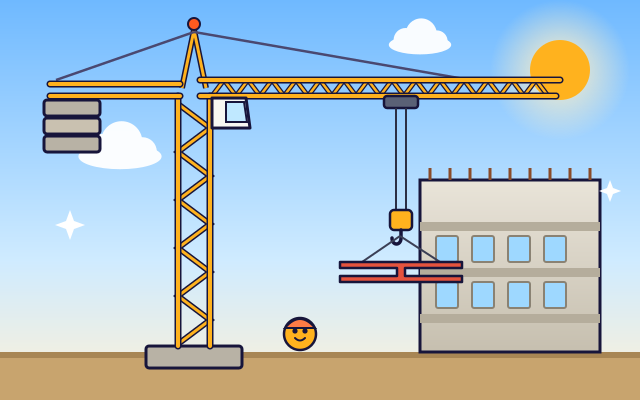
How do construction cranes lift heavy things?
Explore the boom, cables, pulleys, and counterweights. Move virtual loads while investigating how their position affects the crane's balance.
#66
Buildings & city systems
How do construction cranes lift heavy things?
Explore the boom, cables, pulleys, and counterweights. Move virtual loads while investigating how their position affects the crane's balance.
 #67
Buildings & city systems
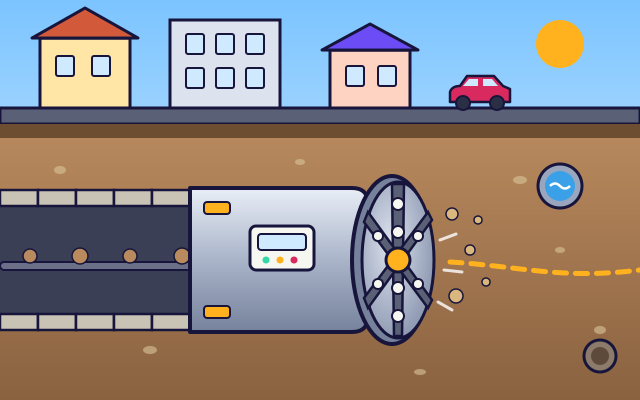
How are tunnels built underground?
Look inside a tunnel-boring machine and follow excavation, soil removal, and tunnel lining. Guide construction around underground obstacles in a model city.
#67
Buildings & city systems
How are tunnels built underground?
Look inside a tunnel-boring machine and follow excavation, soil removal, and tunnel lining. Guide construction around underground obstacles in a model city.
 #68
Buildings & city systems
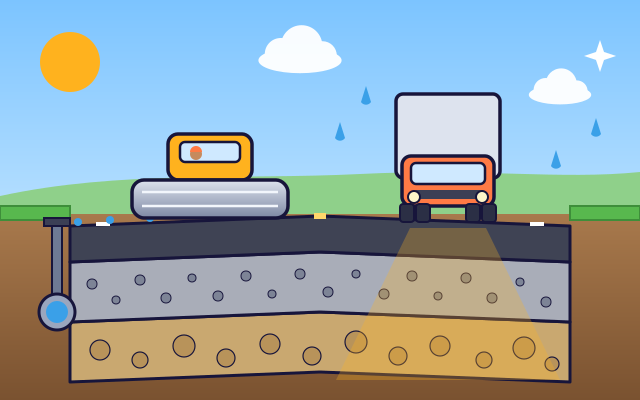
How are roads built?
Build a layered model road, compact the surface, and add drainage. Explore how traffic, water, and temperature contribute to wear and potholes.
#68
Buildings & city systems
How are roads built?
Build a layered model road, compact the surface, and add drainage. Explore how traffic, water, and temperature contribute to wear and potholes.
 #158
Buildings & city systems
How do door closers shut doors gently?
Adjust spring tension and damping to control a model door's return.
#158
Buildings & city systems
How do door closers shut doors gently?
Adjust spring tension and damping to control a model door's return.
Keep exploring
Games to play next
- Bridge LabBuild a bridge from beams, brace it with triangles, and stay on budget.
- Area ArchitectDesign rooms that hit the area and perimeter on the blueprint.
- Route PlannerFind the shortest way around town, dodge closed roads, and measure trips with a scale bar.
Guide for grown-ups
- How to start homeschooling: a step-by-step guide for familiesA guide for parents · 7 min read
Science games by grade
Science worksheets by grade
- Preschool Science Worksheets
- Pre-K Science Worksheets
- Kindergarten Science Worksheets
- 1st Grade Science Worksheets
- 2nd Grade Science Worksheets
- 3rd Grade Science Worksheets
- 4th Grade Science Worksheets
- 5th Grade Science Worksheets
- 6th Grade Science Worksheets
- 7th Grade Science Worksheets
- 8th Grade Science Worksheets