How do weather forecasts get made?
Stations, balloons, radar and satellites measure the weather now. A computer uses those measurements to work out what the air will do next.
The big idea: A forecast starts with measurements of the weather right now. A computer uses the rules of how air moves to step forward in time. More and better measurements make a surer forecast.
It's like guessing where a rolling ball will be next: you look at where it is now, which way it is going and how fast. Forecasters do that with the air.
The interactive parts didn't load. The explanations below still work; try reloading the page.
How a forecast gets made
- Will tomorrow be sunny or rainy? Nobody can see the future. But forecasters can work it out surprisingly well, and it all starts with measuring the weather right now.
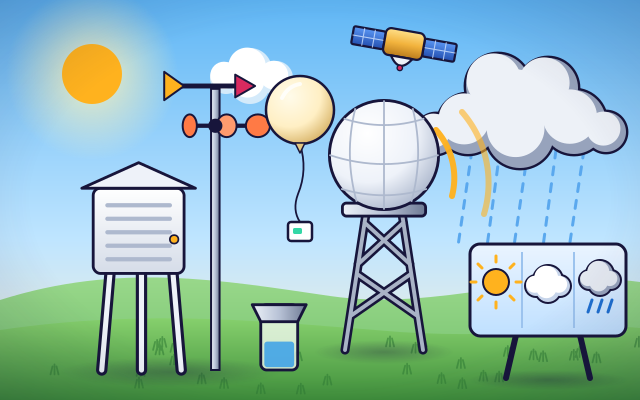
- Weather stations all over the world measure the air: how warm it is, how damp, how hard the wind blows and from where, and how much rain has fallen. Balloons carry instruments high into the sky.
- A weather radar sends out pulses of radio waves. Raindrops bounce some of them back. The radar listens for these echoes, so it can map where rain is falling and which way it is moving.
- Satellites look down from space and photograph the clouds over whole oceans and countries. They can spot storms days before they arrive, even where there are no weather stations at all.
- A powerful computer divides the air into boxes and puts the measurements in. Then it uses the rules of how air moves to work out each box a few minutes later, again and again, far into tomorrow.
- Forecasters check the computer's answer and tell everyone. A 70 percent chance of rain means rain is likely, but not certain. Tomorrow's forecast is usually very good. Next week's is much less sure.
The tools behind a forecast
Every forecast needs these tools working together. Tap each one to see what it adds.
- Weather station. A weather station measures temperature, dampness, air pressure, wind and rain, right where people live. The white box keeps the sun off the thermometer.
- Weather balloon. A weather balloon lifts a small box of instruments high above the clouds. It radios back how warm, damp and windy the air is on the way up.
- Weather radar. Inside the white ball a dish spins round, sending out radio waves and listening for echoes from raindrops. It shows where rain is and how it is moving.
- Weather satellite. A satellite looks down from space and takes pictures of the clouds over huge areas, including oceans where nobody lives.
- Forecast computer. A supercomputer takes all the measurements and uses the rules of how air moves to work out the weather, one small step of time after another.
- Forecaster. A forecaster, called a meteorologist, compares the computer's answers with what is really happening and explains the forecast to everyone.
More measurements, better forecast
Switch the weather station, the radar and the satellite on and off. Watch the forecast for the town get wider or sharper. Then play the day to check it.
Experiment: What happens to the forecast when you add more kinds of measurements?
- Tap just the weather station. How wide is the forecast?
- Add the radar, then the satellite. Watch the forecast change.
- Press Play the day and see where the rain really goes.
What we found: Each tool tells the computer something different: the station gives the wind, the radar finds the rain and the satellite shows the whole cloud. With all three, the computer starts from a truer picture, so its forecast is sharper.
Turn on JavaScript to try it yourself.
Send the rain forecast
Scan with the radar. It shows where the rain was an hour ago and where it is now. Work out which town it will reach, tap that town and send the forecast.
How forecasters work out tomorrow
You can make a simple forecast yourself. If dark clouds are in the west and the wind is blowing from the west, rain is probably on its way. You looked at where the weather is now and which way it is moving, like watching a rolling ball. Real forecasting uses the same idea, with far more measurements.
Weather stations measure the air near the ground. Balloons measure it high up. Radar finds where rain is falling and how it is moving. Satellites photograph the clouds from space, even over the oceans. All of these measurements, from all over the world, are sent to forecasting centers several times a day.
There, a very powerful computer divides the air around the whole Earth into boxes. It fills each box with the measurements, then uses the rules of how air moves, warms and cools to work out each box a few minutes later. It repeats this again and again until it reaches tomorrow and beyond.
The rolling ball comparison has a limit. A ball rolls in a simple way, but air swirls, and tiny differences now can grow into big differences later. So the computer runs many times, each with a slightly different start. If most runs make rain, the forecast is a high chance of rain. That is also why tomorrow's forecast is usually right and next week's is only a rough guide.
Key words
- Forecast
- A careful estimate of what the weather will do, worked out from measurements and science.
- Meteorologist
- A scientist who studies the weather and makes forecasts.
- Radar
- A tool that sends out radio waves and listens for the echoes from raindrops to find where rain is falling.
- Model
- A computer program that uses the rules of how air moves to work out future weather.
- Ensemble
- Many forecasts run with slightly different starts, to see how sure the answer is.
Check your thinking
-
What does every forecast start with?
Show the answer
Measurements of the weather right now. The computer needs to know what the air is doing now before it can work out what happens next.
-
How does a radar find rain?
Show the answer
It sends radio waves and listens for echoes from raindrops. Raindrops bounce the radio waves back, so the echoes show where the rain is.
-
The forecast says a 70 percent chance of rain. What does that mean?
Show the answer
Rain is likely, but not certain. On 10 days like this one, it would rain on about 7 of them. Taking an umbrella is a good idea.
-
Why is tomorrow's forecast better than a forecast for ten days from now?
Show the answer
Small mistakes at the start grow bigger the further ahead you go. No measurement is perfect. A tiny mistake today can become a big one after many days of swirling air.
-
A model's grid boxes are made half as wide. What is the trade-off?
Show the answer
More detail, but far more computing is needed. Smaller boxes show smaller weather features, but there are many more boxes and the time steps must be shorter too.
You're a Earth & weather expert!
You watched, looked inside, tried it, solved the challenge and went deeper. Pick another question below, or switch the age at the top to see this topic another way.
More about earth & weather
 #453
Earth & weather
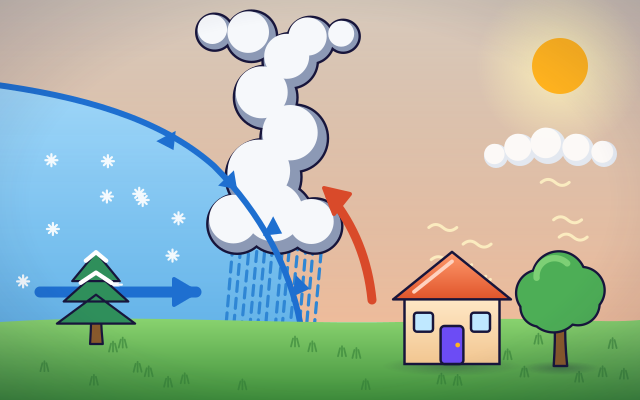
How do weather fronts change the weather?
Move warm and cold air masses together and observe clouds and precipitation.
#453
Earth & weather
How do weather fronts change the weather?
Move warm and cold air masses together and observe clouds and precipitation.
 #454
Earth & weather
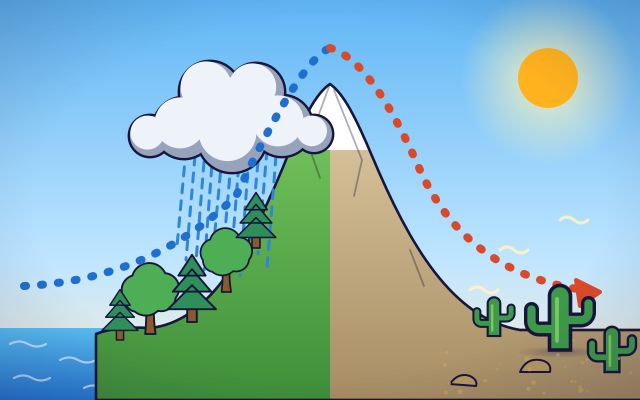
How do mountains create rain shadows?
Guide moist air over a mountain and compare its windward and sheltered sides.
#454
Earth & weather
How do mountains create rain shadows?
Guide moist air over a mountain and compare its windward and sheltered sides.
 #455
Earth & weather
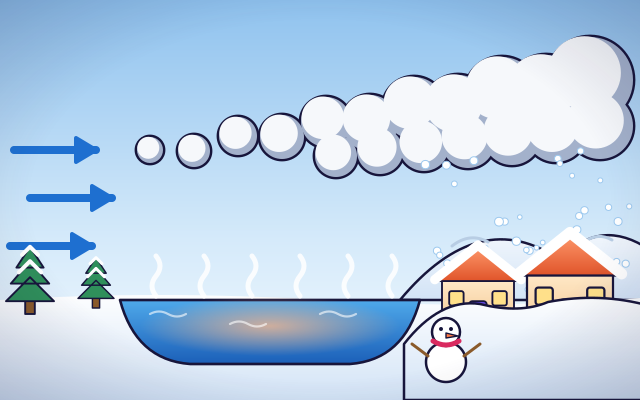
How does lake-effect snow happen?
Move cold air across warmer lake water and follow moisture into snowfall.
#455
Earth & weather
How does lake-effect snow happen?
Move cold air across warmer lake water and follow moisture into snowfall.
 #456
Earth & weather
How does humidity affect the air around us?
Change temperature and water vapor and explore relative humidity and condensation.
#456
Earth & weather
How does humidity affect the air around us?
Change temperature and water vapor and explore relative humidity and condensation.
Keep exploring
Games to play next
- Weather LabPredict the weather in a box, then run a fair test to find out why.
- Seasons and SkiesFrom days of the week to Earth's tilt: dress for the weather, read the sky and discover why seasons happen.
- Landform ExplorerMountains, valleys, peninsulas and deltas — learn the shapes of the land and find them on Earth.
Draw it or make it
- Rotating Weather Wheel ScenePaper craft
Guide for grown-ups
- How to start homeschooling: a step-by-step guide for familiesA guide for parents · 7 min read
Science games by grade
Science worksheets by grade
- Preschool Science Worksheets
- Pre-K Science Worksheets
- Kindergarten Science Worksheets
- 1st Grade Science Worksheets
- 2nd Grade Science Worksheets
- 3rd Grade Science Worksheets
- 4th Grade Science Worksheets
- 5th Grade Science Worksheets
- 6th Grade Science Worksheets
- 7th Grade Science Worksheets
- 8th Grade Science Worksheets