How do weather fronts change the weather?
A front is the edge where a mass of cold air meets a mass of warm air. The warm air is lifted, clouds form, and the weather changes.
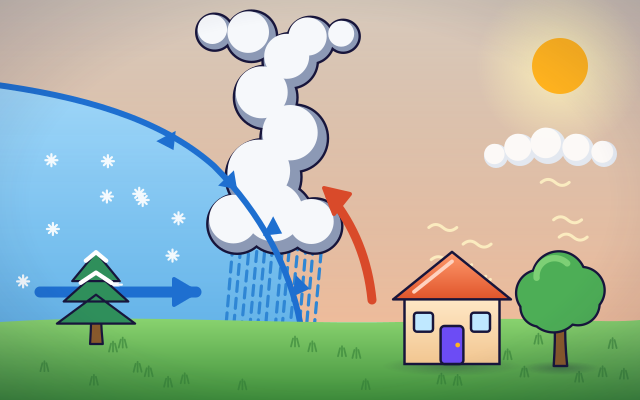
The big idea: Cold air is heavier than warm air, so where they meet, the warm air is pushed up. Rising air cools and makes clouds. A cold front lifts it fast: tall clouds, short heavy showers. A warm front lifts it gently: flat clouds, long soft rain.
It's like a shovel sliding under a pile of sand: heavy cold air slides under light warm air and lifts it. Up high, the lifted air turns into clouds.
The interactive parts didn't load. The explanations below still work; try reloading the page.
How fronts change the weather
- Huge bodies of air drift around the Earth. Air from the north is cold and dry. Air from the warm south is warm and holds lots of moisture. Each one is called an air mass.
- When two air masses meet, they do not mix easily. Cold air is heavier, so it stays near the ground and wedges under the warm air. The line where they meet is called a front.
- At a cold front, cold air pushes forward like a shovel. Its steep edge throws the warm air up quickly. Tall clouds tower up, and there is a short, heavy shower, sometimes with thunder.
- At a warm front, warm air slides slowly up and over the cold air, like walking up a long, gentle ramp. Thin, high clouds come first, then thick gray ones. The rain is light but lasts for hours.
- Weather maps show fronts as lines. A cold front is blue with triangles. A warm front is red with half circles. The shapes point the way the front is moving.
- When a front has passed, you are standing in the other air mass. After a cold front the air is cooler and drier, the sky clears and the wind changes. After a warm front it turns warmer and damper.
A slice through two fronts
This simplified slice shows a cold front on the left and a warm front on the right, with warm air between them. Tap each part.
- Cold air. Cold air is heavier than warm air, so it stays low and pushes along the ground like a wedge.
- Warm air. Warm air is lighter and usually carries more moisture. When it is lifted it cools, and its moisture turns into clouds.
- Cold front. The cold front is the leading edge of the cold air. It is steep, so it lifts the warm air quickly.
- Tall storm clouds. Warm air thrown up fast builds tall, towering clouds. They give short, heavy showers and sometimes thunder.
- Warm front. The warm front is the edge where warm air is replacing cold air. It is a long, gentle slope, so the warm air rises slowly.
- Layer clouds. Slow lifting makes flat sheets of cloud. High, thin clouds arrive first, then low, thick gray ones with steady rain.
Cold push or warm push?
Choose which air pushes, then drag the handle to move the front across the town. Watch the clouds, the rain and the thermometer. Then try the other one.
Experiment: Which front brings tall clouds and a short, heavy shower?
- Let the cold air push. Drag the front all the way past the town.
- Now let the warm air push, and drag that front past the town.
- Compare the clouds, the rain and how the temperature changed.
What we found: A cold front is steep, so it throws the warm air up fast: tall clouds and a short, heavy shower, then cooler air. A warm front is a gentle slope, so the warm air rises slowly: flat clouds and long, soft rain, then warmer air.
Turn on JavaScript to try it yourself.
Weather to order
People in the town ask for different weather. Read each wish under this goal, choose which air pushes and how fast, then send the front.
Why fronts bring a change in the weather
The air around the Earth is not all the same. Air that sits over snowy land for days becomes cold and dry. Air that sits over a warm sea becomes warm and damp. These huge bodies of air are called air masses, and winds move them around the world.
When a cold air mass meets a warm one, they do not stir together like milk in tea. Cold air is heavier, so it stays near the ground, and the lighter warm air is pushed up over it. The edge between them is a front. Lifted air cools, and cool air cannot hold as much water vapor, so clouds form and rain falls.
If the cold air is doing the pushing, it is a cold front. Its edge is steep, like the blade of a shovel, so the warm air shoots up quickly. That builds tall clouds and short, heavy showers. Afterward the air is cooler, drier and clearer.
If the warm air is doing the pushing, it is a warm front. The warm air climbs a long, gentle slope of cold air. Thin, high clouds appear first, then thick gray ones, and the rain is soft but lasts for hours. The shovel comparison fits the cold front best. A warm front is more like sand sliding slowly up a ramp.
Key words
- Air mass
- A huge body of air that is about the same temperature and dampness all through.
- Front
- The sloping boundary where two different air masses meet.
- Cold front
- A front where cold air is pushing in and replacing warm air. It brings short, heavy showers, then cooler air.
- Warm front
- A front where warm air is replacing cold air. It brings long, steady rain, then warmer air.
- Density
- How heavy something is for its size. Cold air is denser than warm air.
Check your thinking
-
Where cold air meets warm air, what happens to the warm air?
Show the answer
It is pushed up, because it is lighter. Cold air is heavier and stays low, so the lighter warm air has to rise over it.
-
Thin, high clouds arrive, then thick gray clouds, then hours of steady rain. Which front is coming?
Show the answer
A warm front. Warm air sliding gently up makes sheets of cloud that slowly get lower and thicker.
-
A cold front has just passed your town. What is the weather like now?
Show the answer
Cooler and drier, with clearing skies. You are now inside the cold air mass, which is cooler and holds less moisture.
-
On a weather map, what does a blue line with triangles mean?
Show the answer
A cold front. Blue with triangles is a cold front. Red with half circles is a warm front.
You're a Earth & weather expert!
You watched, looked inside, tried it, solved the challenge and went deeper. Pick another question below, or switch the age at the top to see this topic another way.
More about earth & weather
 #454
Earth & weather
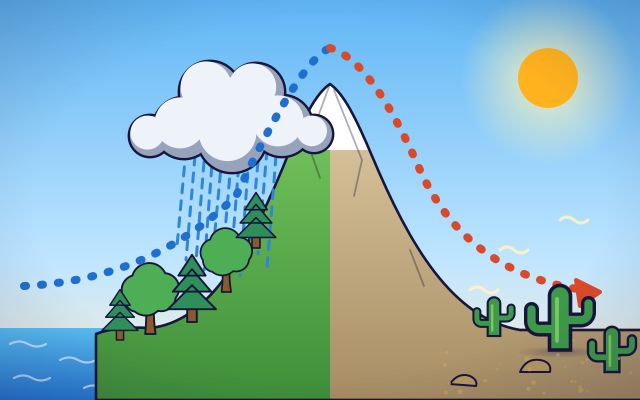
How do mountains create rain shadows?
Guide moist air over a mountain and compare its windward and sheltered sides.
#454
Earth & weather
How do mountains create rain shadows?
Guide moist air over a mountain and compare its windward and sheltered sides.
 #455
Earth & weather
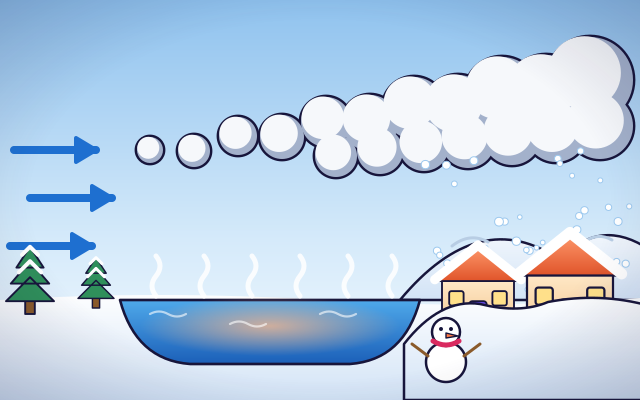
How does lake-effect snow happen?
Move cold air across warmer lake water and follow moisture into snowfall.
#455
Earth & weather
How does lake-effect snow happen?
Move cold air across warmer lake water and follow moisture into snowfall.
 #456
Earth & weather
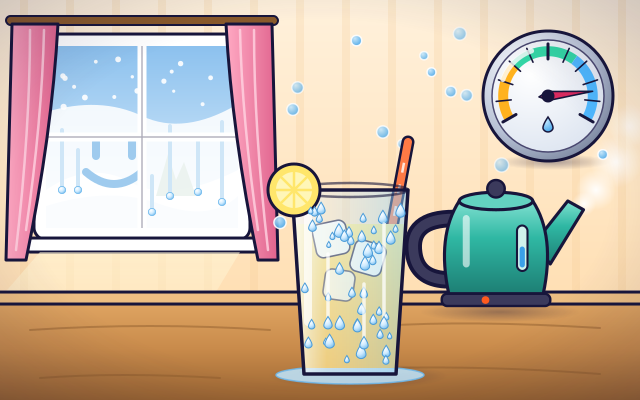
How does humidity affect the air around us?
Change temperature and water vapor and explore relative humidity and condensation.
#456
Earth & weather
How does humidity affect the air around us?
Change temperature and water vapor and explore relative humidity and condensation.
 #457
Earth & weather
How do floods develop?
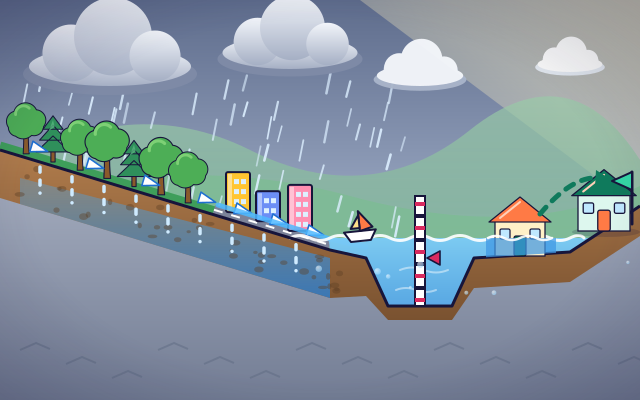
Add rainfall to a model watershed and compare absorption, runoff, and river levels.
#457
Earth & weather
How do floods develop?
Add rainfall to a model watershed and compare absorption, runoff, and river levels.
Keep exploring
Games to play next
- Weather LabPredict the weather in a box, then run a fair test to find out why.
- River MysterySomething changed the river. Sample sites with a limited budget, follow the evidence and find where the change begins.
- Seasons and SkiesFrom days of the week to Earth's tilt: dress for the weather, read the sky and discover why seasons happen.
Guide for grown-ups
- How to start homeschooling: a step-by-step guide for familiesA guide for parents · 7 min read
Science games by grade
Science worksheets by grade
- Preschool Science Worksheets
- Pre-K Science Worksheets
- Kindergarten Science Worksheets
- 1st Grade Science Worksheets
- 2nd Grade Science Worksheets
- 3rd Grade Science Worksheets
- 4th Grade Science Worksheets
- 5th Grade Science Worksheets
- 6th Grade Science Worksheets
- 7th Grade Science Worksheets
- 8th Grade Science Worksheets