
Animal
Common quail
The common quail is a small, round brown bird with stripes. It hides in fields of grass and grain. You hear it much more often than you see it.
The common quail is a small, stocky gamebird that lives in fields and grasslands across Europe, Asia and Africa. It is so secretive and hard to see that people usually only hear its call. Many quails migrate: they nest in Europe in summer and fly south, mostly to Africa, for the winter.
Coturnix coturnix is a small, migratory gamebird (family Phasianidae) of open grassland and farmland across Europe, Asia and Africa. BirdLife International assessed it as Least Concern for the IUCN Red List (assessed 9 August 2018, published 2018), with a decreasing trend and a very preliminary estimate of 15 to 35 million mature birds; in Europe, farming changes, hunting and hybridization with released Japanese quail are named threats.
Photo: TRinaud, CC BY 4.0, via Wikimedia Commons
Meet the common quail
The common quail is a small, round bird.
Its back is brown with pale stripes. It is about as long as a grown-up's hand.
The common quail is a small, stocky gamebird with pointed wings. Its back is brown, streaked and striped with pale beige, and its underside is a warm orange-brown. It is a secretive bird and very hard to see.
It is only about 16 to 18 centimeters long and weighs about 75 to 135 grams. It belongs to the same bird family as pheasants.
Coturnix coturnix belongs to the pheasant family, Phasianidae. The RSPB describes a stocky bird with pointed wings, brown upperparts streaked and striped with beige and warm brownish-orange underparts, a black beak and brown legs, and notes that it is the only migrant member of its family in the UK. The BTO calls it a small, secretive gamebird that is hard to see.
The RSPB gives a length of 16 to 18 centimeters, a wingspan of 32 to 35 centimeters and a weight of 75 to 135 grams; the BTO gives an average weight of 103.8 grams from live birds caught for ringing.
Quick facts
- Group
- Bird
- Length
- 0.16 to 0.18 m
- Wingspan
- 0.32 to 0.35 m
- Weight
- 0.08 to 0.14 kg
- Lifespan in the wild
- 2 years
Fields of grass and grain
Quails live in fields of grass, hay and grain.
They like plants that are thick but not too tall.
Common quails live in open country: grasslands and farmland across Europe, Asia and Africa. In Europe they like fields of clover, wheat and other grain, hay meadows and rough, overgrown grass. They avoid bare soil, trees and bushes, and choose places where the plants are thick but less than 1 meter tall.
In Britain, the quail is a summer visitor that turns up in lowland farmland and grassland.
The IUCN's habitat paragraph refers to Europe only: open habitats including farmland, especially clover, winter wheat and other cereals, hay, rough grass and overgrown fallow, avoiding bare soil, trees and scrub, and preferring a dense herb layer under 1 meter tall. The country list covers most of Europe, much of Africa, the Middle East and Central and South Asia east to China and Mongolia, with introduced birds on Mauritius and Réunion.
The BTO says it may turn up anywhere in lowland Britain with plenty of arable farmland and open grassland, and that areas of calcareous soils in southern Britain seem to be occupied in every atlas. The RSPB lists farmland and grassland.
Continents
Its habitat

Where can you find this animal?
- Lives here naturally · Countries and seas named by a scientific source
- Sightings recorded · Records of wild sightings (GBIF)
- Visits for part of the year · Countries and seas named by a scientific source
Lives here naturally · Countries and seas named by a scientific source
Grasslands and fields where common quails live all year or come to breed: most of Europe, much of Africa, the Middle East and Central and South Asia east to China and Mongolia. Quails live in only parts of many countries shown. Andorra, the Faroe Islands, Gibraltar, Liechtenstein, Malta, Cabo Verde, Comoros and Mayotte are also in the range but have no separate map shape. The IUCN also lists Benin
Places: Afghanistan, Albania, Algeria, Angola, Azerbaijan, Austria, Bangladesh, Armenia and 92 more places.
Source: iucn-red-list · checked October 2026
Sightings recorded · Records of wild sightings (GBIF)
Counts of GBIF records of wild observations (human and machine) and preserved specimens. Records include introduced populations, vagrants, escaped or released animals and misidentifications, so a country with records is not necessarily part of the native range.
Wild sightings have been recorded in Spain, Sweden, France, Portugal, Netherlands, South Africa, Denmark, Norway and 118 more places.
Source: gbif · checked October 2026
Visits for part of the year · Countries and seas named by a scientific source
South Sudan, where the IUCN lists common quails only outside the breeding season.
Places: South Sudan.
Source: iucn-red-list · checked October 2026
Range maps show where scientists say an animal lives, often country by country. An animal may live in only part of a country shown, and sightings records can include animals that wandered far from home.
Seeds and small animals
Quails eat seeds of grasses, weeds and grain.
They eat small bugs too.
Common quails feed on the ground. In Europe they eat mainly the seeds of grasses, weeds and grain, and they also catch small animals that live on the ground, such as insects.
Because farmers now use more weedkillers and insect sprays, there are fewer weeds, seeds and insects in many European fields for quails to eat.
The IUCN's European account says birds feed mainly on the seeds of grasses, weeds and grain, and also take ground-dwelling invertebrates; the RSPB summarizes the diet as seeds and insects.
The same account links European declines to agricultural intensification, which has removed rough grass and uncultivated land, and to herbicides and insecticides that reduce the weeds, seeds and insects available (Tucker and Heath 1994).
Did you know?
People hear quails much more than they see them.
The quail's call is often the only sign that one is hiding nearby.
The BTO says its 'wet-my-lips' call gives away its presence in the countryside.
Small, striped and secretive
The quail is brown with pale stripes.
It is hard to see, even when it is close.
A quail's back is brown, streaked and striped with beige, and its underside is a warm orange-brown. Its body is plump and its wings are pointed. It is so secretive that people hear it far more often than they see it.
Many quails make long journeys every year, between their nesting fields in Europe and their winter homes, mostly in Africa.
Brown upperparts streaked and striped with beige, warm brownish-orange underparts and a stocky body with pointed wings identify it (RSPB). The BTO and the RSPB both stress that it is far more often heard than seen.
The IUCN classes it as a full migrant: most western Palearctic birds winter south of the Sahara, mainly in the Sahel, although some winter as far north as the British Isles and Germany or around the Mediterranean, and routes are thought to vary between individuals and years (McGowan et al. 2013).
A nest in the grass
The mother makes a nest on the ground in the grass.
She lays lots of eggs. The chicks can walk soon after they hatch.
The female makes a nest in a shallow scrape on the ground, hidden in grass or other low plants, and adds some grassy material. She usually lays 8 to 13 eggs and keeps them warm by herself for 17 to 20 days.
The chicks are covered in down and can walk and feed soon after hatching. They can fly at about 18 to 20 days old. A female may raise one or two broods a year, and young quails can breed when they are one year old.
The IUCN's European account gives laying from mid-May to August in northern Europe and from late March to mid-June in the south, typically 8 to 13 eggs, in a scrape with added grassy material among herbaceous plants or grasses; some birds winter in north-west Africa, breed there in March and April, then migrate into Europe and breed again.
The BTO gives a typical clutch of 8 to 13 eggs (observed 7 to 18), incubation by the female for 17 to 20 days, precocial downy chicks fledging at 18 to 20 days, one or two broods (exceptionally more), breeding typically at 1 year and a typical life expectancy of 2 years for a bird that reaches breeding age.
Quail years
Quails fly a long way each year.
In some summers, lots more quails come to Britain than usual.
Common quails are migrants. Most of the quails that nest in Europe fly south for the winter, mostly to the Sahel, the dry lands just south of the Sahara. In Britain they arrive late, mostly from late May onward.
In some years, called quail years, far more quails than usual reach Britain. In 2011, people reported nearly 2,000 singing males there. Scientists are not sure why: spring weather may play a part.
The BTO describes the quail as a summer visitor to Britain arriving very late in spring and early summer, mostly from late May. Numbers fluctuate from year to year and birds do not necessarily use the same sites each year; occasional invasions ('quail years') may be caused by spring weather conditions, although this is unclear. BirdTrack records in 2011 approached 2,000 singing males.
The Rare Breeding Birds Panel data suggest UK numbers were stable over the 25 years to 2019, with a five-year mean of 370 males in 2015 to 2019, and a northward shift in mean breeding latitude of almost 5 kilometers a year over 30 years (Eaton et al. 2021, cited by the BTO).
Did you know?
The quail is the only pheasant-family bird that migrates to and from Britain.
In the UK, the quail is the only member of the pheasant family that migrates.
The RSPB notes that it is the only migrant species of Phasianidae in the UK.
Listen to a common quail
Listen to the sound at the start of this page.
It is a real male quail calling in England.
At the start of this page you can play a real recording of a male common quail's advertising call. Lawrence Shove recorded it at Winbourne, in Devon, England, on 15 June 1966, and the British Library keeps it with its other wildlife recordings.
People describe the call in different ways: the BTO writes it as 'wet-my-lips', and the RSPB as 'pick-per-wick'. Which do you hear?
The recording on this page is the advertising call of a male, made by Lawrence Shove at Winbourne, Devon, England, on 15 June 1966 (British Library, shelfmark W1CDR0001390, shared on Wikimedia Commons). The BTO renders the call as a sweet 'wet-my-lips' that gives the bird's presence away; the RSPB writes it as 'pick-per-wick' and notes that quails are more likely to be heard than seen.
Did you know?
Some quails nest twice in one year, in two places.
Some quails spend the winter in north-west Africa, nest there in spring, then fly to Europe and nest again.
Birds wintering in north-west Africa may breed there in March and April before migrating into Europe to breed again (IUCN).
Least concern, but falling
There are still many common quails.
But there are fewer than before, so people watch them carefully.
The common quail is listed as least concern, because it lives over a huge area and there are many millions of them. A very rough estimate is 15 to 35 million adult birds. But their numbers are going down.
In Europe, changes in farming have taken away rough grass and the weeds, seeds and insects quails need. Hunting, droughts where they spend the winter, and released Japanese quails breeding with wild ones are other problems. In the United Kingdom it is on the Amber List of birds of conservation concern.
BirdLife International assessed Coturnix coturnix as Least Concern for the IUCN Red List (assessed 9 August 2018, published 2018): an extremely large range and population, with a decreasing trend not thought rapid enough to approach the thresholds. The very preliminary estimate of 15 to 35 million mature individuals is scaled up from 6.63 to 13.4 million in Europe (BirdLife International 2015), which forms about 40% of the range.
In Europe the IUCN names agricultural intensification and pesticides, hybridization with released Japanese quail (Coturnix japonica) as a serious danger in the south, hunting, long-term climatic fluctuations and drought in the sub-Saharan wintering grounds; it notes that hunting legislation is poorly enforced. It is listed on CMS Appendix II. The BTO and RSPB place it on the UK Amber List; the RSPB says it is now in partial recovery.
IUCN Red List
How is the common quail doing in the wild?
- Least Concern (this animal)
- Near Threatened
- Vulnerable
- Endangered
- Critically Endangered
- Extinct in the Wild
- Extinct
Least Concern
Not at risk of disappearing from the wild right now.
Amazing facts
-
In some years, many more quails come to Britain.
In 'quail years', far more quails than usual reach Britain. In 2011, people reported nearly 2,000 singing males.
BirdTrack records in the 2011 'quail year' approached 2,000 singing males in Britain (BTO).
-
Some quails nest twice in one year, in two places.
Some quails spend the winter in north-west Africa, nest there in spring, then fly to Europe and nest again.
Birds wintering in north-west Africa may breed there in March and April before migrating into Europe to breed again (IUCN).
-
The quail is the only pheasant-family bird that migrates to and from Britain.
In the UK, the quail is the only member of the pheasant family that migrates.
The RSPB notes that it is the only migrant species of Phasianidae in the UK.
-
People hear quails much more than they see them.
The quail's call is often the only sign that one is hiding nearby.
The BTO says its 'wet-my-lips' call gives away its presence in the countryside.
Words to know
- migrate
- to travel from one place to another at the same time each year
- stubble
- the short, cut stalks left in a field after a crop is harvested
- Sahel
- the band of dry grassland just south of the Sahara Desert
- hybridization
- when two different kinds of animals breed together
- precocial
- born or hatched able to walk and feed itself almost straight away
Discovery challenge
-
How do people usually notice a quail?
How do people usually know a common quail is nearby?
How is the common quail usually detected?
- They hear its call
- They see it on a tree
- They see it swimming
Show the answer
They hear its call
They hear it calling!
It hides so well that its call is usually the only sign of it.
By its call; it is far more often heard than seen (BTO; RSPB).
-
Where do European quails go in winter?
Where do most European common quails spend the winter?
Where do most western Palearctic common quails winter?
- Africa, south of the Sahara
- The Arctic
- South America
Show the answer
Africa, south of the Sahara
To Africa!
Most fly to the Sahel, the dry lands just south of the Sahara.
Mainly the Sahel zone south of the Sahara (IUCN).
-
How big is a common quail?
About how long is a common quail?
What is the common quail's typical length?
- About as long as a hand
- About as long as a car
- About as long as a pencil eraser
Show the answer
About as long as a hand
About as long as a grown-up's hand!
About 16 to 18 centimeters long.
16 to 18 centimeters (RSPB).
-
What do quails mostly eat?
What do common quails mainly eat in Europe?
What makes up most of the common quail's diet in Europe?
- Seeds of grasses, weeds and grain
- Fish
- Tree bark
Show the answer
Seeds of grasses, weeds and grain
Seeds!
Mainly seeds of grasses, weeds and grain, plus some small animals.
Mainly seeds of grasses, weeds and grain, with ground-dwelling invertebrates (IUCN, European account).
Places where you might see it
-
 Watch
 Country
France
France is a country in northwestern Europe, between the Atlantic Ocean and the Mediterranean Sea. It has high mountains such as the Alps and the Pyrenees, long rivers such as the Loire and the Seine, and about 69.1 million people (2026). Its capital is Paris.
-
 Watch
 Country
Spain
Spain covers most of the Iberian Peninsula in southwestern Europe. Its middle is a high, flat plateau, the Pyrenees mountains stand between it and France, and almost 50 million people live there, with Madrid as the capital.
-
 Watch
 Country
United Kingdom
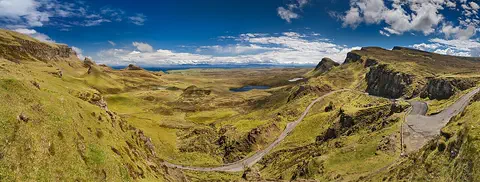
The United Kingdom, or UK, lies on islands off the northwest coast of Europe. It is made up of four parts, England, Scotland, Wales and Northern Ireland, and about 69.5 million people live there. Its capital is London.
Explore next
-
 Watch
Animal
Common pheasant
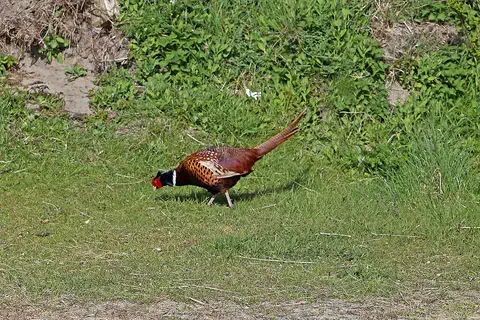
The common pheasant is a long-tailed ground bird. Its wild home is Asia, from the Caspian Sea to China and Korea, but people have taken it to Europe, North America, New Zealand and other places. Males are bright and coppery with a red face; females are mottled brown.
-
 Watch
Animal
Northern bobwhite
The northern bobwhite is a small, plump quail of fields, farms and brushy open country in eastern North America, from southern Canada to Guatemala, and in Cuba. Its whistled bob-white call is a familiar sound in spring. Bobwhites spend fall and winter in groups called coveys, and at night they sleep on the ground in a circle with their heads pointing out.
-
 Watch
3D
Animal
Barn swallow
The barn swallow is a small, speedy bird with a glossy blue back, a reddish throat and a long, deeply forked tail. It catches insects in the air, builds cup-shaped mud nests on barns and bridges, and makes long migrations between the Northern Hemisphere, where it nests, and the Southern Hemisphere, where it spends the winter.
-
 Watch
Animal
White stork
The white stork is a tall white bird with black flight feathers, a red bill and long orange legs. It nests on rooftops, chimneys and trees across Europe, North Africa and western Asia, and many storks soar south to spend the winter in Africa or South Asia.
-
 Watch
Animal
Common kestrel
The common kestrel is a small falcon found across Europe, Asia and Africa. It is famous for hovering: it hangs in the air with its head perfectly still, watching the ground for voles and mice. Males have a gray head and tail; females are browner. It is listed as Least Concern, but in parts of Europe its numbers are falling.
-
Watch
Country
France
France is a country in northwestern Europe, between the Atlantic Ocean and the Mediterranean Sea. It has high mountains such as the Alps and the Pyrenees, long rivers such as the Loire and the Seine, and about 69.1 million people (2026). Its capital is Paris.
-
Watch
Country
Spain
Spain covers most of the Iberian Peninsula in southwestern Europe. Its middle is a high, flat plateau, the Pyrenees mountains stand between it and France, and almost 50 million people live there, with Madrid as the capital.
-
Watch
Country
United Kingdom
The United Kingdom, or UK, lies on islands off the northwest coast of Europe. It is made up of four parts, England, Scotland, Wales and Northern Ireland, and about 69.5 million people live there. Its capital is London.
For parents & teachers
What children will learn
- Locate the parts of Europe, Africa and Asia where common quails live.
- Describe why common quails are easier to hear than to see.
- Describe the quail's migration between Europe and Africa.
- Name ways farming changes affect birds of fields and grassland.
Recommended ages: 3 to 17 · About 15 minutes
Talk about it
- Why might a bird that hides on the ground still make a loud call?
- How could leaving rough grass at the edge of a field help birds?
- Why might some years bring many more quails than others?
Try at home or in class
- Hide and seek: draw a quail on brown paper with pale stripes and hide it on a pile of dry grass or straw-colored paper. How long does it take a friend to find it?
- Hand measure: place a ruler beside your hand. A quail is about 16 to 18 centimeters long. Is your hand longer or shorter?
Key vocabulary: migrate, stubble, Sahel, hybridization, precocial
Where these facts come from
- GBIF Backbone Taxonomy and GBIF Occurrence Search , Global Biodiversity Information Facility (CC0 1.0 (backbone); occurrence counts are facts derived from records under CC0, CC BY and CC BY-NC)
- Wikidata , Wikimedia Foundation (CC0 1.0)
- The IUCN Red List of Threatened Species , International Union for Conservation of Nature (IUCN terms of use (no redistribution of Red List data or range maps))
- Coturnix coturnix (BirdLife International, assessed 9 August 2018, published 2018) , IUCN Red List of Threatened Species
- Coturnix coturnix: population, European habitat and threats text , IUCN Red List of Threatened Species
- Coturnix coturnix: IUCN Red List global assessment record (BirdLife International 2018), IUCN checklist on GBIF , GBIF
- Quail (BirdFacts) , British Trust for Ornithology
- Quail bird facts , RSPB
- File:Common quail (Coturnix coturnix) 2019 2.jpg (Saint-Jean-de-Sauves, France, 12 July 2019, TRinaud) , Wikimedia Commons
- File:Common Quail (Coturnix coturnix) (W1CDR0001390 BD1).ogg (Lawrence Shove, Winbourne, Devon, 15 June 1966, British Library) , Wikimedia Commons
- Wikimedia Commons , Wikimedia Foundation (Per file: Public domain, CC0, CC BY or CC BY-SA only (credited on each page))
Checked, not yet human-reviewed. Last updated November 1, 2026. Spotted a mistake? Tell us.