Animal
Common pheasant
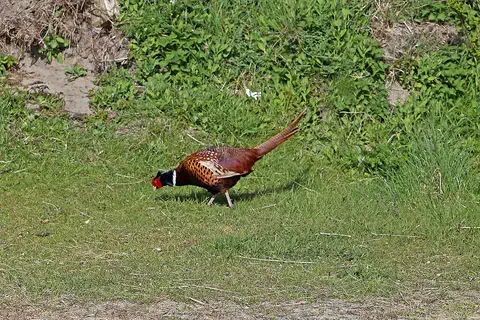
The common pheasant is a big bird with a very long tail. The father has a red face, a green head and a white ring around his neck.
The common pheasant is a long-tailed ground bird. Its wild home is Asia, from the Caspian Sea to China and Korea, but people have taken it to Europe, North America, New Zealand and other places. Males are bright and coppery with a red face; females are mottled brown.
Phasianus colchicus is a gamebird of the pheasant family, native across Asia from the Caucasus and Central Asia to China, Korea and Vietnam. It was introduced to Britain in the 11th century, has since been released widely as a game bird, and is now established in Europe, North America, New Zealand and elsewhere. The IUCN rates it Least Concern (2025).
Photo: W. Bulach, CC BY-SA 4.0, via Wikimedia Commons
Meet the common pheasant
The common pheasant is a big bird that lives on the ground.
The father is very colorful. He has a red face, a shiny green head and a long tail. The mother is brown with dark spots.
The common pheasant has a deep, pear-shaped body, a small head and a long, pointed tail. Including the tail, an adult is about 76 to 91 centimeters long.
Males and females look very different. A male is coppery red and gold with black markings, a shiny green or purple head and a bright red patch of skin around the eye. Many males also have a white collar, which gives the bird its other name, the ring-necked pheasant. Females are smaller and mottled brown, good camouflage on the ground.
Phasianus colchicus belongs to the Phasianidae, the family of pheasants and partridges (order Galliformes). The sexes differ strongly: males are larger, with iridescent green-to-purple heads, red facial wattles, barred coppery plumage and a long barred tail; females are buff-brown and mottled, with a shorter tail.
Animal Diversity Web describes two main groups of subspecies. The colchicus group, the ring-necked pheasants of mainland Eurasia, includes 31 subspecies, many with a white neck ring. The versicolor group of Japan lacks the ring and is green below; it is sometimes treated as a separate species, the green pheasant. Audubon gives a length of 76 to 91 centimeters.
Quick facts
- Group
- Bird
- Length
- 0.76 to 0.91 m
- Wingspan
- 0.65 to 0.72 m
- Weight
- 1.2 to 1.5 kg
A wild home in Asia, new homes far away
Wild pheasants first came from Asia.
People took them to many other countries. Now they live in fields and farms in Europe, America and New Zealand too.
The pheasant's native home is Asia. Its natural range stretches from the Caspian Sea across Central Asia to China and Korea, and south to Myanmar and Vietnam.
People have carried pheasants to many other places to hunt them, so today wild pheasants also live across Europe, in southern Canada and much of the United States, and in New Zealand, Australia and Hawaii. They like open country with some cover: grassy fields, farmland, hedges, marsh edges and woodland edges.
The IUCN's 2025 global assessment lists 19 native range states, from Georgia, Armenia, Azerbaijan and Iran through Central Asia and Mongolia to China, Taiwan, the Koreas, eastern Asian Russia, Myanmar, Laos and Vietnam. It lists introduced, resident populations in more than 40 other countries, including most of Europe, Canada, Australia, New Zealand and Hawaii.
In mainland North America, ADW and Audubon describe populations established on farmland from southern Canada to Utah, California, New England and Virginia; Audubon notes that some are probably not self-sustaining and are kept going by releases of game-farm birds. ADW describes pheasants as generalists of grassland and farmland with cover, usually found where water is present, that occupy most habitats except dense rainforest, alpine forest and very dry places.
Continents

Where can you find this animal?
- Brought here by people · Countries and seas named by a scientific source
- Brought here by people · Countries and seas named by a scientific source
- Lives here naturally · Countries and seas named by a scientific source
- Sightings recorded · Records of wild sightings (GBIF)
Brought here by people · Countries and seas named by a scientific source
Countries where the IUCN lists pheasants that people brought in and that now live in the wild: most of Europe, Canada, Australia, New Zealand and a few Caribbean islands.
Places: Albania, Australia, Austria, Bahamas, Belgium, Bosnia & Herz., Bulgaria, Belarus and 34 more places.
Source: iucn-red-list · checked October 2026
Brought here by people · Countries and seas named by a scientific source
Pheasants introduced to the United States: on farmland from the northern prairies to California, New England and Virginia (ADW), and in Hawaii (IUCN). Some populations are kept going by releases of game-farm birds.
Places: United States.
Source: https://animaldiversity.org/accounts/Phasianus_colchicus/ · checked October 2026
Lives here naturally · Countries and seas named by a scientific source
The pheasant's wild home: grassland, scrub and forest edges from the Caucasus and Central Asia to China, the Koreas and Vietnam. In Russia only the far east is native range; pheasants in European Russia were introduced.
Places: Afghanistan, Azerbaijan, Armenia, Myanmar, China, Taiwan, Georgia, Iran and 10 more places.
Source: iucn-red-list · checked October 2026
Sightings recorded · Records of wild sightings (GBIF)
Counts of GBIF records of wild observations (human and machine) and preserved specimens. Records include introduced populations, vagrants, escaped or released animals and misidentifications, so a country with records is not necessarily part of the native range.
Wild sightings have been recorded in United States, UK, Netherlands, Sweden, Belgium, France, Denmark, Canada and 77 more places.
Source: gbif · checked October 2026
Range maps show where scientists say an animal lives, often country by country. An animal may live in only part of a country shown, and sightings records can include animals that wandered far from home.
Scratching for seeds and insects
Pheasants eat seeds, grain, berries and bugs.
They scratch the ground with their feet and dig with their beaks to find food. Baby pheasants eat mostly insects.
Pheasants are omnivores, which means they eat both plants and animals. They feed on grain such as corn, wheat and barley, weed seeds, green shoots, buds, roots and berries, plus insects, spiders, earthworms and snails.
They find most food on the ground, scratching with their feet or digging with their bills, usually in the early morning and evening. In New Zealand, adults have been seen digging as deep as 8 centimeters. Chicks eat mainly insects.
The diet is broad and seasonal. ADW lists crops such as corn, wheat, barley and flax, weed seeds such as foxtail, ragweed and sunflower, fruits such as wild grape, apple and blackberry, and invertebrates including grasshoppers, caterpillars, crickets and snails. Audubon adds that they eat more seeds in winter and more insects in summer, and that pheasants rarely take lizards, snakes, frogs or rodents.
Foraging is mostly on the ground, scratching with the feet or digging with the bill, mainly in the early morning and evening. New Zealand Birds Online reports adults digging to 8 centimeters and chicks eating mainly insects. In dry habitats, ADW notes, pheasants get water from dew, insects and juicy plants.
Did you know?
Pheasants take baths in dust.
Pheasants take dust baths, flicking dirt into their feathers to clean them.
Dust bathing removes dead skin cells, excess oil, old feathers and the sheaths of new feathers.
A ground bird that can rocket upward
Pheasants walk and run on the ground most of the time.
If something scares them, they fly straight up very fast. Then they fly low and drop into the long grass to hide.
Pheasants spend most of their time on the ground and are fast runners. They walk with a strutting gait, holding the tail level while they feed and tilted up while they run.
When danger comes close, a pheasant can burst almost straight up into the air, then fly low and fast before dropping back into cover. Males have sharp spurs on the backs of their legs. Females' brown, mottled feathers are good camouflage.
ADW describes pheasants as swift runners and strong fliers that can flush almost vertically on take-off, often with a croaking call from males; New Zealand Birds Online adds that they then fly low and swiftly before pitching back into cover. The BTO notes sharp spurs on the back of the male's legs.
Pheasants roost on the ground and in trees and keep their feathers in condition by dust bathing, raking sand and dirt into the plumage to remove dead skin cells, excess oil and old feather sheaths. ADW lists cryptic coloration as an anti-predator adaptation, and females may hide by sitting very still or pretend to have a broken wing to lure a predator away from the nest.
Many eggs and chicks that walk at once
The mother pheasant makes a nest on the ground.
She lays lots of eggs. The chicks can walk and find food right after they hatch. They can fly before they are two weeks old!
In spring each male crows to claim a territory and attract several females. Each female makes a shallow scrape on the ground in thick cover, lines it with plants and lays about 7 to 15 olive-buff eggs, one a day.
Only the mother sits on the eggs, for about 23 to 28 days. The chicks hatch covered in down with their eyes open. They follow their mother to food at once and mostly feed themselves. They can make short flights at about 12 days, and they stay with her for about 10 to 12 weeks.
Breeding runs from mid-March to June in the north (ADW); in New Zealand the main season is October to December. Males are polygynous, holding harems of 2 to 18 females. Each hen nests in a shallow, lightly lined scrape in dense cover and lays one egg a day to a clutch of 7 to 15; larger clutches come from two or more females laying in one nest.
Incubation by the hen alone takes 23 to 28 days. Chicks are precocial, downy and open-eyed, and largely feed themselves while the hen leads them to food. They can fly short distances at about 12 days and stay with the hen for 70 to 80 days (ADW). Both sexes usually breed at one year old. Wild lives are short: the BTO gives a typical life expectancy of two years for birds that reach breeding age.
Crowing and winter flocks
The father pheasant makes a loud call, like a rooster.
He flaps his wings fast after he calls. In winter, pheasants gather in groups.
In spring, a male calls with a loud, two-part crow, 'korrk-kok', that sounds a little like a rooster and can carry up to about a mile (1.6 kilometers). Then he whirs his wings in a quick burst. To court a female, he struts in a half circle around her with one wing drooped and his red face patches swollen.
In autumn and winter pheasants gather in flocks of up to 50 birds where there is food and cover. Some flocks are mixed, and others are all males or all females.
Males establish crowing territories from early spring with the loud, double 'korrk-kok' call, which ADW notes is similar to a rooster's and can travel up to a mile, usually followed by vigorous wing-whirring. Studies cited by ADW found that females tend to choose dominant males and prefer long tails, and that ear-tuft length and black spots on the wattle also play a part, while overall brightness does not. In the lateral courtship display the male crosses slowly in a semicircle in front of the female with his head low, near wing drooped and wattle erect.
Outside the breeding season pheasants form flocks of up to 50, mixed or single-sex; Audubon describes small groups of males and larger flocks of females. Most are sedentary, though northern birds may move to escape hard weather.
Did you know?
Pheasants have lived in Britain for about a thousand years.
Pheasants were brought to Britain in the 11th century, about a thousand years ago.
The BTO dates the pheasant's introduction to Britain to the 11th century.
Wild birds and released birds
There are lots of pheasants.
People raise many pheasants on farms and let them go in the countryside. Pheasants need hedges and bushes for cover.
The IUCN Red List rates the common pheasant Least Concern. It is widespread, and in many introduced places people raise pheasants and release them for hunting. In the UK, tens of millions are released every year.
But pheasants also face problems. When big farms remove hedges, bushes, marshes and field edges, the birds are left with less cover and fewer small ponds and wet places. In New Zealand, numbers crashed in the 1890s after ferrets and stoats were brought in and poisoned grain was spread to control rabbits, and they have never fully recovered.
The IUCN assessed Phasianus colchicus as Least Concern in 2025; the global population trend is listed as unknown. Many introduced populations are managed for hunting. The BTO reports that most pheasants in the UK are reared from imported eggs and chicks and that tens of millions are released each year, a rise that has driven a steep increase in numbers since the 1960s. New Zealand Birds Online estimates about 250,000 pheasants in New Zealand, topped up by releases.
ADW names habitat loss as a threat: larger farms remove fencerows, bushes and marshes and favor single crops, leaving less cover and water. Nests are especially vulnerable to predators such as red foxes. Pheasants can also affect other birds; ADW notes they sometimes lay eggs in prairie-chicken nests in North America.
IUCN Red List
How is the common pheasant doing in the wild?
- Least Concern (this animal)
- Near Threatened
- Vulnerable
- Endangered
- Critically Endangered
- Extinct in the Wild
- Extinct
Least Concern
Not at risk of disappearing from the wild right now.
See the IUCN Red List assessment · The IUCN Red List of Threatened Species 2021.3
Amazing facts
-
Pheasant chicks can fly when they are only about 12 days old.
Pheasant chicks can make short flights when they are only about 12 days old.
Precocial pheasant chicks feed themselves from hatching and can fly short distances at about 12 days.
-
A father pheasant's call can be heard far away.
A male pheasant's crow sounds a bit like a rooster and can carry up to about a mile.
ADW notes that the male's double 'korrk-kok' crow resembles a rooster's call and can travel up to a mile.
-
Pheasants take baths in dust.
Pheasants take dust baths, flicking dirt into their feathers to clean them.
Dust bathing removes dead skin cells, excess oil, old feathers and the sheaths of new feathers.
-
Pheasants have lived in Britain for about a thousand years.
Pheasants were brought to Britain in the 11th century, about a thousand years ago.
The BTO dates the pheasant's introduction to Britain to the 11th century.
Words to know
- native
- living naturally in a place, not brought there by people
- introduced
- brought by people to a place where it did not live before
- omnivore
- an animal that eats both plants and animals
- wattle
- a patch of bare, colored skin on a bird's face or neck
- precocial
- able to walk and feed soon after hatching
- gamebird
- a bird that people hunt, such as a pheasant or partridge
Discovery challenge
-
Where did wild pheasants first live?
On which continent is the common pheasant native?
Where is the common pheasant's native range?
- Asia
- North America
- Australia
Show the answer
Asia
Pheasants first lived in Asia. People took them to other places.
Its native home is Asia, from the Caspian Sea to China and Korea; people introduced it to North America and Australia.
The IUCN lists native populations from the Caucasus and Central Asia to China, Korea and Vietnam; those in North America and Australia were introduced.
-
Which pheasants have a red face and a shiny head?
Which pheasants are the colorful ones with red faces?
Which sex has the iridescent head and red facial wattles?
- The males
- The females
- The chicks
Show the answer
The males
The fathers are colorful. The mothers are brown.
Males are bright and coppery with red faces; females are mottled brown.
Males have iridescent heads, red wattles and long barred tails; females are cryptic buff-brown with shorter tails.
-
What can baby pheasants do right after hatching?
What can pheasant chicks do soon after they hatch?
Which describes newly hatched pheasant chicks?
- Walk and find food
- Only sleep in a tree nest
- Swim in the sea
Show the answer
Walk and find food
The chicks walk with their mother and find food.
The chicks hatch with down and open eyes, follow their mother and mostly feed themselves.
They are precocial: downy, open-eyed and able to follow the hen and feed themselves at once.
-
What do pheasants eat?
What kind of eater is a pheasant?
How would you describe the common pheasant's diet?
- Seeds, plants and insects
- Only fish
- Only leaves of one tree
Show the answer
Seeds, plants and insects
Pheasants eat seeds, grain, berries and bugs.
Pheasants are omnivores that eat grain, seeds, shoots, berries, insects and snails.
A generalist omnivore: grain, weed seeds, shoots and fruit, plus invertebrates, with more seeds in winter and more insects in summer.
Places where you might see it
-
 Watch
 Country
China
China is the largest country in Asia, almost as big as all of Europe. The land steps down from the high, cold Plateau of Tibet in the west to plains and coasts in the east, and about 1.4 billion people live there, along with giant pandas in the mountains of south-central China.
-
 Watch
 Country
United Kingdom
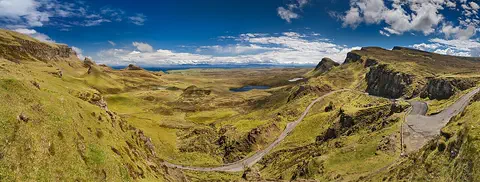
The United Kingdom, or UK, lies on islands off the northwest coast of Europe. It is made up of four parts, England, Scotland, Wales and Northern Ireland, and about 69.5 million people live there. Its capital is London.
Explore next
-
 Watch
3D
Animal
Indian peafowl
The Indian peafowl is a large bird of the pheasant family from South Asia. Males, called peacocks, have a bright blue neck and a long train of shimmering feathers decorated with eyespots, which they spread into a giant fan to impress females, called peahens. It is the national bird of India.
-
 Watch
3D
Animal
Chicken
The chicken is a domesticated bird: people raise it on farms and in backyards all over the world for eggs and meat. Its wild ancestor is the red junglefowl of the forests of southern and Southeast Asia, and scientists think chickens were first domesticated about 3,500 years ago near rice fields in Southeast Asia.
-
 Watch
Animal
Wild turkey
The wild turkey is a big, bronze-feathered bird of North American forests and clearings. It walks most of the time but can run, fly and even roost high in trees at night. By the early 1900s wild turkeys had become rare in many places, but people helped them come back, and now they live in every U.S. state except Alaska.
-
Watch
Country
China
China is the largest country in Asia, almost as big as all of Europe. The land steps down from the high, cold Plateau of Tibet in the west to plains and coasts in the east, and about 1.4 billion people live there, along with giant pandas in the mountains of south-central China.
-
Watch
Country
United Kingdom
The United Kingdom, or UK, lies on islands off the northwest coast of Europe. It is made up of four parts, England, Scotland, Wales and Northern Ireland, and about 69.5 million people live there. Its capital is London.
-
 Watch
Animal
Adélie penguin
The Adélie penguin is a medium-sized penguin, about 70 centimeters tall, with a black back, a white front and a bright white ring around each eye. It breeds in summer on rocky, ice-free ground all around Antarctica, building nests of pebbles, and spends the winter far out at sea among the pack ice.
-
 Watch
Animal
African fish eagle
The African fish eagle is a big eagle of Africa's lakes, rivers and coasts, with a white head, chest and tail and a chestnut-brown body. It snatches fish from the surface of the water, and its loud, ringing call is one of the best-known sounds of Africa.
-
 Watch
Animal
African penguin
The African penguin is a penguin of warm, sunny coasts. It lives only in South Africa and Namibia, nests in burrows and under bushes, and hunts sardines and anchovies in the cold sea. Its numbers have fallen so far that it is now Critically Endangered, and people are working hard to protect it.
For parents & teachers
What children will learn
- Explain the difference between a native and an introduced population, using the pheasant as an example.
- Describe how male and female pheasants differ and why females' mottled feathers help them nest.
- Describe the pheasant's precocial chicks and quick development.
- Name what pheasants eat and how farm changes affect them.
Recommended ages: 3 to 17 · About 15 minutes
Talk about it
- Why might a mother pheasant that nests on the ground be brown instead of bright?
- What could happen when people bring an animal to a country where it did not live before?
- How might hedges and field edges help birds on a farm?
Try at home or in class
- Hide a brown paper cut-out bird and a bright red one in a pile of dry leaves, and see which a friend finds first.
- Measure 84 centimeters with a tape measure and mark how much of a male pheasant's length would be tail.
Key vocabulary: native, introduced, omnivore, wattle, precocial, gamebird
Where these facts come from
- The IUCN Red List of Threatened Species , International Union for Conservation of Nature (IUCN terms of use (no redistribution of Red List data or range maps))
- GBIF Backbone Taxonomy and GBIF Occurrence Search , Global Biodiversity Information Facility (CC0 1.0 (backbone); occurrence counts are facts derived from records under CC0, CC BY and CC BY-NC)
- Wikidata , Wikimedia Foundation (CC0 1.0)
- Phasianus colchicus (Common Pheasant), Red List assessment 2025 , IUCN Red List of Threatened Species
- Phasianus colchicus (common pheasant) , Animal Diversity Web, University of Michigan Museum of Zoology
- Ring-necked Pheasant , National Audubon Society, Guide to North American Birds
- Pheasant: BirdFacts , British Trust for Ornithology
- Common pheasant , New Zealand Birds Online
- Wikimedia Commons , Wikimedia Foundation (Per file: Public domain, CC0, CC BY or CC BY-SA only (credited on each page))
Checked, not yet human-reviewed. Last updated October 24, 2026. Spotted a mistake? Tell us.