Animals of Africa
Tap an animal to meet it: where it lives, what it eats, how it grows, and a narrated adventure with Olly.
103 to explore · page 1 of 3
-
 Watch
Animal
Aardvark
The aardvark is a shy night digger of African savannas. It sniffs out ant and termite nests, rips them open with its spade-like claws and laps up the insects with a sticky tongue about 30 centimeters long. Its name means 'earth pig' in Afrikaans.
-
 Watch
Animal
African buffalo
The African buffalo is a huge, cow-like grazer with heavy, curving horns. It lives in herds that can number in the thousands, and a herd will rush to protect a calf in danger. It lives across much of Africa south of the Sahara, from open savannas to rainforests.
-
 Watch
Animal
African fish eagle
The African fish eagle is a big eagle of Africa's lakes, rivers and coasts, with a white head, chest and tail and a chestnut-brown body. It snatches fish from the surface of the water, and its loud, ringing call is one of the best-known sounds of Africa.
-
 Watch
Animal
African forest elephant
The African forest elephant is a separate species from the bigger bush elephant. It lives in the rainforests of central and western Africa, eats lots of fruit and spreads the seeds of forest trees in its dung. It is Critically Endangered.
-
 Watch
Animal
African penguin
The African penguin is a penguin of warm, sunny coasts. It lives only in South Africa and Namibia, nests in burrows and under bushes, and hunts sardines and anchovies in the cold sea. Its numbers have fallen so far that it is now Critically Endangered, and people are working hard to protect it.
-
 Watch
3D
Animal
African wild dog
The African wild dog, or painted dog, has a patchy coat unlike any other dog's, big round ears and only four toes on its front feet. It lives in close packs that hunt together, share food and care for the pups. It is endangered: the IUCN estimated in 2025 that only about 1,676 adults are left in the wild.
-
 Watch
Animal
Aldabra giant tortoise
The Aldabra giant tortoise is one of the largest land tortoises on Earth. Wild ones live on Aldabra Atoll, a ring of coral islands in the Indian Ocean, where more than 100,000 of them graze, browse and shape the land like elephants do in Africa. They can live for more than 100 years.
-
 Watch
Animal
Arctic tern
The Arctic tern is a small, graceful seabird with a black cap, a red bill and red legs. Every year it flies from its nesting grounds in the Arctic to the edge of the ice around Antarctica and back again. Scientists who tracked terns from Greenland and Iceland found that they flew an average of 70,900 kilometers in one year.
-
 Watch
Animal
Atlantic mudskipper
The Atlantic mudskipper is a fish that spends much of its time out of the water. It lives on the muddy shores of mangrove swamps and river mouths along the coast of West and Central Africa, where it skips across the mud on its strong front fins and catches food on land.
-
 Watch
Animal
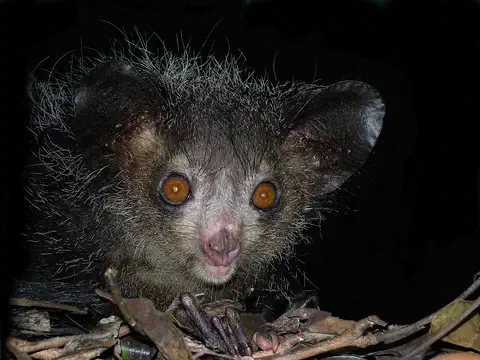
Aye-aye
The aye-aye is a lemur from Madagascar, and the largest primate that is active at night. It taps on branches with its long, skinny middle finger, listens with its enormous ears for hidden grubs, then bites into the wood and hooks them out.
-
 Watch
Animal
Bar-tailed godwit
The bar-tailed godwit is a long-billed shorebird that breeds on Arctic tundra and spends the rest of the year on mudflats far to the south. Godwits from Alaska fly non-stop across the Pacific Ocean to New Zealand and Australia, and one young bird tracked in 2022 flew at least 13,560 kilometers without landing.
-
 Watch
Animal
Barn owl
The barn owl is a pale, ghostly owl with a heart-shaped face that works like a dish to collect sound. It hunts mice and voles at night over fields and grassland, finding them by hearing alone if it has to. Barn owls live on every continent except Antarctica.
-
 Watch
3D
Animal
Barn swallow
The barn swallow is a small, speedy bird with a glossy blue back, a reddish throat and a long, deeply forked tail. It catches insects in the air, builds cup-shaped mud nests on barns and bridges, and makes long migrations between the Northern Hemisphere, where it nests, and the Southern Hemisphere, where it spends the winter.
-
 Watch
Animal
Black mamba
The black mamba is a long, slender, very fast snake of the savannas and rocky hills of sub-Saharan Africa. It is gray to brown, gets its name from its inky-black mouth, hunts small mammals by day, and is shy: it would almost always rather slip away from people. It is also highly venomous, so it is a snake to admire from far away.
-
 Watch
Animal
Black rhinoceros
The black rhinoceros is the smaller of Africa's two rhinos. It has two horns and a pointed, hooked upper lip that it uses to pick leaves and twigs from bushes. It is Critically Endangered, but thanks to rangers and conservationists its numbers have been climbing again.
-
 Watch
Animal
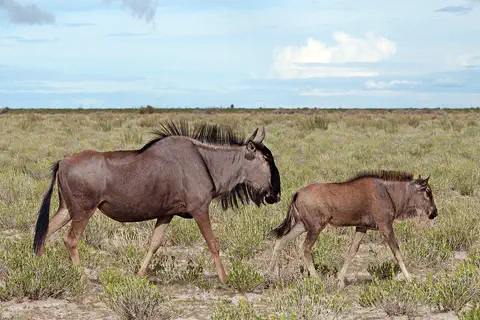
Blue wildebeest
The blue wildebeest, or gnu, is a big antelope with a box-like head, curved horns, a mane and a beard. It grazes the savannas of eastern and southern Africa, and in the Serengeti huge herds travel in a giant circle every year following the rains.
-
 Watch
Animal
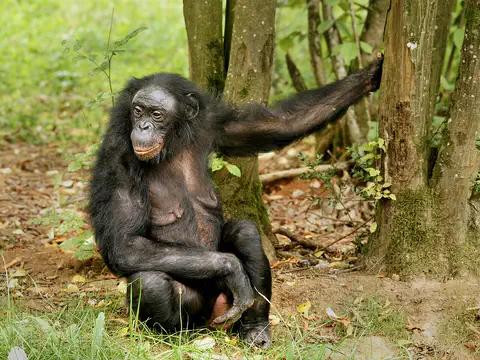
Bonobo
The bonobo is a great ape that looks a lot like a chimpanzee but is more slender, with a rounder head. It lives only in the rainforests south of the Congo River, in groups where females take the lead and squabbles rarely turn into fights.
-
 Watch
3D
Animal
Brown rat
Brown rats are large rodents that came from East Asia and spread around the world with people, mainly on ships. They are smart, strong swimmers with a superb sense of smell. Wild rats can carry germs that make people sick, so they are best left alone.
-
 Watch
Animal
Buff-tailed bumblebee
The buff-tailed bumblebee is one of the most common bumblebees in Europe. It is large and furry, with golden-yellow bands, and the queen has a buff, or light brown, tail. It lives in nests of up to a few hundred bees, and people raise it to pollinate crops such as greenhouse tomatoes.
-
 Watch
Animal
Caracal
The caracal is a sleek, reddish-gold wild cat of Africa, the Middle East and Central Asia to India. Its name comes from a Turkish word meaning "black ears", for its black-backed ears with long tufts. It hunts on the ground, but it can leap two meters or more into the air to catch birds.
-
 Watch
3D
Animal
Cattle
Cattle are large farm animals that people tamed from wild oxen long ago. They eat grass and digest it with a stomach that has four parts. Farmers around the world keep cattle for milk, meat and leather, and in some places oxen still pull plows and carts.
-
 Watch
3D
Animal
Cheetah
The cheetah is the fastest land animal. It can go from standing still to 72 kilometers per hour in about two and a half seconds, and its top speed is around 100 kilometers per hour, as fast as a car on a highway. Cheetahs live mostly in Africa, with a very small group in Iran.
-
 Watch
3D
Animal
Chicken
The chicken is a domesticated bird: people raise it on farms and in backyards all over the world for eggs and meat. Its wild ancestor is the red junglefowl of the forests of southern and Southeast Asia, and scientists think chickens were first domesticated about 3,500 years ago near rice fields in Southeast Asia.
-
 Watch
Animal
Common blackbird
The common blackbird is a thrush found in gardens, parks and woods across Europe, North Africa and parts of Asia. Males are glossy black with a bright yellow-orange bill and eye-ring, females are brown, and on summer evenings males sing a mellow, fluting song from high perches.
-
 Watch
Animal
Common cuttlefish
The common cuttlefish lives in the eastern Atlantic Ocean and the Mediterranean Sea. It is a relative of octopuses and squids, and it is a champion of camouflage: it can change its colors and patterns in moments to match the sea floor, and it floats using a light, hollow shell inside its body called a cuttlebone.
-
 Watch
Animal
Common hippopotamus
The common hippopotamus is one of the biggest animals on land, yet it spends most of the day resting in rivers and lakes to keep cool. At night it walks out to graze, and its special skin makes its own sunscreen.
-
 Watch
3D
Animal
Common kingfisher
The common kingfisher is a small, dazzling blue and orange bird of rivers, canals and lakes across Europe, Asia and North Africa. It watches from a perch, then dives headfirst into the water to catch small fish with its dagger-shaped bill.
-
 Watch
Animal
Common nightingale
The common nightingale is a plain brown songbird with one of the most famous songs in the world. Males sing from thick bushes, often in the middle of the night, and every year the birds fly from Europe and Asia to Africa for the winter.
-
 Watch
3D
Animal
Common ostrich
The common ostrich is the tallest and heaviest bird alive. It cannot fly, but it is the fastest runner on two legs, sprinting at about 70 kilometers an hour across the savannas and deserts of Africa. It also lays the biggest egg of any living animal.
-
 Watch
Animal
Common raven
The common raven is the biggest member of the crow family and the largest songbird. It lives across most of the Northern Hemisphere, from deserts to Arctic tundra. Ravens eat almost anything, play games in the air, and have solved puzzles that scientists designed to test how well they can plan ahead.
-
 Watch
3D
Animal
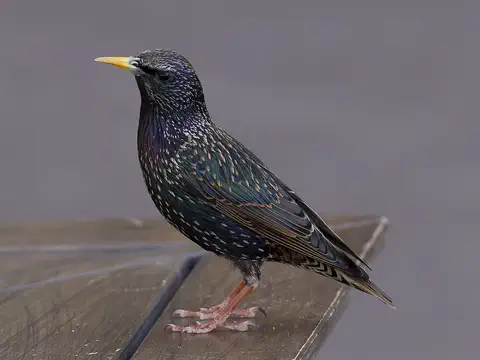
Common starling
The common starling, also called the European starling, is a glossy, spotted songbird from Europe, Asia and North Africa. It is a brilliant copycat that can imitate other birds and even car alarms, and in winter huge flocks swirl through the evening sky in shows called murmurations. People also carried starlings to North America, Australia and other places, where they now live in the wild.
-
 Watch
Animal
Common warthog
Common warthogs are tough wild pigs of the African savanna. They kneel down to eat short grass, sleep in old aardvark burrows and run with their tails held straight up like little flags. The bumps on their faces are thick pads of skin.
-
 Watch
Animal
Desert locust
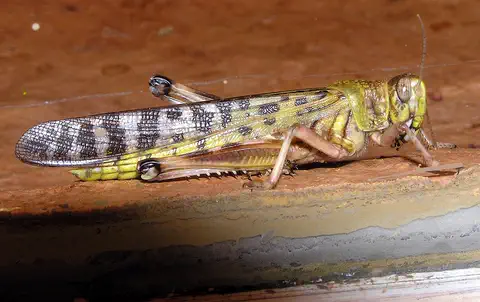
The desert locust is a large grasshopper of the deserts of Africa, the Middle East and Southwest Asia. Most of the time it lives alone. But after good rains, when locusts become crowded, they change their color and behavior and can gather into enormous swarms that fly long distances and eat farmers' crops.
-
 Watch
3D
Animal
Domestic cat
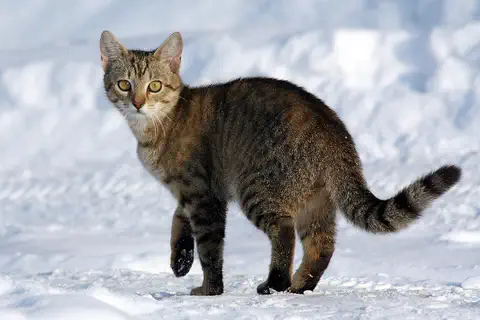
The domestic cat is one of the world's favorite pets. Cats live with people in homes, farms and towns in almost every country on Earth. Long ago they came from a small wildcat of the Middle East and Africa, and they still have the sharp senses and soft paws of a wild hunter.
-
 Watch
3D
Animal
Domestic dog
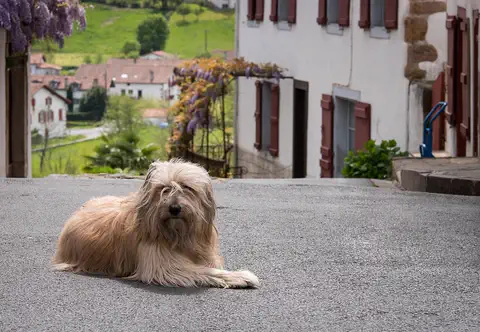
The domestic dog has lived with people for more than 12,000 years. Dogs came from gray wolves, and today there are more than 400 breeds, from tiny Chihuahuas to giant Irish wolfhounds. They live with people all over the world as pets, helpers and friends.
-
 Watch
3D
Animal
Domestic goat
Domestic goats are lively farm animals that came from a wild goat of Asia. They reach up to nibble leaves, twigs and weeds that other farm animals leave behind, and people keep them for milk, cheese, meat, wool and leather.
-
 Watch
3D
Animal
Domestic pig
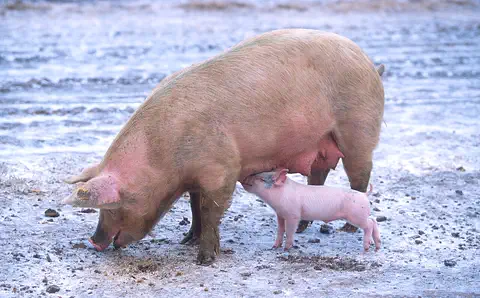
Domestic pigs live with people on every continent except Antarctica. Their ancestor is the wild boar, which people began taming about 9,000 years ago. Pigs are among the smartest farm animals, with a super-sensitive snout for digging up food.
-
 Watch
3D
Animal
Domestic sheep
Domestic sheep are farm animals that people tamed in western Asia thousands of years ago. They graze on grass, digest it with a four-part stomach and stick together in flocks. People keep sheep for wool, meat, milk and leather.
-
 Watch
3D
Animal
Donkey
Donkeys are domesticated members of the horse family, bred from the African wild ass more than 6,000 years ago. With their long ears, sure feet and great strength, they have carried loads for people on rough, dry land ever since, and in many countries they still do that work today.
-
 Watch
3D
Animal
Dromedary camel
The dromedary, or Arabian camel, is the one-humped camel of the deserts of North Africa, the Middle East and India. Its hump stores fat, not water, and its body is full of tricks for saving water. People tamed dromedaries thousands of years ago, and today none live truly wild, except a large feral population in Australia.
-
 Watch
Animal
Eastern gorilla
The eastern gorilla is the gorilla of the misty mountains and forests of east-central Africa. It has two kinds: the shaggy mountain gorilla, whose numbers are slowly growing, and the big Grauer's gorilla, which has become much rarer.
-
 Watch
Animal
Emperor scorpion
The emperor scorpion is one of the biggest scorpions in the world, up to about 20 centimeters long. It lives in the warm, humid forests of West Africa, where it digs burrows and hunts insects such as termites at night. Mothers give birth to live young and carry them on their backs. Like other scorpions, it glows blue-green under ultraviolet light.
-
 Watch
3D
Animal
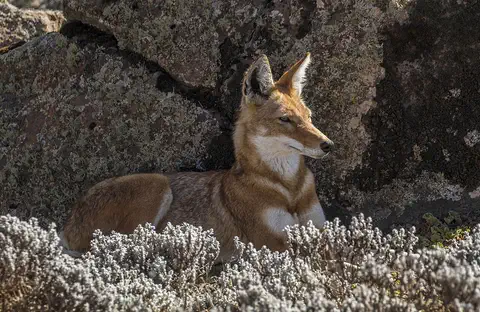
Ethiopian wolf
The Ethiopian wolf is a slender red wolf that lives only in the high mountains of Ethiopia. Wolf families share a territory, but each wolf hunts alone for rats and mole-rats. It is one of the rarest wild dogs on Earth.
-
 Watch
3D
Animal
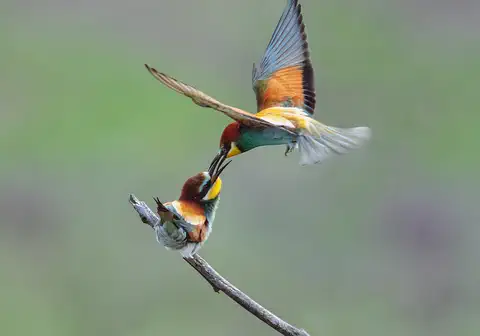
European bee-eater
The European bee-eater is one of the most colorful birds in Europe. It catches bees, dragonflies and other flying insects in midair, knocks out the stings on a branch, and digs a long tunnel in a sandy bank for its nest. Every autumn it flies to Africa for the winter.
-
 Watch
3D
Animal
European mantis
The European mantis is the best-known praying mantis. It sits very still with its spiky front legs folded, then snatches insects that come close. It is native to Europe, Africa and much of Asia, and people brought it to North America more than 100 years ago.
-
 Watch
3D
Animal
European rabbit
The European rabbit is the wild rabbit that all pet and farm rabbits come from. It lives in groups in big underground tunnel homes called warrens. Its numbers have fallen in its first home in Spain, Portugal and France, but people have carried it to many other places, where it became a pest.
-
 Watch
Animal
European robin
The European robin is a small songbird of Europe's woods, parks and gardens, famous for its orange-red breast. It sings almost all year round, even at night under streetlights, and it defends its patch fiercely. Young robins have no red breast at all: they are speckled with golden brown.
-
 Watch
Animal
Fennec fox
The fennec fox is the smallest member of the dog family. It lives in the Sahara and other deserts of North Africa, sleeps in cool burrows by day, and uses its enormous ears to hear insects moving under the sand at night.