Animals of Europe
Tap an animal to meet it: where it lives, what it eats, how it grows, and a narrated adventure with Olly.
89 to explore · page 1 of 2
-
 Watch
Animal
Arctic fox
The Arctic fox lives on the frozen tundra around the North Pole. Its coat changes color with the seasons, white or blue-gray in winter and brown or gray in summer, and it has short ears, a short nose and furry feet to keep the cold out. It eats lemmings, birds and leftovers from polar bears.
-
 Watch
Animal
Arctic tern
The Arctic tern is a small, graceful seabird with a black cap, a red bill and red legs. Every year it flies from its nesting grounds in the Arctic to the edge of the ice around Antarctica and back again. Scientists who tracked terns from Greenland and Iceland found that they flew an average of 70,900 kilometers in one year.
-
 Watch
3D
Animal
Atlantic puffin
The Atlantic puffin is a small seabird of the North Atlantic, often called the clown of the sea because of its huge, colorful bill. It spends most of its life far out on the ocean and comes ashore only in summer to nest in burrows on islands and cliff tops. Underwater, its small wings work like flippers.
-
 Watch
Animal
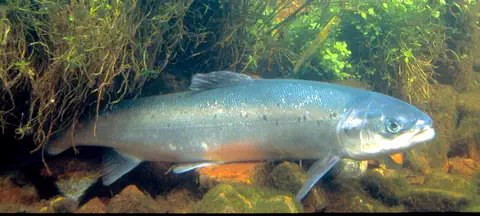
Atlantic salmon
The Atlantic salmon hatches in a river, swims out to the North Atlantic Ocean to feed and grow, then returns to the very river where it was born to lay its eggs. Along the way it changes color and shape several times.
-
 Watch
Animal
Bar-tailed godwit
The bar-tailed godwit is a long-billed shorebird that breeds on Arctic tundra and spends the rest of the year on mudflats far to the south. Godwits from Alaska fly non-stop across the Pacific Ocean to New Zealand and Australia, and one young bird tracked in 2022 flew at least 13,560 kilometers without landing.
-
 Watch
Animal
Barn owl
The barn owl is a pale, ghostly owl with a heart-shaped face that works like a dish to collect sound. It hunts mice and voles at night over fields and grassland, finding them by hearing alone if it has to. Barn owls live on every continent except Antarctica.
-
 Watch
3D
Animal
Barn swallow
The barn swallow is a small, speedy bird with a glossy blue back, a reddish throat and a long, deeply forked tail. It catches insects in the air, builds cup-shaped mud nests on barns and bridges, and makes long migrations between the Northern Hemisphere, where it nests, and the Southern Hemisphere, where it spends the winter.
-
 Watch
3D
Animal
Brown bear
The brown bear lives in more places than any other bear, from European forests to the mountains of Asia and the rivers of Alaska. It eats almost anything, from berries to salmon, and spends the long winter asleep in a cozy den. Grizzly bears and Kodiak bears are brown bears too.
-
 Watch
3D
Animal
Brown rat
Brown rats are large rodents that came from East Asia and spread around the world with people, mainly on ships. They are smart, strong swimmers with a superb sense of smell. Wild rats can carry germs that make people sick, so they are best left alone.
-
 Watch
Animal
Buff-tailed bumblebee
The buff-tailed bumblebee is one of the most common bumblebees in Europe. It is large and furry, with golden-yellow bands, and the queen has a buff, or light brown, tail. It lives in nests of up to a few hundred bees, and people raise it to pollinate crops such as greenhouse tomatoes.
-
 Watch
3D
Animal
Bull-headed dung beetle
The bull-headed dung beetle is a shiny black beetle about 1 centimeter long. Large males have two long, curved horns on their heads, like a bull. These beetles dig tunnels under cow dung and pack dung into balls for their young, which cleans up pastures and helps the soil. They came from Europe and now also live in North America and Australia.
-
 Watch
3D
Animal
Canada goose
The Canada goose is a big, black-necked goose with a white chinstrap, found near lakes, rivers, fields and parks across North America. Many migrate in noisy V-shaped flocks, but more and more stay all year on city lawns. People also brought Canada geese to Britain and other parts of Europe.
-
 Watch
3D
Animal
Cattle
Cattle are large farm animals that people tamed from wild oxen long ago. They eat grass and digest it with a stomach that has four parts. Farmers around the world keep cattle for milk, meat and leather, and in some places oxen still pull plows and carts.
-
 Watch
3D
Animal
Chicken
The chicken is a domesticated bird: people raise it on farms and in backyards all over the world for eggs and meat. Its wild ancestor is the red junglefowl of the forests of southern and Southeast Asia, and scientists think chickens were first domesticated about 3,500 years ago near rice fields in Southeast Asia.
-
 Watch
Animal
Common blackbird
The common blackbird is a thrush found in gardens, parks and woods across Europe, North Africa and parts of Asia. Males are glossy black with a bright yellow-orange bill and eye-ring, females are brown, and on summer evenings males sing a mellow, fluting song from high perches.
-
 Watch
3D
Animal
Common carp
The common carp is a large, sturdy fish with big scales and little whisker-like barbels by its mouth. It comes from rivers and lakes of Europe and Central Asia, but people have carried it to every continent except Antarctica, where it can muddy the water and harm water plants. Koi are a colorful kind of carp.
-
 Watch
Animal
Common cuttlefish
The common cuttlefish lives in the eastern Atlantic Ocean and the Mediterranean Sea. It is a relative of octopuses and squids, and it is a champion of camouflage: it can change its colors and patterns in moments to match the sea floor, and it floats using a light, hollow shell inside its body called a cuttlebone.
-
 Watch
Animal
Common earthworm
The common earthworm digs deep tunnels in the soil and comes up at night to drag fallen leaves down to eat. It breathes through its damp skin, has red blood and five pairs of heart-like pumps. Its tunnels and droppings help keep soil healthy.
-
 Watch
Animal
Common frog
The common frog is a familiar frog of ponds and gardens across Europe. It spends most of the year in damp grass, gardens and woods, and every spring it returns to ponds to lay clumps of frogspawn that grow into tadpoles and then little froglets.
-
 Watch
3D
Animal
Common kingfisher
The common kingfisher is a small, dazzling blue and orange bird of rivers, canals and lakes across Europe, Asia and North Africa. It watches from a perch, then dives headfirst into the water to catch small fish with its dagger-shaped bill.
-
 Watch
Animal
Common loon
The common loon is a big diving bird of northern lakes. In summer it wears a black head, a striped white necklace and a checkered back. It chases fish underwater, calls with eerie wails and yodels, and spends the winter on the coast.
-
 Watch
3D
Animal
Common murre
The common murre is a seabird of cold northern oceans that looks a little like a flying penguin. It dives deep to chase fish, nests in huge crowds on cliff ledges, and its chicks flutter down from the cliff to the sea before they can even fly.
-
 Watch
Animal
Common nightingale
The common nightingale is a plain brown songbird with one of the most famous songs in the world. Males sing from thick bushes, often in the middle of the night, and every year the birds fly from Europe and Asia to Africa for the winter.
-
 Watch
Animal
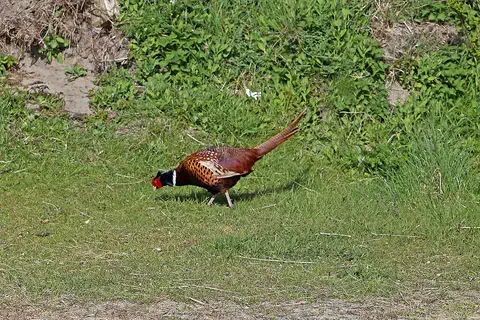
Common pheasant
The common pheasant is a long-tailed ground bird. Its wild home is Asia, from the Caspian Sea to China and Korea, but people have taken it to Europe, North America, New Zealand and other places. Males are bright and coppery with a red face; females are mottled brown.
-
 Watch
Animal
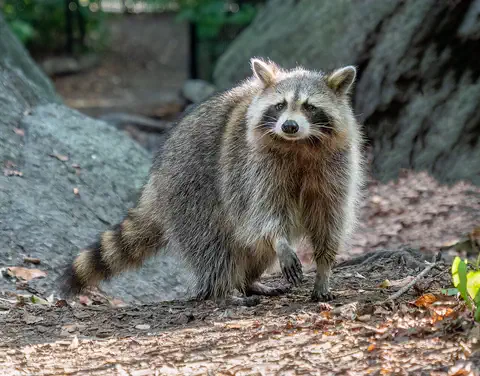
Common raccoon
The common raccoon is a clever night-time animal from North and Central America, famous for its black mask, ringed tail and nimble, hand-like front paws. It eats almost anything and lives in forests, wetlands, farms and even big cities. People have also brought raccoons to Europe and Japan, where they now live wild.
-
 Watch
Animal
Common raven
The common raven is the biggest member of the crow family and the largest songbird. It lives across most of the Northern Hemisphere, from deserts to Arctic tundra. Ravens eat almost anything, play games in the air, and have solved puzzles that scientists designed to test how well they can plan ahead.
-
 Watch
3D
Animal
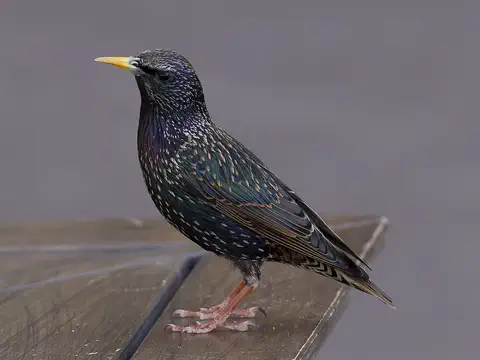
Common starling
The common starling, also called the European starling, is a glossy, spotted songbird from Europe, Asia and North Africa. It is a brilliant copycat that can imitate other birds and even car alarms, and in winter huge flocks swirl through the evening sky in shows called murmurations. People also carried starlings to North America, Australia and other places, where they now live in the wild.
-
 Watch
Animal
Common toad
The common toad is a warty brown amphibian that lives across Europe and into Asia. It spends most of the year on land, hunting slugs, worms and insects at night, then travels back to the pond where it hatched to lay long strings of eggs each spring.
-
 Watch
3D
Animal
Common wasp
The common wasp is a black and yellow striped insect that lives in a big family called a colony. Thousands of wasps share a round nest made of paper that they make by chewing wood. They catch insects such as caterpillars and flies to feed their young, which makes them useful garden helpers.
-
 Watch
3D
Animal
Domestic cat
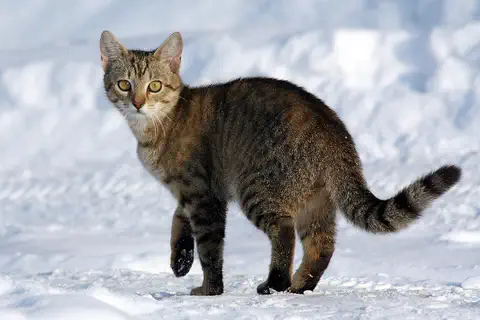
The domestic cat is one of the world's favorite pets. Cats live with people in homes, farms and towns in almost every country on Earth. Long ago they came from a small wildcat of the Middle East and Africa, and they still have the sharp senses and soft paws of a wild hunter.
-
 Watch
3D
Animal
Domestic dog
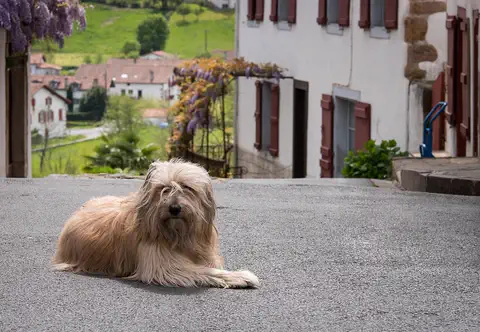
The domestic dog has lived with people for more than 12,000 years. Dogs came from gray wolves, and today there are more than 400 breeds, from tiny Chihuahuas to giant Irish wolfhounds. They live with people all over the world as pets, helpers and friends.
-
 Watch
3D
Animal
Domestic goat
Domestic goats are lively farm animals that came from a wild goat of Asia. They reach up to nibble leaves, twigs and weeds that other farm animals leave behind, and people keep them for milk, cheese, meat, wool and leather.
-
 Watch
3D
Animal
Domestic pig
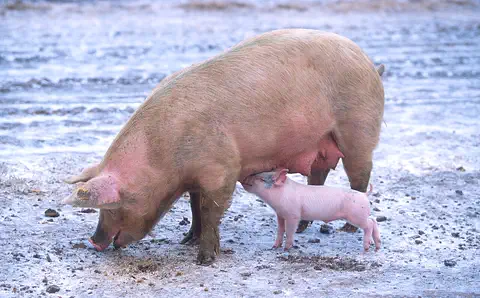
Domestic pigs live with people on every continent except Antarctica. Their ancestor is the wild boar, which people began taming about 9,000 years ago. Pigs are among the smartest farm animals, with a super-sensitive snout for digging up food.
-
 Watch
3D
Animal
Domestic sheep
Domestic sheep are farm animals that people tamed in western Asia thousands of years ago. They graze on grass, digest it with a four-part stomach and stick together in flocks. People keep sheep for wool, meat, milk and leather.
-
 Watch
3D
Animal
Donkey
Donkeys are domesticated members of the horse family, bred from the African wild ass more than 6,000 years ago. With their long ears, sure feet and great strength, they have carried loads for people on rough, dry land ever since, and in many countries they still do that work today.
-
 Watch
3D
Animal
Eastern gray squirrel
Eastern gray squirrels are bushy-tailed tree squirrels from the forests of eastern North America, and they are a common sight in parks and gardens. They bury nuts to eat later. People also took them to Britain and other countries; in Britain they cause problems for the native red squirrel.
-
 Watch
3D
Animal
Eurasian blue tit
The Eurasian blue tit is a small, colorful songbird of woods, parks and gardens across Europe and western Asia. It hangs upside down to find caterpillars, nests in holes and nest boxes, and can lay a very large clutch of eggs once a year, timed for when caterpillars are plentiful.
-
 Watch
Animal
Eurasian eagle-owl
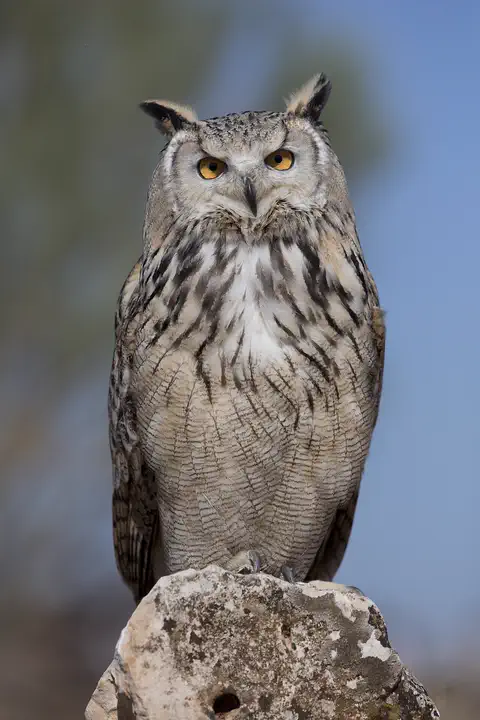
The Eurasian eagle-owl is one of the biggest owls in the world, with wings up to about 2 meters across, big orange eyes and two tall ear tufts. It lives across Europe and Asia, nests on rocky ledges and flies silently at night to catch rats, voles, hares and birds.
-
 Watch
Animal
Eurasian lynx
The Eurasian lynx is the largest of the four kinds of lynx. It has black ear tufts, a ruff of fur around its face, a short black-tipped tail and big furry paws for snow. It hides in forests and ambushes deer such as roe deer, and it has returned to parts of Europe where it had disappeared.
-
 Watch
3D
Animal
European bee-eater
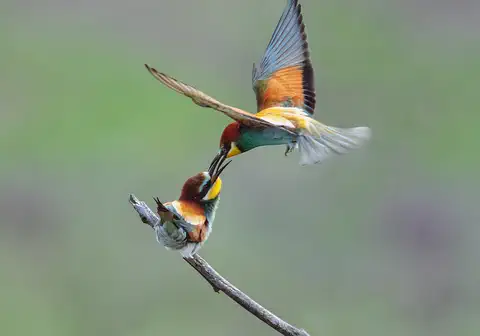
The European bee-eater is one of the most colorful birds in Europe. It catches bees, dragonflies and other flying insects in midair, knocks out the stings on a branch, and digs a long tunnel in a sandy bank for its nest. Every autumn it flies to Africa for the winter.
-
 Watch
Animal
European garden spider
The European garden spider is one of the best-known web-spinning spiders. It builds a round orb web, sits in the middle and waits to feel an insect land. Look for the white cross of spots on its back. It lives across Europe and Asia and was brought to North America, and it is harmless to people.
-
 Watch
Animal
European hedgehog
European hedgehogs are spiny mammals of woods, farmland, parks and gardens in western and northern Europe. They snuffle around at night for bugs and worms, roll into a ball to protect themselves and hibernate through the winter. Their numbers are falling in many countries.
-
 Watch
Animal
European herring gull
The European herring gull is a large, noisy gull of European coasts, with a pale gray back, pink legs and a yellow bill marked with a red spot. It eats almost anything, from crabs and fish to scraps people throw away, and many now nest on rooftops in towns. Even so, its numbers are falling in many places.
-
 Watch
3D
Animal
European mantis
The European mantis is the best-known praying mantis. It sits very still with its spiky front legs folded, then snatches insects that come close. It is native to Europe, Africa and much of Asia, and people brought it to North America more than 100 years ago.
-
 Watch
3D
Animal
European peacock butterfly
The European peacock butterfly has rusty-red wings with four big, colorful eyespots, like the spots on a peacock's tail. When a bird comes close, it flashes its eyespots and makes a hissing sound. Its black, spiny caterpillars live together on stinging nettles, and the adults sleep through the winter in hollow trees and sheds.
-
 Watch
3D
Animal
European rabbit
The European rabbit is the wild rabbit that all pet and farm rabbits come from. It lives in groups in big underground tunnel homes called warrens. Its numbers have fallen in its first home in Spain, Portugal and France, but people have carried it to many other places, where it became a pest.
-
 Watch
Animal
European robin
The European robin is a small songbird of Europe's woods, parks and gardens, famous for its orange-red breast. It sings almost all year round, even at night under streetlights, and it defends its patch fiercely. Young robins have no red breast at all: they are speckled with golden brown.
-
 Watch
3D
Animal
European stag beetle
The European stag beetle is one of Europe's biggest beetles. Males have giant jaws shaped like a stag's antlers, which they use to wrestle other males. Stag beetles spend most of their lives underground as larvae, eating rotting wood for about four years, and live only a few weeks as adults.