
Animal
Leafcutter ant
There are many kinds of leafcutter ants. This page is about one of them. Leafcutter ants cut up leaves and carry them home. They do not eat the leaves. They use them to grow a special food in their underground garden.
Leafcutter ants are farmers. Workers cut pieces of leaves, carry them home along busy trails and use them to grow a fungus garden underground, and the fungus is their food. This page is about one well-known kind, Atta cephalotes, which lives in Central and South America in giant nests of hundreds of thousands to millions of ants.
Atta cephalotes is a fungus-farming ant of Neotropical forests and forest edges. Workers harvest fresh leaves to cultivate a fungus, Leucoagaricus gongylophorus, on which the colony depends; workers of very different sizes divide the labor, and a single long-lived queen can lay more than 25,000 eggs a day. This page covers that species; Atta and its relatives include many other leafcutter species.
Photo: Charles J. Sharp, CC BY-SA 4.0, via Wikimedia Commons
Meet one kind of leafcutter ant
Leafcutter ants are tiny farmers. There are many kinds, and this page is about one of them.
They snip pieces of leaves and carry them home. The leaves look like little green flags. At home, the ants use the leaves to grow their food.
Leafcutter ants are some of the world's most famous farmers. There are many kinds; this page is about one of the best known, Atta cephalotes, which lives in the warm forests of Central and South America.
Workers climb plants, cut out pieces of leaves with their jaws and carry them home over their heads. But they do not eat the leaves. Underground, they use them to grow a fungus, a living thing related to mushrooms, and that fungus feeds the whole colony. One colony can hold hundreds of thousands, or even millions, of ants.
Atta cephalotes belongs to the attine ants, the fungus-growing ants of the Americas. AntWiki notes that only about 275 of roughly 15,000 known ant species farm fungus, and that colonies of the most specialized fungus growers can hold 5 to 10 million ants working in hundreds of fungus chambers.
The San Diego Zoo Wildlife Alliance describes A. cephalotes as a dominant and ecologically important species of tropical American rainforests and forest edges, an "ecosystem engineer" with a large effect on plant communities. The species' genome has been fully sequenced. This page covers A. cephalotes only; other Atta and Acromyrmex species are also called leafcutter ants.
Quick facts
- Group
- Invertebrate
- Length
- 2 to 14 mm
- Lifespan in the wild
- 10 to 20 years
Where it lives
These leafcutter ants live in warm, rainy forests.
They live in Central America and South America. Their big nest is under the ground, with lots of little rooms.
Atta cephalotes lives in and near humid tropical forests from southern Mexico to Brazil. It is rarely far from trees, but it does very well at forest edges, in clearings, along roads, in pastures and gardens, and even in some cities with enough trees.
Its nest is a huge underground city. On top, you see a mound of bare soil with many entrances. Underneath are tunnels and hundreds of round chambers where the fungus gardens grow. Other chambers are used only for waste, which keeps the gardens clean.
The San Diego Zoo Wildlife Alliance gives a range from southern Mexico to Brazil at about 0 to 2,000 meters, naming Brazil, Colombia, Ecuador, French Guiana, Guyana, Mexico, Nicaragua, Peru, Suriname and Venezuela as main countries, plus Trinidad and Panama's Bocas del Toro islands. AntWiki's regional lists add Belize, Guatemala, Honduras, Costa Rica, Panama and Bolivia. Genetic studies show South American populations are separated from those of Central America and western Colombia by the northern Andes.
The species specializes in forest gaps. In Brazil, Meyer and colleagues (2009) found its colonies 11 times denser at the forest edge than in the interior. For Atta generally, nests can reach 3 to 6 meters below ground, and AntWiki cites nests of A. cephalotes covering more than 100 square meters, with separate refuse chambers that help stop disease spreading through the gardens.
Continents
Its habitat

Where can you find this animal?
- Lives here naturally · Countries and seas named by a scientific source
- Sightings recorded · Records of wild sightings (GBIF)
Lives here naturally · Countries and seas named by a scientific source
Humid tropical forests, forest edges and clearings, roadsides, pastures and gardens from southern Mexico through Central America to Brazil and Bolivia, from sea level to about 2,000 meters, and on Trinidad. French Guiana is part of the range but has no separate shape on this map; island reports from the Lesser Antilles are not shown. It lives only in suitable places within each country shown.
Places: Mexico, Belize, Guatemala, Honduras, Nicaragua, Costa Rica, Panama, Colombia and 8 more places.
Source: https://ielc.libguides.com/sdzg/factsheets/leafcutter-ant/distribution · checked October 2026
Sightings recorded · Records of wild sightings (GBIF)
Counts of GBIF records of wild observations (human and machine) and preserved specimens. Records include introduced populations, vagrants, escaped or released animals and misidentifications, so a country with records is not necessarily part of the native range.
Wild sightings have been recorded in Costa Rica, Colombia, Mexico, Brazil, Ecuador, Trinidad & Tobago, Belize, Panama and 13 more places.
Source: gbif · checked October 2026
Range maps show where scientists say an animal lives, often country by country. An animal may live in only part of a country shown, and sightings records can include animals that wandered far from home.
Farmers of fungus
Leafcutter ants grow their own food.
They chew the leaves into soft mush. A fungus grows on it, like a fluffy garden. The ants and their babies eat the fungus.
The ants and their fungus need each other. Workers carry leaf pieces into the nest, where smaller ants cut them into tiny bits about 1 to 2 millimeters across. Gardener ants crush the bits, add droplets of their own droppings as fertilizer and press them into the spongy fungus garden.
The fungus grows little swollen tips full of food. Workers pick them and feed the juice to the young ants, which eat nothing else. Grown-up workers also sip sweet plant sap and nectar. The ants collect most of their leaves high up in the treetops.
Leaf fragments are the substrate for a specialized cultivated fungus, Leucoagaricus gongylophorus. An assembly line processes them: foragers drop fragments in the nest, processing ants clip them to about 1 to 2 millimeters, and gardeners crush them into pellets, add fecal fluid and insert them into the garden, seeding them with fungal strands.
The fungus produces gongylidia, swollen hyphal tips that grow in clusters called staphylae, rich in lipids and carbohydrates. Larvae depend entirely on them, and most of the energy needs of workers are met the same way, although adult foragers also take plant saps and nectar, and Shik and colleagues (2018) found foragers more nutritionally flexible than once thought. Harvest comes mainly from the tree canopy, along with flowers and fruit parts.
Did you know?
Leafcutter ants keep their trash in special rooms.
Leafcutter ants store waste in separate underground chambers, away from their gardens, which helps stop diseases spreading.
Refuse is moved to dedicated chambers by refuse workers who are kept apart from nestmates, protecting the fungus from pathogens.
Ants of every size
Leafcutter ants come in many sizes.
The tiniest ants look after the garden. Middle-sized ants cut leaves. The biggest ants guard the trails. The queen is the biggest of all.
In one colony, workers can be anywhere from about 2 to 14 millimeters long, and the queen is about 22 millimeters. Each size has its own jobs. The smallest workers, called minims, care for the fungus and the young. Medium workers cut and carry leaves. The big majors guard the trails and fight off intruders with powerful, sharp jaws.
Leafcutter ants can also buzz! A special organ on the abdomen makes vibrations. The vibrations help an ant slice through a leaf with less effort, and they call nestmates to help.
Workers are strongly polymorphic, about 2 to 14 millimeters long (Marwell Zoo), and body size and proportions shape their role: small workers handle the delicate fungus, while large, older workers work outside. Majors defend the colony and maintain trails; Marwell Zoo notes they will attack large intruders, including vertebrates.
A stridulatory organ on the gaster, a scraper rubbing over a file, produces vibrations. Tautz and colleagues (1995) found that vibrations passed into the leaf reduce the force and energy needed to cut it; vibrations also recruit nestmates and signal alarm. Arganda and colleagues (2020) found eyes matched to work: below-ground workers have smaller, more sensitive eyes, and above-ground workers larger eyes with sharper vision. Sticky pads and curved claws let foragers climb into the canopy.
How a new colony begins
A new colony starts with one queen.
She flies away from home with a tiny piece of fungus in her mouth. She digs a little room and plants her garden. Her eggs hatch into larvae, then pupae, then new worker ants!
Every year, a big colony sends out thousands of young winged queens and males. They fly up and mate high in the air, and the males die soon after. Each queen carries a small piece of the fungus garden in a pouch in her mouth.
She lands, her wings fall off and she digs a single chamber, where she spits out the fungus to start a new garden. She does not eat it; she lives on her body fat while she lays eggs. The eggs grow into larvae and pupae, tended in the fungus, and become her first workers, who take over the work. Most new colonies fail in the first few months.
Mature Atta colonies produce several thousand alate queens a year, and colonies start producing reproductives after about 3 years. Mating takes place high in the air on synchronized flights, sometimes several kilometers from home; a queen mates with several males (up to five), stores their sperm and never mates again, using only one or two sperm per egg.
The founding queen carries mycelium in her infrabuccal pocket, excavates one chamber and starts a garden fertilized with her excretions, living on body fat and reabsorbed wing muscle. Brood (eggs, larvae, pupae) develops in the fungus. Colony growth is slow for the first 2 years, and Fowler and colleagues (1983) found that only about 10 percent of colonies survived the first few months. A mature queen can lay more than 25,000 eggs a day.
Highways and hitchhikers
Leafcutter ants walk along smooth paths, like little roads.
Some tiny ants ride on top of the leaves. They chase away flies that bother the carriers.
Leafcutter ants build trails like highways, cleared of plants and kept tidy. Some are longer than 500 meters and are used for months or years. The ants follow scent trails that they lay down on the ground.
Watch a leaf piece closely and you may see a tiny ant riding on top. These hitchhikers are minims. They guard the carrier from small parasitic flies that try to lay eggs on the ants, and they start cleaning the leaf on the way home. Colonies can work in the daytime or at night, and they cut back their work during rainstorms.
A. cephalotes is often called a superorganism: a queen and her sterile daughters with overlapping generations and a size-based division of labor. Foragers travel cleared trunk trails, some more than 500 meters long, maintained for months or years and marked with trail pheromones; fallen logs and roots are built into the network, and walking on them is faster.
Minims riding on fragments defend against parasitic phorid flies and begin cleaning the leaves. Activity varies by colony: some are diurnal, some nocturnal, and daytime parasitism and rain likely suppress daytime foraging. Foragers can work at surface temperatures from 17 to 45 °C. Refuse workers are kept apart from the rest of the colony, which helps protect the garden from pathogens.
Did you know?
One leafcutter queen can lay thousands of eggs in one day.
A grown-up leafcutter queen can lay more than 25,000 eggs a day.
Mature queens lay more than 25,000 eggs per day, using only one or two stored sperm per fertilized egg.
Common, important and sometimes a pest
There are lots of leafcutter ants.
They help forests by moving soil and leaves. Sometimes they also cut leaves on farms, and the farmers are not happy!
Atta cephalotes is common and widespread, so it is not in danger. Scientists have not given it an IUCN conservation status. It actually becomes more common where people have cut gaps in forests for farms, pastures and roads.
Leafcutter ants change the forest around them. They move huge amounts of leaves and soil, so scientists call them ecosystem engineers. On farms and in gardens, though, leafcutter ants can strip crops, and they are treated as serious pests in some places.
A. cephalotes has not been assessed by the IUCN and is not listed by CITES; the San Diego Zoo Wildlife Alliance describes it as abundant and widespread, with no conservation concern. It lives at low densities in undisturbed forest but thrives in forest gaps, edges and fragments, pastures and other human-modified land.
Its nests reshape soil and plant communities, which is why it is called an ecosystem engineer, and AntWiki notes that its large nests affect the leaf-litter animal community around them. In agricultural and urban areas, Atta species are considered severe pests, and human movements and attempts to wipe them out with chemicals have also shaped A. cephalotes populations (Weber 1969; Muñoz-Valencia and colleagues 2022).
Did you know?
Leafcutter ants can buzz to make cutting easier.
Leafcutter ants make vibrations with a special organ on their bodies, and the vibrations help them cut leaves with less effort.
Stridulation transmitted into the leaf lowers the force and energy needed to cut it (Tautz and colleagues 1995).
Amazing facts
-
A leafcutter queen takes a tiny piece of her old garden with her when she leaves home.
A young leafcutter queen carries a small piece of fungus in a pouch in her mouth, so she can plant a new garden.
Founding queens carry mycelium in the infrabuccal pocket and regurgitate it to start the new colony's garden.
-
Leafcutter ants can buzz to make cutting easier.
Leafcutter ants make vibrations with a special organ on their bodies, and the vibrations help them cut leaves with less effort.
Stridulation transmitted into the leaf lowers the force and energy needed to cut it (Tautz and colleagues 1995).
-
Leafcutter ants keep their trash in special rooms.
Leafcutter ants store waste in separate underground chambers, away from their gardens, which helps stop diseases spreading.
Refuse is moved to dedicated chambers by refuse workers who are kept apart from nestmates, protecting the fungus from pathogens.
-
One leafcutter queen can lay thousands of eggs in one day.
A grown-up leafcutter queen can lay more than 25,000 eggs a day.
Mature queens lay more than 25,000 eggs per day, using only one or two stored sperm per fertilized egg.
Words to know
- fungus
- a living thing, related to mushrooms, that grows on food like leaves or wood
- colony
- a big family of insects that live and work together
- queen
- the ant that lays the eggs for the whole colony
- minim
- one of the smallest worker ants in a leafcutter colony
- pheromone
- a smell an animal makes to send a message to others of its kind
- ecosystem engineer
- an animal that changes its surroundings so much that it shapes the home of many other living things
Discovery challenge
-
What do leafcutter ants do with the leaves?
What do leafcutter ants use the leaves for?
What is the main use of the leaf fragments leafcutter ants carry home?
- Grow a fungus garden for food
- Build boats to cross rivers
- Make beds for birds
Show the answer
Grow a fungus garden for food
The ants grow a fungus on the leaves, and they eat the fungus.
The leaves feed a fungus garden, and the fungus feeds the ants and their young.
Leaves are the substrate for the cultivated fungus Leucoagaricus gongylophorus, the colony's main food.
-
Why do tiny ants ride on the leaves?
Why do tiny minim workers ride on the leaf pieces?
What is the main job of minims riding on carried fragments?
- To guard the carrier from flies
- To steer the leaf like a sail
- To take a nap
Show the answer
To guard the carrier from flies
The tiny ants chase away flies that bother the carrier.
They guard the carrier from parasitic flies and start cleaning the leaf.
Riders defend foragers against parasitic phorid flies and begin cleaning the fragment.
-
How many queens does a leafcutter colony usually have?
How many egg-laying queens does a leafcutter colony usually have?
How many reproductive queens does a typical A. cephalotes colony contain?
- One
- Ten
- None
Show the answer
One
There is usually just one queen, and she lays all the eggs.
Usually one queen lays the eggs, and millions of workers do the rest.
Typically a single queen; workers are sterile, though a few colonies show more variable breeding systems.
-
What does a new queen carry when she flies away?
What does a young queen carry to start her new colony?
What does a founding queen carry in her infrabuccal pocket?
- A seed
- A piece of fungus
- A leaf
Show the answer
A piece of fungus
She carries a tiny piece of fungus to start a new garden.
She carries a small piece of fungus in a pouch in her mouth and plants it in her new nest.
A piece of mycelium, regurgitated to start the new garden; she does not eat it.
Places where you might see it
-
 Watch
 Country
Costa Rica
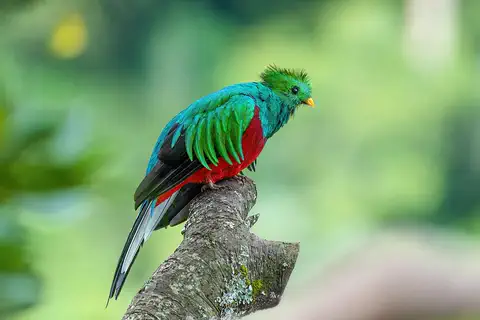
Costa Rica is a small country in Central America between the Caribbean Sea and the Pacific Ocean. Volcanoes and mountains run down its middle, its forests are full of wildlife, and many national parks protect them. Since 1949 it has had no army. About 5.2 million people lived there in 2025.
-
 Watch
 Country
Colombia
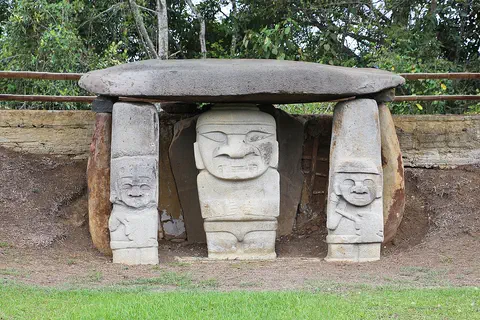
Colombia is in the northwest of South America, with coasts on both the Caribbean Sea and the Pacific Ocean. Three ranges of the Andes run through it, and most people live in the cool mountains, where the capital, Bogotá, sits on a high plateau. About 53.4 million people lived there in 2026, according to DANE, the national statistics office.
Experiments to try
- Watch What If? Lab What if ants left no trails? Many ants mark the way to food with a scent trail, and their nestmates follow it. Because old scent fades, the colony often ends up on the shortest path. Computer scientists even copy the trick. Imagine ants that left no trails and follow what might change.
- Watch What If? Lab What if you could shrink to the size of an ant? Small creatures live in a strange world. For a tiny ant, the air keeps a fall slow, a drop of water might look as big as a beach ball, and its neck turns out to be very strong for its size. Imagine shrinking to ant size and explore each of these, one careful step at a time.
- Watch What If? Lab What if there were no fungi? Fungi are a whole kingdom of living things, with about 144,000 known species, from tiny yeasts to big mushrooms. They puff up our bread, ripen some cheeses, rot dead wood and team up with plant roots. Imagine a world with no fungi at all and follow what might change.
Explore next
-
 Watch
Animal
Army ant
Army ants hunt together in giant swarms and never build a permanent nest. This page is about the best-studied kind, Eciton burchellii, of Central and South American forests. Each night of its traveling phase the colony moves, and the workers link their legs to build a living camp around their queen and young.
-
Watch
Country
Costa Rica
Costa Rica is a small country in Central America between the Caribbean Sea and the Pacific Ocean. Volcanoes and mountains run down its middle, its forests are full of wildlife, and many national parks protect them. Since 1949 it has had no army. About 5.2 million people lived there in 2025.
-
Watch
Country
Colombia
Colombia is in the northwest of South America, with coasts on both the Caribbean Sea and the Pacific Ocean. Three ranges of the Andes run through it, and most people live in the cool mountains, where the capital, Bogotá, sits on a high plateau. About 53.4 million people lived there in 2026, according to DANE, the national statistics office.
- Watch What If? Lab What if ants left no trails? Many ants mark the way to food with a scent trail, and their nestmates follow it. Because old scent fades, the colony often ends up on the shortest path. Computer scientists even copy the trick. Imagine ants that left no trails and follow what might change.
- Watch What If? Lab What if you could shrink to the size of an ant? Small creatures live in a strange world. For a tiny ant, the air keeps a fall slow, a drop of water might look as big as a beach ball, and its neck turns out to be very strong for its size. Imagine shrinking to ant size and explore each of these, one careful step at a time.
- Watch What If? Lab What if there were no fungi? Fungi are a whole kingdom of living things, with about 144,000 known species, from tiny yeasts to big mushrooms. They puff up our bread, ripen some cheeses, rot dead wood and team up with plant roots. Imagine a world with no fungi at all and follow what might change.
-
 Watch
Animal
Hercules beetle
The Hercules beetle is one of the largest beetles in the world: the biggest males can reach 18 centimeters, horns included. It lives in rainforests from southern Mexico to Bolivia and on a few Caribbean islands. Its huge grubs spend more than a year eating rotting wood before they turn into beetles.
-
 Watch
Animal
American lobster
The American lobster is a big crustacean that lives on the rocky sea floor of the northwest Atlantic Ocean. It has two very different claws, one for crushing and one for tearing, and it must climb out of its hard shell again and again to grow.
For parents & teachers
What children will learn
- Explain how leafcutter ants farm a fungus and why the ants and fungus need each other.
- Describe how workers of different sizes share the jobs of a colony.
- Put the steps of founding a new colony in order.
- Discuss why an animal can help a forest and be a pest on a farm.
Recommended ages: 3 to 17 · About 15 minutes
Talk about it
- Why might a colony need workers of so many different sizes?
- How is a leafcutter colony like a farm, and how is it different?
- Why do you think leafcutter ants do better at forest edges than deep in the forest?
Try at home or in class
- Cut a leaf into a shape and try to carry it on top of a toy car across a table: notice how a big load is hard to balance.
- Use a ruler to draw lines 2, 14 and 22 millimeters long to compare the smallest worker, the biggest worker and the queen.
Key vocabulary: fungus, colony, queen, minim, pheromone, ecosystem engineer
Where these facts come from
- GBIF Backbone Taxonomy and GBIF Occurrence Search , Global Biodiversity Information Facility (CC0 1.0 (backbone); occurrence counts are facts derived from records under CC0, CC BY and CC BY-NC)
- Wikidata , Wikimedia Foundation (CC0 1.0)
- Leafcutter Ant (Atta cephalotes) Fact Sheet: Summary , San Diego Zoo Wildlife Alliance Library
- Leafcutter Ant (Atta cephalotes) Fact Sheet: Distribution & Habitat , San Diego Zoo Wildlife Alliance Library
- Leafcutter Ant (Atta cephalotes) Fact Sheet: Physical Characteristics , San Diego Zoo Wildlife Alliance Library
- Leafcutter Ant (Atta cephalotes) Fact Sheet: Behavior & Ecology , San Diego Zoo Wildlife Alliance Library
- Leafcutter Ant (Atta cephalotes) Fact Sheet: Diet & Feeding , San Diego Zoo Wildlife Alliance Library
- Leafcutter Ant (Atta cephalotes) Fact Sheet: Reproduction & Development , San Diego Zoo Wildlife Alliance Library
- Leafcutter Ant (Atta cephalotes) Fact Sheet: Population & Conservation Status , San Diego Zoo Wildlife Alliance Library
- Atta cephalotes (read via the Internet Archive copy of 24 March 2025) , AntWiki
- Leaf-cutter ants , Marwell Zoo
- Wikimedia Commons , Wikimedia Foundation (Per file: Public domain, CC0, CC BY or CC BY-SA only (credited on each page))
Checked, not yet human-reviewed. Last updated October 27, 2026. Spotted a mistake? Tell us.