Invertebrates
Animals without a backbone: insects, spiders, crabs, snails, octopuses, jellyfish and more.
77 to explore · page 1 of 2
-
 Watch
Animal
American lobster
The American lobster is a big crustacean that lives on the rocky sea floor of the northwest Atlantic Ocean. It has two very different claws, one for crushing and one for tearing, and it must climb out of its hard shell again and again to grow.
-
 Watch
3D
Animal
Antarctic krill
Antarctic krill are small, shrimp-like crustaceans about 6 centimeters long that live in the icy Southern Ocean around Antarctica. They gather in enormous swarms, and almost all the bigger animals of the Antarctic, from penguins to blue whales, depend on them for food.
-
 Watch
Animal
Army ant
Army ants hunt together in giant swarms and never build a permanent nest. This page is about the best-studied kind, Eciton burchellii, of Central and South American forests. Each night of its traveling phase the colony moves, and the workers link their legs to build a living camp around their queen and young.
-
 Watch
3D
Animal
Atlantic blue crab
The Atlantic blue crab is a swimming crab with bright blue claws and back legs shaped like paddles. It lives along the Atlantic coast of the Americas, especially in bays where rivers meet the sea, like the Chesapeake Bay. A mother crab carries up to two million eggs in a spongy orange mass under her body.
-
 Watch
3D
Animal
Atlantic ghost crab
The Atlantic ghost crab is a sand-colored crab of beaches along the Atlantic coast of the Americas. It is so pale that it almost disappears on the sand, like a ghost. It digs deep burrows, comes out mostly at night, and runs very fast on its long legs.
-
 Watch
3D
Animal
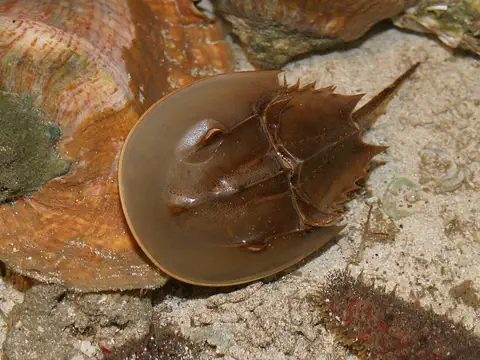
Atlantic horseshoe crab
The Atlantic horseshoe crab is a living fossil: its relatives have looked much the same for hundreds of millions of years. Despite its name, it is more closely related to spiders and scorpions than to crabs. Each spring, thousands crawl onto beaches to lay eggs, feeding hungry shorebirds, and its blue blood helps keep medicines safe.
-
 Watch
Animal
Atlas moth
The atlas moth is one of the largest moths in the world, with wings up to about 24 centimeters across. It lives in tropical and subtropical forests of southern and Southeast Asia. Its caterpillars eat a lot and spin silk cocoons, and the adults cannot eat at all: they live for only about a week.
-
 Watch
Animal
Australian box jellyfish
The Australian box jellyfish has a clear, box-shaped bell with bunches of long tentacles at each of its four corners. Unlike most jellyfish it swims on purpose, it has 24 eyes but no brain, and it grows very fast after leaving the tiny polyp it started from. Its sting is very dangerous, so people in northern Australia swim carefully in stinger season.
-
 Watch
Animal
Blue dragon
The blue dragon is a sea slug only about 3 centimeters long that floats upside down on the ocean's surface, held up by a bubble of gas in its stomach. It eats stinging animals such as the Portuguese man o' war and keeps their stinging cells in its own finger-like tips.
-
 Watch
Animal
Blue sea star
The blue sea star is easy to spot on Indian and Pacific Ocean reefs: bright blue, with five smooth, tube-shaped arms. It cleans up the reef by eating dead animals, tiny creatures and the thin film that grows on rocks, and it can grow back an arm it loses.
-
 Watch
Animal
Buff-tailed bumblebee
The buff-tailed bumblebee is one of the most common bumblebees in Europe. It is large and furry, with golden-yellow bands, and the queen has a buff, or light brown, tail. It lives in nests of up to a few hundred bees, and people raise it to pollinate crops such as greenhouse tomatoes.
-
 Watch
3D
Animal
Bull-headed dung beetle
The bull-headed dung beetle is a shiny black beetle about 1 centimeter long. Large males have two long, curved horns on their heads, like a bull. These beetles dig tunnels under cow dung and pack dung into balls for their young, which cleans up pastures and helps the soil. They came from Europe and now also live in North America and Australia.
-
 Watch
Animal
Caribbean hermit crab
The Caribbean hermit crab is a land hermit crab with a big purple claw and red legs. It lives near the coasts of Bermuda, Florida and the Caribbean, carries an empty snail shell for protection, and goes back to the sea only to release its eggs.
-
 Watch
3D
Animal
Chambered nautilus
The chambered nautilus is a relative of octopuses and squids that lives inside a coiled shell full of sealed rooms. It moves up and down along deep reef slopes by changing how much gas and water are in its shell, and it finds food mostly by smell.
-
 Watch
Animal
Christmas Island red crab
The Christmas Island red crab is a bright red land crab that lives almost only on Christmas Island in the Indian Ocean. It lives in burrows in the rainforest, and when the wet season begins, millions of crabs march down to the ocean together to breed, crossing roads, rocks and beaches.
-
 Watch
Animal
Christmas tree worm
The Christmas tree worm is a small sea worm that lives in a tube inside living coral on Caribbean reefs. Only its two colorful, spiral crowns show. They catch tiny floating food and help it breathe, and the worm pulls them in with a flash if anything comes too close.
-
 Watch
Animal
Coconut crab
The coconut crab, also called the robber crab, is the biggest crustacean that lives on land. It is a close relative of hermit crabs, lives on tropical islands in the Indian and Pacific Oceans, climbs trees, and can open coconuts with its powerful claws.
-
 Watch
Animal
Colossal squid
The colossal squid lives deep in the icy Southern Ocean around Antarctica. It is thought to be the heaviest animal without a backbone: one caught in 2007 weighed about 470 kilograms. Its arms and tentacles carry sharp, turning hooks, and in 2025 scientists filmed a living one in the wild for the first time.
-
 Watch
Animal
Common blue morpho
The common blue morpho is a large butterfly of the forests of Mexico, Central America and South America. The tops of its wings flash bright blue, but the undersides are brown with big eyespots, which camouflage it when it lands with its wings closed. Adults sip juice from rotting fruit instead of nectar.
-
 Watch
Animal
Common cuttlefish
The common cuttlefish lives in the eastern Atlantic Ocean and the Mediterranean Sea. It is a relative of octopuses and squids, and it is a champion of camouflage: it can change its colors and patterns in moments to match the sea floor, and it floats using a light, hollow shell inside its body called a cuttlebone.
-
 Watch
Animal
Common earthworm
The common earthworm digs deep tunnels in the soil and comes up at night to drag fallen leaves down to eat. It breathes through its damp skin, has red blood and five pairs of heart-like pumps. Its tunnels and droppings help keep soil healthy.
-
 Watch
Animal
Common eastern firefly
The common eastern firefly, or big dipper firefly, is a beetle that makes its own light. On summer evenings, males fly over lawns and fields, drawing a J-shaped flash in the air, and females on the ground flash back. Most of its life is spent as a glowing larva in damp soil, hunting snails and worms.
-
 Watch
Animal
Common green darner
The common green darner is one of North America's larger and best-known dragonflies, up to about 8 centimeters long. It begins life as an underwater nymph, then becomes a fast flier that catches insects in the air. Many green darners migrate, in a relay that takes at least three generations each year.
-
 Watch
3D
Animal
Common octopus
The common octopus is a soft-bodied mollusc with eight sucker-lined arms. It lives in coastal waters, hides in a den by day, hunts snails and clams at night, and can change its color, skin texture and shape to vanish against rocks or sand. It lives only one to two years.
-
 Watch
Animal
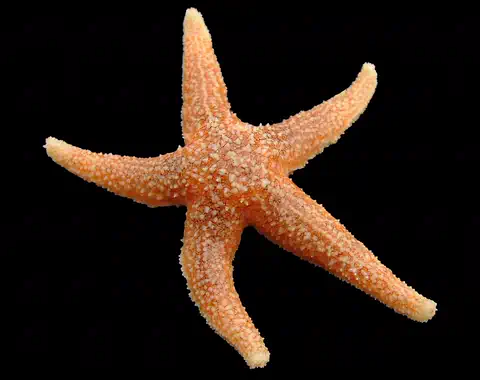
Common starfish
The common starfish is the most familiar starfish of the north-east Atlantic coasts. It has five arms, an eye spot at the tip of each one, and many tube feet. It can pull open a mussel shell and push its own stomach inside to eat.
-
 Watch
3D
Animal
Common wasp
The common wasp is a black and yellow striped insect that lives in a big family called a colony. Thousands of wasps share a round nest made of paper that they make by chewing wood. They catch insects such as caterpillars and flies to feed their young, which makes them useful garden helpers.
-
 Watch
Animal
Crown-of-thorns starfish
The crown-of-thorns starfish is a large sea star of Indian and Pacific Ocean reefs, with up to 21 arms and hundreds of sharp, toxic spines. It eats living coral by pushing its stomach out over it. Usually it is a normal part of the reef, but sometimes huge numbers appear, called outbreaks, and they can eat much of a reef's coral.
-
 Watch
Animal
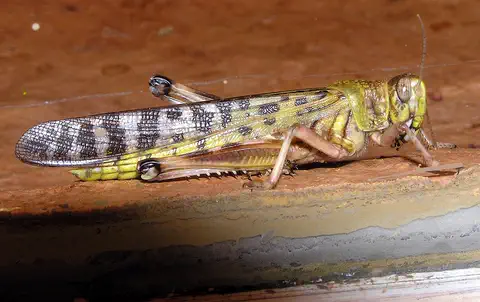
Desert locust
The desert locust is a large grasshopper of the deserts of Africa, the Middle East and Southwest Asia. Most of the time it lives alone. But after good rains, when locusts become crowded, they change their color and behavior and can gather into enormous swarms that fly long distances and eat farmers' crops.
-
 Watch
3D
Animal
Domestic silk moth
The domestic silk moth is an insect people have kept for thousands of years. Its caterpillar, the silkworm, eats mulberry leaves and spins a cocoon from one long silk thread. People unwind those threads to make silk cloth. Silk moths now live only with people: the adults cannot even fly.
-
 Watch
3D
Animal
Eastern tiger swallowtail
The eastern tiger swallowtail is a large butterfly of eastern North America. Males are yellow with black tiger stripes, while many females are dark, which helps them look like a bad-tasting butterfly. Its caterpillars disguise themselves as bird droppings, then turn green with big fake eyes.
-
 Watch
Animal
Emperor scorpion
The emperor scorpion is one of the biggest scorpions in the world, up to about 20 centimeters long. It lives in the warm, humid forests of West Africa, where it digs burrows and hunts insects such as termites at night. Mothers give birth to live young and carry them on their backs. Like other scorpions, it glows blue-green under ultraviolet light.
-
 Watch
Animal
European garden spider
The European garden spider is one of the best-known web-spinning spiders. It builds a round orb web, sits in the middle and waits to feel an insect land. Look for the white cross of spots on its back. It lives across Europe and Asia and was brought to North America, and it is harmless to people.
-
 Watch
3D
Animal
European mantis
The European mantis is the best-known praying mantis. It sits very still with its spiky front legs folded, then snatches insects that come close. It is native to Europe, Africa and much of Asia, and people brought it to North America more than 100 years ago.
-
 Watch
3D
Animal
European peacock butterfly
The European peacock butterfly has rusty-red wings with four big, colorful eyespots, like the spots on a peacock's tail. When a bird comes close, it flashes its eyespots and makes a hissing sound. Its black, spiny caterpillars live together on stinging nettles, and the adults sleep through the winter in hollow trees and sheds.
-
 Watch
3D
Animal
European stag beetle
The European stag beetle is one of Europe's biggest beetles. Males have giant jaws shaped like a stag's antlers, which they use to wrestle other males. Stag beetles spend most of their lives underground as larvae, eating rotting wood for about four years, and live only a few weeks as adults.
-
 Watch
Animal
Garden snail
The garden snail is a land snail with a brown-banded shell about 3 centimeters wide. It glides on a muscular foot over a carpet of slime, comes out mostly at night and after rain, and eats almost any garden plant. It first lived in western Europe and around the Mediterranean, but people have carried it around the world.
-
 Watch
Animal
Giant African millipede
The giant African millipede is one of the largest millipedes in the world, usually 16 to 28 centimeters long. It lives in the lowlands of East Africa, from Kenya to Mozambique, where it eats dead plants and helps turn them back into soil. Like all millipedes, it has two pairs of legs on most body rings and adds rings and legs as it grows.
-
 Watch
Animal
Giant clam
The giant clam, Tridacna gigas, is the largest clam alive. Its shell can grow more than a meter long. It sits on sunny coral reefs in the Indian and Pacific Oceans and gets most of its food from tiny algae living in its body. It is Critically Endangered.
-
 Watch
3D
Animal
Giant isopod
The giant isopod is a deep-sea relative of the pill bugs and sowbugs you find under garden stones, but it can grow to about 50 centimeters long. It crawls over the dark sea floor of the western Atlantic, cleaning up dead fish, squid and other food that sinks from above.
-
 Watch
Animal
Giant Pacific octopus
The giant Pacific octopus is the largest octopus species in the world, living in cool waters of the North Pacific from Japan to Alaska and California. It hunts crabs and clams at night, changes color and skin texture at will, and can squeeze through a hole only a few centimeters wide.
-
 Watch
Animal
Giant squid
The giant squid is one of the biggest animals without a backbone. Most of its length is two very long, stretchy feeding tentacles. It lives deep in oceans around the world, and it is so hard to find that the first photos of a living one in the wild were taken only in 2004.
-
 Watch
Animal
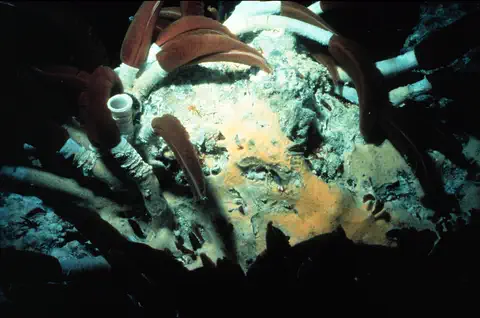
Giant tube worm
The giant tube worm lives more than a mile deep in the Pacific Ocean, beside hot springs in the seafloor called hydrothermal vents. It has no mouth and no stomach. Instead, billions of bacteria living inside its body make its food from chemicals in the vent water.
-
 Watch
Animal
Glasswing butterfly
The glasswing butterfly has wings you can see right through, framed with orange-brown edges. It lives from Mexico to Panama, and its caterpillars eat plants called Cestrum. Scientists study its clear wings because they hardly reflect any light, which could help people design better glass.
-
 Watch
Animal
Goliath beetle
The Goliath beetle is one of the largest beetles on Earth, from about 5 to 11 centimeters long. It lives in the rainforests of central and eastern Africa, where the adults drink tree sap. Its huge grubs need protein-rich food to grow, and they may even hunt other small animals.
-
 Watch
Animal
Goliath birdeater
The Goliath birdeater is a giant tarantula from the rainforests of northern South America. With legs spreading about 28 centimeters and a weight of up to about 170 grams, it is described as the heaviest spider in the world. Despite its name, it eats mostly worms and insects, not birds.
-
 Watch
Animal
Greater blue-ringed octopus
The greater blue-ringed octopus is a small octopus that lives among rocks and reefs in the western Pacific. Most of the time it hides, but when it is bothered, about 60 blue rings flash on its skin. The bright rings are a warning, and they tell us this is an animal to watch, never to touch.
-
 Watch
Animal
Grooved brain coral
The grooved brain coral is a reef-building coral of the Caribbean, the Bahamas, southern Florida and Bermuda. Its tiny polyps live in long, winding valleys, which give the dome-shaped colony the look of a brain. A coral disease that spread from Florida since 2014 has hit it hard, and it is now critically endangered.
-
 Watch
Animal
Hercules beetle
The Hercules beetle is one of the largest beetles in the world: the biggest males can reach 18 centimeters, horns included. It lives in rainforests from southern Mexico to Bolivia and on a few Caribbean islands. Its huge grubs spend more than a year eating rotting wood before they turn into beetles.