
Animal
Monk parakeet
The monk parakeet is a small green parrot with a gray face and chest. It comes from South America. Monk parakeets build big nests out of sticks and live in them together.
The monk parakeet is a noisy green parrot with a pale gray face, throat and chest. It comes from the open woodlands and savannas of southern South America, but birds that escaped or were let go now live wild in cities in North America and Europe. It is the only parrot that builds nests out of sticks, and many pairs can share one huge nest.
Myiopsitta monachus is a small to medium-sized parrot (family Psittacidae) native to lowland southern South America, with introduced populations in the United States, Mexico, Spain and other countries. Unlike most parrots, which nest in cavities, it builds bulky stick nests, often compound nests with a chamber for each pair. BirdLife International assessed it as Least Concern for the IUCN Red List (assessed 9 August 2018, published 2018): the population is unquantified but described as common to abundant, and the trend appears to be increasing.
Photo: Kevin Jones, CC BY 2.0, via Wikimedia Commons
Meet the monk parakeet
The monk parakeet is a small green parrot.
Its face and chest are pale gray. It has a long, pointed tail.
The monk parakeet is a small, chunky parrot with a long, pointed tail. Its back, wings and tail are bright green, and its forehead, face, throat and chest are pale gray. When it flies, you can see blue in its wings. Its thick beak is brownish.
A monk parakeet is about 28 to 30 centimeters long and weighs about 90 to 140 grams. Males and females look alike. Animal Diversity Web says it is more commonly known as the Quaker parrot.
Myiopsitta monachus belongs to the parrot family, Psittacidae. Audubon's guide (Kaufman 1996) gives a length of 28 to 30 centimeters, a wingspan of 48 to 52 centimeters and a weight of 90 to 140 grams, and describes a medium-sized parakeet with a long, pointed tail, mostly green but with extensive gray on the forehead, throat and chest, and blue in the outer wing that shows best in flight; the sexes are similar.
A University of Florida fact sheet (Johnson and Logue 2009) adds a thick yellow-brown bill (Animal Diversity Web says light pinkish-brown), blue to bluish-black flight feathers and pale gray legs, and notes that juveniles may be brighter green. The IUCN notes that the cliff parakeet, Myiopsitta luchsi, was previously lumped with this species.
Quick facts
- Group
- Bird
- Length
- 0.28 to 0.3 m
- Wingspan
- 0.48 to 0.52 m
- Weight
- 0.09 to 0.14 kg
From South America to the world's cities
Monk parakeets come from South America.
Now some live in big cities far away, too.
Monk parakeets come from southern South America: Argentina, Uruguay, Paraguay, Bolivia and southern Brazil. There they live in open woodlands, savannas, farmland and orchards, on low land, often near water.
In the 1960s, many monk parakeets were taken to the United States to be sold as cage birds. Some escaped or were let go, and they started living wild. Wild monk parakeets have since started colonies in cities such as New York and Chicago, in Florida and Texas, and in Spain, Belgium, Mexico and other countries.
The IUCN lists Argentina, Bolivia, Brazil, Paraguay and Uruguay as the native range; a Texas A&M breeding bird atlas account describes it as southern Brazil and Bolivia to central Argentina, below 1,000 meters (the IUCN's upper limit is also 1,000 meters). The University of Florida describes savannas and low woodlands, and says widespread tree planting let the species spread into the formerly treeless Pampas. Queensland's government lists open forest, woodland, savanna, acacia scrub, farmland, orchards and watercourses.
The IUCN lists introduced populations in the United States, Mexico, Puerto Rico, Spain, Belgium, France, Germany, Czechia, Chile and elsewhere. The University of Florida says US imports passed 16,000 birds a year by the late 1960s, that escaped and released birds founded colonies in at least 14 states, and that birds also live in Quebec, Italy, England and Spain, mostly in towns and suburbs.
Continents
Its habitat

Where can you find this animal?
- Brought here by people · Countries and seas named by a scientific source
- Lives here naturally · Countries and seas named by a scientific source
- Sightings recorded · Records of wild sightings (GBIF)
Brought here by people · Countries and seas named by a scientific source
Wild colonies started by escaped or released cage birds, mostly in towns and cities. The IUCN also lists introduced birds on Bermuda, the Cayman Islands, Guadeloupe and the US Virgin Islands, which have no separate map shape. The IUCN also lists Austria, Japan and Slovakia, which are not shaded here, and lists the introduced population in the Bahamas as extinct.
Places: United States, Mexico, Puerto Rico, Spain, Belgium, France, Germany, Czechia and 1 more places.
Source: iucn-red-list · checked October 2026
Lives here naturally · Countries and seas named by a scientific source
Lowlands of southern South America, from southern Brazil and Bolivia to central Argentina, Paraguay and Uruguay. Only the southern part of Brazil is monk parakeet country.
Places: Argentina, Bolivia, Brazil, Paraguay and Uruguay.
Source: iucn-red-list · checked October 2026
Sightings recorded · Records of wild sightings (GBIF)
Counts of GBIF records of wild observations (human and machine) and preserved specimens. Records include introduced populations, vagrants, escaped or released animals and misidentifications, so a country with records is not necessarily part of the native range.
Wild sightings have been recorded in Argentina, United States, Spain, Uruguay, Brazil, Chile, Mexico, Puerto Rico and 38 more places.
Source: gbif · checked October 2026
Range maps show where scientists say an animal lives, often country by country. An animal may live in only part of a country shown, and sightings records can include animals that wandered far from home.
Seeds, fruit and bird feeders
Monk parakeets eat seeds, fruit, nuts and buds.
In cities, they often eat at bird feeders.
Monk parakeets eat many kinds of plant food: seeds, fruits, berries, nuts, flowers and leaf buds. Now and then they also eat insects.
In cities, they get much of their food from bird feeders. While a flock feeds, some birds perch up high and keep watch for danger. In South America, they can damage grain crops, and in some places they are treated as pests.
The University of Florida describes a variable diet of seeds, fruits, berries, nuts, flowers and leaf buds, plus grass seeds, acorns, pine nuts, palm fruits and crop seeds such as corn and wheat, and occasionally insects and other small invertebrates. Throughout the introduced range much food comes from bird feeders; in the coldest months of the northern introduced range, birds feed only at feeders. Flocks forage while 'sentinels' perch on high points to watch for predators.
The same fact sheet reports that in South America monk parakeets damaged up to 45% of some crops in the mid-1970s, while severe crop damage has not been seen in Florida. The Texas A&M account suggests that survival in Texas may depend on seed from bird feeders, as in some northern states.
Did you know?
One monk parakeet nest can have lots of rooms.
One monk parakeet nest measured 1.2 by 2 meters and had 7 rooms for 13 birds.
A nest of 1.2 by 2 meters held seven compartments and 13 birds (Texas A&M, after Neidermyer and Hickey 1977).
Green and gray, with blue wings
A monk parakeet has a thick beak.
Its wings show blue when it flies.
The monk parakeet has a thick, brownish beak and pale gray legs. The gray feathers on its chest have paler edges, which makes them look like little scallops.
It has bright blue to bluish-black flight feathers, which flash when it flies. Monk parakeets are loud: their calls have been described as metallic, rasping squawks and screams.
The University of Florida describes bright green upperparts (including the back of the head) and tail, blue to bluish-black flight feathers, and a pale gray face, throat, chest and legs; Audubon notes the blue in the outer wing is most evident in flight. Animal Diversity Web notes that the throat and abdomen feathers are edged in lighter gray, giving a scalloped, barred look.
The University of Florida describes the calls as metallic, rasping squawks and screams, and says large flocks can be heard over great distances. Plumage is similar in both sexes all year.
Apartments made of sticks
Monk parakeets build a big nest out of sticks.
Many families can live in one nest, each in its own room.
Most parrots nest in holes, but monk parakeets build nests out of sticks, in trees or on towers and poles. Many pairs often build their nests together into one huge nest, with a separate room for each pair. They use the nest all year, for sleeping as well as for raising chicks.
The male does most of the building. The female lays about 3 to 7 eggs and keeps them warm while the male brings her food. The chicks leave the nest after about 6 or 7 weeks and stay with their parents for about 3 months.
The University of Florida calls it the only parrot that builds nests out of sticks rather than nesting in cavities, often as large communal nests with a chamber for each pair. The Texas A&M account says a structure may hold nests for up to 12 pairs, is used for roosting as well as breeding and is often repaired before each season; one nest of 1.2 by 2 meters held seven compartments and 13 birds.
In a study in Entre Ríos, Argentina, Eberhard (1998) found that the male did all or most of the building and fed the female, who incubated alone; later both fed the nestlings, and some breeding groups were trios. First clutches averaged 4.8 eggs (3 to 7). Sources differ on other figures: the Texas A&M account gives 5 to 8 eggs, 24 days of incubation and fledging at about 49 days; Eberhard cites fledging at about 40 days and young staying with their parents for about 3 months, while the Texas A&M account says most stay until they are about 3 months old.
Noisy neighbors
Monk parakeets live in noisy flocks.
They stay close to their stick nest all year.
Monk parakeets are very social. They live in noisy flocks and stay near their stick nest all year round. Their big nests make them easy to find at any time of day.
Because they like to nest on electric towers and poles, their big nests can cause problems. When the nests get wet, they can short out power lines and cut off electricity. Removing the nests is difficult and costly.
The Texas A&M account says birds occupy their stick nest all year and generally do not wander far from it, and that colonies are slow to expand into new areas; in North America eggs are laid mainly from April to July, sometimes with a second clutch in September. Eberhard (1998) suggests colonial nesting may bring benefits of group living such as better detection of predators.
The University of Florida reports that in south Florida birds prefer light poles and electric utility structures, where wet nests can cause short circuits, power cuts and equipment damage; Queensland's government says such damage in Florida costs millions of dollars, and notes that no wild population lives in Queensland.
Did you know?
Dad builds the nest.
In a study in Argentina, the male parakeet did all or most of the nest building.
The male was responsible for all or most of nest construction and maintenance (Eberhard 1998).
Least concern and spreading
There are lots of monk parakeets.
In their home in South America, they are common.
The monk parakeet is listed as least concern. Nobody has counted them all, but they are common in South America and their numbers seem to be growing.
Many wild monk parakeets have been caught and sold to other countries, and international trade in them is controlled. Power companies in Florida have studied ways to reduce the damage the nests cause.
BirdLife International assessed Myiopsitta monachus as Least Concern for the IUCN Red List (assessed 9 August 2018, published 2018): an extremely large range, an apparently increasing trend, and an unquantified population described as 'common' (Stotz et al. 1996) and 'common to abundant' (del Hoyo et al. 1997). The IUCN lists it as not a migrant, with a generation length of 6 years.
The IUCN notes that the species has been heavily traded: from its CITES Appendix II listing in 1981 to January 2005, 710,686 wild-caught birds were recorded in international trade. Outside its native range, the University of Florida describes it as a nuisance in many urban areas and a potential agricultural pest, and its large nests on power structures as a cost to electricity companies.
IUCN Red List
How is the monk parakeet doing in the wild?
- Least Concern (this animal)
- Near Threatened
- Vulnerable
- Endangered
- Critically Endangered
- Extinct in the Wild
- Extinct
Least Concern
Not at risk of disappearing from the wild right now.
Amazing facts
-
Monk parakeets are the only parrots that build stick nests.
Most parrots nest in holes, but the monk parakeet is the only parrot that builds its nest out of sticks.
The University of Florida calls it the only parrot species that builds nests out of sticks; Eberhard (1998) calls it unique among parrots in this.
-
One monk parakeet nest can have lots of rooms.
One monk parakeet nest measured 1.2 by 2 meters and had 7 rooms for 13 birds.
A nest of 1.2 by 2 meters held seven compartments and 13 birds (Texas A&M, after Neidermyer and Hickey 1977).
-
Monk parakeets sleep in their nests all year.
Monk parakeets use their stick nests all year, not just for chicks: they sleep in them at night.
Stick nests are used for roosting as well as breeding and are occupied year-round (Audubon; Texas A&M).
-
Dad builds the nest.
In a study in Argentina, the male parakeet did all or most of the nest building.
The male was responsible for all or most of nest construction and maintenance (Eberhard 1998).
Words to know
- parakeet
- a small parrot, usually with a long tail
- colony
- a group of animals of the same kind that live or nest together
- introduced
- brought by people to a place where it did not live before
- roost
- to rest or sleep somewhere, such as in a nest or a tree
- chamber
- a small room or space inside something bigger
- sentinel
- an animal that keeps watch for danger while others feed
Discovery challenge
-
What does a monk parakeet build its nest with?
What makes the monk parakeet's nest different from other parrots' nests?
How does the monk parakeet's nest differ from that of other parrots?
- It is built of sticks
- It is dug in sand
- It is made of mud
Show the answer
It is built of sticks
Sticks!
Other parrots nest in holes; the monk parakeet builds a nest of sticks.
It builds stick nests rather than nesting in cavities (University of Florida; Eberhard 1998).
-
Where do monk parakeets come from?
On which continent are monk parakeets native?
Where is the monk parakeet's native range?
- South America
- Australia
- Africa
Show the answer
South America
South America!
Southern South America: Argentina, Uruguay, Paraguay, Bolivia and southern Brazil.
Argentina, Bolivia, Brazil, Paraguay and Uruguay (IUCN).
-
What color is a monk parakeet's chest?
What color are a monk parakeet's face and chest?
What color are the monk parakeet's forehead, throat and chest?
- Pale gray
- Bright red
- Yellow
Show the answer
Pale gray
Pale gray!
Pale gray, while its back, wings and tail are green.
Gray, against mostly green plumage (Audubon, Kaufman 1996).
-
Who does most of the nest building?
In a study in Argentina, which parent did most of the nest building?
Which sex built most of the nest in Eberhard's 1998 study?
- The male
- The female
- The chicks
Show the answer
The male
The dad!
The male did all or most of the building, and fed the female while she kept the eggs warm.
The male did all or most of nest construction and fed the incubating female (Eberhard 1998).
Places where you might see it
-
 Watch
 Country
Argentina
Argentina covers most of the southern part of South America. The Andes mountains run down its western side, grassy plains called the Pampas spread across the middle, and windy Patagonia stretches to the far south. INDEC, the national statistics office, estimates that about 46.5 million people lived there in 2026, many of them in and around Buenos Aires.
-
 Watch
 Country
Uruguay
Uruguay is the second-smallest country in South America, between Brazil and Argentina. Its gently rolling grasslands are grazed by cattle and sheep, and almost half of its 3.5 million people live in and around the capital, Montevideo.
-
 Watch
 Country
Paraguay
Paraguay is a landlocked country in the heart of South America. The Paraguay River divides it into a hilly east, where most people live, and the hot, flat Chaco in the west. Guaraní and Spanish are both official languages, and about 7 million people lived there in 2025.
-
 Watch
City
Buenos Aires
Buenos Aires, the capital of Argentina, lies on the Río de la Plata, 240 kilometers from the Atlantic Ocean. Founded twice, in 1536 and 1580, it grew into South America's largest port and a city of wide avenues, lively neighborhoods and the tango. About 3.1 million people lived in the city in 2022.
Explore next
-
 Watch
Animal
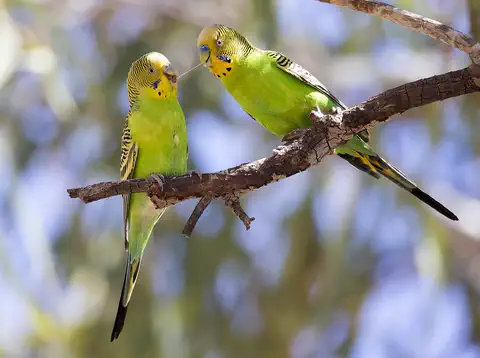
Budgerigar
The budgerigar, or budgie, is a little parrot from the dry heart of Australia. Wild budgies are green and yellow with wavy black stripes. They are nomads that travel in flocks, they must find water every day, and they breed after good rain. Budgies are also popular pets all over the world.
-
 Watch
3D
Animal
Blue-and-yellow macaw
The blue-and-yellow macaw is a large parrot of South America and Panama. It is bright blue on top and golden yellow underneath, with a green forehead and a white face lined with black. It lives near swamps and rivers, cracks nuts with its strong black beak and stays with one mate for life.
-
 Watch
Animal
Gray parrot
The gray parrot is a gray, red-tailed parrot from the rainforests of West and Central Africa. It lives in big, noisy flocks, eats fruit and seeds, and is famous for copying sounds. Trapping for the pet trade and forest loss have made it endangered.
-
Watch
Country
Argentina
Argentina covers most of the southern part of South America. The Andes mountains run down its western side, grassy plains called the Pampas spread across the middle, and windy Patagonia stretches to the far south. INDEC, the national statistics office, estimates that about 46.5 million people lived there in 2026, many of them in and around Buenos Aires.
-
Watch
Country
Uruguay
Uruguay is the second-smallest country in South America, between Brazil and Argentina. Its gently rolling grasslands are grazed by cattle and sheep, and almost half of its 3.5 million people live in and around the capital, Montevideo.
-
Watch
Country
Paraguay
Paraguay is a landlocked country in the heart of South America. The Paraguay River divides it into a hilly east, where most people live, and the hot, flat Chaco in the west. Guaraní and Spanish are both official languages, and about 7 million people lived there in 2025.
-
Watch
City
Buenos Aires
Buenos Aires, the capital of Argentina, lies on the Río de la Plata, 240 kilometers from the Atlantic Ocean. Founded twice, in 1536 and 1580, it grew into South America's largest port and a city of wide avenues, lively neighborhoods and the tango. About 3.1 million people lived in the city in 2022.
-
 Watch
Animal
Rose-ringed parakeet
The rose-ringed parakeet is a slim green parrot with a red beak and a long, pointed tail. Adult males have a black and pink ring around the neck. It is native to a belt of Africa south of the Sahara and to southern Asia, but cage birds that escaped or were let go have started wild flocks in more than 35 other countries, including big cities in Europe.
For parents & teachers
What children will learn
- Locate southern South America and some of the places where monk parakeets now live wild.
- Describe how monk parakeets build shared stick nests with a room for each pair.
- Explain what an introduced species is and how escaped cage birds started new colonies.
- Describe the monk parakeet's colors and size.
Recommended ages: 3 to 17 · About 15 minutes
Talk about it
- Why might many pairs of birds build their nests together?
- What problems can happen when an animal is brought to a new place?
- Why do some places have laws against releasing pet birds into the wild?
Try at home or in class
- Stick apartment: with a grown-up, collect small twigs and build a model nest with several rooms, one for each pair of parakeets.
- Size check: measure 29 centimeters on a ruler or tape measure and compare it with your hand to see how big a monk parakeet is.
Key vocabulary: parakeet, colony, introduced, roost, chamber, sentinel
Where these facts come from
- GBIF Backbone Taxonomy and GBIF Occurrence Search , Global Biodiversity Information Facility (CC0 1.0 (backbone); occurrence counts are facts derived from records under CC0, CC BY and CC BY-NC)
- Wikidata , Wikimedia Foundation (CC0 1.0)
- The IUCN Red List of Threatened Species , International Union for Conservation of Nature (IUCN terms of use (no redistribution of Red List data or range maps))
- Myiopsitta monachus (BirdLife International, assessed 9 August 2018, published 2018) , IUCN Red List of Threatened Species
- Myiopsitta monachus: justification, population, threats and conservation text , IUCN Red List of Threatened Species
- Myiopsitta monachus: IUCN Red List global assessment record (BirdLife International 2018), IUCN checklist on GBIF , GBIF
- Monk Parakeet (guide text from Lives of North American Birds, Kenn Kaufman 1996) , National Audubon Society
- Florida's Introduced Birds: Monk Parakeet (Myiopsitta monachus), WEC257 (Johnson and Logue, 2009) , University of Florida IFAS Extension (EDIS)
- Monk Parakeet (Texas Breeding Bird Atlas species account, Harold H. Burgess, updated 2006) , Texas A&M AgriLife
- Breeding biology of the Monk Parakeet (Eberhard, Wilson Bulletin 110(4): 463-473, 1998) , Louisiana State University (author's copy)
- Monk parakeet , Queensland Government (Business Queensland)
- Myiopsitta monachus (monk parakeet), Lin Wang (author), Joan Rasmussen (editor) , Animal Diversity Web, University of Michigan Museum of Zoology
- File:Monk Parakeet (Myiopsitta monachus) Buenos Aires.jpg (29 March 2008, Kevin Jones) , Wikimedia Commons
- Wikimedia Commons , Wikimedia Foundation (Per file: Public domain, CC0, CC BY or CC BY-SA only (credited on each page))
Checked, not yet human-reviewed. Last updated November 1, 2026. Spotted a mistake? Tell us.