
Animal
Rose-ringed parakeet
The rose-ringed parakeet is a bright green parrot with a red beak and a very long tail. It comes from Africa and Asia. Now it also lives wild in many big cities.
The rose-ringed parakeet is a slim green parrot with a red beak and a long, pointed tail. Adult males have a black and pink ring around the neck. It is native to a belt of Africa south of the Sahara and to southern Asia, but cage birds that escaped or were let go have started wild flocks in more than 35 other countries, including big cities in Europe.
Alexandrinus krameri (formerly Psittacula krameri) is a medium-sized parrot (family Psittacidae) native to sub-Saharan Africa north of the rainforest and to southern Asia, and one of the most successful introduced birds in the world, with established populations in over 35 countries outside its native range (Global Invasive Species Database). BirdLife International assessed it as Least Concern for the IUCN Red List (assessed 12 June 2024, published 2024): the population is unquantified but common to abundant, and the trend is suspected to be increasing.
Photo: Charles J. Sharp, CC BY-SA 4.0, via Wikimedia Commons
Meet the rose-ringed parakeet
The rose-ringed parakeet is a bright green parrot.
It has a red beak and a very long tail.
The rose-ringed parakeet is a medium-sized parrot with a bright green body, a red beak and a long, pointed tail that makes up more than half of its length. An adult male has a pink and black ring around his face and neck. Females and young birds have no ring.
It is about 38 to 42 centimeters long and weighs about 96 to 139 grams. In Britain it is often called the ring-necked parakeet.
Alexandrinus krameri was listed until recently as Psittacula krameri; the IUCN explains that genetic work (Braun et al. 2016, 2019) split Psittacula into several genera, including Alexandrinus. The Global Invasive Species Database names four subspecies: borealis, krameri, manillensis and parvirostris.
The RSPB gives a length of 38 to 42 centimeters, a wingspan of 42 to 48 centimeters and a weight of 96 to 139 grams, and describes a green body, long tail, red beak and a pink and black ring around the face and neck. BTO measurements of live adults in Britain average 142 grams (125 to 160). Animal Diversity Web says the tail can be up to 25 centimeters, more than half the body length, and that males gain the neck ring at about three years old; females lack it.
Quick facts
- Group
- Bird
- Length
- 0.38 to 0.42 m
- Wingspan
- 0.42 to 0.48 m
- Weight
- 0.1 to 0.14 kg
From the savanna to the city park
Rose-ringed parakeets come from Africa and Asia.
Now some live in parks and gardens in cities far away.
Rose-ringed parakeets have two native homes. One is a belt across Africa, from coast to coast, between the Sahara Desert and the rainforest. The other is southern Asia, from Afghanistan and Pakistan through India, Nepal and Sri Lanka to Bangladesh and Myanmar. They live in woodland, savanna, grassland and towns.
People have kept them as cage birds for a long time. Birds that escaped or were let go now live wild in many countries, for example in London and other British cities, and in Belgium, the Netherlands, Japan and the United Arab Emirates.
The IUCN lists 34 native range countries in Africa and southern Asia, with habitats including forest, savanna, shrubland, grassland, inland wetlands and artificial habitats up to 2,000 meters. The Florida Breeding Bird Atlas (Dellinger 2024) describes two separate native areas: in Africa, subspecies krameri and parvirostris range coast to coast between the Sahara and the rainforest; borealis and manillensis are native to southern Asia, Sri Lanka and Myanmar.
The IUCN lists introduced populations in about 35 more countries, including much of western Europe, the Middle East, Japan, South Africa, the United States and Venezuela. The BTO says European populations are mostly urban, with more than 90 established across the continent, and that genetic study traced Britain's birds to the northern part of the native range in Pakistan and northern India (Jackson et al. 2015).
Continents
Its habitat

Where can you find this animal?
- Brought here by people · Countries and seas named by a scientific source
- Lives here naturally · Countries and seas named by a scientific source
- Sightings recorded · Records of wild sightings (GBIF)
Brought here by people · Countries and seas named by a scientific source
Wild populations started by escaped or released cage birds, mostly in towns and cities. The IUCN also lists introduced birds in Bahrain, Hong Kong, Macao, the Maldives, Mauritius and Singapore, which have no separate map shape.
Places: Belgium, Cuba, Egypt, France, Germany, Iran, Iraq, Italy and 21 more places.
Source: iucn-red-list · checked October 2026
Lives here naturally · Countries and seas named by a scientific source
Two separate native areas: a belt across Africa between the Sahara and the rainforest, and southern Asia from Afghanistan and Pakistan through India, Nepal, Sri Lanka and Bangladesh to Myanmar, with parts of China and Vietnam. Only part of many shaded countries is parakeet country.
Places: Afghanistan, Bangladesh, Benin, Bhutan, Burkina Faso, Cameroon, Central African Rep., Chad and 26 more places.
Source: iucn-red-list · checked October 2026
Sightings recorded · Records of wild sightings (GBIF)
Counts of GBIF records of wild observations (human and machine) and preserved specimens. Records include introduced populations, vagrants, escaped or released animals and misidentifications, so a country with records is not necessarily part of the native range.
Wild sightings have been recorded in India, UK, Belgium, Netherlands, France, Spain, Sri Lanka, Germany and 114 more places.
Source: gbif · checked October 2026
Range maps show where scientists say an animal lives, often country by country. An animal may live in only part of a country shown, and sightings records can include animals that wandered far from home.
Seeds, fruit and garden feeders
Rose-ringed parakeets eat seeds, nuts, fruit and berries.
In cities, they visit bird feeders in gardens.
Rose-ringed parakeets eat mostly seeds and grains, along with fruit, berries and nuts. Animal Diversity Web says about 80 percent of their food is seeds.
In Britain, they are regular visitors to garden bird feeders, where they eat seeds, nuts, fruit and fat cakes. Because they also eat crops and stored grain, farmers in some places see them as pests.
Animal Diversity Web describes a mainly granivorous diet, with about 80% of food seed-based, and notes that the species is viewed as an agricultural pest that can damage crops and stored grain. The RSPB lists fruit, berries, nuts and seeds.
In Britain, the BTO reports regular visits to bird tables for seed, nuts, fruit and fat cakes, with garden use throughout the year peaking in November and December (BTO Garden BirdWatch), and says crop damage has already been reported there, as elsewhere in the native and introduced range (Butler 2003). The Florida atlas notes that birds may fly up to about 12 miles (19 kilometers) a day between breeding, feeding and roosting areas.
Did you know?
Young parakeets learn new calls as they grow up.
Young rose-ringed parakeets have just one call and learn the grown-up calls as they get older.
Juveniles have a single call and learn the adult calls as they mature (Animal Diversity Web).
A ring, a red beak and a long tail
The boy parakeet has a dark ring around his neck.
The girl parakeet does not have a ring.
The neck ring gives this parakeet its name. Only adult males have the pink and black ring around the face and neck. Young males do not get their ring until they are about three years old.
Its beak is red. In flight it shows pointed wings and a long tail, and it flies steadily, straight and fast.
The RSPB describes a green bird with a long tail, red beak and a pink and black ring around the face and neck, with pointed wings and a very steady, direct and speedy flight. Animal Diversity Web says only males show the ring, acquired at sexual maturity at about three years, and that young birds lack it.
Animal Diversity Web also reports three distinctive adult calls, including a rapid 'kew-kew-kew', a deep 'krrrr' when threatened and a soft 'purr' used in groups; young birds have one call and learn the others as they mature (after Butler et al. 2002). The RSPB notes that the loud call often gives the bird away.
A nest in a tree hole
Rose-ringed parakeets nest in holes in trees.
The mother lays about four eggs. Both parents feed the chicks.
Rose-ringed parakeets do not dig their own nest holes. They use holes made by other animals, such as woodpeckers, in trees, and sometimes holes in poles or walls. The female lays about 3 or 4 eggs and keeps them warm for about 22 to 24 days.
The chicks hatch without feathers. Both parents feed them, and the young birds leave the nest after about 6 or 7 weeks.
Animal Diversity Web calls the species a secondary cavity nester that uses existing holes, for example those of great spotted woodpeckers, which brings it into conflict with native hole-nesting birds; the Florida atlas adds utility poles and walls. BTO figures give a typical clutch of 3 to 4 eggs (2 to 6), incubation by the female of 22 to 24 days, naked altricial chicks and fledging at 40 to 50 days.
From 108 British nests found in 2001 to 2003, the median clutch was 4, the mean first-egg date 26 March and overall nest success 72%, enough to explain the population rise (Butler et al. 2013, via BTO). Animal Diversity Web says both parents feed and defend the young; a ringed bird in Britain lived at least 8 years and 11 months (BTO).
Noisy flocks and big roosts
Rose-ringed parakeets fly in noisy flocks.
At night, hundreds sleep together in trees.
Rose-ringed parakeets are social birds that often travel in flocks. At night, hundreds of them can gather to sleep together at a roost, and they use the same roost all year.
They adapt well to towns and cities. In Britain, they started breeding every year in 1969, and the BTO says the birds breeding there are the most northerly breeding parrots in the world.
The RSPB notes flocks that can reach hundreds at a roost site, and Animal Diversity Web describes a communal roost used all year, though fewer birds use it in spring when females stay on their nests.
The BTO says the species began breeding annually in Britain in 1969 after escapes and releases over many decades, with the largest populations in Greater London and the Isle of Thanet, Kent, and later colonies in cities such as Liverpool, Manchester, Sheffield and Birmingham. It describes these birds as the most northerly breeding parrots in the world. A study in Belgium found negative effects on nuthatches, which also nest in holes, but no such effect has yet been found in Britain (Strubbe and Matthysen; Newson et al. 2011, via BTO).
Did you know?
Only boy parakeets have the neck ring.
Male rose-ringed parakeets only grow their black and pink neck ring when they are about three years old.
Males acquire the ring at sexual maturity, about three years (Animal Diversity Web).
Least concern and spreading
There are lots of rose-ringed parakeets.
In some new places, people worry they take nest holes from other birds.
The rose-ringed parakeet is listed as least concern. Nobody has counted them all, but they are common in their native lands and their numbers seem to be growing, because they adapt well to farms, parks and cities.
In places where people brought them, scientists are studying whether the parakeets harm native birds, for example by taking their nest holes. In Britain, the BTO estimates about 12,000 breeding pairs.
BirdLife International assessed Alexandrinus krameri as Least Concern for the IUCN Red List (assessed 12 June 2024, published 2024). The population is unquantified but reported as common to abundant in the native range (del Hoyo et al. 1997), with an estimated 100 to 10,000 introduced breeding pairs in Japan. Although tree cover in its mapped range fell by about 19.9% over three generations, the IUCN suspects an increase because the species is highly adaptable to human-made and urban habitats. It is reported as used in trade at a high prevalence, appearing in three of seven trade datasets (Donald et al. 2024), is not a migrant, and has a generation length of 9.98 years.
In Britain, the BTO estimates around 12,000 breeding pairs and the RSPB gives 8,600 pairs; as a non-native species it has no UK conservation status, and the BTO notes concerns about possible environmental and economic effects.
IUCN Red List
How is the rose-ringed parakeet doing in the wild?
- Least Concern (this animal)
- Near Threatened
- Vulnerable
- Endangered
- Critically Endangered
- Extinct in the Wild
- Extinct
Least Concern
Not at risk of disappearing from the wild right now.
Amazing facts
-
Only boy parakeets have the neck ring.
Male rose-ringed parakeets only grow their black and pink neck ring when they are about three years old.
Males acquire the ring at sexual maturity, about three years (Animal Diversity Web).
-
Some of these parrots live as far north as Britain.
The BTO says the parakeets breeding in Britain are the most northerly breeding parrots in the world.
The BTO describes Britain's breeding birds as the most northerly breeding parrots in the world.
-
Young parakeets learn new calls as they grow up.
Young rose-ringed parakeets have just one call and learn the grown-up calls as they get older.
Juveniles have a single call and learn the adult calls as they mature (Animal Diversity Web).
-
Their tail is very, very long.
A rose-ringed parakeet's tail can be up to 25 centimeters long, more than half of its whole length.
Tail up to 25 centimeters, more than half the total length (Animal Diversity Web).
Words to know
- parakeet
- a small parrot, usually with a long tail
- introduced
- brought by people to a place where it did not live before
- native
- living naturally in a place, without being brought by people
- cavity
- a hole or hollow space, such as a hole in a tree
- roost
- a place where birds gather to rest or sleep
- granivore
- an animal that eats mainly seeds and grains
Discovery challenge
-
Which parakeets have the neck ring?
Which rose-ringed parakeets have the black and pink neck ring?
Which individuals show the neck ring?
- Adult males
- Chicks
- Adult females
Show the answer
Adult males
Grown-up boys!
Only adult males; they get the ring at about three years old.
Adult males only, from about three years (Animal Diversity Web).
-
Where do rose-ringed parakeets nest?
Where does a rose-ringed parakeet usually make its nest?
What kind of nest site does the rose-ringed parakeet use?
- In a hole made by another animal
- In a floating nest on water
- In a burrow it digs in sand
Show the answer
In a hole made by another animal
In a hole in a tree!
It uses holes made by other animals, such as woodpeckers.
A secondary cavity nester using existing holes (Animal Diversity Web).
-
What do rose-ringed parakeets mostly eat?
What makes up most of a rose-ringed parakeet's food?
What is the main component of the rose-ringed parakeet's diet?
- Seeds
- Fish
- Leaves
Show the answer
Seeds
Seeds!
Mostly seeds and grains, plus fruit, berries and nuts.
About 80% seeds (Animal Diversity Web).
-
Where do rose-ringed parakeets come from?
Where are rose-ringed parakeets native?
What is the rose-ringed parakeet's native range?
- Africa and southern Asia
- Australia
- South America
Show the answer
Africa and southern Asia
Africa and Asia!
A belt across Africa and southern Asia; flocks elsewhere were started by escaped cage birds.
Sub-Saharan Africa north of the rainforest and southern Asia (IUCN; Florida Breeding Bird Atlas).
Places where you might see it
-
 Watch
 Country
India
India is a huge country in South Asia, shaped like a big triangle pointing into the Indian Ocean. The Himalayas rise along its north, heavy monsoon rains arrive every summer, and about 1.46 billion people (2025) live there, speaking hundreds of languages.
-
 Watch
 Country
Pakistan
Pakistan is a country in South Asia that stretches from icy mountain peaks in the north down the fertile valley of the Indus River to the Arabian Sea. It has busy cities such as Karachi and Lahore, its capital is Islamabad, and its 2023 census counted 241.49 million people.
-
 Watch
 Country
Senegal
Senegal is a country at the far western tip of Africa, on the Atlantic Ocean. Its capital, Dakar, sits on the westernmost point of the continent. About 19 million people live there, and the Senegal River, wetlands full of birds and quiet mangrove deltas make it a place of water as well as dry grassland.
-
 Watch
City
London
London, the capital of the United Kingdom, began as a Roman town almost 2,000 years ago. About 8.8 million people lived in Greater London in 2021. It has the Tower of London, Big Ben, Tower Bridge and the Tube, an underground railway that opened in 1863.
Explore next
-
 Watch
Animal
Monk parakeet
The monk parakeet is a noisy green parrot with a pale gray face, throat and chest. It comes from the open woodlands and savannas of southern South America, but birds that escaped or were let go now live wild in cities in North America and Europe. It is the only parrot that builds nests out of sticks, and many pairs can share one huge nest.
-
 Watch
Animal
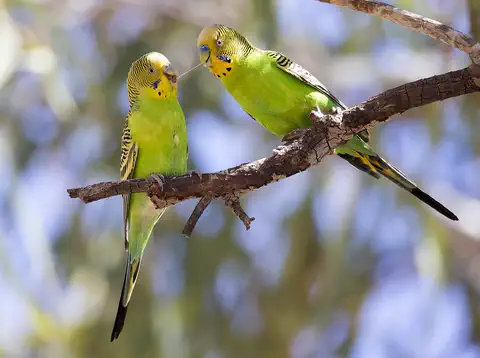
Budgerigar
The budgerigar, or budgie, is a little parrot from the dry heart of Australia. Wild budgies are green and yellow with wavy black stripes. They are nomads that travel in flocks, they must find water every day, and they breed after good rain. Budgies are also popular pets all over the world.
-
 Watch
Animal
Gray parrot
The gray parrot is a gray, red-tailed parrot from the rainforests of West and Central Africa. It lives in big, noisy flocks, eats fruit and seeds, and is famous for copying sounds. Trapping for the pet trade and forest loss have made it endangered.
-
Watch
Country
India
India is a huge country in South Asia, shaped like a big triangle pointing into the Indian Ocean. The Himalayas rise along its north, heavy monsoon rains arrive every summer, and about 1.46 billion people (2025) live there, speaking hundreds of languages.
-
Watch
Country
Pakistan
Pakistan is a country in South Asia that stretches from icy mountain peaks in the north down the fertile valley of the Indus River to the Arabian Sea. It has busy cities such as Karachi and Lahore, its capital is Islamabad, and its 2023 census counted 241.49 million people.
-
Watch
Country
Senegal
Senegal is a country at the far western tip of Africa, on the Atlantic Ocean. Its capital, Dakar, sits on the westernmost point of the continent. About 19 million people live there, and the Senegal River, wetlands full of birds and quiet mangrove deltas make it a place of water as well as dry grassland.
-
Watch
City
London
London, the capital of the United Kingdom, began as a Roman town almost 2,000 years ago. About 8.8 million people lived in Greater London in 2021. It has the Tower of London, Big Ben, Tower Bridge and the Tube, an underground railway that opened in 1863.
-
 Watch
Animal
Adélie penguin
The Adélie penguin is a medium-sized penguin, about 70 centimeters tall, with a black back, a white front and a bright white ring around each eye. It breeds in summer on rocky, ice-free ground all around Antarctica, building nests of pebbles, and spends the winter far out at sea among the pack ice.
For parents & teachers
What children will learn
- Locate the parakeet's two native areas in Africa and Asia, and some cities where it now lives wild.
- Explain the difference between a native and an introduced species.
- Describe how male and female rose-ringed parakeets look different.
- Describe how the parakeet nests in holes made by other animals.
Recommended ages: 3 to 17 · About 15 minutes
Talk about it
- How could a bird from a warm country survive winters in London?
- Why might a new bird that nests in tree holes affect birds that already live there?
- Why do some places have rules about letting pet birds go free?
Try at home or in class
- Two homes map: on a world map, color the parakeet's native belt in Africa and southern Asia, then mark London and Japan, where wild flocks now live.
- Tail measure: cut a strip of paper 25 centimeters long, the length of a parakeet's tail, and compare it with a 40-centimeter strip for the whole bird.
Key vocabulary: parakeet, introduced, native, cavity, roost, granivore
Where these facts come from
- GBIF Backbone Taxonomy and GBIF Occurrence Search , Global Biodiversity Information Facility (CC0 1.0 (backbone); occurrence counts are facts derived from records under CC0, CC BY and CC BY-NC)
- Wikidata , Wikimedia Foundation (CC0 1.0)
- The IUCN Red List of Threatened Species , International Union for Conservation of Nature (IUCN terms of use (no redistribution of Red List data or range maps))
- Alexandrinus krameri (BirdLife International, assessed 12 June 2024, published 2024) , IUCN Red List of Threatened Species
- Alexandrinus krameri: taxonomy, justification, population and trade text , IUCN Red List of Threatened Species
- Alexandrinus krameri: IUCN Red List global assessment record (BirdLife International 2024), IUCN checklist on GBIF , GBIF
- Ring-necked Parakeet , RSPB
- Ring-necked Parakeet (BirdFacts) , British Trust for Ornithology (BTO)
- Rose-ringed Parakeet (Dellinger 2024, Florida Breeding Bird Atlas II) , Florida Ornithological Society and University of South Florida Libraries
- Species profile: Psittacula krameri , Global Invasive Species Database (IUCN SSC Invasive Species Specialist Group)
- Psittacula krameri (rose-ringed parakeet), Ashley Flory (author), Radford University , Animal Diversity Web, University of Michigan Museum of Zoology
- File:Rose-ringed parakeet (Psittacula krameri borealis) male Jaipur.jpg (7 November 2019, Charles J. Sharp) , Wikimedia Commons
- Wikimedia Commons , Wikimedia Foundation (Per file: Public domain, CC0, CC BY or CC BY-SA only (credited on each page))
Checked, not yet human-reviewed. Last updated November 1, 2026. Spotted a mistake? Tell us.