
Animal
Red panda
The red panda is a small, furry animal with red fur and a long, stripy tail. It lives in the trees of tall mountains in Asia.
The red panda is a cat-sized tree climber with rusty-red fur and a bushy ringed tail. It lives in cool mountain forests of the Himalayas and southern China and eats mostly bamboo leaves. Despite its name, it is not a close relative of the giant panda. It is endangered.
Ailurus fulgens is the only living member of the family Ailuridae, an ancient carnivoran lineage most closely related to skunks, raccoons and weasels. It shares a bamboo diet and a 'pseudo-thumb' with the giant panda, lives in high temperate forests from Nepal to China, and is listed as Endangered after an estimated 40 percent decline in two decades.
Photo: Gzzz, CC BY-SA 3.0, via Wikimedia Commons
Meet the red panda
The red panda is about as big as a pet cat.
It has red fur, a white face and pointy ears. Its fluffy tail has rings of red and light brown. It loves to climb trees.
The red panda is about the size of a pet cat, with a body 56 to 62 centimeters long and a fluffy tail almost as long again. Its fur is rusty red, its face is white with red 'tear marks' running from its eyes to its mouth, and its tail has red and buff rings.
Its name is confusing. Red pandas eat bamboo and live in Asian mountains, like giant pandas, but the two are not close relatives. The red panda is the only living member of its own animal family. One of its Chinese names means 'fire fox'.
Adults weigh about 3.6 to 7.7 kilograms, with a head-and-body length of 56 to 62.5 centimeters and a tail of 37 to 47 centimeters. The large round head, short snout, pointed ears and reddish 'tear' marks from eye to mouth are distinctive.
Its classification was debated for nearly two centuries. First placed with raccoons in 1825, later with bears, it is now put in its own family, Ailuridae, within the superfamily Musteloidea alongside skunks, raccoons and weasels. Recent genetic work suggests the Himalayan red panda (A. f. fulgens) and the Chinese red panda (A. f. styani) may be separate species; the Chinese form tends to be larger and deeper red.
Quick facts
- Group
- Mammal
- Length
- 56 to 62.5 cm
- Weight
- 3.6 to 7.7 kg
- Lifespan in the wild
- 8 to 10 years
Where it lives
Red pandas live high in the mountains of Asia.
The forests there are cool and full of bamboo. Mossy branches make good places to rest.
Red pandas live in cool, high mountain forests with lots of bamboo growing under the trees. Their home stretches across the Himalayas and nearby mountains, in Nepal, India, Bhutan, northern Myanmar and southwestern China.
Their red fur actually helps them hide. In the fir trees where they live, branches are covered with clumps of reddish-brown moss and white lichens, so a red panda curled up on a branch blends right in.
The IUCN Red List (2015) lists five range states: Bhutan, China, India, Myanmar and Nepal. The species inhabits high-altitude temperate forest with a bamboo understory in the Himalayas and adjoining ranges, from Nepal east through northern Myanmar to western Sichuan and Yunnan in China, including parts of Tibet.
The Himalayan form lives mainly in Nepal, India and Bhutan, and the Chinese form mainly in China and Myanmar. Within each country shown on the map the species occupies only suitable mountain forest, often in fragmented patches. Its coat matches the reddish moss and white lichen that festoon fir branches in this habitat.
Continent

Where can you find this animal?
- Lives here naturally · Countries and seas named by a scientific source
- Sightings recorded · Records of wild sightings (GBIF)
Lives here naturally · Countries and seas named by a scientific source
High temperate mountain forests with bamboo in the Himalayas and nearby ranges: Nepal, northeastern India, Bhutan, northern Myanmar and southwestern China. Only the mountain forests of each country shown are red panda country.
Places: Nepal, India, Bhutan, Myanmar and China.
Source: iucn-red-list · checked October 2026
Sightings recorded · Records of wild sightings (GBIF)
Counts of GBIF records of wild observations (human and machine) and preserved specimens. Records include introduced populations, vagrants, escaped or released animals and misidentifications, so a country with records is not necessarily part of the native range.
Wild sightings have been recorded in Nepal, India, United States, China, Germany, Bhutan, Japan, Spain and 7 more places.
Source: gbif · checked October 2026
Range maps show where scientists say an animal lives, often country by country. An animal may live in only part of a country shown, and sightings records can include animals that wandered far from home.
What it eats
Red pandas eat mostly bamboo leaves.
They pick the softest leaf tips. Sometimes they eat fruit, roots, bugs and grubs too.
About 95 percent of a red panda's food is bamboo. Unlike the giant panda, which eats whole bamboo stems, the red panda is picky: it chooses the most nutritious leaf tips and, in season, tender new shoots. It holds the stems in its front paws and nips off leaves with its mouth.
The rest of its diet is roots, juicy grasses, fruit, insects and grubs, and now and then a bird or small mammal. Bamboo leaves do not give much energy, so red pandas have to save energy wherever they can.
Bamboo makes up about 95 percent of the diet, but red pandas feed selectively on the most nutritious leaf tips and shoots rather than on culms. They grasp stems with the forepaws, aided by a pseudo-thumb (a modified wrist bone also found in the giant panda), and shear leaves with robust teeth.
Supplementary foods include roots, succulent grasses, fruit, insects and grubs, with occasional birds and small mammals. Like the giant panda, the red panda has a simple carnivore stomach, so its leaf diet yields little energy. The Smithsonian describes it as an obligate bamboo eater on a tight energy budget for much of the year.
Did you know?
Red pandas taste smells with a bump under their tongue.
Red pandas collect smells with a tiny cone under their tongue. No other meat-eating animal has one.
A cone-like sublingual structure delivers liquid odorants to a gland in the mouth, unique among carnivores according to the Smithsonian.
Built for cold treetops
Red pandas have thick fur, even on their feet.
Their bushy tail is a balance pole and a warm blanket. They can climb down trees head first!
A red panda wears two layers of fur: a soft, woolly undercoat and long, coarse outer hairs. Even the bottoms of its feet are furry, which keeps them warm on cold branches. Its long, bushy tail helps it balance in the trees and wraps around it like a scarf in the cold.
Red pandas are amazing climbers. Their ankles are very flexible and can turn, so they can climb down a tree trunk head first, like a squirrel. Sharp, curved claws that can partly pull back help them grip.
Insulation comes from a dense woolly undercoat under long, coarse guard hairs, and fur covers the soles of the feet, which have five widely spaced toes and semi-retractable claws. The long tail aids balance and is wrapped around the body against cold and wind.
Extremely flexible ankles, with a fibula that can rotate about its axis, allow headfirst descent of tree trunks. The red panda also has a unique way of sampling scent: a cone-like structure on the underside of the tongue collects liquid and carries it to a gland in the mouth, an adaptation the Smithsonian says no other carnivore has. Scent glands between the footpads leave marks that are odorless to people.
Growing up
Mother red pandas make a soft nest in a hollow tree.
Usually two cubs are born. They already have fur when they are born. They stay with their mom for about a year.
Red pandas mate in winter, from January to March. The mother makes a cozy nest in a tree hole, hollow stump or bamboo thicket and lines it with moss and leaves. In late spring or early summer she has two cubs, usually.
Unlike giant panda babies, red panda cubs are born covered in fur, which protects them from the cold. A newborn weighs about 90 to 110 grams. The cubs stay with their mother for about a year, when they are fully grown.
In the Northern Hemisphere breeding runs from January to March, triggered by lengthening days after the winter solstice. Gestation, apparently including delayed implantation, lasts 93 to 156 days; a long gestation may reflect the species' slow metabolism, and late-spring births coincide with the most tender, digestible bamboo.
Females build nests lined with moss and leaves in tree holes, stumps, roots or bamboo thickets, and litters of usually two are born between May and July. Newborns of the Himalayan form weigh about 90 to 110 grams and are fully furred. Young stay with the mother for about a year and mature at around 18 months; females stop breeding at about 12, and red pandas may live as long as 23 years.
Saving energy
Red pandas live alone and sleep a lot.
They are most busy in the early morning and evening. When it is cold, they curl up into a tight, furry ball.
Red pandas live alone, except during the mating season. They are most active at dawn and dusk, and spend more than half the day resting, often high in a tree.
They are energy savers. In very cold weather a red panda can slow its body down, waking up every few hours to look for food. It curls into a ball with its tail wrapped around to stay warm. When it is hot, it stretches out along a branch and pants to cool off. Red pandas are quiet, but they can squeal, twitter and make a 'huff-quack'.
Red pandas are solitary outside the breeding season, with wild home ranges of about 2.6 square kilometers (1 square mile). They are mainly crepuscular and, in human care, awake about 45 percent of the day, more active in cool weather.
The Smithsonian notes that in severe cold they can become dormant, lowering metabolic rate and raising it every few hours to forage, which brings their energy use close to that of sloths. Postural thermoregulation, curling tightly in cold and sprawling and panting in warmth, adds to the savings. Vocalizations are quiet, including squeals, twitters and huff-quacks; cubs whistle or bleat in distress. They climb to escape predators such as leopards and jackals.
Did you know?
A red panda's tail is almost as long as its body.
Almost half of a red panda's total length is its fluffy tail.
The tail, 37 to 47 centimeters, makes up almost half of total body length and serves for balance and insulation.
Helping red pandas
Red pandas are endangered.
Their forests are being cut down. People are working to protect the forests so red pandas have a safe home.
Red pandas are endangered. There may be only about 10,000 adults left, and scientists think their numbers dropped by about 40 percent in 20 years. The main reasons are cutting down forests for wood and farms, grazing animals, collecting firewood, and poaching.
Red pandas are protected by law in all five countries where they live, and they are found in parks in each of them. People also help by setting up protected areas, working with local villages and breeding red pandas in zoos.
The IUCN lists the red panda as Endangered with a decreasing trend (2015, criteria A2cde+3cde+4cde). The Smithsonian reports an estimated 40 percent decline over two decades, likely to continue; San Diego Zoo Wildlife Alliance puts the adult population at around 10,000.
Threats are habitat loss and degradation from logging, livestock grazing, firewood collection, farming and settlement, plus poaching and disturbance; the arrival of livestock and dogs with people brings further risks. The species is legally protected in India, Bhutan, China, Nepal and Myanmar and occurs in protected areas in all five, though grazing, hunting and logging persist inside many of them.
IUCN Red List
How is the red panda doing in the wild?
- Least Concern
- Near Threatened
- Vulnerable
- Endangered (this animal)
- Critically Endangered
- Extinct in the Wild
- Extinct
Endangered
At very high risk of disappearing from the wild.
See the IUCN Red List assessment · The IUCN Red List of Threatened Species 2022.2
Amazing facts
-
One Chinese name for the red panda means 'fire fox'.
One of the red panda's Chinese names means 'fire fox', which is why some people call it the firefox.
San Diego Zoo Wildlife Alliance gives the Chinese name as meaning 'fire fox', the origin of the English nickname firefox.
-
A red panda's tail is almost as long as its body.
Almost half of a red panda's total length is its fluffy tail.
The tail, 37 to 47 centimeters, makes up almost half of total body length and serves for balance and insulation.
-
Red pandas can climb down trees head first.
Special flexible ankles let red pandas climb down tree trunks head first, like a squirrel.
A rotating fibula and very flexible ankles let the red panda descend tree trunks headfirst.
-
Red pandas taste smells with a bump under their tongue.
Red pandas collect smells with a tiny cone under their tongue. No other meat-eating animal has one.
A cone-like sublingual structure delivers liquid odorants to a gland in the mouth, unique among carnivores according to the Smithsonian.
Words to know
- arboreal
- living in trees
- bamboo
- a tall grass with hard, woody stems and many leaves
- lichen
- a crusty or bushy growth made by a fungus and algae living together
- camouflage
- colors or patterns that help an animal blend in
- crepuscular
- most active at dawn and dusk
- endangered
- at risk of disappearing from the wild
Discovery challenge
-
What does a red panda eat most?
Which part of bamboo do red pandas like best?
How does the red panda's bamboo feeding differ from the giant panda's?
- Bamboo leaves
- Fish
- Seeds from flowers
Show the answer
Bamboo leaves
Red pandas eat bamboo leaves.
They pick the most nutritious leaf tips and fresh shoots.
Red pandas select leaf tips and shoots, while giant pandas eat nearly all above-ground parts, including culms.
-
Is a red panda a kind of giant panda?
How are red pandas and giant pandas related?
Where is the red panda placed in the classification of carnivores?
- They are not close relatives
- They are the same animal
- The red panda is a baby giant panda
Show the answer
They are not close relatives
No! They are different animals.
They share a name and a bamboo diet but are not close relatives.
In its own family, Ailuridae, within Musteloidea, closest to skunks, raccoons and weasels.
-
Where do red pandas live?
Where do red pandas live?
Which describes the red panda's range?
- High mountain forests in Asia
- Hot deserts in Africa
- Icy islands near the South Pole
Show the answer
High mountain forests in Asia
They live in cool mountain forests in Asia.
They live in the Himalayas and nearby mountains, in five countries.
High temperate forest with bamboo in Nepal, India, Bhutan, Myanmar and China.
-
What does a red panda do when it is cold?
How does a red panda save energy in cold weather?
Which strategy lets red pandas survive on low-energy food?
- Curls up in a furry ball
- Jumps in a lake
- Runs very fast
Show the answer
Curls up in a furry ball
It curls up and wraps its tail around itself.
It curls into a ball, and in great cold can slow its body down.
Postural thermoregulation and cold-induced dormancy, cutting energy use to near a sloth's.
Places where you might see it
-
 Watch
Natural wonder
Himalayas
The Himalayas are a giant wall of mountains in Asia, between the high Plateau of Tibet and the plains of India. They hold the highest mountains in the world, including Mount Everest. They rose when the land carrying India crashed into Asia, and their snow and ice feed great rivers such as the Ganges and the Indus.
-
 Watch
Natural wonder
Mount Everest
Mount Everest, in the Himalayas on the border of Nepal and China, is what Britannica calls the highest mountain in the world. In 2020 China and Nepal announced its height as 8,848.86 meters. It grew as two giant plates of Earth's crust pushed together, and it is still rising a tiny bit each year.
-
 Watch
 Country
Nepal
Nepal is a landlocked country in South Asia, between India and China. It climbs from flat, warm farmland in the south to the snowy Himalaya in the north, where Mount Everest stands, and about 29.6 million people lived there in 2025.
Explore next
-
 Watch
Animal
Giant panda
The giant panda is a black-and-white bear that lives in misty mountain forests in China. About 99 percent of its food is bamboo, and it spends up to 16 hours a day eating. Pandas were once endangered, but protecting their forests has helped them, and they are now listed as Vulnerable.
-
 Watch
Animal
Common raccoon
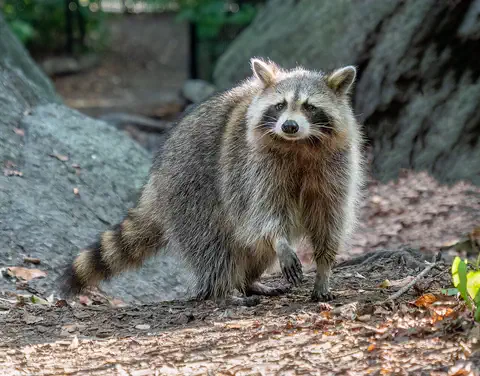
The common raccoon is a clever night-time animal from North and Central America, famous for its black mask, ringed tail and nimble, hand-like front paws. It eats almost anything and lives in forests, wetlands, farms and even big cities. People have also brought raccoons to Europe and Japan, where they now live wild.
-
 Watch
Animal
Striped skunk
The striped skunk is a cat-sized mammal of North America with bold black and white fur. It comes out at night to hunt insects and other small foods, and it is famous for its warning dance and its strong-smelling spray, which it uses only when it feels threatened.
-
 Watch
Animal
Snow leopard
The snow leopard lives high in the mountains of Central Asia, where it is freezing cold and the ground is steep and rocky. Thick fur, huge furry paws and a tail almost as long as its body help it survive. It is so hard to spot that people call it the ghost cat of the mountains.
-
Watch
Natural wonder
Himalayas
The Himalayas are a giant wall of mountains in Asia, between the high Plateau of Tibet and the plains of India. They hold the highest mountains in the world, including Mount Everest. They rose when the land carrying India crashed into Asia, and their snow and ice feed great rivers such as the Ganges and the Indus.
-
Watch
Natural wonder
Mount Everest
Mount Everest, in the Himalayas on the border of Nepal and China, is what Britannica calls the highest mountain in the world. In 2020 China and Nepal announced its height as 8,848.86 meters. It grew as two giant plates of Earth's crust pushed together, and it is still rising a tiny bit each year.
-
Watch
Country
Nepal
Nepal is a landlocked country in South Asia, between India and China. It climbs from flat, warm farmland in the south to the snowy Himalaya in the north, where Mount Everest stands, and about 29.6 million people lived there in 2025.
-
 Watch
Animal
Aardvark
The aardvark is a shy night digger of African savannas. It sniffs out ant and termite nests, rips them open with its spade-like claws and laps up the insects with a sticky tongue about 30 centimeters long. Its name means 'earth pig' in Afrikaans.
For parents & teachers
What children will learn
- Describe the red panda's body features and how they help it live in cold mountain trees.
- Explain how a low-energy bamboo diet shapes the red panda's behavior.
- Understand that animals with similar names are not always related.
- Explain why red pandas are endangered and how people protect them.
Recommended ages: 3 to 17 · About 12 minutes
Talk about it
- Why do you think the red panda and giant panda both ended up eating bamboo, even though they are not close relatives?
- How does a red panda's fur color help it stay safe?
- What are some ways you save energy, and how is that like a red panda?
Try at home or in class
- Curl up in a ball under a blanket and then stretch out flat: notice which way you feel warmer, just as a red panda does.
- Make a camouflage test: place a red-brown and a bright blue paper shape on a brown-and-green background and see which one friends spot first.
Key vocabulary: arboreal, bamboo, lichen, camouflage, crepuscular, endangered
Where these facts come from
- The IUCN Red List of Threatened Species , International Union for Conservation of Nature (IUCN terms of use (no redistribution of Red List data or range maps))
- GBIF Backbone Taxonomy and GBIF Occurrence Search , Global Biodiversity Information Facility (CC0 1.0 (backbone); occurrence counts are facts derived from records under CC0, CC BY and CC BY-NC)
- Red panda , Smithsonian's National Zoo and Conservation Biology Institute
- Red panda , San Diego Zoo Wildlife Alliance
- Ailurus fulgens (Red Panda), 2015 assessment , IUCN Red List of Threatened Species
- Wikidata , Wikimedia Foundation (CC0 1.0)
- Wikimedia Commons , Wikimedia Foundation (Per file: Public domain, CC0, CC BY or CC BY-SA only (credited on each page))
Checked, not yet human-reviewed. Last updated October 24, 2026. Spotted a mistake? Tell us.