
Animal
Snow leopard
The snow leopard lives high in cold, rocky mountains. It has thick, smoky gray fur and a very long, fluffy tail.
The snow leopard lives high in the mountains of Central Asia, where it is freezing cold and the ground is steep and rocky. Thick fur, huge furry paws and a tail almost as long as its body help it survive. It is so hard to spot that people call it the ghost cat of the mountains.
Panthera uncia is a medium-sized big cat of the high mountains of Central and South Asia, adapted to cold and rugged terrain with a dense double coat, broad furred paws, a heat-conserving nasal cavity and an exceptionally long balancing tail. It cannot roar. The IUCN lists it as Vulnerable, with about 2,700 to 3,400 mature adults.
Photo: kallerna, CC BY-SA 3.0, via Wikimedia Commons
Meet the snow leopard
The snow leopard is a big cat that lives in the snow.
Its fur is pale gray with dark spots. Its tail is very long and fluffy. It is very hard to see in the rocks.
The snow leopard is a big cat, but smaller than a leopard or a lion: it weighs about 23 to 41 kilograms, about as much as a big dog. Its soft fur is pale gray or cream with smoky dark rosettes, which blend perfectly with rocks and snow.
People rarely see snow leopards in the wild, because they live in very high, steep mountains and are so well hidden. That is why they are sometimes called the ghost cats of the Himalayas.
Panthera uncia stands about 60 centimeters at the shoulder and weighs 23 to 41 kilograms; Britannica gives a total length of about 2.1 meters, including a tail of about 0.9 meters. Rosettes, rings around smaller spots, cover the body and tail, while solid spots mark the head, neck and lower legs, and a dark streak runs along the spine.
Its closest relative is the tiger. Britannica summarizes genetic studies suggesting that the snow leopard's lineage split from the tiger's about 3.2 million years ago. The species was once often placed in its own genus, Uncia, which is why both scientific names are still seen.
Quick facts
- Group
- Mammal
- Length
- 1 to 1.3 m
- Height
- 0.6 m
- Weight
- 23 to 41 kg
- Lifespan in the wild
- 10 to 12 years
Where it lives
Snow leopards live in Asia, high up in the mountains.
It is cold and windy there. There are lots of rocks and cliffs, and snow in winter.
Snow leopards live in the high mountains of Central Asia and the Himalayas, in twelve countries from Afghanistan to Mongolia and China. They usually live between about 3,000 and 4,500 meters above sea level, where few trees can grow.
Their home is grassy and rocky, with cliffs, ridges and steep valleys. In winter, some snow leopards follow the wild sheep and goats they hunt down to lower slopes.
Britannica describes a range from the Himalayas, Hindu Kush and Plateau of Tibet in the south to the Altai Mountains and highlands west of Lake Baikal in Russia. The IUCN Red List (2016 assessment) lists twelve range countries: Afghanistan, Bhutan, China, India, Kazakhstan, Kyrgyzstan, Mongolia, Nepal, Pakistan, Russia, Tajikistan and Uzbekistan; Animal Diversity Web notes that about 60 percent of the range lies in China.
Animal Diversity Web records snow leopards from about 900 to 5,500 meters, usually between 3,000 and 4,500 meters, in alpine and subalpine grassland, scrub and rocky terrain. They move up and down with the seasonal movements of their prey. The map shades whole countries, but snow leopards live only in their high mountains.
Continent

Where can you find this animal?
- Lives here naturally · Countries and seas named by a scientific source
- Sightings recorded · Records of wild sightings (GBIF)
Lives here naturally · Countries and seas named by a scientific source
High mountains only, usually 3,000 to 4,500 meters above sea level, from the Himalayas, Hindu Kush and Tibetan Plateau north to the Altai Mountains. Snow leopards live in only the mountain parts of each country shown.
Places: Afghanistan, Bhutan, China, India, Kazakhstan, Kyrgyzstan, Mongolia, Nepal and 4 more places.
Source: iucn-red-list · checked October 2026
Sightings recorded · Records of wild sightings (GBIF)
Counts of GBIF records of wild observations (human and machine) and preserved specimens. Records include introduced populations, vagrants, escaped or released animals and misidentifications, so a country with records is not necessarily part of the native range.
Wild sightings have been recorded in United States, India, China, Mongolia, Kyrgyzstan, Nepal, Germany, Russia and 14 more places.
Source: gbif · checked October 2026
Range maps show where scientists say an animal lives, often country by country. An animal may live in only part of a country shown, and sightings records can include animals that wandered far from home.
What it eats
Snow leopards eat meat.
They hunt wild sheep and wild goats called ibex. They also catch marmots and birds. A snow leopard can jump down on its food from a rock.
The snow leopard's main foods are blue sheep and ibex, wild sheep and goats that live on steep mountain slopes. It also catches marmots, hares, birds and small rodents.
It often hunts by ambush: it creeps close using rocks for cover, then leaps down on its prey from above. Sometimes snow leopards also catch farm animals such as sheep and goats, which can make herders angry.
Blue sheep (bharal) and ibex are the main prey, supplemented by marmots, hares, game birds and small rodents. Hunting is typically by stalking and ambush, often leaping down on prey from a rock outcrop; long hind legs give the agility and spring this needs on broken terrain.
Where wild prey is scarce, snow leopards also take domestic livestock. San Diego Zoo Wildlife Alliance points out that this brings them into conflict with herders and farmers, and conflict over livestock is a key conservation issue across the range.
Did you know?
The tiger is the snow leopard's closest cousin.
Scientists have found that the snow leopard's closest relative is the tiger.
Genetic studies place the split between the snow leopard and tiger lineages at about 3.2 million years ago.
Made for the cold
Snow leopards have very thick fur to keep warm.
Their big paws are furry underneath, like snowshoes. Their long tail helps them balance. It can also cover them like a scarf.
Everything about a snow leopard helps it live in the cold. Its fur is thick and woolly, up to 10 centimeters long on its belly. Its small, round ears lose little heat. Its short, wide nose warms the icy air before it reaches the lungs.
Huge paws with fur underneath work like snowshoes, gripping snow and rock. And its tail is extremely long, nearly as long as its body, which helps it balance on cliffs. In bad weather it can wrap its tail around itself.
The coat combines a dense insulating undercoat with outer hairs about 5 centimeters long, and up to about 10 centimeters on the belly; coat thickness varies from fine in summer to thick in winter. Small rounded ears and a broad head with large nasal cavities, which warm inhaled air, reduce heat loss.
Broad front paws with furred soles cushion and grip on snow and rock. Short, strong forelegs and chest muscles help with balance when climbing, and relatively long hind legs aid jumping. The tail, 80 to 100 centimeters, is about 75 to 90 percent of head-and-body length; Animal Diversity Web notes it is used for balance and can also cover the extremities in harsh weather.
Growing up
Baby snow leopards are called cubs.
They are born in a den among the rocks. Their fur is darker than their mother's. At three months they start to learn to hunt.
Snow leopards mate in late winter, from about January to March. After about three months, usually two or three cubs are born in a hidden den among the rocks, often in June or July. The cubs are much darker than their mother, and their eyes open after about a week.
By two months old, cubs can run and eat solid food. At three months they begin learning to hunt with their mother. They usually leave her when they are 18 to 22 months old.
Breeding takes place from about January to March, and after a gestation of 90 to 105 days the female gives birth to two to four cubs, usually two or three, in a sheltered rock den. Only recently, using GPS tracking, have researchers located such dens. Cubs are darker than adults, and their eyes open at about seven days.
Cubs run and take solid food by two months, start to learn hunting at three months, and usually disperse at 18 to 22 months, reaching sexual maturity at two to three years. Britannica suggests a wild lifespan of perhaps 10 to 12 years, against up to 21 years in human care.
Ghost of the mountains
Snow leopards like to live alone.
They leave smells on rocks to say, I was here! Snow leopards can't roar. They purr and make a friendly puffing sound.
Snow leopards are solitary. Males and females meet only to mate, and mothers raise their cubs alone. They leave messages for each other with scrapes on the ground, sprays of scent and even by rubbing their cheeks on rocks. These smell messages can last for days or weeks.
Unlike lions, tigers, jaguars and leopards, snow leopards cannot roar. Their throat is more like a small cat's. They hiss, growl, moan and yowl, and they greet each other with a friendly chuff. They can purr, too.
Adults are solitary, interacting mainly in the breeding season. Ranges are advertised by scrapes, scent sprays, feces and cheek-rubbing, chemical signals that persist for days or weeks along ridgelines and cliff bases where snow leopards travel.
The snow leopard is the one member of Panthera that cannot roar: San Diego Zoo Wildlife Alliance explains that its throat structure resembles that of smaller cats. Its vocal range includes hisses, growls, moans, yowls, the friendly chuff and purring. Because they are so elusive and live in such hard terrain, much of what is known comes from camera traps and GPS collars.
Did you know?
A snow leopard's nose warms up cold air.
A snow leopard has a big space inside its nose that warms up freezing air before it reaches the lungs.
Large nasal cavities in a broad skull warm inhaled air, an adaptation to cold, thin mountain air.
Helping snow leopards
There are not many snow leopards.
People who live in the mountains are helping. They keep their sheep and goats safe, so snow leopards and people can share the land.
Snow leopards are Vulnerable. Scientists think there are only about 2,700 to 3,400 adults in the wild, but they are so hard to find that no one knows for sure. They are threatened when they kill herders' animals and are killed in return, when people hunt them or their prey, and when their mountain homes change.
Helping herders is one of the best ways to help. Better grazing, payments for animals lost to snow leopards, and health care and schools for herding families help people and snow leopards share the mountains.
The IUCN Red List assessed the snow leopard as Vulnerable in its 2016 assessment, with an estimated 2,710 to 3,386 mature individuals and a decreasing trend. Britannica explains that it was moved from Endangered in 2017 after a calculation error was found in the earlier population assessment; it notes that no comprehensive surveys exist and estimates up to about 7,500 animals of all ages.
Threats include retaliatory killing over livestock, poaching, loss of wild prey and habitat pressure. San Diego Zoo Wildlife Alliance argues that improving herders' lives, through better grazing management, compensation for livestock lost to snow leopards, and health care and education, is essential, together with cooperation between governments and conservation groups.
IUCN Red List
How is the snow leopard doing in the wild?
- Least Concern
- Near Threatened
- Vulnerable (this animal)
- Endangered
- Critically Endangered
- Extinct in the Wild
- Extinct
Vulnerable
At high risk of disappearing from the wild.
See the IUCN Red List assessment · The IUCN Red List of Threatened Species 2022.2
Amazing facts
-
Snow leopards can't roar, but they can purr.
Snow leopards can't roar like lions. They purr and greet each other with a friendly chuff.
The snow leopard's throat resembles a small cat's, so unlike lions, tigers, jaguars and leopards it cannot roar.
-
A snow leopard's tail can be almost as long as its body.
A snow leopard's tail can be up to a meter long and helps it balance on steep cliffs.
The tail is 75 to 90 percent of head-and-body length and also covers the extremities in harsh weather.
-
A snow leopard's nose warms up cold air.
A snow leopard has a big space inside its nose that warms up freezing air before it reaches the lungs.
Large nasal cavities in a broad skull warm inhaled air, an adaptation to cold, thin mountain air.
-
The tiger is the snow leopard's closest cousin.
Scientists have found that the snow leopard's closest relative is the tiger.
Genetic studies place the split between the snow leopard and tiger lineages at about 3.2 million years ago.
Words to know
- alpine
- high up in the mountains, above where trees grow
- insulation
- a layer that keeps heat in, like thick fur
- ibex
- a wild mountain goat with long, curved horns
- herder
- a person who looks after sheep, goats or other farm animals
- elusive
- very hard to find or see
- solitary
- living alone rather than in a group
Discovery challenge
-
Where do snow leopards live?
Where do snow leopards live?
At what altitude do snow leopards usually live?
- High in the mountains
- In the ocean
- In hot jungles
Show the answer
High in the mountains
Snow leopards live high up in cold mountains.
They live in the high mountains of Central Asia and the Himalayas.
Usually between 3,000 and 4,500 meters, in alpine and subalpine zones.
-
What does the long tail help with?
How does a snow leopard use its long tail?
Which is NOT a known use of the snow leopard's tail?
- Balancing on cliffs
- Swimming fast
- Keeping warm
Show the answer
Swimming fast
The tail helps it balance and keeps it warm.
It helps with balance on steep rocks and can be wrapped around the body in the cold.
The tail is used for balance and to cover the extremities; it is not a swimming adaptation.
-
Can a snow leopard roar?
Which sound can a snow leopard NOT make?
Why can't snow leopards roar?
- A purr
- A roar
- A chuff
Show the answer
A roar
No! Snow leopards can't roar, but they can purr.
Snow leopards purr, hiss, growl and chuff, but they cannot roar.
Their throat structure is more like a small cat's than that of the roaring big cats.
-
What helps a snow leopard walk on snow?
How are a snow leopard's paws like snowshoes?
Which adaptation helps snow leopards move over snow?
- Big paws with fur underneath
- Tiny pointed feet
- Webbed toes
Show the answer
Big paws with fur underneath
Big, furry paws help it walk on snow.
Wide paws with fur underneath spread its weight and grip the snow, like snowshoes.
Broad paws with furred soles spread weight, give traction and cushion the feet.
Places where you might see it
-
 Watch
 Country
Kazakhstan
Kazakhstan is the largest country in Central Asia and the ninth largest in the world. It has no ocean coast, but the Caspian Sea lies along its southwest edge. About 20.6 million people lived there in 2026, and its capital is Astana.
-
 Watch
 Country
Pakistan
Pakistan is a country in South Asia that stretches from icy mountain peaks in the north down the fertile valley of the Indus River to the Arabian Sea. It has busy cities such as Karachi and Lahore, its capital is Islamabad, and its 2023 census counted 241.49 million people.
-
 Watch
Natural wonder
K2
K2 is the world's second highest mountain, 8,611 meters tall, in the Karakoram Range of Asia. It got its short name in 1856, when a surveyor marked it as the second peak he measured in the Karakoram. It is one of the hardest mountains to climb, and its summit was first reached in 1954.
-
 Watch
 Country
Mongolia
Mongolia is a large, landlocked country in Asia, between Russia and China. Most of it is a high plateau of grassy steppe, with mountains in the west and the Gobi in the south, and about 3.6 million people lived there in 2025.
-
 Watch
 Country
Afghanistan
Afghanistan is a landlocked country in south-central Asia. The high Hindu Kush mountains run across its middle, sandy deserts lie in the southwest, and the capital, Kabul, sits in a valley about 1,800 meters above sea level.
-
 Watch
Natural wonder
Himalayas
The Himalayas are a giant wall of mountains in Asia, between the high Plateau of Tibet and the plains of India. They hold the highest mountains in the world, including Mount Everest. They rose when the land carrying India crashed into Asia, and their snow and ice feed great rivers such as the Ganges and the Indus.
-
 Watch
Natural wonder
Mount Everest
Mount Everest, in the Himalayas on the border of Nepal and China, is what Britannica calls the highest mountain in the world. In 2020 China and Nepal announced its height as 8,848.86 meters. It grew as two giant plates of Earth's crust pushed together, and it is still rising a tiny bit each year.
-
 Watch
 Country
Tajikistan
Tajikistan is a small, landlocked country in Central Asia, and more than nine-tenths of it is mountains. The Pamir Mountains in the east have peaks over 7,000 meters and one of the longest glaciers in the world. About 10.7 million people live there, mostly in the valleys.
-
 Watch
Natural wonder
Gobi Desert
The Gobi is a giant desert stretching across Mongolia and China. Britannica says its name comes from a Mongolian word meaning waterless place. Much of it is bare rock and gravel rather than sand, winters are bitterly cold and summers hot, and its rocks hold remarkable dinosaur fossils, including the first dinosaur eggs known to science.
-
 Watch
 Country
Kyrgyzstan
Kyrgyzstan is a mountain country in Central Asia, with no coast on the sea. The high Tien Shan mountains cover much of it, and Lake Issyk-Kul, one of the largest high-mountain lakes in the world, lies in the northeast. Its capital is Bishkek.
Explore next
-
 Watch
3D
Animal
Tiger
The tiger is a huge cat with orange fur and dark stripes that help it hide in tall grass and forest shadows. It lives alone, hunts deer and wild pigs, and loves to swim. Wild tigers live only in Asia, and they are endangered.
-
 Watch
3D
Animal
Leopard
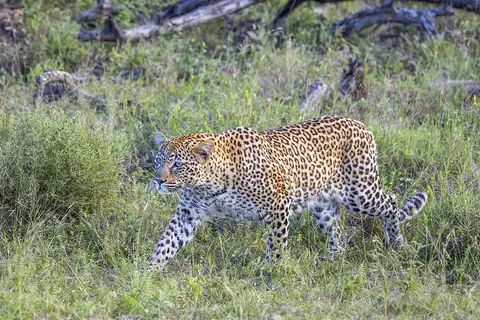
The leopard is a strong, spotted big cat and the best climber of them all. It can carry its food high up into a tree, away from lions and hyenas. Leopards live in more kinds of places than any other big cat, from deserts to rainforests, across Africa and Asia.
-
 Watch
Animal
Pallas's cat
Pallas's cat, or the manul, is a small wild cat of the cold, dry grasslands and mountains of Central Asia. Its long, thick fur makes it look bigger than it really is, and its flat face and low, round ears help it peek over rocks without being seen. It hunts pikas and other small animals.
-
Watch
Country
Kazakhstan
Kazakhstan is the largest country in Central Asia and the ninth largest in the world. It has no ocean coast, but the Caspian Sea lies along its southwest edge. About 20.6 million people lived there in 2026, and its capital is Astana.
-
 Watch
3D
Animal
Red panda
The red panda is a cat-sized tree climber with rusty-red fur and a bushy ringed tail. It lives in cool mountain forests of the Himalayas and southern China and eats mostly bamboo leaves. Despite its name, it is not a close relative of the giant panda. It is endangered.
-
Watch
Country
Pakistan
Pakistan is a country in South Asia that stretches from icy mountain peaks in the north down the fertile valley of the Indus River to the Arabian Sea. It has busy cities such as Karachi and Lahore, its capital is Islamabad, and its 2023 census counted 241.49 million people.
-
Watch
Natural wonder
K2
K2 is the world's second highest mountain, 8,611 meters tall, in the Karakoram Range of Asia. It got its short name in 1856, when a surveyor marked it as the second peak he measured in the Karakoram. It is one of the hardest mountains to climb, and its summit was first reached in 1954.
-
 Watch
Animal
Clouded leopard
The clouded leopard is a forest cat of mainland Southeast Asia and the Himalayan foothills. It is named for the cloud-shaped patches on its coat, and it is an amazing climber that can creep headfirst down a tree trunk. It is Vulnerable, and fewer of them are left each year.
For parents & teachers
What children will learn
- Explain how a snow leopard's fur, ears, nose, paws and tail help it live in the cold.
- Locate the mountain ranges of Asia where snow leopards live.
- Describe how snow leopards hunt and why they come into conflict with herders.
- Understand why helping people helps snow leopards.
Recommended ages: 3 to 17 · About 15 minutes
Talk about it
- Why would small ears be better than big ears in a very cold place?
- Why is it so hard for scientists to count snow leopards?
- If you were a herder, what would help you live peacefully alongside snow leopards?
Try at home or in class
- Hold an ice cube in a bare hand, then in a hand wrapped in a thick sock, to feel how fur-like layers keep warmth in.
- Walk on soft sand or snow in flat shoes and then with a wide board under each foot, to see why big paws work like snowshoes.
Key vocabulary: alpine, insulation, ibex, herder, elusive, solitary
Where these facts come from
- The IUCN Red List of Threatened Species , International Union for Conservation of Nature (IUCN terms of use (no redistribution of Red List data or range maps))
- GBIF Backbone Taxonomy and GBIF Occurrence Search , Global Biodiversity Information Facility (CC0 1.0 (backbone); occurrence counts are facts derived from records under CC0, CC BY and CC BY-NC)
- Wikidata , Wikimedia Foundation (CC0 1.0)
- Panthera uncia (Snow Leopard), 2016 assessment , IUCN Red List of Threatened Species
- Snow leopard , Encyclopaedia Britannica
- Snow leopard , San Diego Zoo Wildlife Alliance
- Uncia uncia (snow leopard) , Animal Diversity Web, University of Michigan Museum of Zoology
- Wikimedia Commons , Wikimedia Foundation (Per file: Public domain, CC0, CC BY or CC BY-SA only (credited on each page))
Checked, not yet human-reviewed. Last updated October 24, 2026. Spotted a mistake? Tell us.