
Animal
Striped skunk
The striped skunk is a black and white animal with a big fluffy tail. If it is scared, it can spray a very stinky smell.
The striped skunk is a cat-sized mammal of North America with bold black and white fur. It comes out at night to hunt insects and other small foods, and it is famous for its warning dance and its strong-smelling spray, which it uses only when it feels threatened.
Mephitis mephitis, the striped skunk, is a nocturnal omnivore found from southern Canada to northern Mexico. Its aposematic black and white coat advertises paired anal scent glands that spray sulfur-rich musk, a defense so effective that most mammal predators avoid it.
Photo: Dan & Lin Dzurisin, CC BY 2.0, via Wikimedia Commons
Meet the striped skunk
The striped skunk has black fur and white stripes.
It has a small pointy head and a big bushy tail. It is about as big as a pet cat.
The striped skunk is a mammal about the size of a house cat, with short legs, a small pointed head and a big bushy tail. Its fur is black, with a thin white stripe down the middle of its face and wide white stripes on its back.
Those bold colors are a warning. They tell other animals, "Leave me alone!" The striped skunk's scientific name, Mephitis, comes from a Latin word meaning a bad smell.
Mephitis mephitis belongs to the family Mephitidae, the skunks and stink badgers. Skunks were long treated as a subfamily (Mephitinae) of the weasel family, Mustelidae, but molecular evidence shows they lie outside the mustelids and form a family of their own. Britannica counts 12 species of skunk, 10 of them in the Western Hemisphere.
The striped skunk's total length ranges from about 465 to 815 millimeters and its weight from 0.7 to 6.3 kilograms; males are slightly larger than females. The genus name comes from the Latin for a foul odor. Its high-contrast coat is a classic example of aposematism, coloring that advertises a defense.
Quick facts
- Group
- Mammal
- Length
- 0.47 to 0.82 m
- Weight
- 0.7 to 6.3 kg
- Lifespan in the wild
- up to 7 years
Where it lives
Striped skunks live in North America.
They live in woods, fields and farms. Some live in towns, under porches and sheds.
Striped skunks live across most of North America, from southern Canada through most of the United States to northern Mexico. They make their homes in woods, forests, grassy plains, scrubland and along rivers.
They have also learned to live near people, on farms and in towns. During the day a skunk rests in a den: often an old burrow dug by another animal, a hollow log, a brush pile or the space under a porch or shed.
The IUCN lists the striped skunk as native to Canada, the United States and Mexico. Its range runs from the Atlantic to the Pacific across most of the continental United States and southern Canada, reaching south into northern Mexico. It is usually found from sea level to about 1,800 meters, but has been recorded as high as 4,200 meters.
Habitats include woodland, forest, wooded ravines, grassland, scrub and riparian areas, and the species has become more common in farmland and suburbs. Skunks den in abandoned burrows of other mammals, digging their own when necessary, or under buildings, in hollow logs and in rock or brush piles.
Continent
Its habitats


Where can you find this animal?
- Lives here naturally · Countries and seas named by a scientific source
- Sightings recorded · Records of wild sightings (GBIF)
Lives here naturally · Countries and seas named by a scientific source
Woods, grasslands, farms and towns across most of North America, from southern Canada through most of the United States to northern Mexico. Skunks live in only part of Canada and Mexico.
Places: Canada, United States and Mexico.
Source: iucn-red-list · checked October 2026
Sightings recorded · Records of wild sightings (GBIF)
Counts of GBIF records of wild observations (human and machine) and preserved specimens. Records include introduced populations, vagrants, escaped or released animals and misidentifications, so a country with records is not necessarily part of the native range.
Wild sightings have been recorded in United States, Canada, Mexico, Belgium, Netherlands, Germany, Denmark, UK and 3 more places.
Source: gbif · checked October 2026
Range maps show where scientists say an animal lives, often country by country. An animal may live in only part of a country shown, and sightings records can include animals that wandered far from home.
What it eats
Skunks eat many kinds of food.
In summer they eat lots of bugs, like beetles and crickets. They also eat mice, eggs and fruit.
Striped skunks are omnivores, which means they eat both animals and plants. In spring and summer they mostly eat insects, such as grasshoppers, crickets, beetles and grubs. They also eat worms, crayfish, mice and voles, frogs, eggs and fish.
When fruit is ripe they eat wild cherries and other fruits, and corn too. Skunks dig up beetle grubs that feed on the roots of lawn grass, so they can help keep those pests in check.
The striped skunk is an opportunistic omnivore whose diet shifts with the seasons. In spring and summer it is mainly insectivorous, taking grasshoppers, crickets, beetles, larvae and even bees, along with earthworms, crayfish and other invertebrates. In winter, small mammals such as voles and the eggs and young of ground-nesting birds become more important.
Amphibians, reptiles, carrion and fish are also eaten, and animal food can make up 80 to 90 percent of the diet. Plant foods include corn, nightshade and fruits such as black cherries and ground cherries. By eating crop and lawn pests, skunks provide insect control that benefits people.
Did you know?
Big owls are not bothered by skunk spray.
Most mammals stay away from skunks, but great horned owls and eagles hunt them anyway.
Large birds of prey, most notably great horned owls and eagles, are unaffected by the musk and hunt skunks.
Built for digging, dressed to warn
A skunk has short legs and long claws for digging.
Its white stripes are a warning sign. No two skunks have just the same stripes.
A striped skunk has short, sturdy legs with five toes on each foot. Its front feet have long claws, which are great for digging up insects and grubs, though its short legs are not good for climbing.
Its black and white pattern is easy to spot. A thin white stripe runs up its nose and forehead, and white stripes on its back usually split into a V near its tail. The stripes are a little different on every skunk.
The striped skunk has a small triangular head, short ears, black eyes and 34 teeth. Its legs are stout, with five-toed plantigrade feet (it walks on its soles) and long foreclaws adapted for digging.
The coat is black with a thin white stripe on the snout and forehead and a white patch on the nape that usually continues along the back, dividing into a broad V toward the rump. The pattern varies greatly between individuals and across the range. The defensive equipment lies at the base of the tail: two enlarged anal scent glands, each with a nipple-like opening that the skunk can aim with fine muscle control.
Growing up
Baby skunks are called kits.
When they are born, they cannot see. They already have stripes! Later they follow their mom in a line to find food.
Striped skunks mate in late winter or early spring. About two months later, the mother gives birth to between 2 and 10 babies, called kits, in her den. Each kit weighs only about 32 to 35 grams, and its eyes stay closed for about three weeks.
Even at birth, you can see the kits' stripe pattern. At about six or seven weeks old they follow their mother outside in a single-file line to learn how to find food.
Breeding usually takes place from February to April. Gestation lasts about 59 to 77 days and can begin with up to 19 days of delayed implantation, when the embryo pauses before attaching to the uterus. Litters range from 2 to 10, averaging about 5, and newborns weigh 32 to 35 grams.
Kits are altricial: sparsely furred, with eyes closed until about three weeks, although their color pattern is already visible. They are weaned at six to seven weeks and learn to forage by following their mother in single file. Young males leave by July or August, while young females may stay until the next spring. Both sexes can breed at about 10 months.

A warning before the spray
Skunks come out at night.
If a skunk feels scared, it stamps its feet and lifts its tail. That means "Go away!" If you do not go, it may spray a stinky smell.
Striped skunks live alone and come out mostly at night. They are calm animals that usually ignore others, and they would rather walk away from danger than spray.
If something gets too close, a skunk gives a warning. It faces the animal, arches its back, raises its tail and stamps its front feet. If the warning is ignored, it bends its back end around, still facing the animal, and sprays an oily, yellowish liquid that smells terrible and stings the eyes.
Striped skunks are solitary and mainly nocturnal, sometimes active at dusk and dawn. They are generally docile, and spraying is a last resort that follows a threat display: the skunk faces the intruder, arches its back, raises its tail and stamps its forefeet, sometimes charging a few steps or backing away while dragging its front paws.
The musk's strength comes from sulfur compounds called thiols and thioacetates. A skunk that cannot see its pursuer releases a fine cloud the predator must run through; with a target in view, it aims a stream at the face, accurate to about 2 meters, and the spray can reach about 6 meters. In cold regions skunks do not truly hibernate but stay inactive in winter dens, living on stored fat.
Did you know?
Baby skunks have stripes before they are born.
Newborn skunk kits have hardly any fur, yet you can already see their stripe pattern.
Kits are altricial with sparse fur at birth, but the color pattern is already distinguishable on their skin.
Living alongside skunks
There are lots of striped skunks.
They help people by eating bugs. If you see a skunk, stand still or back away slowly. Then it will not feel scared.
Striped skunks are common, and they are not in danger. Scientists list them as Least Concern. Many young skunks do not survive their first year because of harsh weather and disease, and cars and predators such as great horned owls and coyotes also take some.
Skunks and people often share the same neighborhoods. Keeping trash and pet food shut away, giving skunks plenty of space and not blocking a den in late spring or early summer, when it may have babies inside, helps everyone get along.
The IUCN lists Mephitis mephitis as Least Concern (assessed 2015) with a stable population, and the Animal Diversity Web describes it as abundant and not threatened. Mortality is high in the first year from severe weather and infectious disease; predation, parasites, road traffic and hunting add to it. Large birds of prey such as great horned owls and eagles are not deterred by the musk.
Because skunks can carry rabies and other diseases and sometimes dig up lawns or den under buildings, they come into conflict with people. Mass Audubon advises securing garbage and pet food, giving skunks plenty of space, and never trying to shut a skunk out of its den between May and July, when young are likely to be inside.
IUCN Red List
How is the striped skunk doing in the wild?
- Least Concern (this animal)
- Near Threatened
- Vulnerable
- Endangered
- Critically Endangered
- Extinct in the Wild
- Extinct
Least Concern
Not at risk of disappearing from the wild right now.
See the IUCN Red List assessment · The IUCN Red List of Threatened Species 2022.2
Amazing facts
-
The name Mephitis means a bad smell.
The striped skunk's scientific name, Mephitis, comes from a Latin word meaning a bad smell.
The genus name Mephitis is a Latin word for a foul-smelling vapor or stench, and the skunk family, Mephitidae, is named after the genus.
-
Every skunk has its own stripe pattern.
Mass Audubon compares a skunk's stripes to fingerprints: the pattern is a little different on every skunk.
Stripe patterns vary greatly between individuals and also differ from one part of the range to another.
-
Baby skunks have stripes before they are born.
Newborn skunk kits have hardly any fur, yet you can already see their stripe pattern.
Kits are altricial with sparse fur at birth, but the color pattern is already distinguishable on their skin.
-
Big owls are not bothered by skunk spray.
Most mammals stay away from skunks, but great horned owls and eagles hunt them anyway.
Large birds of prey, most notably great horned owls and eagles, are unaffected by the musk and hunt skunks.
Words to know
- nocturnal
- active at night and resting during the day
- omnivore
- an animal that eats both plants and animals
- musk
- a strong-smelling liquid some animals make
- den
- a sheltered place where an animal rests and raises its young
- kit
- a baby skunk
- warning colors
- bold colors that tell other animals to stay away
Discovery challenge
-
What does a skunk do to warn you?
What warning does a striped skunk give before it sprays?
Which behavior is part of the striped skunk's threat display before spraying?
- It stamps its front feet
- It sings a song
- It climbs a tree
Show the answer
It stamps its front feet
It stamps its feet and lifts its tail. That means "Go away!"
It faces the animal, arches its back, raises its tail and stamps its front feet. It sprays only if the warning is ignored.
Facing the intruder, arching the back, raising the tail and stamping the forefeet come before the skunk sprays as a last resort.
-
What do skunks eat a lot of in summer?
What do striped skunks mostly eat in spring and summer?
What makes up most of a striped skunk's warm-season diet?
- Insects
- Only grass
- Only fish
Show the answer
Insects
Skunks eat lots of bugs, like beetles and crickets.
In spring and summer they mostly eat insects such as grasshoppers, crickets and beetle grubs.
Striped skunks are mainly insectivorous in spring and summer, shifting toward small mammals and eggs in winter.
-
When do skunks come out to look for food?
When are striped skunks most active?
What is the striped skunk's main daily activity pattern?
- At night
- In the middle of the day
- Only in winter
Show the answer
At night
Skunks come out at night.
They rest in dens by day and come out at night to find food.
They are mainly nocturnal, sometimes crepuscular, resting in dens by day.
-
Where do striped skunks live?
On which continent do striped skunks live in the wild?
Which continent holds the striped skunk's entire native range?
- North America
- Africa
- Antarctica
Show the answer
North America
Striped skunks live in North America.
They live from southern Canada through the United States to northern Mexico.
The IUCN lists Canada, the United States and Mexico as its native range.
Places where you might see it
-
 Watch
 Country
United States
The United States is a large country in North America made of 50 states, from icy Alaska to the warm islands of Hawaii. It has the Grand Canyon, the Mississippi River and Yellowstone, and about 342 million people live there.
-
 Watch
 Country
Canada
Canada is the second-largest country in the world, stretching across the north of North America from the Atlantic to the Pacific and up into the Arctic. It has the Rocky Mountains, thousands of islands and about 42 million people, who speak English, French and many other languages.
Explore next
-
Watch
Country
United States
The United States is a large country in North America made of 50 states, from icy Alaska to the warm islands of Hawaii. It has the Grand Canyon, the Mississippi River and Yellowstone, and about 342 million people live there.
-
Watch
Country
Canada
Canada is the second-largest country in the world, stretching across the north of North America from the Atlantic to the Pacific and up into the Arctic. It has the Rocky Mountains, thousands of islands and about 42 million people, who speak English, French and many other languages.
-
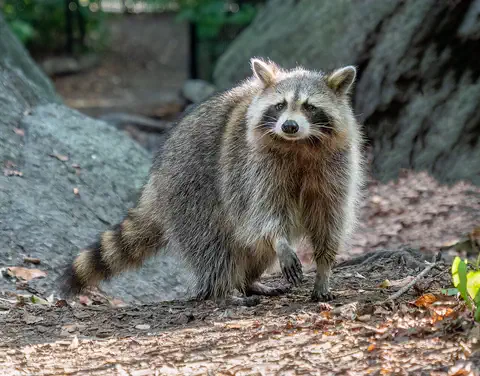 Watch
Animal
Common raccoon
The common raccoon is a clever night-time animal from North and Central America, famous for its black mask, ringed tail and nimble, hand-like front paws. It eats almost anything and lives in forests, wetlands, farms and even big cities. People have also brought raccoons to Europe and Japan, where they now live wild.
-
 Watch
Animal
Great horned owl
The great horned owl is a large, powerful owl with two long, earlike tufts of feathers on its head. It is one of the most common owls in North America and lives in almost any kind of semi-open place, from deserts and forests to city parks. It hunts mostly at night.
-
 Watch
Animal
Red fox
The red fox is a small, clever member of the dog family with an orange coat, black legs and a bushy, white-tipped tail. It lives across North America, Europe, Asia and North Africa, more of the world than any other wild land carnivore, and has even moved into big cities.
-
 Watch
3D
Animal
Red panda
The red panda is a cat-sized tree climber with rusty-red fur and a bushy ringed tail. It lives in cool mountain forests of the Himalayas and southern China and eats mostly bamboo leaves. Despite its name, it is not a close relative of the giant panda. It is endangered.
-
 Watch
Animal
Aardvark
The aardvark is a shy night digger of African savannas. It sniffs out ant and termite nests, rips them open with its spade-like claws and laps up the insects with a sticky tongue about 30 centimeters long. Its name means 'earth pig' in Afrikaans.
-
 Watch
Animal
African buffalo
The African buffalo is a huge, cow-like grazer with heavy, curving horns. It lives in herds that can number in the thousands, and a herd will rush to protect a calf in danger. It lives across much of Africa south of the Sahara, from open savannas to rainforests.
For parents & teachers
What children will learn
- Describe the striped skunk's body and how its colors work as a warning.
- Explain that skunks are omnivores whose diet changes with the seasons.
- Describe the warning display and why spraying is a last resort.
- Suggest safe, kind ways for people and skunks to share neighborhoods.
Recommended ages: 3 to 17 · About 12 minutes
Talk about it
- Why might it help a skunk to warn an animal before spraying?
- Can you think of other animals with bold colors that mean "stay away"?
- What could your family do so that skunks are not attracted to your home?
Try at home or in class
- Measure 6 meters on the floor or ground with a tape measure to see how far a skunk's spray can reach.
- Draw your own skunk with a stripe pattern no one else has, then compare drawings to see how every pattern is different.
Key vocabulary: nocturnal, omnivore, musk, den, kit, warning colors
Where these facts come from
- The IUCN Red List of Threatened Species , International Union for Conservation of Nature (IUCN terms of use (no redistribution of Red List data or range maps))
- GBIF Backbone Taxonomy and GBIF Occurrence Search , Global Biodiversity Information Facility (CC0 1.0 (backbone); occurrence counts are facts derived from records under CC0, CC BY and CC BY-NC)
- Mephitis mephitis (striped skunk) , Animal Diversity Web, University of Michigan Museum of Zoology
- Skunks in Massachusetts , Mass Audubon
- Skunk , Encyclopaedia Britannica
- Mephitidae (skunks and stink badgers) , Animal Diversity Web, University of Michigan Museum of Zoology
- Mephitis , Merriam-Webster Dictionary
- Mephitis mephitis (Striped Skunk), 2016 global assessment , IUCN Red List of Threatened Species
- Wikidata , Wikimedia Foundation (CC0 1.0)
- Wikimedia Commons , Wikimedia Foundation (Per file: Public domain, CC0, CC BY or CC BY-SA only (credited on each page))
Checked, not yet human-reviewed. Last updated October 24, 2026. Spotted a mistake? Tell us.