
Animal
South American coati
The coati has a long, wiggly nose and a stripy tail. It sniffs for bugs and fruit on the forest floor. Coatis live in big groups.
The South American coati is a relative of the raccoon with a long, bendy snout and a ringed tail it often holds straight up. Females and their young travel in noisy bands, sniffing out insects, spiders and fruit in forests from Colombia to northern Argentina.
Nasua nasua, a procyonid of South American forests, is a diurnal omnivore that roots through leaf litter with a long, mobile snout. Females and young live in bands of up to about 30, while adult males are mostly solitary. It is listed as Least Concern (IUCN, 2016).
Photo: © Giles Laurent, gileslaurent.com, License CC BY-SA, CC BY-SA 4.0, via Wikimedia Commons
Meet the coati
The coati has a long nose that wiggles.
Its tail has dark and light rings. It often holds its tail straight up.
The South American coati (say ko-AH-tee) is a cousin of the raccoon. Its most famous feature is its long, narrow snout, which turns up a little at the tip and can bend in all directions. Its long tail has yellowish and dark rings.
Adults weigh 3 to 6 kilograms, about as much as a pet cat, and stand about 30 centimeters tall at the shoulder. Their fur can be brown, gray or bright rusty red, with a pale belly.
Nasua nasua belongs to the Procyonidae, the family of raccoons, kinkajous and olingos. Adults measure 41 to 67 centimeters from head to the base of the tail, and the tail adds another 32 to 69; they stand about 30 centimeters at the shoulder and weigh 3 to 6 kilograms (Animal Diversity Web). Males are larger than females.
The upper parts range from dark brown or gray to bright rust, with white underparts. The muzzle is brown, with pale marks above, below and behind each eye, and the small ears are rimmed with white inside. Solitary males were once described as a separate species, which is where the name "coatimundi", meaning "lone coati", comes from (San Diego Zoo Wildlife Alliance).
Quick facts
- Group
- Mammal
- Length
- 41 to 67 cm
- Height
- 30 cm
- Weight
- 3 to 6 kg
- Lifespan in the wild
- 7 to 8 years
Where it lives
Coatis live in South America.
They live in forests. They walk on the ground and climb trees.
South American coatis live in tropical South America, from Colombia and Venezuela south to Uruguay and northern Argentina. They live in many kinds of forest: rainforest, cloud forest in the mountains, forest along rivers and dry scrub forest.
Coatis like forest edges and young forest that grows back after trees are cut. In the Andes Mountains they are found up to 2,500 meters high.
Animal Diversity Web gives the range as tropical South America from Colombia and Venezuela to Uruguay and northern Argentina, including Ecuador, and up to 2,500 meters on both slopes of the Andes. North of Colombia, the white-nosed coati, Nasua narica, takes its place.
Habitats include deciduous, evergreen and cloud forest, riverine gallery forest, xeric forest, Chaco, cerrado and dry scrub forest. Where people have changed the land, coatis are often found in secondary forest and at forest edges, and they sometimes enter villages to search through garbage.
Continent
Its habitat

Where can you find this animal?
- Lives here naturally · Countries and seas named by a scientific source
- Sightings recorded · Records of wild sightings (GBIF)
Lives here naturally · Countries and seas named by a scientific source
Forests of tropical South America, from Colombia and Venezuela to Uruguay and northern Argentina, up to 2,500 meters in the Andes. Coatis live in only part of some countries shown (in Argentina, only the north).
Places: Colombia, Venezuela, Guyana, Suriname, Ecuador, Peru, Brazil, Bolivia and 3 more places.
Source: Animal Diversity Web · checked October 2026
Sightings recorded · Records of wild sightings (GBIF)
Counts of GBIF records of wild observations (human and machine) and preserved specimens. Records include introduced populations, vagrants, escaped or released animals and misidentifications, so a country with records is not necessarily part of the native range.
Wild sightings have been recorded in Brazil, Colombia, Argentina, Ecuador, Chile, Peru, Bolivia, Suriname and 26 more places.
Source: gbif · checked October 2026
Range maps show where scientists say an animal lives, often country by country. An animal may live in only part of a country shown, and sightings records can include animals that wandered far from home.
What it eats
Coatis eat fruit and small animals.
They sniff under leaves to find beetles, spiders and ants. Their claws dig them out.
Coatis are omnivores. They eat a lot of fruit, and they hunt small animals hidden in the leaf litter: beetle grubs, spiders, scorpions, centipedes, ants and termites. Sometimes they catch lizards or small rodents, or eat eggs.
A coati pushes its long nose under leaves and into cracks to sniff out food, then digs with its strong front claws. Because it eats so much fruit, it probably helps spread seeds through the forest.
The diet is omnivorous, centered on fruit and invertebrates: beetle larvae, scorpions, centipedes, spiders, ants and termites, plus palm fruits, eggs, lizards, small mammals and carrion (Animal Diversity Web). The flexible snout probes leaf litter and debris, and the strong forelimbs and claws tear open rotting logs.
Foraging differs by sex: males forage alone and may catch more lizards and rodents, while females in bands rely heavily on smell to find beetles, grubs and termites (San Diego Zoo Wildlife Alliance). Breeding is timed to the season when fruit is most plentiful, and coatis are likely important seed dispersers.
Did you know?
People once thought boy coatis were a different animal!
Because grown-up males live alone, scientists once thought they were a separate kind of animal.
Solitary males were first described as a separate species; "coatimundi" ("lone coati") preserves that mistake.
Nose, claws and tail
A coati's nose can bend and wiggle.
It has strong claws for digging. It can climb down trees head first!
A coati's snout is long and very flexible, perfect for poking under leaves. Its front legs are strong, with long claws for digging and climbing.
Coatis have a special trick: their ankles can turn around, so they can climb down a tree head first. In the trees, the long ringed tail helps them balance. On the ground they often carry it straight up.
The elongated, slightly upturned snout is highly mobile and used to search leaf litter and turned-over debris. Strong forelimbs and claws dig food from logs and burrows. Coatis can reverse the ankle joints, rotating the hind feet so they can descend trunks headfirst (Animal Diversity Web; the San Diego Zoo describes the ankles turning 180 degrees).
The long, banded tail is used for balance in trees. On the ground it is usually held erect, which the San Diego Zoo suggests may help band members keep track of each other in dense vegetation. Young coatis are paler than adults.
Growing up
A mother coati makes a nest in a tree.
She has three to seven babies there. After about six weeks, they all join the group again.
When it is time to give birth, a female leaves her band and builds a nest high in a tree. About 74 to 77 days after mating, she has three to seven tiny babies. They are born helpless, with closed eyes that open after about 10 days.
At about 26 days old the young can climb. After five to six weeks, the mother brings them back to the band, where the other females help protect them. They drink milk until about four months old.
Breeding is seasonal and timed to fruit abundance: January to March in some places, October to February in others. A single male is accepted into a band to mate, then leaves. Pregnant females disperse to build tree nests and give birth to three to seven altricial young after 74 to 77 days, mostly from April to June (Animal Diversity Web).
Young weigh about 78 grams at five days, open their eyes at 10 days, stand at 19, walk at 24 and climb at 26. Mothers and young rejoin the band after five to six weeks, and weaning comes at about four months. Females mature at about two years and males at about three.
Life in a band
Coatis are awake in the day.
Moms and babies live in big groups called bands. Grown-up males usually live alone.
Coatis are active in the daytime and spend most of the day searching for food. Females and their young live together in groups called bands, with up to about 30 coatis. Adult males live alone for most of the year.
Coatis sleep, mate and give birth up in the trees. They chatter to each other with chirps, grunts and snorts, and females bark to warn the band of danger. In a band, mothers share the job of watching for predators.
Coatis are diurnal and largely terrestrial, but they sleep, mate and give birth in trees. Unrelated females and their young form bands of up to about 30, while adult males are mostly solitary outside the breeding season (Animal Diversity Web; San Diego Zoo Wildlife Alliance). They are good climbers and swim well.
Calls include chirps, grunts and snorts; females bark to warn bandmates and whimper to keep young close. Grooming builds bonds among females. Living in a band shares the work of vigilance: the San Diego Zoo reports that a lone nesting female spends about 18 percent of her foraging time watching for danger, falling to about 10 percent once she rejoins the band.
Did you know?
A coati can climb down a tree head first.
Coatis can turn their ankles around, so they can climb down tree trunks head first.
Reversible ankle joints let coatis descend trunks headfirst.
Coatis and people
There are still lots of coatis.
But people cut down forests where they live. Some people hunt them.
The South American coati is listed as Least Concern: it lives in a huge area and is not in danger right now. But cutting down forests for mining, roads and farms takes away its home, and in some places people hunt coatis for food.
Coatis sometimes raid crops, chickens or garbage near villages. And although some people want them as pets, coatis are wild animals that need to live in the wild.
The IUCN assessed Nasua nasua as Least Concern in 2016. Animal Diversity Web lists hunting for food and deforestation for mining and road building as harmful effects of people, along with a small demand in the live pet trade. The species is on CITES Appendix III at Uruguay's request.
Conflict arises where coatis damage crops, raid poultry or enter houses for food. Because coatis help control insect populations and disperse seeds, healthy forests with coatis benefit people too.
IUCN Red List
How is the south american coati doing in the wild?
- Least Concern (this animal)
- Near Threatened
- Vulnerable
- Endangered
- Critically Endangered
- Extinct in the Wild
- Extinct
Least Concern
Not at risk of disappearing from the wild right now.
See the IUCN Red List assessment · The IUCN Red List of Threatened Species 2022.2
Amazing facts
-
A coati can climb down a tree head first.
Coatis can turn their ankles around, so they can climb down tree trunks head first.
Reversible ankle joints let coatis descend trunks headfirst.
-
Coatis sleep up in the trees.
Coatis find their food on the ground, but they sleep, mate and give birth up in the trees.
Although largely terrestrial foragers, coatis sleep, mate and give birth in trees.
-
People once thought boy coatis were a different animal!
Because grown-up males live alone, scientists once thought they were a separate kind of animal.
Solitary males were first described as a separate species; "coatimundi" ("lone coati") preserves that mistake.
-
Mother coatis bark to warn their group.
Female coatis give a barking call to warn their band of danger.
Females bark to warn bandmates of danger and whimper to keep young close during weaning.
Words to know
- band
- a group of female coatis and their young that live and travel together
- snout
- the long nose and mouth part of an animal's face
- omnivore
- an animal that eats both plants and animals
- diurnal
- active during the day
- leaf litter
- the layer of fallen leaves on the forest floor
Discovery challenge
-
What does a coati use to find bugs under leaves?
Which body part does a coati use to search the leaf litter?
Which feature lets a coati probe leaf litter and debris for prey?
- Its long nose
- Its tail
- Its ears
Show the answer
Its long nose
Its long, wiggly nose sniffs out bugs.
Its long, flexible snout pokes under leaves and sniffs out food.
The elongated, highly mobile snout, guided by smell.
-
Who lives together in a coati band?
Which coatis live together in bands?
How are South American coati groups made up?
- Only grown-up males
- Females and their young
- One coati alone
Show the answer
Females and their young
Moms and babies live together. Dads mostly live alone.
Females and their young live in bands; adult males live alone most of the year.
Bands of unrelated females and young, up to about 30; adult males are mostly solitary.
-
How can a coati climb down a tree?
What trick helps coatis climb down trees?
Which adaptation lets a coati descend a trunk headfirst?
- It slides down its tail
- Its ankles turn around
- It jumps from the top
Show the answer
Its ankles turn around
Its ankles turn, so it can go down head first.
Its ankles can turn around, so it climbs down head first.
Reversible ankle joints rotate the hind feet so the claws grip on the way down.
-
When are coatis awake?
When are coatis most active?
What is the coati's activity pattern?
- In the daytime
- Only at night
- Only in winter
Show the answer
In the daytime
Coatis are awake in the day.
In the daytime: they spend most of the day looking for food.
Diurnal: most of the day is spent foraging.
Places where you might see it
-
 Watch
 Country
Brazil
Brazil covers about half of South America and is the fifth-largest country in the world. It holds most of the Amazon River basin and much of the world's largest rainforest, and about 214 million people lived there in 2026, most of them near the Atlantic coast.
-
 Watch
 Country
Argentina
Argentina covers most of the southern part of South America. The Andes mountains run down its western side, grassy plains called the Pampas spread across the middle, and windy Patagonia stretches to the far south. INDEC, the national statistics office, estimates that about 46.5 million people lived there in 2026, many of them in and around Buenos Aires.
-
 Watch
 Country
Colombia
Colombia is in the northwest of South America, with coasts on both the Caribbean Sea and the Pacific Ocean. Three ranges of the Andes run through it, and most people live in the cool mountains, where the capital, Bogotá, sits on a high plateau. About 53.4 million people lived there in 2026, according to DANE, the national statistics office.
-
 Watch
Natural wonder
Iguaçu Falls
Iguaçu Falls, on the Iguaçu River where Brazil and Argentina meet, is a system of many waterfalls and rapids almost three kilometers wide, with drops of up to about 80 meters. Clouds of spray keep the rainforest around it green and wet.
Explore next
-
 Watch
3D
Animal
Jaguar
The jaguar is the largest cat in North and South America. It lives near rivers and swamps, swims well, and has such a powerful bite that it can crack a turtle's shell. Most jaguars live in the Amazon rainforest.
-
 Watch
Animal
Ocelot
The ocelot is a medium-sized wild cat of the Americas, from southern Texas to northern Argentina. Its golden coat has chains of dark-edged spots, and no two ocelots look alike. It hunts mostly at night, catching mice, rats, lizards and birds, and it needs thick plants to hide in.
-
Watch
Country
Brazil
Brazil covers about half of South America and is the fifth-largest country in the world. It holds most of the Amazon River basin and much of the world's largest rainforest, and about 214 million people lived there in 2026, most of them near the Atlantic coast.
-
Watch
Country
Argentina
Argentina covers most of the southern part of South America. The Andes mountains run down its western side, grassy plains called the Pampas spread across the middle, and windy Patagonia stretches to the far south. INDEC, the national statistics office, estimates that about 46.5 million people lived there in 2026, many of them in and around Buenos Aires.
-
Watch
Country
Colombia
Colombia is in the northwest of South America, with coasts on both the Caribbean Sea and the Pacific Ocean. Three ranges of the Andes run through it, and most people live in the cool mountains, where the capital, Bogotá, sits on a high plateau. About 53.4 million people lived there in 2026, according to DANE, the national statistics office.
-
 Watch
Animal
Common raccoon
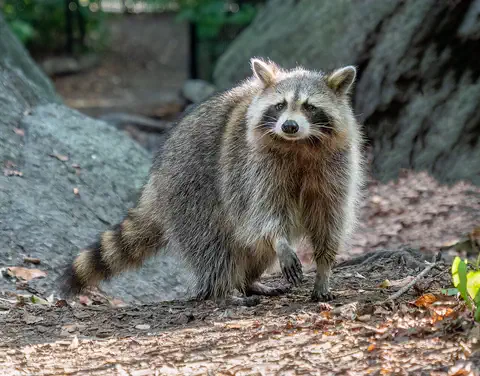
The common raccoon is a clever night-time animal from North and Central America, famous for its black mask, ringed tail and nimble, hand-like front paws. It eats almost anything and lives in forests, wetlands, farms and even big cities. People have also brought raccoons to Europe and Japan, where they now live wild.
-
Watch
Natural wonder
Iguaçu Falls
Iguaçu Falls, on the Iguaçu River where Brazil and Argentina meet, is a system of many waterfalls and rapids almost three kilometers wide, with drops of up to about 80 meters. Clouds of spray keep the rainforest around it green and wet.
-
 Watch
Animal
Binturong
The binturong, sometimes called a bearcat, is neither a bear nor a cat: it is a relative of civets. It lives high in the rainforests of South and Southeast Asia, eats mostly fruit, and grips branches with a tail that works like an extra hand. Its scent is famous: it smells like buttered popcorn.
For parents & teachers
What children will learn
- Describe how a coati's snout, claws and tail help it find food and climb.
- Explain how living in a band helps coatis stay safe.
- Locate the South American coati's range on a map of South America.
- Discuss why coatis are wild animals and not pets.
Recommended ages: 3 to 17 · About 15 minutes
Talk about it
- Why might it be safer for a coati mother to be in a band than alone?
- How could an animal that eats fruit help a forest grow?
- Why do you think coatis hold their tails up when they walk?
Try at home or in class
- Hide small toys under a pile of leaves or paper scraps and search with your nose close to the ground, like a coati, using only one finger to dig.
- Make a striped coati tail from a paper strip, coloring dark and light rings, and count the rings.
Key vocabulary: band, snout, omnivore, diurnal, leaf litter
Where these facts come from
- GBIF Backbone Taxonomy and GBIF Occurrence Search , Global Biodiversity Information Facility (CC0 1.0 (backbone); occurrence counts are facts derived from records under CC0, CC BY and CC BY-NC)
- The IUCN Red List of Threatened Species , International Union for Conservation of Nature (IUCN terms of use (no redistribution of Red List data or range maps))
- Nasua nasua (South American coati) , Animal Diversity Web, University of Michigan
- Coati , San Diego Zoo Wildlife Alliance
- Nasua nasua: IUCN Red List global assessment record (Emmons & Helgen 2016), IUCN checklist on GBIF , GBIF
- Wikidata , Wikimedia Foundation (CC0 1.0)
- Wikimedia Commons , Wikimedia Foundation (Per file: Public domain, CC0, CC BY or CC BY-SA only (credited on each page))
Checked, not yet human-reviewed. Last updated November 1, 2026. Spotted a mistake? Tell us.