
Animal
Jaguar
The jaguar is the biggest cat in the Americas. It has spots and loves water. It is a great swimmer.
The jaguar is the largest cat in North and South America. It lives near rivers and swamps, swims well, and has such a powerful bite that it can crack a turtle's shell. Most jaguars live in the Amazon rainforest.
Panthera onca is the largest cat of the Americas and the only living Panthera species there. A solitary stalk-and-ambush predator with an exceptionally strong bite, it often kills by piercing the skull and takes caimans, turtles and fish as well as capybaras and peccaries. The IUCN lists it as Near Threatened.
Photo: Thiagomarcelcampi, CC BY-SA 4.0, via Wikimedia Commons
Meet the jaguar
The jaguar is a big, strong cat.
It has orange fur with black spots. Many spots are in rings, with a dot in the middle. Jaguars love to swim.
The jaguar is the biggest cat in the Americas and the third-largest cat in the world, after the tiger and the lion. It is stocky and muscular, with a broad head and short, powerful legs.
Its orange-tan coat is covered in rosettes, rings of black spots, and most rosettes have a black dot in the middle. That dot is the easiest way to tell a jaguar from a leopard, which lives in Africa and Asia. Some jaguars are black, with spots that are hard to see.
Panthera onca is the only member of its genus in the Americas. Britannica gives adult males a total length of 1.7 to 2.7 meters including a 0.6 to 0.9 meter tail, a shoulder height of 0.7 to 0.8 meters and a weight of 100 to 160 kilograms; size varies widely by region, from Pantanal males averaging about 100 kilograms to Honduran males averaging about 57 (Animal Diversity Web).
The rosettes usually enclose a central black spot, and a row of long black spots along the back may merge into a stripe. Jaguars are larger and more heavily built than leopards. Melanistic (black) jaguars occur, with spots faintly visible against the dark coat.
Quick facts
- Group
- Mammal
- Length
- 1.7 to 2.7 m
- Height
- 0.7 to 0.8 m
- Weight
- 68 to 136 kg
- Lifespan in the wild
- 11 to 12 years
Where it lives
Jaguars live in Central and South America.
Most live in big, wet rainforests. They like to stay near rivers and swamps.
Jaguars live from Mexico through Central America to northern Argentina. Most of them live in the Amazon rainforest, the largest rainforest on Earth. They also live in the Pantanal, a huge wetland in Brazil, Bolivia and Paraguay, and in dry forests and grasslands.
Jaguars almost always live near water. Long ago they lived as far north as the southwestern United States, but now only a few are ever seen there.
The jaguar's historical range ran from the southwestern United States, as far north as the Grand Canyon region, to Patagonia. Britannica describes it as now virtually extinct in the north of that range, surviving in reduced numbers in remoter parts of Central and South America. The IUCN Red List (2016 assessment) lists it as extant in 19 countries and extinct in El Salvador and Uruguay.
The stronghold is the Amazon basin: Britannica cites an estimate of about 64,000 wild jaguars, about 89 percent of them in the Amazon. Jaguars favor dense forest near water, but also use wetlands such as the Pantanal, seasonally flooded grasslands and dry forest. The map shades countries, so a shaded country does not mean jaguars live everywhere in it.
Continents

Where can you find this animal?
- Lives here naturally · Countries and seas named by a scientific source
- Sightings recorded · Records of wild sightings (GBIF)
Lives here naturally · Countries and seas named by a scientific source
Rainforests, wetlands and other forests from Mexico to northern Argentina, with by far the most jaguars in the Amazon basin. In the United States only a few jaguars are seen, close to the Mexican border. Jaguars also live in French Guiana, which this map draws as part of France.
Places: Argentina, Belize, Bolivia, Brazil, Colombia, Costa Rica, Ecuador, Guatemala and 10 more places.
Source: iucn-red-list · checked October 2026
Sightings recorded · Records of wild sightings (GBIF)
Counts of GBIF records of wild observations (human and machine) and preserved specimens. Records include introduced populations, vagrants, escaped or released animals and misidentifications, so a country with records is not necessarily part of the native range.
Wild sightings have been recorded in Brazil, Paraguay, Argentina, Mexico, Costa Rica, Colombia, Ecuador, Suriname and 18 more places.
Source: gbif · checked October 2026
Range maps show where scientists say an animal lives, often country by country. An animal may live in only part of a country shown, and sightings records can include animals that wandered far from home.
What it eats
Jaguars eat meat.
They catch big rodents called capybaras. They also catch fish, turtles and caimans. Their bite is super strong.
Jaguars are carnivores. Their favorite prey are capybaras, the world's biggest rodents, and wild pigs called peccaries. They also catch deer, birds, fish, turtles and caimans, which are a kind of crocodilian.
A jaguar's jaw muscles are so strong that it can bite through a turtle's shell or a caiman's tough skin. Jaguars have even been seen sitting by the water and tapping the surface with their tails, which may attract fish.
Preferred prey include capybaras and peccaries, but jaguars are opportunistic and also take deer, birds, fish, turtles, tortoises and caimans. Their name is often traced to a Tupi-Guarani word described by Britannica as meaning 'he who kills with one leap', fitting a stalk-and-ambush hunter.
Jaguars often kill by piercing the back of the skull with their canines, using very large jaw muscles; this also lets them crack the shells of turtles and tortoises. San Diego Zoo Wildlife Alliance reports jaguars tapping the water with their tails to attract fish, and Animal Diversity Web records one dragging a 34-kilogram sea turtle more than 90 meters into forest.
Did you know?
A jaguar can crack a turtle's shell with its teeth.
A jaguar's bite is strong enough to crack the shells of turtles and tortoises.
Large jaw muscles let jaguars kill by piercing the skull and crack the shells of turtles and tortoises.
Built for forests and rivers
A jaguar has big paws and strong legs.
It can climb trees, walk on the forest floor and swim in rivers. Its spots help it hide in the shadows.
Jaguars are built for the rainforest. Muscular legs and large paws let them climb trees, pad quietly along the forest floor and swim across rivers. They enjoy a dip, and they are strong swimmers.
Their rosettes look bold in a photo, but in the dappled light and shade under the trees, they help the jaguar disappear. A big, broad head holds huge jaw muscles, which give the jaguar a very powerful bite.
The jaguar is stockier than the leopard, with a broad head, a deep chest and short, massive limbs. San Diego Zoo Wildlife Alliance links these muscular limbs and large paws to a life that combines climbing, walking the forest floor and swimming; jaguars typically live near water and readily hunt aquatic prey.
The skull carries very large jaw muscles, which allow the skull-piercing bite and the cracking of reptile shells. The rosette pattern is disruptive camouflage in forest shade, and melanistic jaguars blend into dark understory. Males grow faster than females; by about two years old they are about 50 percent heavier than their sisters.
Growing up
Baby jaguars are called cubs.
A mother jaguar has one to four cubs. She looks after them all by herself. The cubs stay with her for about two years.
After about 100 days, a mother jaguar gives birth to one to four cubs, usually two. They have woolly, spotted fur and their eyes are closed at first. She raises them on her own.
At six to eight weeks old the cubs can follow their mother. They drink milk until they are five or six months old, but they also eat meat she catches. They start to hunt on their own at 15 to 18 months and leave her at about two years old to find a home of their own.
Gestation lasts about 91 to 111 days, and one to four cubs, usually two, are born weighing about 700 to 900 grams, with coarse, woolly, spotted fur and closed eyes that open within about two weeks. The mother raises the litter alone.
Cubs follow her from six to eight weeks, are weaned at five to six months while already eating meat, begin hunting by 15 to 18 months and become independent at about 1.75 to 2.5 years. Females mature at 12 to 24 months and males at 24 to 36 months (Animal Diversity Web).
A solitary roar
Jaguars like to live alone.
They leave scratch marks and smells. That tells other jaguars, this place is taken! Jaguars can roar.
Jaguars are solitary and usually avoid each other. As a jaguar roams its territory, it leaves claw marks and scent marks to tell other jaguars that the area is taken. They are often active by day, but they do most of their hunting at night.
Jaguars are one of only four big cats that can roar, along with lions, tigers and leopards. A male's roar sounds like a bark followed by a growl, and a female's sounds like a coughing roar. They roar to warn off other jaguars and to find a mate.
Adults are solitary and space themselves through scent marks made with urine and feces and through claw marks along their routes. Britannica notes that although jaguars are active by day, they hunt mainly at night and on the ground, and they move easily between trees, ground and water.
San Diego Zoo Wildlife Alliance notes that jaguars, lions, tigers and leopards are the only big cats that can roar. The jaguar's call is a series of hoarse, cough-like grunts: in males more like a bark followed by a growl. Roaring is used to warn off rivals, defend territory and bring males and females together for breeding.
Did you know?
Most jaguars live in the Amazon rainforest.
About 9 out of every 10 wild jaguars live in the Amazon basin.
Of an estimated 64,000 wild jaguars, about 89 percent live in the Amazon River basin.
Helping jaguars
Jaguars need big forests to live in.
People are working to keep the forests safe. Then jaguars have room to hunt and raise their cubs.
Jaguars are Near Threatened, which means they could become endangered if things do not improve. Forests are being cleared for farms and ranches, and some ranchers trap or poison jaguars that catch their cattle. People also hunt the animals jaguars eat.
The good news is that the Amazon still has many jaguars. Protected parks, wildlife corridors that connect forests, and help for ranchers to protect their cattle all make a difference.
The IUCN Red List assessed the jaguar as Near Threatened in 2016, with a decreasing and severely fragmented population. Britannica names habitat loss, hunting and retaliatory killing for livestock losses as the causes of the range and population decline, and San Diego Zoo Wildlife Alliance notes that ranchers often respond to losses by trapping and poisoning jaguars.
With most jaguars in the Amazon basin, deforestation there matters greatly to the species' future. Conservation aims to keep large forest blocks, connect populations through corridors from Mexico to Argentina, and reduce conflict with cattle ranching so that people and jaguars can share working landscapes.
IUCN Red List
How is the jaguar doing in the wild?
- Least Concern
- Near Threatened (this animal)
- Vulnerable
- Endangered
- Critically Endangered
- Extinct in the Wild
- Extinct
Near Threatened
Not at risk yet, but it could be soon.
See the IUCN Red List assessment · The IUCN Red List of Threatened Species 2022.2
Amazing facts
-
A jaguar can crack a turtle's shell with its teeth.
A jaguar's bite is strong enough to crack the shells of turtles and tortoises.
Large jaw muscles let jaguars kill by piercing the skull and crack the shells of turtles and tortoises.
-
Jaguars may use their tails to go fishing.
Jaguars have been seen tapping the water with their tails, which may attract fish.
San Diego Zoo Wildlife Alliance reports jaguars sitting at the water's edge and tapping the surface with the tail, possibly to lure fish.
-
Most jaguars live in the Amazon rainforest.
About 9 out of every 10 wild jaguars live in the Amazon basin.
Of an estimated 64,000 wild jaguars, about 89 percent live in the Amazon River basin.
-
Jaguars can roar like lions.
Jaguars are one of only four big cats that can roar, with lions, tigers and leopards.
Only the jaguar, lion, tiger and leopard can roar; a male jaguar's roar sounds like a bark followed by a growl.
Words to know
- rosette
- a ring of spots shaped a little like a flower
- capybara
- the world's largest rodent, which lives near water in South America
- caiman
- a reptile related to alligators that lives in Central and South America
- rainforest
- a thick, warm forest where it rains a lot
- solitary
- living alone rather than in a group
- corridor
- a strip of wild land that connects two larger wild areas
Discovery challenge
-
Where do most jaguars live?
Where do most of the world's wild jaguars live?
Roughly what share of wild jaguars live in the Amazon basin?
- In the Amazon rainforest
- In the Arctic
- In the Sahara Desert
Show the answer
In the Amazon rainforest
Most jaguars live in the big Amazon rainforest.
About 9 out of 10 wild jaguars live in the Amazon.
About 89 percent, according to the estimate cited by Britannica.
-
Can jaguars swim?
Which of these do jaguars often catch in or near water?
Which prey shows the strength of a jaguar's bite?
- Turtles and caimans
- Penguins
- Polar bears
Show the answer
Turtles and caimans
Yes! Jaguars swim well and catch turtles and fish.
Jaguars live near water and catch fish, turtles and caimans.
Jaguars crack turtle and tortoise shells and kill caimans, often with a bite through the skull.
-
What is inside a jaguar's spots?
How can you tell a jaguar from a leopard?
Which coat feature distinguishes a jaguar from a leopard?
- Jaguar rosettes often have a dot inside
- Jaguars have stripes
- Jaguars have no spots
Show the answer
Jaguar rosettes often have a dot inside
Many jaguar spots have a little dot in the middle.
Jaguar rosettes usually have a black dot inside; leopard rosettes don't.
Jaguar rosettes typically enclose a central spot, which leopard rosettes lack.
-
Who looks after jaguar cubs?
Who raises jaguar cubs?
Who raises young jaguars until they are about two years old?
- Their mother, by herself
- A big herd
- No one
Show the answer
Their mother, by herself
The mother jaguar looks after her cubs by herself.
A mother jaguar raises her cubs alone for about two years.
Cubs hunt alone from 15 to 18 months but stay near the mother until about two years old.
Places where you might see it
-
 Watch
 Country
Argentina
Argentina covers most of the southern part of South America. The Andes mountains run down its western side, grassy plains called the Pampas spread across the middle, and windy Patagonia stretches to the far south. INDEC, the national statistics office, estimates that about 46.5 million people lived there in 2026, many of them in and around Buenos Aires.
-
 Watch
Natural wonder
Iguaçu Falls
Iguaçu Falls, on the Iguaçu River where Brazil and Argentina meet, is a system of many waterfalls and rapids almost three kilometers wide, with drops of up to about 80 meters. Clouds of spray keep the rainforest around it green and wet.
-
 Watch
 Country
Paraguay
Paraguay is a landlocked country in the heart of South America. The Paraguay River divides it into a hilly east, where most people live, and the hot, flat Chaco in the west. Guaraní and Spanish are both official languages, and about 7 million people lived there in 2025.
-
 Watch
Natural wonder
Amazon rainforest
The Amazon rainforest covers about 6 million square kilometers around the Amazon River and its branches in northern South America, and about 60 percent of it is in Brazil. Britannica calls it the world's richest and most varied home for living things, with millions of kinds of insects, plants and animals.
-
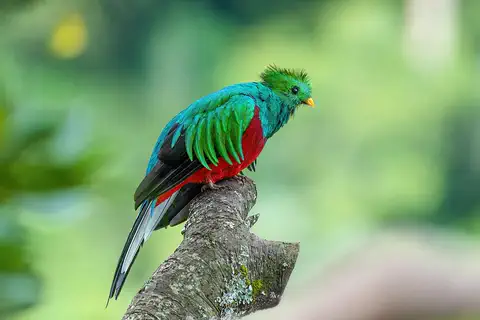 Watch
 Country
Costa Rica
Costa Rica is a small country in Central America between the Caribbean Sea and the Pacific Ocean. Volcanoes and mountains run down its middle, its forests are full of wildlife, and many national parks protect them. Since 1949 it has had no army. About 5.2 million people lived there in 2025.
-
 Watch
 Country
Venezuela
Venezuela is a country on the north coast of South America. It has high Andes mountains, huge grassy plains called the Llanos, the great Orinoco River and flat-topped mountains called tepuis, where Angel Falls drops 979 meters.
-
 Watch
 Country
Honduras
Honduras is a mountainous country in Central America, with the Caribbean Sea to the north and a short Pacific coast to the south. Its forests are home to jaguars and macaws, the Maya city of Copán stands in the west, and about 10.2 million people live there (official 2026 estimate).
-
 Watch
Natural wonder
Pantanal
The Pantanal is one of the world's largest freshwater wetlands, mostly in Brazil and reaching into Bolivia and Paraguay. Each rainy season its rivers overflow and flood the lowlands, making shallow lakes and marshes; in the dry season the water slowly drains away. This rhythm feeds an amazing number of animals, from jaguars and giant otters to about 600 kinds of birds.
-
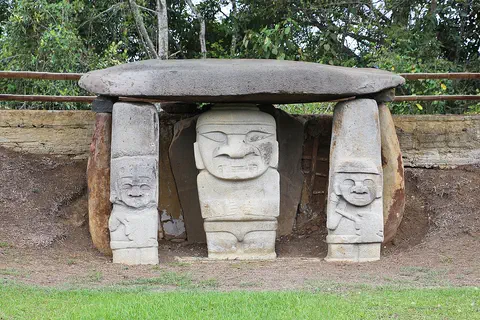 Watch
 Country
Colombia
Colombia is in the northwest of South America, with coasts on both the Caribbean Sea and the Pacific Ocean. Three ranges of the Andes run through it, and most people live in the cool mountains, where the capital, Bogotá, sits on a high plateau. About 53.4 million people lived there in 2026, according to DANE, the national statistics office.
Explore next
-
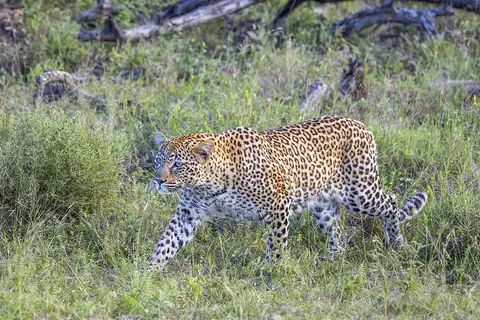 Watch
3D
Animal
Leopard
The leopard is a strong, spotted big cat and the best climber of them all. It can carry its food high up into a tree, away from lions and hyenas. Leopards live in more kinds of places than any other big cat, from deserts to rainforests, across Africa and Asia.
-
 Watch
3D
Animal
Puma
The puma, also called the cougar or mountain lion, is a big, slender cat with plain tan fur and a long tail. It lives in more of the Americas than any other wild cat, from Canada all the way to the southern tip of South America, in mountains, forests, deserts and swamps.
-
 Watch
Animal
Ocelot
The ocelot is a medium-sized wild cat of the Americas, from southern Texas to northern Argentina. Its golden coat has chains of dark-edged spots, and no two ocelots look alike. It hunts mostly at night, catching mice, rats, lizards and birds, and it needs thick plants to hide in.
-
 Watch
3D
Animal
Capybara
The capybara is the largest rodent alive, a giant cousin of the guinea pig. It lives in groups beside rivers, lakes and marshes in South America, grazes on grass and water plants, and dives into the water to stay cool and safe.
-
 Watch
3D
Animal
Green anaconda
The green anaconda is one of the largest snakes on Earth. This olive-green, spotted boa lives in the rivers, swamps and flooded grasslands of northern South America, where it lies hidden in shallow water with only its eyes and nose showing.
-
Watch
Country
Argentina
Argentina covers most of the southern part of South America. The Andes mountains run down its western side, grassy plains called the Pampas spread across the middle, and windy Patagonia stretches to the far south. INDEC, the national statistics office, estimates that about 46.5 million people lived there in 2026, many of them in and around Buenos Aires.
-
Watch
Natural wonder
Iguaçu Falls
Iguaçu Falls, on the Iguaçu River where Brazil and Argentina meet, is a system of many waterfalls and rapids almost three kilometers wide, with drops of up to about 80 meters. Clouds of spray keep the rainforest around it green and wet.
-
Watch
Country
Paraguay
Paraguay is a landlocked country in the heart of South America. The Paraguay River divides it into a hilly east, where most people live, and the hot, flat Chaco in the west. Guaraní and Spanish are both official languages, and about 7 million people lived there in 2025.
For parents & teachers
What children will learn
- Describe the jaguar's body and how it helps it hunt in forests and water.
- Explain what jaguars eat and what makes their bite special.
- Tell the difference between a jaguar and a leopard, and say where each lives.
- Understand why jaguars are Near Threatened and how forests protect them.
Recommended ages: 3 to 17 · About 15 minutes
Talk about it
- Why might living near water be useful for a jaguar?
- What could ranchers do to protect their cattle without harming jaguars?
- How does cutting down the Amazon rainforest affect animals like the jaguar?
Try at home or in class
- Draw a leopard rosette and a jaguar rosette, then swap drawings with someone and see if they can tell which is which.
- Find the Amazon rainforest on a globe or map and trace the rivers that run through it.
Key vocabulary: rosette, capybara, caiman, rainforest, solitary, corridor
Where these facts come from
- The IUCN Red List of Threatened Species , International Union for Conservation of Nature (IUCN terms of use (no redistribution of Red List data or range maps))
- GBIF Backbone Taxonomy and GBIF Occurrence Search , Global Biodiversity Information Facility (CC0 1.0 (backbone); occurrence counts are facts derived from records under CC0, CC BY and CC BY-NC)
- Wikidata , Wikimedia Foundation (CC0 1.0)
- Panthera onca (Jaguar), 2016 assessment , IUCN Red List of Threatened Species
- Jaguar , Encyclopaedia Britannica
- Jaguar , San Diego Zoo Wildlife Alliance
- Panthera onca (jaguar) , Animal Diversity Web, University of Michigan Museum of Zoology
- Wikimedia Commons , Wikimedia Foundation (Per file: Public domain, CC0, CC BY or CC BY-SA only (credited on each page))
Checked, not yet human-reviewed. Last updated October 24, 2026. Spotted a mistake? Tell us.