
 Country
South America
Brazil
Brazil is the biggest country in South America. It has the huge Amazon rainforest, a mighty river, giant waterfalls and busy beach cities.
Brazil covers about half of South America and is the fifth-largest country in the world. It holds most of the Amazon River basin and much of the world's largest rainforest, and about 214 million people lived there in 2026, most of them near the Atlantic coast.
Brazil occupies half of South America's landmass and is the world's fifth-largest country, with six biomes from the Amazon to the Pampa. Its roughly 214 million people (2026), shaped by Indigenous, African, Portuguese and later immigrant heritage, speak Portuguese, the first language of the vast majority, alongside more than 200 Indigenous languages.
Photo: Donatas Dabravolskas, CC BY-SA 4.0, via Wikimedia Commons
Discover Brazil
Brazil is a very big country in South America.
It has a huge rainforest and long rivers. It has a long, sunny coast. Most people speak Portuguese. The capital city is called Brasília.
Brazil covers nearly half of South America. Only four countries in the world are bigger: Russia, Canada, China and the United States. Its coast along the Atlantic Ocean is about 7,400 kilometers long, and it borders every South American country except Chile and Ecuador.
About 214 million people lived in Brazil in 2026, and most live near the eastern coast in big cities such as São Paulo and Rio de Janeiro. The capital, Brasília, was built in the middle of the country. Brazil was once ruled by Portugal, so Portuguese is its main language.
Brazil occupies half of South America's landmass and is the fifth-largest country in the world after Russia, Canada, China and the United States; its area, about 8.5 million square kilometers, exceeds that of the 48 conterminous U.S. states. It stretches roughly 4,350 km both north to south and east to west, has some 7,400 km of Atlantic coastline and more than 15,700 km of land borders.
Brazil's statistics office, IBGE, estimated the population at 214.2 million on July 1, 2026. Most people live along the eastern seaboard; the Southeast covers only one-tenth of the territory but holds two-fifths of the population, while the North covers more than two-fifths of the land but holds a limited share of the people. The government groups the states and the Federal District into five Major Regions: North, Northeast, Central-West, Southeast and South.
Cities and famous places
São Paulo is the biggest city in Brazil.
Rio de Janeiro has beaches and pointy mountains by the sea. Brasília is the capital. It was built in a new, special shape.
São Paulo is Brazil's largest city, with about 11.9 million people in 2025, and its state is the country's business heartland. Rio de Janeiro, the capital from 1763 to 1960, sits between steep green mountains and the sea, and is famous for its beaches and the statue of Christ on Corcovado mountain.
Brasília was built from nothing in the middle of the country, starting in 1956, to become the new capital. The planner Lúcio Costa and the architect Oscar Niemeyer designed it so that every part fits the city's overall plan, which people often compare to a bird in flight.
São Paulo (11,904,961 people in 2025, Wikidata) anchors the Southeast, the country's economic and demographic heartland. Rio de Janeiro (6.73 million), the national capital from 1763 to 1960, remains Brazil's main cultural and tourist center; UNESCO inscribed its Carioca landscapes between the mountain and the sea in 2012, from the peaks of Tijuca National Park to the Botanical Gardens (1808), Corcovado and the designed shoreline of Copacabana.
Brasília, created ex nihilo in 1956 and inscribed in 1987, is in UNESCO's words a landmark in the history of town planning: Lúcio Costa's layout of residential and administrative districts, often compared to a bird in flight, and Oscar Niemeyer's buildings were designed to be in harmony with the whole. Moving the capital inland shifted migrants and industry toward the interior; the Central-West around it is now an expanding agricultural frontier.

Rainforest, rivers and wetlands
Brazil has the biggest rainforest in the world.
The trees grow very tall. The Amazon River is huge. In the south, giant waterfalls thunder. A wet, grassy land called the Pantanal floods every year.
The Amazon River flows about 6,400 kilometers from the Andes to the Atlantic and carries more water than any other river on Earth. Around it grows the world's largest tropical rainforest, and Brazil holds about 60 percent of the Amazon basin. A single patch of Amazon forest of 0.4 hectares (one acre) can hold 250 or more kinds of trees.
In the Central-West, the Pantanal is one of the world's largest freshwater wetlands; it floods in the rainy season. On the border with Argentina, the Iguaçu Falls stretch about 2,700 meters. Brazil's highest point, Neblina Peak, stands near the border with Venezuela.
Brazil has six biomes: Amazônia, Cerrado, Caatinga, Pantanal, Mata Atlântica (Atlantic Forest) and Pampa. The Amazon, rising in the Peruvian Andes and flowing some 6,400 km, contributes up to one-fifth of the world's continental runoff to the sea; six tributaries exceed 1,600 km. Britannica notes that the basin has the greatest variety of plant species on Earth, with 250 or more tree species on a typical 0.4-hectare plot, and a closed canopy that lets no more than 10 percent of sunlight reach the ground.
The Pantanal, about 140,000 km², is flooded by the upper Paraguay River each rainy season; UNESCO's Pantanal Conservation Area (2000) protects 187,818 ha of it. The Iguaçu falls, shared with Argentina, extend some 2,700 m (World Heritage, 1986). Highlands in fact cover most of Brazil; Neblina Peak, measured by IBGE at 2,995.3 m (Britannica gives an older 3,014 m), is the highest point. January lowland temperatures average about 26 °C, while the Northeast's drought quadrilateral, the hottest region, averages some 29 °C.

Animals of Brazil
Lots of animals live in the Amazon rainforest.
Monkeys and birds live high in the trees. Capybaras live by the rivers. Pink river dolphins swim in the water. A tiny golden monkey lives in forests near the coast.
The Amazon rainforest teems with life. Most animals live high in the canopy: insects, snakes, tree frogs, many kinds of monkeys and hundreds of kinds of birds. Capybaras, caimans and anacondas live along the riverbanks, and the waters hold manatees, pink river dolphins and about 1,500 known kinds of fish, including piranhas.
In the Atlantic Forest of southeastern Brazil lives the golden lion tamarin, a small monkey with a golden mane. In the early 1970s only about 200 were left in the wild. Thanks to conservation, about 2,500 live in the wild today. Giant otters and giant anteaters live in Iguaçu National Park.
Britannica describes the Amazon canopy as teeming with insects, snakes, tree frogs, monkeys and birds; several hundred bird species nest near the main channel, caimans (Britannica says alligators), anacondas, boa constrictors and capybaras live on the banks, and the waters hold manatees, freshwater dolphins such as the boto (Inia geoffrensis), endemic to the basin, and some 1,500 identified fish species, including about 450 catfish. The Pantanal supports the giant pirarucu, ibis, herons, armadillos, anteaters and rheas.
The Smithsonian's National Zoo reports that the pet trade and habitat loss, as forests were cleared for sugar cane, coffee, cattle, logging, charcoal and towns, left as few as 200 golden lion tamarins in the wild in the early 1970s; about 2,500 now live in the wild, mostly in or near the Poço das Antas Biological Reserve in Rio de Janeiro state, and about one-third of the wild population descends from tamarins raised in human care. UNESCO lists the giant otter and giant anteater among the rare species of Iguaçu National Park.

People, languages and food
About 214 million people live in Brazil.
Most people speak Portuguese. Their families came from many places. Soccer is very popular. Samba is music and dance that many people love.
About 214 million people lived in Brazil in 2026. Their ancestors include Indigenous peoples, Africans who were brought as enslaved people, Portuguese settlers and later immigrants from Italy, Germany, Japan and other countries. Portuguese is spoken across the country, and more than 200 Indigenous languages are still spoken too, especially in the Amazon.
Brazilian Portuguese has borrowed many words from Tupí-Guaraní, an Indigenous language, and from immigrants: "tchau" (goodbye) comes from the Italian "ciao". African traditions are strongest along the coast from the Northeast to Rio de Janeiro, in foods, music and dance such as samba. Soccer is hugely popular, and Brazil has won the men's World Cup five times.
Britannica describes modern Brazilian life as formed by Indigenous, African and Portuguese cultures, with Portuguese influence dominant in language, main religion and customs, and with later Italian, German, Japanese and Spanish-speaking immigrants. Between two million and six million Indigenous people lived in the region at the time of European contact in 1500; today more than 200 Indigenous languages, such as Tucuna, Kaingang and Guaraní Mbyá, are spoken. Tupian was once the lingua franca between Indigenous peoples and the Portuguese and added perhaps thousands of words and many place-names in Brazilian Portuguese.
About two-thirds of Brazilians are Roman Catholic, and much of the rest of the population is Protestant; Catholicism ceased to be the official religion with the republic in 1889. African influences are strongest on the coast between the Northeast and Rio, in traditional foods, music and the samba. Brazil has won the FIFA World Cup a record five times (1958, 1962, 1970, 1994 and 2002). The South has about one-seventh of the population, including many people of German and Italian ancestry.

A long history
People have lived in Brazil for a very long time.
Long ago, people painted pictures on rock walls. Later, sailors came from Portugal. Today Brazil is its own country.
In Serra da Capivara National Park, rock shelters hold paintings more than 25,000 years old, made by some of South America's oldest communities. Millions of Indigenous people lived in the region when a Portuguese fleet led by Pedro Álvares Cabral reached the coast in 1500.
Portugal ruled Brazil for more than 300 years. Portuguese settlers set up sugarcane plantations in the Northeast, and slavery lasted until 1888. Brazil became independent in 1822 under Emperor Pedro I. Slavery was abolished in 1888, and in 1889 Brazil became a republic. The capital moved from Rio de Janeiro to Brasília in 1960.
Rock shelters in Serra da Capivara National Park (World Heritage, 1991) are decorated with paintings, some more than 25,000 years old, an outstanding testimony to one of South America's oldest human communities. On April 22, 1500, Pedro Álvares Cabral's fleet, bound for India, sighted the mainland, and Portugal claimed the land; Britannica estimates that between two million and six million Indigenous people then lived in the region. The Portuguese established sugarcane plantations in the Northeast in the 16th century, and slave-based plantation farming, mainly of sugar, remained the empire's main economic system in the 19th century.
In 1822 Brazil became independent under Dom Pedro I and, unlike Spanish and British possessions, did not fragment. On May 13, 1888, the princess regent decreed the complete emancipation of enslaved people, about 700,000 of them, and on November 15, 1889, a military coup ended the monarchy and created a republic. Rio de Janeiro was the capital from 1763 to 1960, when Brasília took its place. A military dictatorship governed from 1964 to 1985; Britannica traces Brazil's deep inequalities partly to colonization from the 16th through the 19th century and to that dictatorship.

Brazil on the map
Find Brazil on the globe.
It is the giant country in South America. The Atlantic Ocean is on its east side. It touches almost every other country in South America.
Brazil is shaped like a huge, uneven triangle. The Atlantic Ocean lies along its whole eastern side. It shares borders with ten countries and territories: Uruguay, Argentina, Paraguay, Bolivia, Peru, Colombia, Venezuela, Guyana, Suriname and French Guiana.
Most of Brazil is tropical; only the South, around Paraná, Santa Catarina and Rio Grande do Sul, stretches below the Tropic of Capricorn. The island of Fernando de Noronha lies about 360 kilometers off the northeast coast.
Brazil borders Uruguay to the south; Argentina, Paraguay and Bolivia to the southwest; Peru to the west; Colombia to the northwest; and Venezuela, Guyana, Suriname and French Guiana (part of France) to the north, sharing more than 15,700 km of land borders with every South American country except Chile and Ecuador. It forms a vast irregular triangle about 4,350 km across in each direction.
Britannica groups its physical features into five divisions: the Guiana Highlands in the north, shared with Venezuela and the Guianas; the Amazon lowlands; the Pantanal; the Brazilian Highlands with the coastal ranges; and the coastal lowlands. The South lies below the Tropic of Capricorn, and the Northeast's Fernando de Noronha lies some 360 km offshore.
- Size
- fifth-largest country in the world
- North to south and east to west
- roughly 4,350 km
- Atlantic coastline
- about 7,400 km
- Neighbors
- every South American country except Chile and Ecuador
Amazing facts
-
The Amazon carries more water than any other river.
The Amazon River carries more water than any other river on Earth.
The Amazon contributes up to one-fifth of Earth's surface runoff from the continents to the sea, more than 10 times the Mississippi's annual discharge.
-
Some trees in the Amazon are as tall as a big building.
The tallest Amazon trees rise 45 to 60 meters, and their canopy lets very little sunlight reach the ground.
The Amazon's layered canopy lets no more than 10 percent of sunlight reach the forest floor, so more life is found in the canopy than on the ground.
-
The word for goodbye in Brazil came from Italy.
Brazilians say "tchau" for goodbye, a word borrowed from the Italian "ciao".
Italian, German, Japanese and Spanish-speaking immigrants added words to Brazilian Portuguese, including tchau from the Italian ciao.
-
Golden lion tamarins have a golden mane like a lion.
About 2,500 golden lion tamarins now live in the wild, up from about 200 in the early 1970s.
About one-third of today's wild golden lion tamarins descend from animals raised in human care and reintroduced to Brazil's Atlantic Forest.
-
Some rock paintings in Brazil are very, very old.
Some paintings in the rock shelters of Serra da Capivara are more than 25,000 years old.
UNESCO calls Serra da Capivara's painted rock shelters an outstanding testimony to one of the oldest human communities of South America.
Words to know
- rainforest
- a thick forest that gets a lot of rain all year
- canopy
- the high layer of leaves and branches formed by the tops of trees
- wetland
- land that is covered by shallow water for all or part of the year
- biome
- a large area with its own kind of climate, plants and animals
- Indigenous
- describes the first peoples known to have lived in a place
- republic
- a country led by elected leaders and a president rather than a king or queen
Discovery challenge
-
What is the capital city of Brazil?
Which city is the capital of Brazil?
Which planned city replaced Rio de Janeiro as Brazil's capital in 1960?
- Rio de Janeiro
- São Paulo
- Brasília
Show the answer
Brasília
Brasília is the capital of Brazil.
Brasília is the capital. Rio de Janeiro was the capital before 1960, and São Paulo is the biggest city.
Brasília, created from 1956, became the capital in 1960; Rio had been capital since 1763.
-
What language do most people in Brazil speak?
Which language is spoken by most people in Brazil?
Which language, brought by the colonial power, is the first language of the vast majority of Brazilians?
- Spanish
- Portuguese
- French
Show the answer
Portuguese
Most people in Brazil speak Portuguese.
Portugal ruled Brazil for centuries, so Portuguese is the main language.
Portuguese arrived in the 16th century and is the first language of the vast majority; more than 200 Indigenous languages are also spoken.
-
Which huge forest grows in Brazil?
Brazil holds about 60 percent of which forest region?
Brazil holds about 60 percent of the basin of the world's largest tropical rainforest. Which one?
- The Amazon rainforest
- The Black Forest
- The Białowieża Forest
Show the answer
The Amazon rainforest
The Amazon rainforest grows in Brazil.
Brazil holds about 60 percent of the Amazon, home of the largest rainforest in the world.
The Amazon is the world's largest tropical rainforest; Brazil holds approximately 60 percent of the Amazon basin.
-
Which little monkey with golden fur lives in Brazil?
Which small monkey of Brazil's Atlantic Forest fell to about 200 in the wild?
Which primate's wild population recovered from about 200 in the early 1970s to about 2,500?
- Golden lion tamarin
- Japanese macaque
- Gorilla
Show the answer
Golden lion tamarin
The golden lion tamarin. People helped it come back.
Golden lion tamarins live in the Atlantic Forest; about 2,500 now live in the wild.
Conservation and reintroduction raised wild golden lion tamarins to about 2,500, mostly near Poço das Antas.
-
Brazil is the biggest country on which continent?
Brazil covers about half of which continent?
Brazil occupies half the landmass of which continent?
- Africa
- Europe
- South America
Show the answer
South America
Brazil is the biggest country in South America.
Brazil covers nearly half of South America.
Brazil occupies half of South America's landmass and borders all its countries but Chile and Ecuador.
Places to discover in Brazil
-
 Watch
City
Curitiba
Curitiba is the capital of the state of Paraná, in southern Brazil, about 930 meters above the sea. About 1.8 million people live there (2025). The city is famous around the world for its bus rapid transit, begun in 1974, and for the lakes, flood-control systems and parks it built from the 1970s.
-
Watch
City
Rio de Janeiro
Rio de Janeiro is a city of about 6.7 million people (2025) on Brazil's Atlantic coast. Forested mountains, a giant statue on Corcovado, the Sugarloaf peak and famous beaches make it one of the most recognizable cities on Earth. It was Brazil's capital until 1960.
-
 Watch
City
São Paulo
São Paulo, capital of the state of São Paulo, is the largest city in the Southern Hemisphere. It began as a small Jesuit mission in 1554 and grew huge after coffee became Brazil's main export. About 11.9 million people live in the city (2025), with families whose roots reach from Italy and Portugal to Japan and Lebanon.
-
 Watch
Landmark
Christ the Redeemer
Christ the Redeemer is a 30-meter statue of Jesus on top of Corcovado mountain in Rio de Janeiro, Brazil. Built from 1926 to 1931 out of reinforced concrete, it is covered in thousands of small soapstone triangles, and it stands on a pedestal 8 meters high.
-
Watch
Natural wonder
Iguaçu Falls
Iguaçu Falls, on the Iguaçu River where Brazil and Argentina meet, is a system of many waterfalls and rapids almost three kilometers wide, with drops of up to about 80 meters. Clouds of spray keep the rainforest around it green and wet.
-
Watch
Natural wonder
Amazon rainforest
The Amazon rainforest covers about 6 million square kilometers around the Amazon River and its branches in northern South America, and about 60 percent of it is in Brazil. Britannica calls it the world's richest and most varied home for living things, with millions of kinds of insects, plants and animals.
-
 Watch
Natural wonder
Amazon River
The Amazon River flows from tiny streams in the Andes Mountains of Peru across Colombia and Brazil to the Atlantic Ocean. NASA calls it the largest river in the world: about 219,000 cubic meters of water pour into the ocean every second, nearly a fifth of all the water that rivers carry to the oceans.
-
 Watch
Natural wonder
Pantanal
The Pantanal is one of the world's largest freshwater wetlands, mostly in Brazil and reaching into Bolivia and Paraguay. Each rainy season its rivers overflow and flood the lowlands, making shallow lakes and marshes; in the dry season the water slowly drains away. This rhythm feeds an amazing number of animals, from jaguars and giant otters to about 600 kinds of birds.
-
 Watch
Natural wonder
Mount Roraima
Mount Roraima is a huge flat-topped mountain called a tepui, in the Guiana Highlands of South America, where Brazil, Venezuela and Guyana meet. Its summit stands about 2,772 meters high, ringed by sheer sandstone cliffs. Tepuis like it are some of the world's oldest rock formations, and they are home to unusual plants such as marsh pitcher plants.
Animals of Brazil
-
 Watch
Animal
Golden lion tamarin
The golden lion tamarin is a small, bright orange monkey with a lion-like mane. It lives only in the Atlantic coastal forest of Brazil. In the 1970s only about 200 were left in the wild; thanks to decades of work, a census in 2022 and 2023 counted about 4,800.
-
 Watch
Animal
Amazon river dolphin
The Amazon river dolphin, or boto, is the largest river dolphin. Many adults are pink. It lives only in fresh water, in the Amazon and Orinoco river basins of South America, and its bendy neck and big flippers let it twist between tree trunks in flooded forests as it hunts fish using sound.
-
 Watch
Animal
Ocelot
The ocelot is a medium-sized wild cat of the Americas, from southern Texas to northern Argentina. Its golden coat has chains of dark-edged spots, and no two ocelots look alike. It hunts mostly at night, catching mice, rats, lizards and birds, and it needs thick plants to hide in.
-
 Watch
Animal
Nine-banded armadillo
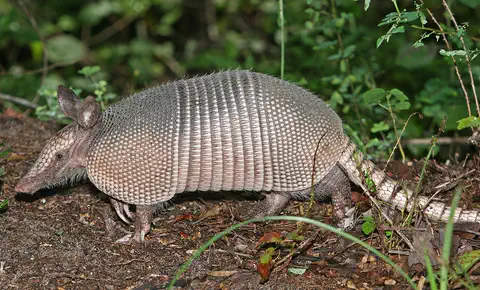
The nine-banded armadillo is a small, armored digger that lives from Argentina all the way to the United States. It sniffs out beetles and other bugs in the soil, can hold its breath for six minutes, and almost always has four identical babies at once.
-
 Watch
Animal
Giant otter
The giant otter is the longest otter in the world, up to about 1.8 meters from nose to tail. It lives in the rivers and lakes of South America in noisy family groups that hunt fish together by day. It is endangered, and people are working to protect it.
-
 Watch
Animal
Army ant
Army ants hunt together in giant swarms and never build a permanent nest. This page is about the best-studied kind, Eciton burchellii, of Central and South American forests. Each night of its traveling phase the colony moves, and the workers link their legs to build a living camp around their queen and young.
-
 Watch
Animal
Burrowing owl
The burrowing owl is a small, sandy-brown owl with long legs and bright yellow eyes. Unlike most owls, it lives underground, in burrows dug by prairie dogs, ground squirrels or tortoises, or sometimes by the owls themselves. It lives in open grasslands and deserts from Canada to the tip of South America.
-
 Watch
Animal
Hoatzin
The hoatzin is a strange and wonderful bird of the Amazon and Orinoco rivers. It eats mostly leaves and digests them slowly with the help of bacteria, a bit like a cow. Its chicks have claws on their wings that help them climb back up through the branches.
-
 Watch
Animal
Red-bellied piranha
The red-bellied piranha is a silver fish with a red belly that lives in rivers, creeks and floodplain ponds of South America. It has a famous reputation, but experts say the danger to people is greatly exaggerated: piranhas mostly eat fish, insects, snails and plants.
-
 Watch
Animal
Neon tetra
The neon tetra is a tiny fish, about as long as a quarter is wide, with a glowing blue stripe and a bright red patch. In the wild it lives in clear and dark-water forest streams of the western Amazon. It is also one of the most popular aquarium fish in the world.
-
 Watch
3D
Animal
Lined seahorse
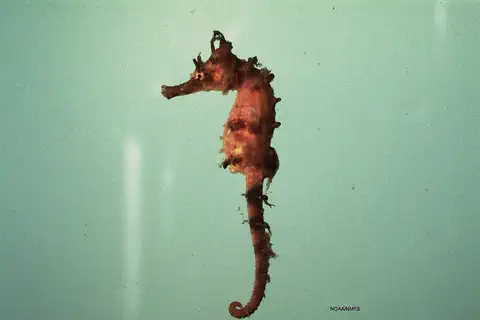
The lined seahorse is a small fish of the western Atlantic Ocean, from Canada and the United States down to Brazil. It has a horse-shaped head, a long snout with no teeth and a tail that grips seagrass. The male carries the eggs in a pouch until tiny seahorses are born.
-
 Watch
Animal
Giant anteater
The giant anteater is the biggest of the four kinds of anteater. It has no teeth at all, but its sticky tongue, about 60 centimeters long, flicks in and out up to 150 times a minute to slurp up ants and termites. Babies ride on their mothers' backs.
Explore next
-
Watch
Natural wonder
Amazon rainforest
The Amazon rainforest covers about 6 million square kilometers around the Amazon River and its branches in northern South America, and about 60 percent of it is in Brazil. Britannica calls it the world's richest and most varied home for living things, with millions of kinds of insects, plants and animals.
-
Watch
Natural wonder
Amazon River
The Amazon River flows from tiny streams in the Andes Mountains of Peru across Colombia and Brazil to the Atlantic Ocean. NASA calls it the largest river in the world: about 219,000 cubic meters of water pour into the ocean every second, nearly a fifth of all the water that rivers carry to the oceans.
-
Watch
Natural wonder
Iguaçu Falls
Iguaçu Falls, on the Iguaçu River where Brazil and Argentina meet, is a system of many waterfalls and rapids almost three kilometers wide, with drops of up to about 80 meters. Clouds of spray keep the rainforest around it green and wet.
-
Watch
Natural wonder
Pantanal
The Pantanal is one of the world's largest freshwater wetlands, mostly in Brazil and reaching into Bolivia and Paraguay. Each rainy season its rivers overflow and flood the lowlands, making shallow lakes and marshes; in the dry season the water slowly drains away. This rhythm feeds an amazing number of animals, from jaguars and giant otters to about 600 kinds of birds.
-
Watch
City
Rio de Janeiro
Rio de Janeiro is a city of about 6.7 million people (2025) on Brazil's Atlantic coast. Forested mountains, a giant statue on Corcovado, the Sugarloaf peak and famous beaches make it one of the most recognizable cities on Earth. It was Brazil's capital until 1960.
-
Watch
Animal
Golden lion tamarin
The golden lion tamarin is a small, bright orange monkey with a lion-like mane. It lives only in the Atlantic coastal forest of Brazil. In the 1970s only about 200 were left in the wild; thanks to decades of work, a census in 2022 and 2023 counted about 4,800.
-
Watch
Animal
Amazon river dolphin
The Amazon river dolphin, or boto, is the largest river dolphin. Many adults are pink. It lives only in fresh water, in the Amazon and Orinoco river basins of South America, and its bendy neck and big flippers let it twist between tree trunks in flooded forests as it hunts fish using sound.
-
Watch
Animal
Ocelot
The ocelot is a medium-sized wild cat of the Americas, from southern Texas to northern Argentina. Its golden coat has chains of dark-edged spots, and no two ocelots look alike. It hunts mostly at night, catching mice, rats, lizards and birds, and it needs thick plants to hide in.
For parents & teachers
What children will learn
- Locate Brazil and describe its size compared with the rest of South America.
- Explain why the Amazon rainforest and river are important, and describe the Pantanal and Iguaçu Falls.
- Describe how Indigenous, African, Portuguese and immigrant heritage shape Brazil today.
- Outline Brazil's history from ancient rock art to independence (1822), abolition (1888) and the republic (1889).
Recommended ages: 3 to 17 · About 15 minutes
Talk about it
- Why do you think more animals live in the rainforest canopy than on the ground?
- Brazil built a brand-new capital in the middle of the country. Why might a country do that?
- Brazilian Portuguese borrowed words from many languages. Can you think of words in your language that came from somewhere else?
Try at home or in class
- Make a rainforest in a box: layer a shoebox with a ground layer, an understory and a canopy of paper leaves, and shine a flashlight from above to see how little light reaches the bottom.
- On a map of South America, color Brazil and count how many countries it touches.
Key vocabulary: rainforest, canopy, wetland, biome, Indigenous, republic
Where these facts come from
- Wikidata , Wikimedia Foundation (CC0 1.0)
- Natural Earth vector data , Natural Earth (NACIS) (Public domain)
- UNESCO World Heritage List , UNESCO World Heritage Centre (Linked as a reference; site facts come from Wikidata)
- Brazil , Encyclopaedia Britannica
- Brazil: Climate, soils, plant and animal life , Encyclopaedia Britannica
- Brazil: Rivers , Encyclopaedia Britannica
- Brazil: Language and religion , Encyclopaedia Britannica
- Brazil: Cultural life , Encyclopaedia Britannica
- Brazil: Sports and recreation , Encyclopaedia Britannica
- Amazon Rainforest , Encyclopaedia Britannica
- Brazil: History , Encyclopaedia Britannica
- Brazil: Independence , Encyclopaedia Britannica
- Brazil: The collapse of the empire , Encyclopaedia Britannica
- Estimativas da População (population estimates, 1 July 2026) , Instituto Brasileiro de Geografia e Estatística (IBGE)
- Tabela 1.3.2.1: Pontos mais altos do Brasil (Anuário Estatístico do Brasil 2024) , Instituto Brasileiro de Geografia e Estatística (IBGE)
- Golden lion tamarin , Smithsonian's National Zoo and Conservation Biology Institute
- Iguaçu National Park , UNESCO World Heritage Centre
- Pantanal Conservation Area , UNESCO World Heritage Centre
- Brasilia , UNESCO World Heritage Centre
- Rio de Janeiro: Carioca Landscapes between the Mountain and the Sea , UNESCO World Heritage Centre
- Serra da Capivara National Park , UNESCO World Heritage Centre
- PlayOwl region table, version 1 , PlayOwl (PlayOwl original data)
- flag-icons 7.5.0 , Panayiotis Lipiridis and contributors (MIT)
- Wikimedia Commons , Wikimedia Foundation (Per file (public domain, CC0, CC BY or CC BY-SA); see each media record)
Checked, not yet human-reviewed. Last updated October 24, 2026. Spotted a mistake? Tell us.
Picture credits
- Photo: Donatas Dabravolskas, CC BY-SA 4.0, via Wikimedia Commons · source · license
- Photo: Arturdiasr, CC BY-SA 4.0, via Wikimedia Commons · source · license
- Photo: Phil P Harris., CC BY-SA 2.5, via Wikimedia Commons · source · license
- Photo: Mariordo (Mario Roberto Durán Ortiz), CC BY-SA 4.0, via Wikimedia Commons · source · license
- Photo: Rafael Rabello de Barros, CC BY-SA 3.0, via Wikimedia Commons · source · license
- Photo: Goldemberg Fonseca de Almeida from Dourados - MS, Brazil, CC BY 2.0, via Wikimedia Commons · source · license
- Photo: Alicia Yo at the English-language Wikipedia, CC BY-SA 3.0, via Wikimedia Commons · source · license