
Animal
Burrowing owl
The burrowing owl is a small owl with long legs and bright yellow eyes. It lives in a hole in the ground. It is often awake in the daytime.
The burrowing owl is a small, sandy-brown owl with long legs and bright yellow eyes. Unlike most owls, it lives underground, in burrows dug by prairie dogs, ground squirrels or tortoises, or sometimes by the owls themselves. It lives in open grasslands and deserts from Canada to the tip of South America.
Athene cunicularia is a small, long-legged owl of open, sparsely vegetated country in the Americas that nests and roosts in burrows. It hunts at all hours, mainly on insects and small mammals. It is listed as Least Concern, with 1 to 10 million mature birds in the IUCN's 2025 estimate, but it has declined in many parts of North America.
Photo: © Frank Schulenburg, CC BY-SA 4.0, via Wikimedia Commons
Meet the burrowing owl
The burrowing owl is a small owl that lives in a hole in the ground.
It has long legs, a round head and bright yellow eyes. Its brown feathers have pale spots. It has white eyebrows and a white throat.
The burrowing owl is a small owl, about 19 to 25 centimeters long, about as long as a robin but much chunkier. It weighs only about 150 grams.
It has long legs, a short tail and a round head with no ear tufts. Its brown feathers are covered in sandy-pale spots, and it has bold white eyebrows, a white throat and bright yellow eyes. Unlike most owls, males and females are the same size.
Athene cunicularia is a small owl, 19 to 25 centimeters long with a wingspan of about 55 centimeters and a mass of about 150 grams, according to Cornell's All About Birds. Unusually among owls, the sexes are the same size.
Its build suits life on the ground: long legs, a short tail and a rounded head without ear tufts. Adults are brown, mottled with sandy-pale spots above, with a spotted breast grading to brown bars on the belly, a bold white throat and eyebrows, and yellow eyes. Juveniles are plainer, with buffy-yellow underparts. Many subspecies span the range, but differences in plumage are small; Florida and Caribbean birds tend to be a little smaller with whiter spots.
Quick facts
- Group
- Bird
- Length
- 0.19 to 0.25 m
- Wingspan
- 0.55 m
- Weight
- 0.15 kg
A home underground
Burrowing owls live in North and South America.
They live in open, grassy or dry places with few trees. They make their homes in holes in the ground.
Burrowing owls live in open places with short, sparse plants: prairies, pastures, deserts, farm fields, and even golf courses, airports and empty lots in towns. They range from Canada and the United States through Mexico, Central America and the Caribbean all the way to the tip of South America.
They live underground in burrows. Most move into holes dug by prairie dogs, ground squirrels, badgers, armadillos or tortoises, and then dig them bigger with their beaks and feet. In Florida and the Caribbean, burrowing owls usually dig their own.
The IUCN's 2025 global assessment lists the species as resident across much of Mexico, Central and South America and the Caribbean, and as a breeding bird in Canada, the United States, Suriname and Uruguay, from sea level to about 4,500 meters. It is extinct on Antigua and Barbuda and Guadeloupe. Northern populations migrate south for the winter.
Cornell describes its habitat as open, treeless, gently sloping land with low, sparse vegetation, including grassland, desert and steppe as well as pastures, croplands, airports, road embankments, cemeteries and vacant lots. Owls are often associated with colonies of prairie dogs, ground squirrels and tortoises, whose burrows they adopt; pairs enlarge and maintain them by digging with the bill and kicking soil back with the feet. In Florida and the Caribbean they usually excavate their own burrows.
Continents
Its habitats


Where can you find this animal?
- Lives here naturally · Countries and seas named by a scientific source
- Sightings recorded · Records of wild sightings (GBIF)
Lives here naturally · Countries and seas named by a scientific source
Open grasslands, deserts and farmland from southern Canada and the western and southern United States through Mexico, Central America and the Caribbean to the tip of South America. Northern birds fly south for the winter. Owls live in only part of many countries shown.
Places: Canada, United States, Uruguay, Suriname, Argentina, Bahamas, Belize, Bolivia and 15 more places.
Source: iucn-red-list · checked October 2026
Sightings recorded · Records of wild sightings (GBIF)
Counts of GBIF records of wild observations (human and machine) and preserved specimens. Records include introduced populations, vagrants, escaped or released animals and misidentifications, so a country with records is not necessarily part of the native range.
Wild sightings have been recorded in United States, Brazil, Argentina, Peru, Chile, Mexico, Colombia, Paraguay and 25 more places.
Source: gbif · checked October 2026
Range maps show where scientists say an animal lives, often country by country. An animal may live in only part of a country shown, and sightings records can include animals that wandered far from home.
What it eats
Burrowing owls eat lots of bugs.
They catch grasshoppers, crickets, beetles and moths. They catch mice and voles too, and sometimes lizards and frogs.
Most of the things a burrowing owl catches are insects, such as grasshoppers, crickets, moths and beetles. But the bigger animals it catches, such as mice, voles and shrews, make up most of the weight of its food. It also eats scorpions, frogs, lizards, snakes and small birds.
It hunts close to the ground, by flying, hovering, walking or even running, and grabs prey with its talons. Burrowing owls even spread animal dung at their burrow entrance, which attracts dung beetles that they then catch and eat.
Insects and other invertebrates make up most prey items, while vertebrates supply most of the diet by mass. Common prey includes grasshoppers, crickets, moths, beetles, mice, voles and shrews, with records of scorpions, earthworms, frogs, toads, snakes, lizards, bats, ground squirrels, young rabbits and small birds. Females catch more insects, mainly by day; males take most of the vertebrates, mainly at night.
Burrowing owls hunt at all hours, staying low and flying, hovering, walking or running to seize prey in their talons. Before laying, they carpet the burrow entrance with dung, which attracts dung beetles and other insects that they eat. They also cache surplus food for incubation and brooding: one store found in Saskatchewan in 1997 held more than 200 rodents.
Did you know?
Burrowing owl dads and moms are the same size.
In most owls the female is bigger than the male, but male and female burrowing owls are the same size.
Unlike most owls, in which females are larger than males, burrowing owl sexes are the same size.
An owl built for the ground
Burrowing owls have long legs for walking and running.
Their round heads have no ear tufts. When they are surprised, they bob up and down!
Burrowing owls spend most of their time on the ground or on low perches such as fence posts. Their long legs help them walk and run after prey, and they often stand on the dirt mound at their burrow entrance.
Living underground has another challenge: the air in a burrow can hold more carbon dioxide than the air outside. Burrowing owls can put up with more carbon dioxide than other birds can. When alarmed, they bob their bodies quickly up and down.
Long legs and a short tail suit an owl that forages on foot and from low perches. Its rounded head lacks ear tufts, and its mottled brown and sandy plumage gives good camouflage against bare ground; owls often stand on burrow mounds with just the head and eyes showing.
Cornell notes that burrowing owls tolerate higher levels of carbon dioxide than other birds, an adaptation shared with other burrowing animals, since the gas can build up underground. Disturbed owls, and hunting owls pinpointing prey, bob jerkily up and down.
Growing up in a burrow
The mother owl lays her eggs deep in the burrow.
She can lay many eggs, up to twelve! The chicks hatch after about four weeks. They are fluffy and gray-white.
Burrowing owls nest underground at the end of the burrow, which can be several meters long, twists and turns, and is usually less than a meter deep. They often line it with livestock dung, and sometimes with feathers or grass.
The female lays 2 to 12 smooth white eggs, which hatch after 28 to 30 days. She stays in or near the burrow while the male stands guard nearby. The chicks hatch helpless, with their eyes closed and covered in grayish-white fluff. They leave the nest at 44 to 53 days old.
Nesting owls favor sites with many burrows nearby, loose soil, slight elevation against flooding and lookouts such as mounds, bushes, fence posts or signs. The nest burrow can be several yards long and usually less than about a meter deep, twisting, with a dirt mound at the entrance and an opening at least 10 to 15 centimeters wide; it is often lined with livestock manure.
Clutches are 2 to 12 smooth white eggs. Incubation lasts 28 to 30 days, and the chicks hatch helpless, eyes closed, in grayish-white down. Females stay in or near the burrow until the young fledge at 44 to 53 days, while males guard from a nearby burrow or perch. Young owls play-hunt by pouncing on each other, on prey brought by their parents and on dung around the burrow. The oldest known wild burrowing owl was at least 9 years and 11 months old.
Neighbors in a colony
Burrowing owls often live near other burrowing owls.
They are awake in the daytime as well as at night. They like to stand by their burrow and look around.
Unlike most owls, burrowing owls are often active during the day, especially in the early morning and late evening, and they can hunt at any hour. Between hunts they rest on the dirt mound at their burrow entrance.
Pairs are mostly monogamous, and they nest close to other pairs in loose colonies. Males defend their space from other males by calling, puffing up their feathers in a crouching display, or chasing them. To court a female, a male may fly high into the air, hover for a few seconds and then drop quickly down.
Burrowing owls hunt at all hours and are most active in early morning and late evening. They are mostly monogamous and breed in loose colonies, often among the burrows of prairie dogs or ground squirrels. Males defend territories by vocalizing, by a weaving crouch display with feathers fluffed, or by chasing.
Courting males circle overhead or rise tens of feet, hover for a few seconds and descend rapidly; pairs call, rub bills and preen each other, and the male presents food to the female. Owls often collect bottle caps, foil, paper scraps and other trash at burrow entrances, which Cornell suggests may possibly signal that a burrow is occupied. Wintering owls may roost in tufts of vegetation rather than burrows.

Helping burrowing owls
There are still many burrowing owls, but fewer than before in some places.
People build artificial burrows for them. Keeping prairie dogs and ground squirrels helps the owls find homes.
Burrowing owls are not endangered worldwide, and the IUCN's 2025 assessment estimates between 1 and 10 million adults. But in parts of North America they have declined sharply, and they are listed as endangered in Canada.
Farms and towns have replaced many colonies of prairie dogs and ground squirrels whose burrows the owls need. Pesticides, cars and pet cats and dogs also harm them. People help by protecting small patches of grassland and by building artificial burrows from buckets, pipes and tubing.
The IUCN's 2025 global assessment lists the species as Least Concern, with 1,000,000 to 9,999,999 mature individuals and a stable trend. Regionally the picture is worse: the North American Breeding Bird Survey found declines of nearly 3.5 percent a year in Canada between 1966 and 2019, with sharp losses in Florida, the Dakotas, the Midwest and coastal California. The species is listed as Endangered in Canada and under Special Protection in Mexico.
Agriculture and development have shrunk the colonies of burrowing mammals the owls depend on, and pesticides, vehicle collisions, shooting, entanglement in fences and predation by introduced animals, including pet cats and dogs, cause many deaths. Protective laws, reintroductions, habitat protection and artificial burrows help, and because the owls do not need large unbroken areas, even small protected patches of land can benefit them.
IUCN Red List
How is the burrowing owl doing in the wild?
- Least Concern (this animal)
- Near Threatened
- Vulnerable
- Endangered
- Critically Endangered
- Extinct in the Wild
- Extinct
Least Concern
Not at risk of disappearing from the wild right now.
See the IUCN Red List assessment · The IUCN Red List of Threatened Species 2021.3
Amazing facts
-
Burrowing owls put animal poop by their door to catch bugs!
Burrowing owls spread animal dung around their burrow entrance. It attracts dung beetles, which the owls catch and eat.
Before laying, burrowing owls carpet the burrow entrance with dung, which draws dung beetles and other insects that become prey.
-
Burrowing owls bob up and down when they are surprised.
When a burrowing owl is alarmed, it bobs its body quickly up and down.
Jerky bobbing is shown both by disturbed owls and by hunting owls pinpointing prey.
-
Some burrowing owls live in pipes that people put in the ground.
Conservationists build artificial burrows for burrowing owls out of buckets, pipes and tubing, and the owls move in.
Where natural burrows are scarce, owls have nested in piles of PVC pipe, and conservationists supply artificial burrows of buckets, pipes and tubing.
-
Burrowing owl dads and moms are the same size.
In most owls the female is bigger than the male, but male and female burrowing owls are the same size.
Unlike most owls, in which females are larger than males, burrowing owl sexes are the same size.
Words to know
- burrow
- a hole or tunnel in the ground that an animal lives in
- colony
- a group of animals of the same kind living close together
- prairie
- a wide, flat land covered in grass
- cache
- a hidden store of food saved for later
- talons
- the long, sharp, curved claws of a bird of prey
- migrate
- to travel to another place for part of the year
Discovery challenge
-
Where does a burrowing owl live?
Where does a burrowing owl make its home?
Which nest site is typical of the burrowing owl?
- High in a tree
- In a hole in the ground
- Floating on a lake
Show the answer
In a hole in the ground
It lives in a hole in the ground called a burrow.
In a burrow underground, often one dug by a prairie dog, ground squirrel or tortoise.
Underground burrows, usually adopted from burrowing mammals or tortoises and enlarged; in Florida and the Caribbean the owls usually dig their own.
-
What do burrowing owls catch the most?
What kind of animal makes up most of the prey items a burrowing owl catches?
Which group makes up the majority of burrowing owl prey items (by number)?
- Insects
- Fish
- Fruit
Show the answer
Insects
They catch lots of bugs, like grasshoppers and beetles.
Insects such as grasshoppers, crickets and beetles, though mice and voles give more of the weight of food.
Invertebrates, especially insects, dominate by number; vertebrates such as mice and voles dominate by mass.
-
Does a burrowing owl have ear tufts?
How is a burrowing owl's head different from an eagle-owl's?
Which feature distinguishes the burrowing owl's head from that of horned owls?
- It has no ear tufts
- It has very tall ear tufts
- It has a crest of long feathers
Show the answer
It has no ear tufts
No! Its head is round with no ear tufts.
Its head is round with no ear tufts, while an eagle-owl has tall tufts.
The rounded head lacks ear tufts, unlike horned owls such as the Eurasian eagle-owl and great horned owl.
-
When can you see burrowing owls?
When are burrowing owls active?
Which best describes the burrowing owl's activity pattern?
- Only in the middle of the night
- In the day and at night
- Only in winter
Show the answer
In the day and at night
They are awake in the day and at night.
They are active during the day and can hunt at any hour, especially early morning and late evening.
They hunt at all hours, with peaks in early morning and late evening; females take more insects by day, males more vertebrates by night.
Places where you might see it
-
 Watch
 Country
United States
The United States is a large country in North America made of 50 states, from icy Alaska to the warm islands of Hawaii. It has the Grand Canyon, the Mississippi River and Yellowstone, and about 342 million people live there.
-
 Watch
 Country
Brazil
Brazil covers about half of South America and is the fifth-largest country in the world. It holds most of the Amazon River basin and much of the world's largest rainforest, and about 214 million people lived there in 2026, most of them near the Atlantic coast.
-
 Watch
 Country
Uruguay
Uruguay is the second-smallest country in South America, between Brazil and Argentina. Its gently rolling grasslands are grazed by cattle and sheep, and almost half of its 3.5 million people live in and around the capital, Montevideo.
Explore next
-
 Watch
Animal
Black-tailed prairie dog
Black-tailed prairie dogs are sociable ground squirrels of North America's Great Plains. They dig huge underground towns, keep the grass short to watch for danger, and bark warnings to each other. Many other animals depend on their towns.
-
 Watch
Animal
Desert tortoise
The desert tortoise, also called the Mojave desert tortoise, lives in the deserts of the south-western United States. It spends most of its life in underground burrows, stores water in its body, and can live for 50 years or more. Sadly, it is now critically endangered.
-
 Watch
Animal
Barn owl
The barn owl is a pale, ghostly owl with a heart-shaped face that works like a dish to collect sound. It hunts mice and voles at night over fields and grassland, finding them by hearing alone if it has to. Barn owls live on every continent except Antarctica.
-
 Watch
Animal
Eurasian eagle-owl
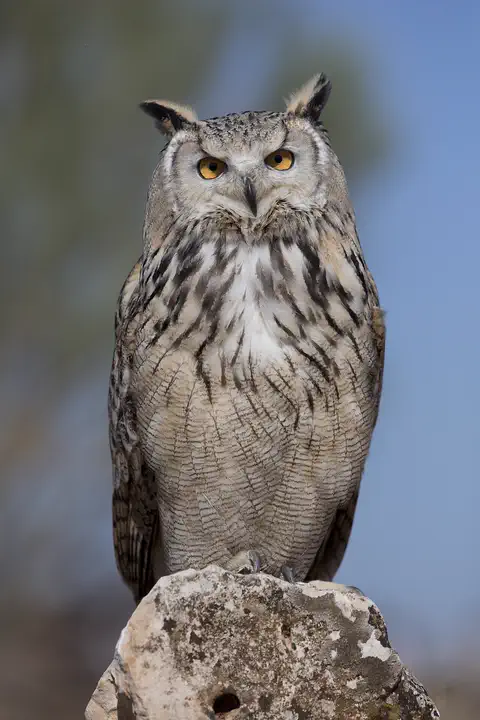
The Eurasian eagle-owl is one of the biggest owls in the world, with wings up to about 2 meters across, big orange eyes and two tall ear tufts. It lives across Europe and Asia, nests on rocky ledges and flies silently at night to catch rats, voles, hares and birds.
-
Watch
Country
United States
The United States is a large country in North America made of 50 states, from icy Alaska to the warm islands of Hawaii. It has the Grand Canyon, the Mississippi River and Yellowstone, and about 342 million people live there.
-
Watch
Country
Brazil
Brazil covers about half of South America and is the fifth-largest country in the world. It holds most of the Amazon River basin and much of the world's largest rainforest, and about 214 million people lived there in 2026, most of them near the Atlantic coast.
-
Watch
Country
Uruguay
Uruguay is the second-smallest country in South America, between Brazil and Argentina. Its gently rolling grasslands are grazed by cattle and sheep, and almost half of its 3.5 million people live in and around the capital, Montevideo.
-
 Watch
Animal
Greater roadrunner
The greater roadrunner is a long-legged member of the cuckoo family that lives in deserts and scrubby country in the southwestern United States and Mexico. It flies only a little but runs fast, chasing lizards, insects and even snakes, and it has clever ways of coping with desert heat.
For parents & teachers
What children will learn
- Describe how the burrowing owl's long legs, camouflage and tolerance of carbon dioxide suit life in a burrow.
- Explain how burrowing owls depend on prairie dogs, ground squirrels and tortoises.
- Compare the burrowing owl with other owls, such as eagle-owls and barn owls.
- Describe why the owls have declined in places and how artificial burrows help.
Recommended ages: 3 to 17 · About 15 minutes
Talk about it
- Why might an owl that lives in open grassland be active in the daytime?
- How does losing prairie dogs affect burrowing owls?
- Where near your home could small patches of wild land help animals?
Try at home or in class
- Draw a cross-section of a burrowing owl's burrow, with its twists, the dirt mound and the nest chamber.
- Measure 25 centimeters with a ruler to see how small a burrowing owl is, and compare it with a robin in a bird book.
Key vocabulary: burrow, colony, prairie, cache, talons, migrate
Where these facts come from
- The IUCN Red List of Threatened Species , International Union for Conservation of Nature (IUCN terms of use (no redistribution of Red List data or range maps))
- GBIF Backbone Taxonomy and GBIF Occurrence Search , Global Biodiversity Information Facility (CC0 1.0 (backbone); occurrence counts are facts derived from records under CC0, CC BY and CC BY-NC)
- Wikidata , Wikimedia Foundation (CC0 1.0)
- Athene cunicularia (Burrowing Owl), Red List global assessment 2025 , IUCN Red List of Threatened Species
- Burrowing Owl overview , Cornell Lab of Ornithology, All About Birds
- Burrowing Owl identification , Cornell Lab of Ornithology, All About Birds
- Burrowing Owl life history , Cornell Lab of Ornithology, All About Birds
- Wikimedia Commons , Wikimedia Foundation (Per file: Public domain, CC0, CC BY or CC BY-SA only (credited on each page))
Checked, not yet human-reviewed. Last updated October 24, 2026. Spotted a mistake? Tell us.