
Life around the world Asia
Living in a ger in Mongolia
A ger is a round home made of wood and thick felt. Families in Mongolia can take it down, carry it and put it up again. A stove in the middle keeps everyone warm.
A ger is a round, portable home with lattice walls, roof poles and a crown at the top, covered in layers of wool felt and canvas and tied with ropes. Herding families in Mongolia take it down and move it with their animals, and many families also live in gers around the capital, Ulaanbaatar.
The Mongol ger, a round frame of lattice walls, roof poles and a crown covered with felt and canvas, is light enough to carry and strong enough to withstand Mongolia's spring winds. UNESCO inscribed the craftsmanship of the ger and its customs in 2013. Gers are used by herders on the move and in Ulaanbaatar's ger districts.
Photo: Zazaa Mongolia, CC BY-SA 4.0, via Wikimedia Commons
A home you can carry
Mongolia is a big country in the middle of Asia.
It has wide grasslands and deserts. Some families are herders who move with their animals. Many live in round homes called gers.
Mongolia is a country in East Asia, between Russia and China, with about 3.4 million people (2021). Its capital, Ulaanbaatar, sits on a windswept plateau 1,350 meters high, beside the Tuul River.
In Mongolian, ger means home or household. A ger is a round tent-like home that can be taken apart, packed up and moved. In this topic we find out how a ger is built, how it is kept warm, how families move it, and how gers are used both on the steppe and around Ulaanbaatar.
Mongolia had about 3.4 million people in 2021 (Wikidata), and UNICEF reports that about half of them live in Ulaanbaatar, the capital, which stands on the Tuul River on a windswept plateau at 1,350 m. The city began as a seasonal moving residence and became permanent on its present site in 1639; it took the name Ulaanbaatar, "Red Hero," in 1924.
The ger is the traditional dwelling of Mongolia's nomadic herding families; in Mongolian the word means home or household, while "yurt" is a Russian word for the same kind of dwelling. In 2013, UNESCO inscribed the traditional craftsmanship of the Mongol ger and its associated customs on its Representative List of the Intangible Cultural Heritage of Humanity. This topic draws on that inscription, National Geographic Education and Britannica.
The parts of a ger
A ger has walls that fold up like a fence.
Long poles reach up from the walls to a round ring at the top. Thick felt covers it all. A rope ties it tight.
The walls of a ger are made of khana, folding lattice sections of crisscrossed wooden poles, like a fence that can be pushed flat. Long straight roof poles, called uni, run from the walls up to a wooden ring at the top, called the crown. The round opening it makes is the toono, which lets in light and air.
The frame is covered with layers of white felt and canvas and tightened with ropes of animal hair. Inside, felt rugs cover the floor. A ger is usually a little over 2 meters high at the walls.
UNESCO describes the ger as a round structure of walls, poles and a peaked roof covered with canvas and felt and tightened with ropes, and notes that its structure is the same across the country: a painted, decorated wooden frame, covers of white felt and canvas, ropes of animal hair, flooring and carpets of hand-sewn felt, and furniture.
National Geographic names the parts. The walls are khana, collapsible lattices of light wood such as willow, birch or poplar, joined with ropes of leather or animal hair. The straight roof poles, uni, attach to a central ring, the crown, whose opening, the toono, admits air and light and lets a chimney pass through; columns called bagana sometimes support a heavy crown. Most covers have three to five layers of felt with an outer waterproof canvas, and a ger stands a little over 2 m high, with a gently sloping roof rising about another meter.
Putting it up together
Putting up a ger is a family job.
Grown-ups stand the walls in a circle and lift the roof poles. Children watch and learn. Soon the family has a cozy home.
Taking a ger down and putting it back up is always a family job, and children learn by watching their elders. A ger takes between half an hour and three hours to put up or take down.
Making a ger is teamwork too. Men usually carve the wooden frame, while women and men paint it, sew and stitch the covers and make the felt. Young people learn these skills from an experienced craftsperson, and ger makers are highly respected.
UNESCO's inscription stresses that ger craftsmanship is a household or group enterprise: men carve the wood, and both women and men paint, sew and stitch, and make felt. Cutting and preparing sheep's wool, making felt, stitching canvas and preparing woodwork are usually communal. The skills pass to younger generations mainly through mentoring by a senior craftsperson, and makers are highly respected.
Dismantling and reassembling the ger are always family operations, with children learning by watching. National Geographic gives 30 minutes to 3 hours to set up or take down a yurt, which usually houses five to 15 people. The structure is flexible enough to fold and pack, light enough for nomads to carry, and sturdy enough to be taken apart and rebuilt again and again.
Warm inside, windy outside
Mongolia has strong winds and cold winters.
The ger's round shape lets the wind slide around it. Thick felt keeps the heat in. A stove in the middle warms the whole home.
Felt is a thick cloth made by pressing wool together, often from the family's own sheep, goats or yaks. Several layers of felt wrapped around the ger keep the heat in, and in the coldest weather families can add more.
A wood-burning iron stove sits in the middle of a traditional ger, with its chimney poking out through the toono at the top. Because the ger is round, the stove heats it evenly, and the round shape also stands up to wind from any direction. UNESCO says a ger can withstand Mongolia's fierce spring winds.
The ger's form suits the steppe climate, National Geographic explains. A circular plan resists wind from any direction and is efficiently heated and cooled; the low, sloping roof makes it unlikely that wind will tear off the roof poles; and the door, the one vulnerable point, is usually a strong wooden frame or a wooden door rather than a felt flap. UNESCO notes that the ger can withstand Mongolia's fierce spring winds.
Warmth comes from felt and fire. The covering felt is usually made from the wool of the herders' sheep, goats or yaks; the traditional method was to wet the wool, roll it around a pole, wrap it in yak hide and drag it behind a galloping horse to compress the fibers. A central iron stove spreads heat evenly, its chimney rising through the toono, while the crown opening keeps fresh air circulating; extra layers of felt can be added for the coldest months.
Moving with the herds
Herding families move to find fresh grass for their animals.
They fold up the ger and pack it. Horses, camels or yaks can carry it. Then they put it up in a new place.
Gers were made for a moving life. Herding families set up their ger wherever there is good pasture, grass for their animals. When it is time to move, the ger is taken apart, packed and carried by horses, camels or yaks, or on a small wagon.
In the past, Central Asian nomads often moved several times a year. A large family ger could be taken down in about an hour and carried by two or three pack animals. The door of a ger traditionally faces south.
Britannica describes the yurt as pitched wherever the nomad finds good pasture for the herds and carried from place to place on horseback or on a small wagon. National Geographic notes that Central Asian nomads historically moved several times a year, and that large family gers could be dismantled in an hour and hauled on two or three pack animals such as horses, camels or yaks.
Because the treeless steppe offers no timber, herders historically traded for wood with people in river valleys, buying logs, pre-cut poles or complete khana. When set up, a ger traditionally faces its door to the south. In the rainy season, families may dig a shallow trench around it to catch the rain and keep the floor from becoming muddy.
Gers around Ulaanbaatar
Gers are not only out on the grassland.
Around the big city of Ulaanbaatar, many families live in gers too. Their neighborhoods are called ger districts.
Ulaanbaatar is Mongolia's capital and biggest city, with tall buildings, a university, theaters and museums. About half of Mongolia's people live there.
The city also has neighborhoods called ger districts, where many families live in gers. Across Mongolia, the 2010 census counted about 45 of every 100 households living in a ger, fewer than in 2000. In winter, many of these homes are heated with stoves that burn coal, and UNICEF says this smoke is the city's biggest source of winter air pollution. Mongolia's government and UNICEF are working on cleaner heating.
Ulaanbaatar is Mongolia's main industrial center and home to the National University of Mongolia (1942) and the Academy of Sciences, linked by railroad and international airport to China and Russia. UNICEF reports that about half of Mongolia's roughly three million people live in the city, which includes the ger districts that UNICEF describes as informal settlements. Mongolia's 2010 census found 45.2 percent of all households living in gers, 5.7 points fewer than in 2000; among urban households the share was 32.7 percent.
Winter heating there affects the whole city. UNICEF identifies coal-burning stoves in the ger districts during the cold season as the most important source of Ulaanbaatar's air pollution, and it supports national authorities in piloting and scaling up low-carbon technologies in households and institutions.
Amazing facts
-
The word ger means home.
In Mongolian, ger means home or household. Yurt is a Russian word for the same kind of home.
"Ger" means home or household in Mongolian; "yurt" is the Russian word for what Mongolians call a ger.
-
Felt was once made by dragging wool behind a horse.
To make felt, herders used to wet wool, roll it around a pole, wrap it in yak hide and drag it behind a galloping horse.
The traditional steppe felting method compressed wet wool, rolled on a pole and wrapped in yak hide, by dragging it behind a galloping horse.
-
Ger makers are very respected in Mongolia.
UNESCO says the people who make gers are highly respected, and they teach young people by mentoring them.
UNESCO notes that ger craftsmanship passes to the younger generation principally through mentoring by a senior craftsperson, and that its makers are highly respected.
-
The name Ulaanbaatar means "Red Hero."
Mongolia's capital was renamed Ulaanbaatar, meaning "Red Hero," in 1924.
The city, known to Russians as Urga, was renamed Ulaanbaatar ("Red Hero") when Mongolia was declared a people's republic in 1924.
Words to know
- ger
- a round, portable Mongolian home of a wooden frame covered with felt
- felt
- a thick cloth made by pressing wool fibers tightly together
- lattice
- a crisscross framework of thin strips
- steppe
- a huge, flat grassland with few trees
- nomad
- a person who moves from place to place, often with herds of animals
- pasture
- land covered with grass for animals to eat
Discovery challenge
-
What covers the walls and roof of a ger?
What is the frame of a ger covered with?
According to UNESCO, what materials cover a Mongol ger's frame?
- Felt and canvas
- Glass and steel
- Bricks
Show the answer
Felt and canvas
Thick wool felt and canvas cover the ger.
Layers of white felt and a canvas cover go over the wooden frame, tied with ropes.
Covers of white felt and canvas, tightened with ropes of animal hair.
-
What keeps a ger warm inside?
What sits in the middle of a traditional ger to keep it warm?
What provides heat in a traditional ger, and where is it placed?
- A stove in the middle
- A fire on the roof
- Blocks of ice
Show the answer
A stove in the middle
A stove in the middle keeps everyone warm.
A wood-burning iron stove sits in the middle, with its chimney going up through the toono.
A central iron stove heats the round space evenly; its chimney passes through the crown opening.
-
Which way does a ger's door usually face?
Which direction does the door of a ger traditionally face?
What is the traditional orientation of a ger's door?
- South
- North
- West
Show the answer
South
The door usually faces south.
A ger's door traditionally faces south.
The traditional orientation places the door to the south.
-
Who puts up and takes down a ger?
Who usually takes a ger down and puts it back up?
According to UNESCO, who carries out the dismantling and reassembling of a ger?
- The family, working together
- A team of robots
- Only a builder from far away
Show the answer
The family, working together
The whole family helps, and children learn by watching.
It is always a family job, and children learn by watching their elders.
UNESCO: dismantling and reassembling the ger are always family operations, with children learning by watching their elders.
Explore next
-
Watch
 Country
Mongolia
Mongolia is a large, landlocked country in Asia, between Russia and China. Most of it is a high plateau of grassy steppe, with mountains in the west and the Gobi in the south, and about 3.6 million people lived there in 2025.
-
 Watch
Natural wonder
Gobi Desert
The Gobi is a giant desert stretching across Mongolia and China. Britannica says its name comes from a Mongolian word meaning waterless place. Much of it is bare rock and gravel rather than sand, winters are bitterly cold and summers hot, and its rocks hold remarkable dinosaur fossils, including the first dinosaur eggs known to science.
- Watch Life around the world Living with snow in Yakutsk Yakutsk, a city of more than 300,000 people beside the Lena River in Siberia, is one of the coldest cities in the world: in January, the average daily high is about -35°C. People dress in layers, many buildings stand on stilts above frozen ground called permafrost, and young children stay home from school on the coldest days.
-
 Watch
Life around the world
A school day in Tokyo
In Tokyo, many children walk to their local school in neighborhood groups. Lessons are 45 minutes long in elementary school. At lunchtime, pupils set and clear the table in their classroom, and they share the job of cleaning their school. The school year starts in April.
-
Watch
Life around the world
Riding the Shinkansen from Tokyo to Osaka
The Tokaido Shinkansen, Japan's first bullet train line, opened in 1964 between Tokyo and Osaka. Today its trains reach 285 km/h, the fastest take 2 hours 21 minutes from Tokyo to Shin-Osaka, and in fiscal year 2023 the average delay was just 1.6 minutes per train.
-
 Watch
Life around the world
Breakfast noodles in Hanoi
Pho is a soup of rice noodles, meat and a fragrant broth, and in Vietnam it is mostly eaten for breakfast. In Hanoi, near where pho is thought to have begun, cooks focus on a clear broth simmered with bones, meat, ginger, shallots and spices, served at street stalls from early morning.
-
 Watch
Life around the world
Lunch at a Singapore hawker center
A hawker center is a building full of small food stalls, each cooking its own dishes, with shared tables in the middle. Singapore built them to move street cooks indoors, and today they are where people from Chinese, Malay, Indian and other communities eat side by side. UNESCO calls them community dining rooms.
-
 Watch
Life around the world
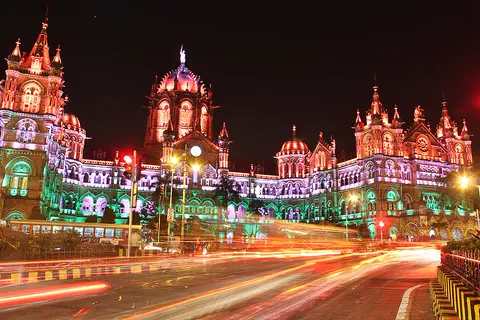
Lunchbox delivery in Mumbai
Every working day, Mumbai's dabbawalas collect home-cooked lunches in metal tiffin boxes, carry them by bicycle, on foot and on the city's local trains, and deliver them to offices by lunchtime. Colored letters, numbers and symbols painted on each box tell them where it goes, and the empty boxes travel home in the afternoon.
For parents & teachers
What children will learn
- Name the main parts of a ger and explain what each does.
- Explain how a ger is designed to be carried, kept warm and withstand wind.
- Describe how herding families move with their animals.
- Understand that gers are used both in the countryside and in the city.
Recommended ages: 4 to 12 · About 12 minutes
Talk about it
- If your home had to be carried by two or three animals, what would you take with you?
- Why might a round home be better in strong wind than a square one?
- Why do you think children learn to put up a ger by watching their families?
Try at home or in class
- Build a model ger: a circle of folded paper lattice for the walls, straws for the roof poles, a paper ring for the crown, and felt or cotton balls for the cover.
- Feel the difference between one layer and three layers of cloth over a warm mug: which keeps the heat in longer?
Key vocabulary: ger, felt, lattice, steppe, nomad, pasture
Where these facts come from
- Traditional craftsmanship of the Mongol Ger and its associated customs (inscribed 2013, 8.COM) , UNESCO Intangible Cultural Heritage
- Yurt , National Geographic Education
- Yurt , Encyclopaedia Britannica
- Ulaanbaatar , Encyclopaedia Britannica
- Climate change and air pollution , UNICEF Mongolia
- Mongolia: main findings of the 2010 Population and Housing Census , United Nations Statistics Division (from the National Statistical Office of Mongolia)
- Wikidata , Wikimedia Foundation (CC0 1.0)
Checked, not yet human-reviewed. Last updated October 24, 2026. Spotted a mistake? Tell us.