
Animal
American black bear
The American black bear lives in the forests of North America. It can climb trees, it loves berries and nuts, and it sleeps through the winter.
The American black bear is the most common bear in North America. It lives mostly in forests, climbs trees with its short, curved claws, eats mainly plants, and spends the winter in a den. Not all black bears are black: some are brown, cinnamon, blue-gray or even white.
Ursus americanus is North America's most abundant and widespread bear, found from Alaska and Canada through much of the United States to northern Mexico. A forest-dwelling omnivore whose diet is about 85 percent plants, it survives winter in a state of torpor. Once nearly wiped out in much of the continental U.S., it has recovered widely and is listed as Least Concern.
Photo: Cephas, CC BY-SA 3.0, via Wikimedia Commons
Meet the American black bear
The American black bear is a big, furry forest bear.
It has small eyes, a long snout and short, curved claws. Most black bears are black. Some are brown, and a few are even white.
The American black bear is the smallest of North America's three kinds of bear, and the most common. A grown-up male stands about 3 feet (0.9 meters) tall at the shoulder and is about as long as a grown-up is tall.
Its name can trick you. Most black bears are black, often with a brown muzzle and sometimes a white patch on the chest, but some are brown or cinnamon. In southeastern Alaska a few are blue-gray, called glacier bears, and on some islands of British Columbia there are black bears with white fur.
Ursus americanus is the smallest and most abundant of North America's three bear species; the Alaska Department of Fish and Game estimates about 100,000 in Alaska alone. Body size varies with food supply: in the Great Smoky Mountains adult males average about 113 kilograms in summer and females just over 45, and both can nearly double their weight before winter.
Coat color is genetically variable. Black predominates in most regions, but brown and cinnamon bears occur in parts of Alaska and are common in its Interior, blue-gray 'glacier bears' occur around Yakutat in Southeast Alaska, and white-coated bears live on islands in British Columbia.
Quick facts
- Group
- Mammal
- Length
- 1.5 to 1.9 m
- Height
- up to 0.9 m
- Weight
- 45 to 113 kg
- Top speed
- up to 48 km/h
- Lifespan in the wild
- up to 30 years
Where it lives
Black bears live in North America.
They like forests with lots of trees. They live in Canada, the United States and Mexico. Some even live near towns.
American black bears live across much of North America: in Alaska, most of Canada, many parts of the United States, and south into northern Mexico. They are forest bears. They live in pine forests and in forests whose trees lose their leaves, and climb up into mountain meadows too.
Black bears usually stay away from wide-open grasslands like the Great Plains, except along rivers where trees grow. Great Smoky Mountains National Park has about 1,900 of them, the densest black bear population in the country.
The IUCN Red List (2016) lists three range states: Canada, the United States and Mexico. Within them the species is tied to wooded habitat, coniferous and deciduous forest and forested mountains up to alpine zones, and is largely absent from open prairie except along wooded river corridors. In Alaska it occupies most forested areas but not the Seward Peninsula, the Yukon-Kuskokwim Delta, the North Slope or islands held by brown bears.
Before European colonization the species ranged across most of the continent. Habitat loss and unregulated hunting had nearly eliminated it from much of the continental U.S. by the early 1900s; since then it has recovered widely. Great Smoky Mountains National Park holds roughly 1,900 bears, about two per square mile.
Continent
Its habitats


Where can you find this animal?
- Lives here naturally · Countries and seas named by a scientific source
- Sightings recorded · Records of wild sightings (GBIF)
Lives here naturally · Countries and seas named by a scientific source
Forests and wooded mountains of Alaska, much of Canada, many parts of the United States and northern Mexico. Black bears are absent from open prairies, far northern tundra and many cities and farmlands inside these countries.
Places: Canada, United States and Mexico.
Source: iucn-red-list · checked October 2026
Sightings recorded · Records of wild sightings (GBIF)
Counts of GBIF records of wild observations (human and machine) and preserved specimens. Records include introduced populations, vagrants, escaped or released animals and misidentifications, so a country with records is not necessarily part of the native range.
Wild sightings have been recorded in United States, Canada, Mexico, Germany, Belize, Namibia, France and Mongolia.
Source: gbif · checked October 2026
Range maps show where scientists say an animal lives, often country by country. An animal may live in only part of a country shown, and sightings records can include animals that wandered far from home.
What it eats
Black bears eat mostly plants.
They munch grass, berries, nuts and acorns. They also eat ants and grubs. In the fall they eat and eat to get ready for winter.
Black bears are omnivores, but about 85 percent of what they eat is plants. In spring they eat fresh green shoots. In summer they look for berries, plus insects such as ants and beetles. In the fall, nuts and acorns help them build up a thick layer of fat for winter.
They eat some meat too, such as animals that died in winter, fish, or a newborn deer or moose calf. Black bears are also drawn to garbage, pet food and livestock feed, which can lead them into trouble near people.
Black bears are opportunistic omnivores with a strongly plant-based diet, roughly 85 percent plant material in the Great Smoky Mountains. The seasonal pattern is fresh green vegetation in spring; berries, ants, grubs and other insects in summer; and high-energy nuts and acorns in fall, which drive the weight gain needed for winter. Where salmon are available, as in parts of Alaska, bears switch to fish in summer.
Meat comes from winter-killed carrion and from very young hoofed animals; in some Alaskan areas black bears are effective predators of newborn moose calves. Human foods, garbage, pet food, livestock feed and fruit trees are powerful attractants, and bears that learn to use them often come into conflict with people.

Climber with a super nose
Black bears have short, curved claws.
The claws help them climb trees fast. Their noses can smell food very far away. They can run fast and swim well.
A black bear's claws are short and curved, rarely longer than about 4 centimeters. That makes black bears excellent tree climbers, unlike adult brown bears with their long digging claws. Cubs scramble up trees to stay safe.
The black bear's best sense is smell: its nose is about seven times better than a bloodhound's. It can run at up to about 48 kilometers per hour and is a good swimmer. You can tell it from a grizzly by its straight face from forehead to nose, its taller ears and its missing shoulder hump.
The claws are short (the Alaska Department of Fish and Game says rarely over 1.5 inches, about 3.8 centimeters), curved and non-retractable, which suits climbing rather than digging. Black bears also swim well and can run at up to about 48 kilometers per hour.
The National Park Service describes their sense of smell as about seven times that of a bloodhound, while sight and hearing are adequate. Field marks that separate them from brown bears, since color is unreliable, are a straight facial profile, longer and less rounded ears, short front claws, and no prominent shoulder hump.
Growing up
Black bear cubs are born in the winter den.
They are tiny, about as heavy as a can of soup. They drink milk and grow. The next year they leave their mom.
Black bears mate in early summer. The cubs are born in late January or early February while their mother is in her winter den. Usually there are two, and each weighs only about 230 to 340 grams, less than a can of beans. They are blind and have almost no fur.
The cubs drink milk all winter and come out with their mother in spring. They spend the next winter in the den with her too. When they are about a year and a half old, they go off on their own.
Mating peaks in May and June. As in all bears, implantation of the embryo is delayed until about the time of den entry in the fall, which lets the female's body commit to pregnancy only if her fat reserves are adequate; the total gestation is about seven months. Cubs are born in late January or early February, typically twins though one to five are possible, weighing about 230 to 340 grams, blind and nearly hairless.
The family dens together a second winter and separates the following spring, when the cubs are about 18 months old; in poor northern habitat they may stay an extra year. Females usually breed every other year and mature at 3 to 6 years, depending on food.
Winter sleep and bear life
In winter, black bears sleep in dens.
A den can be a hollow tree or a cave. In cold places they sleep for months. In warmer places they wake up more often.
Black bears usually live alone, apart from mothers with cubs and during the mating season. When food becomes hard to find in the fall, they settle into dens in hollow trees, rock caves or holes they dig, and sleep through the winter.
This winter sleep is called torpor. The bears do not eat, drink, pee or poop, but they can wake up if disturbed. In the far north it can last seven months or more. In the Great Smoky Mountains, bears may sleep for only a month or two at a time.
Apart from family groups and the breeding season, black bears are solitary. In fall, as food declines, they enter dens in rock cavities, hollow trees or excavations and become dormant. The state is usually described as torpor rather than true hibernation: body temperature and metabolic rate fall, and bears neither eat, drink nor excrete, yet remain more rousable than small hibernators.
Duration tracks climate, from seven to eight months in the north of the range to short bouts in the southern Appalachians, and females with cubs emerge last. How such a large mammal sustains months of dormancy without eating or excreting is, the National Park Service notes, still not fully understood.
Did you know?
Black bears can nearly double their weight in the fall.
Before winter, black bears eat so many nuts and acorns that they can nearly double their weight.
Pre-denning hyperphagia on hard mast can almost double a bear's summer body mass in Great Smoky Mountains National Park.
A bear comeback
Black bears were once in trouble.
Now there are many again. People keep food and trash locked away so bears stay wild and safe.
About a hundred years ago, black bears had almost disappeared from much of the United States because of hunting and lost forests. Thanks to protection, they have come back in many places and are listed as Least Concern.
Now the challenge is sharing space. Bears that find garbage or picnic food can lose their fear of people and get into trouble. Parks ask visitors to store food safely, never feed bears, and keep at least 50 yards away.
The IUCN lists Ursus americanus as Least Concern with an increasing population trend (2016 assessment). Formerly listed populations in Florida and Louisiana are increasing, and bears are recolonizing parts of western Texas from which they had been extirpated.
The main pressures now are habitat loss at the edges of protected areas and food conditioning. Bears that learn to eat human food lose their wariness, damage property and, as the National Park Service notes, often have shorter lives because they are more likely to be hit by cars, poached or euthanized. Bear-proof containers, food-storage rules and keeping 50 yards away are the main tools of coexistence.
IUCN Red List
How is the american black bear doing in the wild?
- Least Concern (this animal)
- Near Threatened
- Vulnerable
- Endangered
- Critically Endangered
- Extinct in the Wild
- Extinct
Least Concern
Not at risk of disappearing from the wild right now.
See the IUCN Red List assessment · The IUCN Red List of Threatened Species 2022.2
Amazing facts
-
Some black bears are blue-gray, and some are white.
Not all black bears are black: some are brown or cinnamon, a few in Alaska are blue-gray 'glacier bears', and some in British Columbia are white.
Color phases include black, brown, cinnamon, blue-gray 'glacier bears' near Yakutat, Alaska, and white-coated bears on islands in British Columbia.
-
A newborn black bear is lighter than a can of soup.
A newborn black bear cub weighs only about 230 to 340 grams, yet its father may weigh more than 100 kilograms.
Cubs are born at about 230 to 340 grams, blind and nearly hairless, during the mother's winter dormancy.
-
Black bears have a nose better than a bloodhound's.
A black bear's sense of smell is about seven times stronger than a bloodhound's, a dog famous for its nose.
The National Park Service rates the black bear's olfactory ability at about seven times a bloodhound's.
-
Black bears can nearly double their weight in the fall.
Before winter, black bears eat so many nuts and acorns that they can nearly double their weight.
Pre-denning hyperphagia on hard mast can almost double a bear's summer body mass in Great Smoky Mountains National Park.
Words to know
- omnivore
- an animal that eats both plants and animals
- torpor
- a deep, energy-saving sleep that an animal can wake from
- den
- a sheltered place, like a hollow tree or cave, where a bear sleeps
- muzzle
- the nose and mouth part of an animal's face
- acorn
- the nut of an oak tree
- habitat
- the natural home of an animal or plant
Discovery challenge
-
What color can a black bear be?
Which is true about black bears' fur?
Why is coat color a poor way to identify a black bear?
- Only black
- Black, brown, cinnamon, blue-gray or white
- Only spotted
Show the answer
Black, brown, cinnamon, blue-gray or white
Black bears can be black, brown and even white!
Most are black, but some are brown, cinnamon, blue-gray or white.
Color varies genetically and overlaps with brown bears; face profile, ears, claws and the lack of a hump are better marks.
-
What helps a black bear climb trees?
Why are black bears good tree climbers?
Which feature suits black bears to climbing?
- Short, curved claws
- Long, straight claws
- Webbed feet
Show the answer
Short, curved claws
Short, curved claws grip the bark.
Their claws are short and curved, rarely longer than about 4 centimeters.
Short, curved, non-retractable claws, in contrast to the brown bear's long, straight digging claws.
-
What do black bears eat most?
What makes up most of a black bear's diet?
About what share of a black bear's diet is plant material in the Smokies?
- Plants
- Fish
- Rocks
Show the answer
Plants
They eat mostly plants, like berries and nuts.
About 85 percent of their food is plants, such as berries, nuts and acorns.
Roughly 85 percent, with acorns and other nuts especially important in fall.
-
How can we help bears stay wild?
What is the best way to keep black bears safe near people?
What is the main threat to individual black bears near people today?
- Feed them snacks
- Store food and trash safely
- Chase them
Show the answer
Store food and trash safely
Keep food put away and never feed bears.
Bears that never get human food stay wild and safe.
Food conditioning, which leads to property damage, road deaths and removal of bears.
Places where you might see it
Experiments to try
Explore next
-
 Watch
3D
Animal
Brown bear
The brown bear lives in more places than any other bear, from European forests to the mountains of Asia and the rivers of Alaska. It eats almost anything, from berries to salmon, and spends the long winter asleep in a cozy den. Grizzly bears and Kodiak bears are brown bears too.
-
 Watch
Animal
Asian black bear
The Asian black bear is a black bear with a cream crescent on its chest, shaped like a new moon. It lives in forests and mountains from Iran and Pakistan across the Himalayas and Southeast Asia to China, Korea, Japan and the Russian Far East. It eats mostly plants, especially fruit and nuts, and in cold places it sleeps through the winter.
-
 Watch
Animal
Polar bear
The polar bear is a huge bear that lives on the frozen sea of the Arctic. Thick fur and a layer of fat keep it warm, its amazing nose finds seals under the snow, and it can swim for many hours. It needs sea ice to hunt, so a warming Arctic is a big problem for it.
-
 Watch
Animal
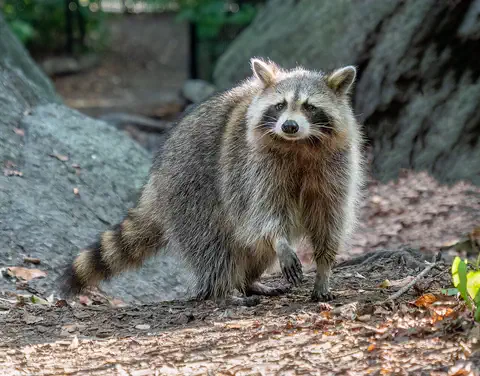
Common raccoon
The common raccoon is a clever night-time animal from North and Central America, famous for its black mask, ringed tail and nimble, hand-like front paws. It eats almost anything and lives in forests, wetlands, farms and even big cities. People have also brought raccoons to Europe and Japan, where they now live wild.
-
 Watch
Animal
White-tailed deer
White-tailed deer live in forests, fields and even towns from Canada down to South America. They are named for the white underside of the tail, which they hold up like a flag when they run. Males grow new antlers every year.
-
 Watch
Animal
Giant panda
The giant panda is a black-and-white bear that lives in misty mountain forests in China. About 99 percent of its food is bamboo, and it spends up to 16 hours a day eating. Pandas were once endangered, but protecting their forests has helped them, and they are now listed as Vulnerable.
-
 Watch
Natural wonder
Yosemite National Park
Yosemite National Park lies in California's Sierra Nevada mountains. Its granite cliffs, rounded domes and tall waterfalls were shaped by rivers and then by glaciers, which turned narrow canyons into wide U-shaped valleys. It is also home to giant sequoia trees and hundreds of black bears.
- Watch What If? Lab What if animals did not hibernate? Winter brings two big problems for animals: less food and lots of cold. Bats, groundhogs, dormice and bears get through it by slowing their bodies right down. Imagine they couldn't, and follow what might change for finding food, saving energy and the famous winter sleepers.
For parents & teachers
What children will learn
- Describe how the black bear's claws, nose and coat help it live in forests.
- Explain how a black bear's diet changes with the seasons.
- Describe winter torpor and the black bear life cycle.
- Explain how black bears recovered and how people can help them stay wild.
Recommended ages: 3 to 17 · About 15 minutes
Talk about it
- Why might a bear that eats human food be in more danger than one that does not?
- How can you tell a black bear from a grizzly if both can be brown?
- Why do you think black bears eat so much in the fall?
Try at home or in class
- Go on an acorn or nut walk in a park and count how many you find in ten minutes. Imagine a bear needing thousands before winter.
- Smell test: hide a cotton ball with a drop of vanilla in one of several cups and see who can find it by smell alone.
Key vocabulary: omnivore, torpor, den, muzzle, acorn, habitat
Where these facts come from
- The IUCN Red List of Threatened Species , International Union for Conservation of Nature (IUCN terms of use (no redistribution of Red List data or range maps))
- GBIF Backbone Taxonomy and GBIF Occurrence Search , Global Biodiversity Information Facility (CC0 1.0 (backbone); occurrence counts are facts derived from records under CC0, CC BY and CC BY-NC)
- Black Bear Species Profile , Alaska Department of Fish and Game
- Black Bears , Great Smoky Mountains National Park, U.S. National Park Service
- American Black Bear , National Wildlife Federation
- Ursus americanus (American Black Bear), 2016 assessment , IUCN Red List of Threatened Species
- Wikidata , Wikimedia Foundation (CC0 1.0)
- Wikimedia Commons , Wikimedia Foundation (Per file: Public domain, CC0, CC BY or CC BY-SA only (credited on each page))
Checked, not yet human-reviewed. Last updated October 24, 2026. Spotted a mistake? Tell us.