
Temperate forest
Animals that live in the temperate forest. Tap one to meet it.
85 to explore · page 1 of 2
-
 Watch
Animal
American black bear
The American black bear is the most common bear in North America. It lives mostly in forests, climbs trees with its short, curved claws, eats mainly plants, and spends the winter in a den. Not all black bears are black: some are brown, cinnamon, blue-gray or even white.
-
 Watch
3D
Animal
American robin
The American robin is a very familiar bird over most of North America, with a gray-brown back, a warm orange breast and a cheery song. It runs across lawns pulling up earthworms, eats lots of berries in winter, and builds a mud-lined nest for its sky-blue eggs.
-
 Watch
Animal
American toad
The American toad is a common, warty toad of eastern North America, found in forests, prairies, farms and backyards. It has big poison glands behind its eyes, hunts insects and worms at night, and in spring the males sing a long, musical trill from shallow ponds, where females lay thousands of eggs in long strings.
-
 Watch
Animal
Asian black bear
The Asian black bear is a black bear with a cream crescent on its chest, shaped like a new moon. It lives in forests and mountains from Iran and Pakistan across the Himalayas and Southeast Asia to China, Korea, Japan and the Russian Far East. It eats mostly plants, especially fruit and nuts, and in cold places it sleeps through the winter.
-
 Watch
3D
Animal
Bald eagle
The bald eagle is one of North America's biggest birds, with a white head and tail, a dark brown body and a huge yellow bill. It lives near lakes, rivers and coasts and eats mostly fish. Once rare because of hunting and pesticides, it has made an amazing comeback.
-
 Watch
Animal
Black-capped chickadee
The black-capped chickadee is a small, curious songbird of North American woods and backyards. It hides thousands of seeds to eat later and remembers where they are, and its "chick-a-dee-dee-dee" call tells other birds how dangerous a nearby predator is.
-
 Watch
Animal
Blue jay
The blue jay is a large, crested songbird of eastern and central North America, blue above and white below with a black necklace. It is clever and loud, can copy the calls of hawks, and can bury thousands of acorns in a single fall. Its acorn burying is credited with helping oak trees spread.
-
 Watch
Animal
Bobcat
The bobcat is North America's most common wild cat, found from southern Canada across the United States to Mexico. It is bigger than a house cat, with a short tail, ear tufts and a spotted coat. It lives in forests, swamps, deserts and even some cities, and hunts mostly rabbits.
-
 Watch
3D
Animal
Brown bear
The brown bear lives in more places than any other bear, from European forests to the mountains of Asia and the rivers of Alaska. It eats almost anything, from berries to salmon, and spends the long winter asleep in a cozy den. Grizzly bears and Kodiak bears are brown bears too.
-
 Watch
Animal
Canada lynx
The Canada lynx is a wild cat of the snowy northern forests of Canada and Alaska. Its huge, furry paws work like snowshoes, and it depends on one animal above all, the snowshoe hare. When hares are plentiful, lynx do well; when hares become scarce, lynx have a hard time too.
-
 Watch
Animal
Common blackbird
The common blackbird is a thrush found in gardens, parks and woods across Europe, North Africa and parts of Asia. Males are glossy black with a bright yellow-orange bill and eye-ring, females are brown, and on summer evenings males sing a mellow, fluting song from high perches.
-
 Watch
Animal
Common eastern firefly
The common eastern firefly, or big dipper firefly, is a beetle that makes its own light. On summer evenings, males fly over lawns and fields, drawing a J-shaped flash in the air, and females on the ground flash back. Most of its life is spent as a glowing larva in damp soil, hunting snails and worms.
-
 Watch
Animal
Common frog
The common frog is a familiar frog of ponds and gardens across Europe. It spends most of the year in damp grass, gardens and woods, and every spring it returns to ponds to lay clumps of frogspawn that grow into tadpoles and then little froglets.
-
 Watch
Animal
Common garter snake
The common garter snake is one of the most familiar snakes in North America. It has light stripes along a dark body, it lives almost everywhere from Canada to Florida, and it copes with cold better than most snakes. In spring, huge numbers come out of their winter dens together.
-
 Watch
Animal
Common nightingale
The common nightingale is a plain brown songbird with one of the most famous songs in the world. Males sing from thick bushes, often in the middle of the night, and every year the birds fly from Europe and Asia to Africa for the winter.
-
 Watch
Animal
Common raccoon
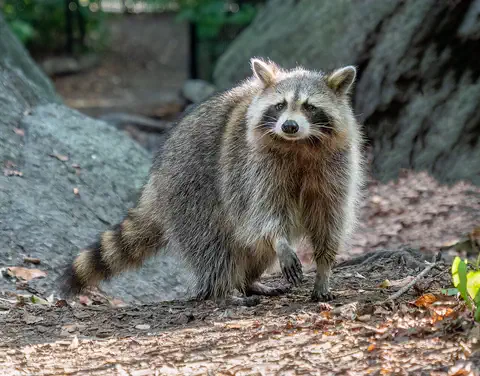
The common raccoon is a clever night-time animal from North and Central America, famous for its black mask, ringed tail and nimble, hand-like front paws. It eats almost anything and lives in forests, wetlands, farms and even big cities. People have also brought raccoons to Europe and Japan, where they now live wild.
-
 Watch
Animal
Common raven
The common raven is the biggest member of the crow family and the largest songbird. It lives across most of the Northern Hemisphere, from deserts to Arctic tundra. Ravens eat almost anything, play games in the air, and have solved puzzles that scientists designed to test how well they can plan ahead.
-
 Watch
Animal
Common toad
The common toad is a warty brown amphibian that lives across Europe and into Asia. It spends most of the year on land, hunting slugs, worms and insects at night, then travels back to the pond where it hatched to lay long strings of eggs each spring.
-
 Watch
3D
Animal
Common wasp
The common wasp is a black and yellow striped insect that lives in a big family called a colony. Thousands of wasps share a round nest made of paper that they make by chewing wood. They catch insects such as caterpillars and flies to feed their young, which makes them useful garden helpers.
-
 Watch
Animal
Common wombat
The common wombat, or bare-nosed wombat, is a stocky, barrel-shaped marsupial of south-eastern Australia and Tasmania. It is one of the world's largest burrowing animals, spends about two thirds of its life underground and leaves cube-shaped poop to mark its patch.
-
 Watch
Animal
Corn snake
The corn snake is a slender, colorful snake of the pine woods, fields and old barns of the southeastern United States. It has red blotches outlined in black and a black-and-white checkered belly. It has no venom: it catches mice and rats by squeezing them, and it spends much of its time hidden in burrows.
-
 Watch
3D
Animal
Coyote
The coyote is a clever, adaptable wild dog that lives from Alaska and Canada to Panama. It is smaller than a wolf and bigger than a fox. Coyotes eat mostly mice, voles and rabbits, howl and yip to keep in touch, and live everywhere from deserts and forests to city parks.
-
 Watch
3D
Animal
Eastern bluebird
The eastern bluebird is a small thrush of open fields and parks in eastern North America, south to Central America. Males are bright blue with a rusty orange chest. Bluebirds watch from wires and fence posts, flutter down to catch insects, and nest in tree holes and in nest boxes that people put up for them.
-
 Watch
3D
Animal
Eastern box turtle
The eastern box turtle is a small land turtle of eastern North America with a high, domed shell splashed with yellow and orange. A hinge on the bottom shell lets it close up almost completely, like a box with a lid. It eats mushrooms, berries, worms and slugs and can live for decades.
-
 Watch
Animal
Eastern chipmunk
Eastern chipmunks are small ground squirrels with five dark stripes down their backs. They live in the woods, yards and parks of eastern North America, carry food in stretchy cheek pouches, and store it in underground burrows for the winter.
-
 Watch
3D
Animal
Eastern gray squirrel
Eastern gray squirrels are bushy-tailed tree squirrels from the forests of eastern North America, and they are a common sight in parks and gardens. They bury nuts to eat later. People also took them to Britain and other countries; in Britain they cause problems for the native red squirrel.
-
 Watch
Animal
Eastern grey kangaroo
The eastern grey kangaroo is a big, woolly gray kangaroo of eastern Australia and Tasmania. It hops on powerful back legs, balances with its long tail and grazes on grass in groups called mobs. Its joey is born weighing less than a gram and grows up in its mother's pouch.
-
 Watch
Animal
Eastern tiger salamander
The eastern tiger salamander is one of North America's biggest land salamanders: dark and shiny, with yellow or olive blotches. It spends most of its life in burrows, then walks to fishless ponds on rainy nights to lay its eggs. Its babies live in water and breathe with feathery gills.
-
 Watch
3D
Animal
Eastern tiger swallowtail
The eastern tiger swallowtail is a large butterfly of eastern North America. Males are yellow with black tiger stripes, while many females are dark, which helps them look like a bad-tasting butterfly. Its caterpillars disguise themselves as bird droppings, then turn green with big fake eyes.
-
 Watch
3D
Animal
Eurasian blue tit
The Eurasian blue tit is a small, colorful songbird of woods, parks and gardens across Europe and western Asia. It hangs upside down to find caterpillars, nests in holes and nest boxes, and can lay a very large clutch of eggs once a year, timed for when caterpillars are plentiful.
-
 Watch
Animal
Eurasian eagle-owl
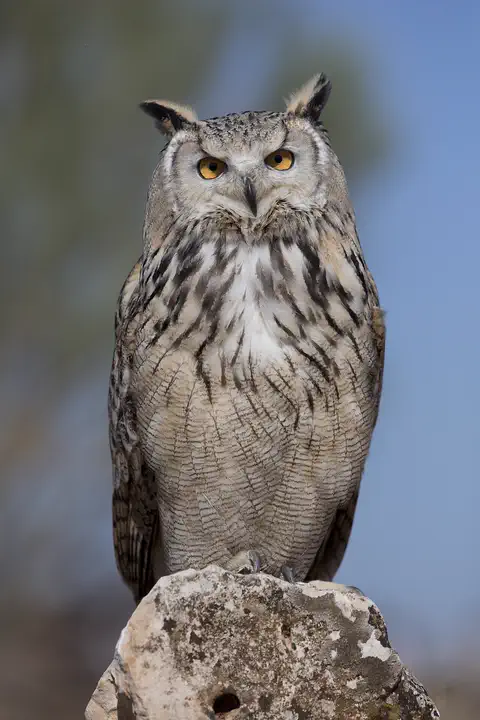
The Eurasian eagle-owl is one of the biggest owls in the world, with wings up to about 2 meters across, big orange eyes and two tall ear tufts. It lives across Europe and Asia, nests on rocky ledges and flies silently at night to catch rats, voles, hares and birds.
-
 Watch
Animal
Eurasian lynx
The Eurasian lynx is the largest of the four kinds of lynx. It has black ear tufts, a ruff of fur around its face, a short black-tipped tail and big furry paws for snow. It hides in forests and ambushes deer such as roe deer, and it has returned to parts of Europe where it had disappeared.
-
 Watch
Animal
European garden spider
The European garden spider is one of the best-known web-spinning spiders. It builds a round orb web, sits in the middle and waits to feel an insect land. Look for the white cross of spots on its back. It lives across Europe and Asia and was brought to North America, and it is harmless to people.
-
 Watch
Animal
European hedgehog
European hedgehogs are spiny mammals of woods, farmland, parks and gardens in western and northern Europe. They snuffle around at night for bugs and worms, roll into a ball to protect themselves and hibernate through the winter. Their numbers are falling in many countries.
-
 Watch
3D
Animal
European peacock butterfly
The European peacock butterfly has rusty-red wings with four big, colorful eyespots, like the spots on a peacock's tail. When a bird comes close, it flashes its eyespots and makes a hissing sound. Its black, spiny caterpillars live together on stinging nettles, and the adults sleep through the winter in hollow trees and sheds.
-
 Watch
Animal
European robin
The European robin is a small songbird of Europe's woods, parks and gardens, famous for its orange-red breast. It sings almost all year round, even at night under streetlights, and it defends its patch fiercely. Young robins have no red breast at all: they are speckled with golden brown.
-
 Watch
3D
Animal
European stag beetle
The European stag beetle is one of Europe's biggest beetles. Males have giant jaws shaped like a stag's antlers, which they use to wrestle other males. Stag beetles spend most of their lives underground as larvae, eating rotting wood for about four years, and live only a few weeks as adults.
-
 Watch
Animal
Fire salamander
The fire salamander is a shiny black amphibian with bold yellow spots, found in cool, damp forests across much of Europe. Its colors warn predators that its skin makes bad-tasting toxins. Unlike most amphibians, the mother keeps her eggs inside her body and gives birth to live larvae in a stream.
-
 Watch
Animal
Garden snail
The garden snail is a land snail with a brown-banded shell about 3 centimeters wide. It glides on a muscular foot over a carpet of slime, comes out mostly at night and after rain, and eats almost any garden plant. It first lived in western Europe and around the Mediterranean, but people have carried it around the world.
-
 Watch
Animal
Giant panda
The giant panda is a black-and-white bear that lives in misty mountain forests in China. About 99 percent of its food is bamboo, and it spends up to 16 hours a day eating. Pandas were once endangered, but protecting their forests has helped them, and they are now listed as Vulnerable.
-
 Watch
3D
Animal
Gray wolf
The gray wolf is the largest member of the dog family and the wild ancestor of pet dogs. Wolves live in family packs that hunt big animals like elk and moose together, and their howls can carry about 10 kilometers. After being wiped out in many places, wolves are coming back in parts of North America and Europe.
-
 Watch
Animal
Great horned owl
The great horned owl is a large, powerful owl with two long, earlike tufts of feathers on its head. It is one of the most common owls in North America and lives in almost any kind of semi-open place, from deserts and forests to city parks. It hunts mostly at night.
-
 Watch
Animal
Japanese giant salamander
The Japanese giant salamander is one of the biggest salamanders in the world, growing up to 1.5 meters long. It lives its whole life in cool, clear rivers in Japan, breathes mostly through its wrinkly skin, and the fathers guard the eggs and babies for months.
-
 Watch
Animal
Japanese macaque
The Japanese macaque, or snow monkey, lives farther north than any other monkey or ape except people. Thick fur keeps it warm through snowy winters, and some troops have learned to sit in warm hot springs.
-
 Watch
Animal
Kākāpō
The kākāpō is a large, moss-green parrot from New Zealand with an owl-like face. It cannot fly, it is active at night, and it eats only plants. It nearly died out, but careful work by New Zealand's Department of Conservation has grown the population to 325 birds (September 2026).
-
 Watch
Animal
Kea
The kea is a big, olive-green parrot found only on the South Island of New Zealand. It lives in mountain forests and alpine meadows, digs for food with its long, curved beak, nests on the ground and is famous for being curious, playful and clever.
-
 Watch
Animal
Koala
The koala is a tree-living marsupial from eastern Australia. It eats almost nothing but eucalyptus leaves, sleeps up to 20 hours a day to save energy, and carries its jellybean-sized baby in a pouch that opens toward its back legs.
-
 Watch
Animal
Laughing kookaburra
The laughing kookaburra is one of the larger members of the kingfisher family. It lives in the woodlands of eastern Australia, pounces on insects, worms and small animals, and lives in family groups. Its famous 'laugh' is really a territorial call that warns other birds to stay away.