
Animal
Asian elephant
The Asian elephant is the biggest land animal in Asia. It has a long trunk, smaller ears than African elephants and a head with two bumps.
The Asian elephant is the largest land animal in Asia. It is a little smaller than its African cousins, with smaller ears, a head shaped like two domes and a trunk with one finger-like tip. It lives in forests and grassy clearings in 13 countries of South and Southeast Asia.
Elephas maximus is the largest land mammal in Asia. It survives in fragmented populations across 13 range countries, lives in herds of related females without a strong matriarch, and has been listed as Endangered since 1986, with habitat loss and human-elephant conflict the main threats.
Photo: Yathin S Krishnappa, CC BY-SA 3.0, via Wikimedia Commons
Meet the Asian elephant
The Asian elephant is a huge gray animal with a long trunk.
Its ears are smaller than an African elephant's. Its head has two round bumps on top. Only some males have big tusks.
The Asian elephant is the biggest land animal in Asia. An adult usually stands about 2.6 to 3.2 meters tall at the shoulder and weighs about 3,400 to 5,200 kilograms, a bit smaller than an African bush elephant.
You can tell the two apart. Asian elephants have smaller ears, a head with two domes on top, and only one finger-like tip at the end of the trunk instead of two. Their gray skin often has pale pink patches on the ears, forehead and trunk, and young elephants are covered in brownish or reddish hair.
Elephas maximus is one of three living elephant species, with the African bush and African forest elephants. Britannica gives average adults about 2.6 to 3.2 meters at the shoulder and 3,400 to 5,200 kilograms, with males substantially larger than females.
Compared with African elephants it has smaller ears, a smaller trunk and tusks, a twin-domed head and a single finger-like projection at the trunk tip. Depigmentation of the skin on ears, forehead and trunk increases with age and is thought to depend on genetics, nutrition and habitat. Calves are covered in brownish to reddish hair that thins and darkens with age.
Quick facts
- Group
- Mammal
- Height
- 2.6 to 3.2 m
- Weight
- 3,400 to 5,200 kg
Where it lives
Asian elephants live in Asia.
They live in forests with open, grassy spaces. They walk a long way to find food and water.
Wild Asian elephants live in 13 countries of South and Southeast Asia. Most live in India, Sri Lanka, Myanmar, Thailand, Indonesia and Malaysia, and smaller numbers live in Bhutan, Laos, Cambodia, Bangladesh, China, Nepal and Vietnam. India has by far the most.
They are forest animals that like places where forest meets open, grassy clearings, with lots of different plants to eat and shade nearby. Long ago they lived much farther west, all the way to Syria and Iraq.
The species survives in isolated pockets across 13 range countries; Britannica places the largest populations in India, Sri Lanka, Myanmar, Thailand, Indonesia and Malaysia, with smaller ones in Bhutan, Laos, Cambodia, Bangladesh, China, Nepal and Vietnam. Historically it ranged from Syria and Iraq across Asia south of the Himalayas to Indochina, north into China as far as the Yangtze, and to Sri Lanka, Sumatra and Borneo.
Elephants favor mosaics of forest and grassy glades. Radio-collared elephants in Myanmar studied by Smithsonian scientists typically walked about 1.6 to 6.4 kilometers a day within home ranges from about 15 to several hundred square kilometers. WWF estimates that about 70 percent of Asian elephants live outside protected areas.
Continent

Where can you find this animal?
- Lives here naturally · Countries and seas named by a scientific source
- Sightings recorded · Records of wild sightings (GBIF)
Lives here naturally · Countries and seas named by a scientific source
Isolated pockets of forest and grassland in 13 countries of South and Southeast Asia, including Sumatra and Borneo. Elephants live in only part of each country shown; India has the largest population.
Places: India, Sri Lanka, Myanmar, Thailand, Indonesia, Malaysia, Bhutan, Laos and 5 more places.
Source: Encyclopaedia Britannica; WWF · checked October 2026
Sightings recorded · Records of wild sightings (GBIF)
Counts of GBIF records of wild observations (human and machine) and preserved specimens. Records include introduced populations, vagrants, escaped or released animals and misidentifications, so a country with records is not necessarily part of the native range.
Wild sightings have been recorded in United States, India, Sri Lanka, Thailand, Malaysia, Cambodia, Nepal, China and 23 more places.
Source: gbif · checked October 2026
Range maps show where scientists say an animal lives, often country by country. An animal may live in only part of a country shown, and sightings records can include animals that wandered far from home.
What it eats
Elephants eat only plants.
They eat lots of grass, plus leaves, bark, roots and fruit. They spend most of the day eating!
Asian elephants are herbivores. They mostly eat grass, but also large amounts of leaves, roots, vines, twigs, shoots, bark and fruit. They spend about three-quarters of every day eating or walking to food and water.
They eat in three main sessions: early morning, afternoon and night, and rest during the hottest hours. Elephants also love farm crops such as bananas and sugar cane, which can cause problems with farmers.
The diet is primarily grass, supplemented by heavy browsing on leaves, roots, vines, twigs, shoots and bark, and by fruit. The Smithsonian's National Zoo reports that Asian elephants spend about three-quarters of each day feeding or moving to food and water, in three principal feeding bouts in the early morning, afternoon and night, resting through the midday heat.
Cultivated crops such as bananas and sugar cane are strongly favored. Because foraging herds can destroy crops, feeding behavior lies at the heart of human-elephant conflict, one of the species' main conservation problems.
Did you know?
Elephants walk on their toes.
Elephants walk on their toes, with a thick, spongy pad under each foot that cushions every step.
A thick fibrous pad beneath the digits acts as a shock absorber for the bones of the leg and foot.
Trunk, tusks and teeth
The trunk is a nose and a top lip together.
It has one little finger on the end to pick things up. Most Asian elephants have only tiny tusks, or none.
The trunk is a nose and upper lip joined together, with no bones. It has about 150,000 muscle units, so it can move in any direction, and it can hold about 7.6 liters of water. The single finger-like tip at the end helps it pick up small things.
Only some male Asian elephants grow big tusks. Most females and some males have tiny tusks called tushes that barely poke out of the lip, and many adult males have no tusks at all. Elephants grow six sets of teeth in a lifetime, which move forward like a conveyor belt as old ones wear out.
The trunk, a fusion of nose and upper lip, contains no bone; cartilage occurs only at its base. About 150,000 muscle units arranged radially and longitudinally let it move in any direction with precision and strength, and it holds about 7.6 liters of water. The single distal projection aids fine handling.
Tusks are modified upper incisors of ivory; in Asian elephants only some males have large tusks, most females and some males have small, brittle tushes, and many males are tuskless. Six sets of cheek teeth, all present in the skull at birth, erupt in sequence and move forward like a conveyor belt. Legs stacked almost vertically under the body support the weight efficiently.
Growing up
A baby elephant is called a calf.
It grows inside its mother for almost two years. Soon after it is born, it can stand up and drink milk.
An Asian elephant is pregnant for about 21.5 to 22 months, one of the longest pregnancies of any animal. Usually one calf is born, weighing about 68 to 158 kilograms. Calves stand up and drink milk soon after birth, and start eating plants at about 6 months.
Females usually have their first calf in their mid-teens and then a new calf every three to eight years. Young males leave their family between about 8 and 13 years old.
Gestation lasts about 21.5 to 22 months; usually a single calf of about 68 to 158 kilograms is born, standing and nursing shortly after birth. Calves begin feeding on vegetation at about 6 months and also eat their mother's dung for several years, which provides nutrients.
Both sexes mature at 8 to 13 years, but females usually first give birth in their mid-teens and males rarely father calves before their thirties. Birth intervals average three to eight years depending on conditions. Wild Asian elephants typically live into their mid-50s, though data are limited; median life expectancy for females is about 47.
Family life and talking
Elephant moms, aunts and babies live together in a herd.
They help each other look after the calves. They talk with deep rumbles and lots of touching.
Asian elephants live in small herds of related females and their young. They work together to raise calves and protect the group. Unlike African elephants, they do not have one strong female leader, though some females take charge more than others.
Elephants talk with very low rumbles that people can barely hear, which other elephants can hear more than 3 kilometers away. They also touch each other with their trunks to greet, comfort and play, and they use their amazing sense of smell to learn who is nearby.
Herds consist of related females, their daughters and immature males, with complex cooperative relationships. Unlike African elephants, Asian elephants lack a clear matriarch, although individual females may become more dominant. Males leave at puberty, at about 8 to 13, form loose bachelor groups and become more solitary with age; adult males undergo musth, a period of high testosterone, from about 30.
Communication is multimodal: infrasonic rumbles carry messages more than about 3 kilometers; scent reveals identity, sex and reproductive status; and frequent touching, especially with the trunk, signals greeting, reassurance, play and dominance.
Did you know?
Many Asian elephant males have no tusks.
Only some male Asian elephants grow big tusks. Many adult males have none, and most females have tiny tusks called tushes.
Large tusks occur only in some males; in Sri Lanka fewer than 10 percent of males are tusked.
Sharing land with elephants
There are fewer Asian elephants than there used to be.
People are working to keep elephants and farms safe. Protecting forests helps elephants find food.
Asian elephants have been endangered since 1986. Scientists estimate that only about 37,000 to 57,000 remain. Their forests are being cut into small pieces by farms, plantations, roads and towns, so elephants wander into fields and villages, which can be dangerous for both elephants and people.
Conservation groups help by protecting forests, building corridors so elephants can travel safely between them, and helping farmers keep elephants away from crops. The international ivory trade has been banned since 1989.
Listed as Endangered since 1986, the Asian elephant numbers an estimated 37,000 to 57,000, a wide range that reflects how hard the species is to survey. Habitat loss and fragmentation from settlements, plantations including oil palm, farming, mining and roads are the greatest threat, and about 70 percent of elephants live outside protected areas, driving human-elephant conflict.
Because many males are tuskless, ivory poaching is less severe than in Africa, but poaching of tuskers in southern India has skewed breeding, and the capture of wild calves for tourism remains a threat. CITES banned the international ivory trade in 1989; corridor restoration, compensation schemes and certified land use are among current responses.
IUCN Red List
How is the asian elephant doing in the wild?
- Least Concern
- Near Threatened
- Vulnerable
- Endangered (this animal)
- Critically Endangered
- Extinct in the Wild
- Extinct
Endangered
At very high risk of disappearing from the wild.
See the IUCN Red List assessment · The IUCN Red List of Threatened Species 2022.2
Amazing facts
-
An Asian elephant's trunk has one finger at the tip.
Asian elephants have one finger-like tip on the end of their trunk; African elephants have two.
A single distal projection on the trunk distinguishes Asian elephants from African elephants, which have two.
-
Many Asian elephant males have no tusks.
Only some male Asian elephants grow big tusks. Many adult males have none, and most females have tiny tusks called tushes.
Large tusks occur only in some males; in Sri Lanka fewer than 10 percent of males are tusked.
-
An elephant's trunk has about 150,000 muscle parts.
An elephant's trunk has about 150,000 tiny muscle units, so it can move in any direction.
Roughly 150,000 radially and longitudinally arranged muscle units allow precise movement in any direction.
-
Elephants walk on their toes.
Elephants walk on their toes, with a thick, spongy pad under each foot that cushions every step.
A thick fibrous pad beneath the digits acts as a shock absorber for the bones of the leg and foot.
Words to know
- herbivore
- an animal that eats only plants
- trunk
- an elephant's long nose and upper lip joined together
- tush
- a small tusk that barely shows outside an elephant's lip
- corridor
- a strip of natural land that connects two habitats so animals can move between them
- human-elephant conflict
- problems that happen when elephants and people compete for land and food
- endangered
- at risk of disappearing from the wild
Discovery challenge
-
Which elephant has smaller ears?
Which elephant has smaller ears, a twin-domed head and one finger on its trunk tip?
Which species has smaller ears, a twin-domed head and a single trunk-tip projection?
- The Asian elephant
- The African bush elephant
- They are the same
Show the answer
The Asian elephant
The Asian elephant has smaller ears.
Asian elephants have smaller ears, a twin-domed head and one finger on the trunk tip.
Smaller ears, a twin-domed head and a single trunk-tip projection.
-
Do all Asian elephants have big tusks?
Which Asian elephants grow large tusks?
Do all Asian elephants carry large tusks?
- No, only some males
- Yes, all of them
- Only the babies
Show the answer
No, only some males
No. Only some boy elephants have big tusks.
Only some males; most females have tiny tushes, and many males have none.
No. Only some males have large tusks; most females and some males have small tushes, and many males are tuskless, which is why ivory poaching is less severe than in Africa.
-
What do elephants eat?
What do Asian elephants mostly eat?
What kind of food do Asian elephants eat?
- Plants
- Fish
- Meat
Show the answer
Plants
Elephants eat only plants.
Mostly grass, plus leaves, bark, roots and fruit.
Only plants: mainly grass, plus browse and fruit. They also favor crops such as bananas and sugar cane, so herds raid fields, a root of human-elephant conflict.
-
Where do Asian elephants live?
In how many countries do wild Asian elephants live?
How many range countries does the Asian elephant survive in today?
- 13 countries in Asia
- Only in Africa
- All over the world
Show the answer
13 countries in Asia
They live in Asia.
Wild Asian elephants live in 13 countries of South and Southeast Asia.
Thirteen range countries in South and Southeast Asia; India has by far the largest population.
Places where you might see it
-
 Watch
 Country
India
India is a huge country in South Asia, shaped like a big triangle pointing into the Indian Ocean. The Himalayas rise along its north, heavy monsoon rains arrive every summer, and about 1.46 billion people (2025) live there, speaking hundreds of languages.
-
 Watch
 Country
Cambodia
Cambodia is a country in mainland Southeast Asia, a land of wide plains and great rivers. Its Tonle Sap lake more than doubles in size every rainy season, and Angkor, with the remains of capitals built from the 800s to the 1400s, is one of the most important archaeological sites in Southeast Asia.
-
 Watch
Natural wonder
Kaziranga National Park
Kaziranga National Park lies beside the great Brahmaputra River in Assam, in northeastern India. Every year the river floods parts of the park, keeping its tall grasslands, marshes and pools alive. It is home to the world's largest population of greater one-horned rhinoceroses, more than 2,600 in 2024, which grew from only a handful about a hundred years earlier.
-
 Watch
 Country
Vietnam
Vietnam stretches about 1,650 kilometers along the coast of Southeast Asia, with mountains in the west and two great river deltas, the Red River in the north and the Mekong in the south. About 102.3 million people lived there in 2025. Its capital is Hanoi, and its largest city is Ho Chi Minh City.
-
 Watch
 Country
Myanmar
Myanmar, also called Burma, is the northernmost country of Southeast Asia. Snowy mountains rise in the far north, and the long Irrawaddy River flows south through its heartland to a huge delta of rice fields. About 55 million people live there.
-
 Watch
 Country
Laos
Laos is a landlocked country in mainland Southeast Asia, covered mostly by forested mountains. The Mekong River runs along its western side, and most people live in villages and grow rice. Its capital, Vientiane, stands on the Mekong.
-
 Watch
 Country
Bangladesh
Bangladesh is a low, flat country in South Asia, built by two great rivers, the Ganges and the Brahmaputra. Monsoon rains flood its fields each year, the Sundarbans mangrove forest lines its coast, and about 176 million people lived there in 2025.
-
 Watch
 Country
Sri Lanka
Sri Lanka is an island country in the Indian Ocean, just south of India. Green highlands rise in the middle, surrounded by plains and sandy beaches. About 22 million people live there, and the island is famous for its tea, its ancient cities and its wild elephants.
-
 Watch
 Country
Bhutan
Bhutan is a small, landlocked kingdom on the eastern ridges of the Himalayas, between India and China. Its land climbs from steamy forests in the south to snowy peaks over 7,300 meters in the north. About 790,000 people live there, mostly in villages in its green valleys.
-
 Watch
 Country
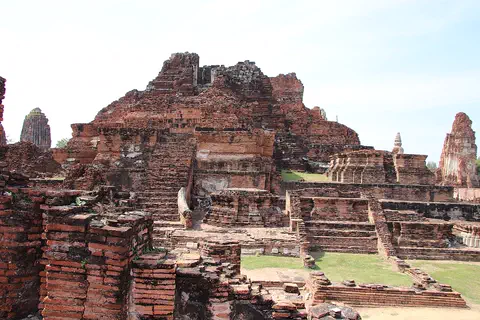
Thailand
Thailand is a tropical country in the middle of mainland Southeast Asia, with forested mountains in the north, rice fields on its central plains and a long, narrow peninsula in the south. Its capital is Bangkok, and about 65.8 million people were on its civil register at the end of 2025.
Experiments to try
Explore next
-
 Watch
Animal
African forest elephant
The African forest elephant is a separate species from the bigger bush elephant. It lives in the rainforests of central and western Africa, eats lots of fruit and spreads the seeds of forest trees in its dung. It is Critically Endangered.
-
 Watch
3D
Animal
Tiger
The tiger is a huge cat with orange fur and dark stripes that help it hide in tall grass and forest shadows. It lives alone, hunts deer and wild pigs, and loves to swim. Wild tigers live only in Asia, and they are endangered.
-
 Watch
3D
Animal
Bornean orangutan
The Bornean orangutan is a shaggy red great ape that spends almost all its life in the treetops of Borneo's rainforests. It eats mostly ripe fruit, builds a new leafy bed every night, and lives a quieter, more solitary life than other great apes.
-
 Watch
3D
Animal
Indian rhinoceros
The Indian rhinoceros, also called the greater one-horned rhino, has a single horn and deep folds in its skin that make it look armor-plated. It grazes on tall grass by rivers in India and Nepal, swims well, and has made a remarkable comeback from about 200 animals to more than 4,000.
-
Watch
Country
India
India is a huge country in South Asia, shaped like a big triangle pointing into the Indian Ocean. The Himalayas rise along its north, heavy monsoon rains arrive every summer, and about 1.46 billion people (2025) live there, speaking hundreds of languages.
-
Watch
Country
Cambodia
Cambodia is a country in mainland Southeast Asia, a land of wide plains and great rivers. Its Tonle Sap lake more than doubles in size every rainy season, and Angkor, with the remains of capitals built from the 800s to the 1400s, is one of the most important archaeological sites in Southeast Asia.
-
Watch
Natural wonder
Kaziranga National Park
Kaziranga National Park lies beside the great Brahmaputra River in Assam, in northeastern India. Every year the river floods parts of the park, keeping its tall grasslands, marshes and pools alive. It is home to the world's largest population of greater one-horned rhinoceroses, more than 2,600 in 2024, which grew from only a handful about a hundred years earlier.
-
Watch
Country
Vietnam
Vietnam stretches about 1,650 kilometers along the coast of Southeast Asia, with mountains in the west and two great river deltas, the Red River in the north and the Mekong in the south. About 102.3 million people lived there in 2025. Its capital is Hanoi, and its largest city is Ho Chi Minh City.
For parents & teachers
What children will learn
- Compare Asian and African bush elephants and name three differences.
- Describe how the trunk, tusks and teeth work.
- Describe Asian elephant herd life and communication.
- Explain why habitat fragmentation leads to human-elephant conflict.
Recommended ages: 3 to 17 · About 15 minutes
Talk about it
- What could farmers and elephants each need to live near each other safely?
- Why might it matter that many Asian elephant males have no tusks?
- How is an elephant herd like a family? How is it different?
Try at home or in class
- Fill a 7.5-liter bucket or several water bottles to see how much water an elephant's trunk can hold.
- Put the Asian elephant and African bush elephant photos side by side and list every difference you can spot.
Key vocabulary: herbivore, trunk, tush, corridor, human-elephant conflict, endangered
Where these facts come from
- The IUCN Red List of Threatened Species , International Union for Conservation of Nature (IUCN terms of use (no redistribution of Red List data or range maps))
- GBIF Backbone Taxonomy and GBIF Occurrence Search , Global Biodiversity Information Facility (CC0 1.0 (backbone); occurrence counts are facts derived from records under CC0, CC BY and CC BY-NC)
- Asian elephant , Smithsonian's National Zoo and Conservation Biology Institute
- Asian elephant , Encyclopaedia Britannica
- Asian Elephant , World Wildlife Fund
- Wikidata , Wikimedia Foundation (CC0 1.0)
- Wikimedia Commons , Wikimedia Foundation (Per file: Public domain, CC0, CC BY or CC BY-SA only (credited on each page))
Checked, not yet human-reviewed. Last updated October 28, 2026. Spotted a mistake? Tell us.
Picture and 3D model credits
- Photo: Yathin S Krishnappa, CC BY-SA 3.0, via Wikimedia Commons · source · license
- Photo: Pailoolom, CC BY-SA 4.0, via Wikimedia Commons · source · license
- Photo: Giles Laurent, CC BY-SA 4.0, via Wikimedia Commons · source · license
- 3D model: iRahulRajput, CC BY 4.0, via Sketchfab · source · license