
Animal
Tiger
The tiger is the biggest striped cat. It lives in forests in Asia. Tigers love water and are very good swimmers.
The tiger is a huge cat with orange fur and dark stripes that help it hide in tall grass and forest shadows. It lives alone, hunts deer and wild pigs, and loves to swim. Wild tigers live only in Asia, and they are endangered.
Panthera tigris, the largest cat alongside the lion, is a solitary stalk-and-ambush predator of deer and wild pigs. Its range runs from the snowy taiga of the Russian Far East to the mangroves of the Sundarbans and the rainforests of Sumatra, but it has shrunk dramatically, and the IUCN lists the tiger as Endangered.
Photo: Charles J. Sharp, CC BY-SA 4.0, via Wikimedia Commons
Meet the tiger
The tiger is a very big cat.
It has orange fur with black stripes. It has a white spot on the back of each ear. Tigers like to live on their own.
Tigers are the biggest striped cats in the world. Most have reddish-orange fur with dark, almost black stripes, a pale belly and a white spot on the back of each ear. A few tigers in zoos are white with darker stripes.
Unlike lions, tigers live mostly alone. A grown tiger has its own home area, and it meets other tigers only now and then. Mother tigers are the exception: they stay with their cubs for about two years.
Panthera tigris is the largest member of the genus Panthera together with the lion. Britannica gives typical weights of about 160 to 230 kilograms, with tigers in the south of the range smaller than those in the north; the Amur (Siberian) tiger is the largest, reaching about 300 kilograms and 3.7 to 4 meters in total length (San Diego Zoo Wildlife Alliance and Britannica).
Most classifications recognize six living subspecies (Amur, Bengal, Indochinese, Malayan, Sumatran and South China), though some scientists merge them into fewer groups. The South China tiger has not been seen in the wild since the 1970s and may be extinct there, and the Bengal tiger makes up about half of all wild tigers.
Quick facts
- Group
- Mammal
- Length
- 1.98 to 3.7 m
- Weight
- 160 to 230 kg
Where it lives
Wild tigers live only in Asia.
Some live in snowy forests. Some live in hot, wet jungles. Some live in swamps near the sea.
Wild tigers live only in Asia, but in very different places. Amur tigers roam snowy forests in the far east of Russia, where winter nights can fall to minus 40 degrees Celsius. Bengal tigers live in forests and grasslands in India and nearby countries, and in the Sundarbans, a huge mangrove swamp by the sea.
Tigers used to live in many more countries, from Turkey to Indonesia. Today they survive in about ten countries, and many of them live in protected parks and reserves.
Tigers tolerate an exceptional range of conditions, from Siberian taiga at minus 40 °C to the mangroves of the Sundarbans above 40 °C, and also occupy tropical rainforest, swamps and grasslands. The IUCN Red List (2021 assessment) lists tigers as extant in Bangladesh, Bhutan, China, India, Indonesia, Malaysia, Myanmar, Nepal, Russia and Thailand, but often only in small parts of them: Indonesia's tigers live only on Sumatra, Malaysia's only on the peninsula, and China's in a few areas of the northeast and the far southwest.
The same assessment lists tigers as extinct in more than fifteen countries, including Iran, Kazakhstan, Afghanistan, Turkey, Pakistan, Cambodia, Laos and Vietnam, and on the Indonesian islands of Java and Bali. The map shows both: the countries where tigers live today, and, in a separate style, countries they have lost.
Continent
Its habitats


Where can you find this animal?
- Used to live here · Countries and seas named by a scientific source
- Lives here naturally · Countries and seas named by a scientific source
- Sightings recorded · Records of wild sightings (GBIF)
Used to live here · Countries and seas named by a scientific source
Countries where wild tigers used to live but are now gone. Tigers have also vanished from Java and Bali in Indonesia, from Singapore, from most of China and from parts of India.
Places: Afghanistan, Armenia, Azerbaijan, Cambodia, Iran, Kazakhstan, North Korea, Kyrgyzstan and 7 more places.
Source: iucn-red-list · checked October 2026
Lives here naturally · Countries and seas named by a scientific source
Scattered forests, grasslands and mangroves, mostly in protected areas. Tigers live in only small parts of several countries shown: in Indonesia only on Sumatra, in Malaysia only on the peninsula, in Russia only in the Far East, and in China only in a few border areas of the northeast and southwest.
Places: Bangladesh, Bhutan, China, India, Indonesia, Malaysia, Myanmar, Nepal and 2 more places.
Source: iucn-red-list · checked October 2026
Sightings recorded · Records of wild sightings (GBIF)
Counts of GBIF records of wild observations (human and machine) and preserved specimens. Records include introduced populations, vagrants, escaped or released animals and misidentifications, so a country with records is not necessarily part of the native range.
Wild sightings have been recorded in India, Russia, Indonesia, United States, Nepal, Germany, China, Thailand and 29 more places.
Source: gbif · checked October 2026
Range maps show where scientists say an animal lives, often country by country. An animal may live in only part of a country shown, and sightings records can include animals that wandered far from home.
What it eats
Tigers eat meat.
They like to catch deer and wild pigs. A tiger creeps very slowly and quietly. Then it jumps out fast.
Tigers are carnivores. Their favorite prey are large animals such as deer and wild pigs. A tiger usually hunts at night, creeping slowly and silently toward its prey for 20 or 30 minutes before it pounces from very close.
A tiger makes a big kill only about once or twice a week, so it eats as much as it can. Then it hides what is left from vultures and other scavengers and comes back for another meal later. Its rough, sandpaper-like tongue scrapes the last bits of meat from the bones.
Tigers prefer fairly large prey, especially deer such as sambar, chital and swamp deer, and wild pigs, though they also take smaller animals, scavenge carrion, and sometimes take kills from leopards or other tigers. They are stalk-and-ambush hunters, usually active at night, moving slowly for 20 to 30 minutes before seizing the prey by the neck with their canines and powerful jaws.
Because a tiger typically kills only once or twice a week, it gorges and then hides the carcass from scavengers so it can return. Britannica notes that hunting skill is only partly instinctive: cubs need long training from their mother to become proficient.
Did you know?
Tigers love to swim.
Tigers have partly webbed toes and are strong swimmers. They cool off in pools on hot days.
Unlike most cats, tigers seek out water; partly webbed toes and powerful limbs make them strong swimmers that readily cross rivers.
Stripes, paws and swimming
A tiger's stripes help it hide in tall grass.
Its big front paws are very strong. Tigers love water. They swim across rivers and cool off in ponds.
Stripes might seem easy to spot, but in long grass and shady forest they break up the tiger's outline, so prey find it hard to see the tiger lying in wait. Amur tigers have paler coats and fewer stripes, which suits their snowy home.
Tigers are built to grab big animals: broad shoulders, huge front legs, large paws and claws 7 to 10 centimeters long. Most cats avoid water, but tigers are powerful swimmers with partly webbed toes. They cool off in ponds and rivers and will swim across a river to reach prey.
The vertical stripes are disruptive camouflage: dark bars on a pale background break up the body outline in grass and dappled forest light. Coat varies across the range, from the bright reddish tan of southern tigers to the longer, softer and paler fur of the Amur tiger. The white spots on the backs of the ears may play a part in communication between tigers.
The skeleton and muscles are built for grappling: a short, thick neck, broad shoulders and massive forelimbs, with long claws and broad forepaws. Bengal tigers have the longest canines of any living big cat, about 7.5 to 10 centimeters (Animal Diversity Web). Tigers are strong swimmers, and rivers rarely stop their movements.
Growing up
Baby tigers are called cubs.
A mother tiger has two to four cubs. She hides them while she hunts. The cubs play and wrestle to learn how to hunt.
A tigress is pregnant for a little over three months, about 107 days. She usually has two to four cubs, though up to seven have been recorded. The cubs are born blind and helpless, and their mother must leave them hidden while she hunts.
At about eight weeks old the cubs start to follow her on hunts. They practice by chasing, tackling and wrestling each other, and even by ambushing their resting mother. They stop drinking milk at five or six months but stay with their mother for about two years.
Gestation lasts a little over three months (about 107 days), and the normal litter is two to four cubs, with up to seven recorded. Cubs are born blind, and their vision is unclear for the first six to eight weeks. Up to half do not survive their first year, from starvation, disease, accidents and competition among littermates; stronger cubs often get more of the food.
Cubs join their mother on hunts at about eight weeks, are weaned at five to six months, and begin learning to kill at around six months, but they do not hunt alone until they leave her at about two years old. Males grow faster and tend to leave earlier. Britannica gives an average wild lifespan of about 11 years.
A life alone
Most tigers live alone.
They leave smells and scratch marks on trees. That tells other tigers, this is my home. A happy tiger makes a soft, puffing chuff sound.
Tigers are solitary, which means they live alone. Each one has a home range, and males usually have bigger ones than females. Where food is scarce, like the Russian Far East, a tiger may need more than 10,000 square kilometers.
Tigers mark their land with scratches on trees, scrapes on the ground and scent. They also talk a lot: they roar to warn other tigers far away, grunt and hiss, and greet each other, especially mothers and cubs, with a friendly puffing sound called a chuff.
Adults are solitary and space themselves out with territories whose size depends on prey density, terrain, water and the presence of other tigers; Amur tiger ranges of more than 10,000 square kilometers have been recorded. Territories are maintained by roaring, ground scrapes, claw marks on trees, droppings, scent from facial glands rubbed on objects and sprayed urine mixed with anal-gland secretions. Living apart reduces conflict between neighbors.
Although less social than lions, tigers are very vocal. San Diego Zoo Wildlife Alliance describes roars used to challenge other tigers at long range, defend a meal or attract a mate, along with grunts, hisses and the chuff, a soft, friendly greeting most often heard between a mother and her cubs.

Helping tigers
There are not many wild tigers left.
People are working hard to protect them. Parks keep tigers and their forests safe.
Tigers are endangered. About a hundred years ago there may have been around 100,000 wild tigers. By the early 2000s there were only about 3,200. People hunted tigers for their fur and body parts, cut down their forests, and hunted the deer and pigs that tigers eat.
Today many countries protect tigers in national parks and reserves, rangers patrol against poachers, and countries such as India have worked hard to protect them.
The IUCN lists the tiger as Endangered (2021 assessment), estimating about 2,600 to 3,900 mature individuals with a best estimate of about 3,140. Britannica contrasts this with an estimated 100,000 tigers a century earlier. San Diego Zoo Wildlife Alliance names poaching as the largest threat, with tigers killed for fur and for body parts used in unproven traditional medicines, alongside habitat loss and fragmentation, conflict with people and disease.
Conservation relies on strict protection of core habitat, anti-poaching patrols, restoring prey populations, corridors that let tigers move between reserves, and work with communities that live near tigers. Recovery is uneven: some populations have grown under protection, while the IUCN now lists tigers as extinct in Cambodia, Laos and Vietnam.
IUCN Red List
How is the tiger doing in the wild?
- Least Concern
- Near Threatened
- Vulnerable
- Endangered (this animal)
- Critically Endangered
- Extinct in the Wild
- Extinct
Endangered
At very high risk of disappearing from the wild.
See the IUCN Red List assessment · The IUCN Red List of Threatened Species 2022.2
Amazing facts
-
Tigers love to swim.
Tigers have partly webbed toes and are strong swimmers. They cool off in pools on hot days.
Unlike most cats, tigers seek out water; partly webbed toes and powerful limbs make them strong swimmers that readily cross rivers.
-
A tiger's tongue feels like sandpaper.
A tiger's tongue is as rough as sandpaper. It uses it to scrape meat off bones.
Hard, spiky bumps called papillae make a tiger's tongue rough enough to scrape the last meat from bones.
-
Tigers say hello with a soft puff of air.
Tigers greet each other with a friendly puffing sound called a chuff, especially mothers and cubs.
The chuff, a soft snort through the nostrils, is a friendly close-range greeting, most often between a mother and her cubs.
-
Some tigers live in the snow.
Amur tigers live where winter nights can drop to minus 40 degrees Celsius. Their fur is longer and paler than other tigers' fur.
Tigers span about 80 °C of temperature extremes, from Siberian taiga at minus 40 °C to Sundarbans mangroves above 40 °C.
Words to know
- solitary
- living alone rather than in a group
- camouflage
- colors or patterns that help an animal blend in
- stalk
- to creep slowly and quietly toward prey
- subspecies
- a group within a species that lives in one area and looks a little different
- mangrove
- a forest of trees that grow in salty water along warm coasts
- poaching
- hunting animals when it is against the law
Discovery challenge
-
How do stripes help a tiger?
How do stripes help a tiger?
What is the main job of a tiger's stripes?
- They help it hide
- They help it fly
- They keep it dry
Show the answer
They help it hide
Stripes help a tiger hide in tall grass.
In long grass and shady forest, stripes break up the tiger's outline, so prey can't spot it.
The stripes are disruptive camouflage, breaking up the body outline in grass and dappled light.
-
Do tigers like water?
What makes tigers unusual among cats?
Which statement about tigers is true?
- They are afraid of water
- They are strong swimmers
- They live in big groups
Show the answer
They are strong swimmers
Yes! Tigers love water and swim well.
Most cats avoid water, but tigers swim across rivers and cool off in pools.
Tigers are strong swimmers with partly webbed toes; they are solitary, not social.
-
Where do wild tigers live?
On which continent do wild tigers live?
Which describes the wild tiger's range today?
- Africa
- Asia
- South America
Show the answer
Asia
Wild tigers live in Asia.
Wild tigers live only in Asia, from Russia's Far East to Sumatra.
Fragments in about ten Asian countries; tigers are extinct in more than fifteen others.
-
How long do tiger cubs stay with their mom?
How long do tiger cubs usually stay with their mother?
When do young tigers start hunting on their own?
- About two weeks
- About two years
- About twenty years
Show the answer
About two years
Tiger cubs stay with their mom for about two years.
Cubs stay with their mother for about two years while they learn to hunt.
Cubs learn to kill from about six months but hunt alone only after leaving the mother at about two years.
Places where you might see it
-
 Watch
 Country
India
India is a huge country in South Asia, shaped like a big triangle pointing into the Indian Ocean. The Himalayas rise along its north, heavy monsoon rains arrive every summer, and about 1.46 billion people (2025) live there, speaking hundreds of languages.
-
 Watch
Natural wonder
Kaziranga National Park
Kaziranga National Park lies beside the great Brahmaputra River in Assam, in northeastern India. Every year the river floods parts of the park, keeping its tall grasslands, marshes and pools alive. It is home to the world's largest population of greater one-horned rhinoceroses, more than 2,600 in 2024, which grew from only a handful about a hundred years earlier.
-
 Watch
Natural wonder
Chitwan National Park
Chitwan National Park, in the lowlands of southern Nepal, was Nepal's first national park. Its sal forests, tall grasslands and rivers are home to the second-largest population of greater one-horned rhinoceroses in the world, 694 in 2021, and to Bengal tigers, 145 counted in and around the park in 2026.
-
 Watch
Natural wonder
Ajanta Caves
The Ajanta Caves are about 30 halls and rooms carved by hand into a curving cliff above the Waghora River in western India. Buddhist communities made them in two big phases, starting more than 2,000 years ago. Their wall paintings and stone carvings are some of the most famous ancient art in India, and they have been a UNESCO World Heritage Site since 1983.
-
 Watch
Natural wonder
Ganges
The Ganges, called the Ganga in India, flows about 2,510 kilometers from a glacier in the Himalayas across the plains of northern India to the Bay of Bengal, through India and Bangladesh. Its basin is home to hundreds of millions of people who farm, fish and travel on it. For many Hindus it is the holiest of rivers. Near the sea it builds a giant delta with the Brahmaputra.
-
 Watch
 Country
Myanmar
Myanmar, also called Burma, is the northernmost country of Southeast Asia. Snowy mountains rise in the far north, and the long Irrawaddy River flows south through its heartland to a huge delta of rice fields. About 55 million people live there.
-
 Watch
Natural wonder
Sundarbans
The Sundarbans is a vast mangrove forest where the Ganges and Brahmaputra rivers meet the Bay of Bengal. It is shared by Bangladesh and India. Twice a day the tides flood its muddy islands, and its trees are made to live in salty water. It is one of the last homes of the Bengal tiger, and both countries protect it as a World Heritage Site.
-
 Watch
 Country
Bangladesh
Bangladesh is a low, flat country in South Asia, built by two great rivers, the Ganges and the Brahmaputra. Monsoon rains flood its fields each year, the Sundarbans mangrove forest lines its coast, and about 176 million people lived there in 2025.
-
 Watch
 Country
Bhutan
Bhutan is a small, landlocked kingdom on the eastern ridges of the Himalayas, between India and China. Its land climbs from steamy forests in the south to snowy peaks over 7,300 meters in the north. About 790,000 people live there, mostly in villages in its green valleys.
-
 Watch
 Country
Thailand
Thailand is a tropical country in the middle of mainland Southeast Asia, with forested mountains in the north, rice fields on its central plains and a long, narrow peninsula in the south. Its capital is Bangkok, and about 65.8 million people were on its civil register at the end of 2025.
Explore next
-
 Watch
3D
Animal
Lion
The lion is the only big cat that lives in a family group, called a pride. Lionesses hunt together, males guard the pride's land, and their roar can be heard about 8 kilometers away. Wild lions live in Africa, plus one small group in western India.
-
 Watch
3D
Animal
Leopard
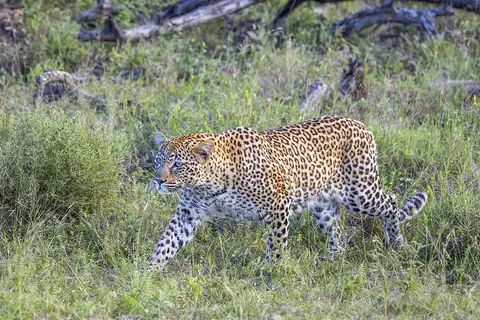
The leopard is a strong, spotted big cat and the best climber of them all. It can carry its food high up into a tree, away from lions and hyenas. Leopards live in more kinds of places than any other big cat, from deserts to rainforests, across Africa and Asia.
-
 Watch
Animal
Snow leopard
The snow leopard lives high in the mountains of Central Asia, where it is freezing cold and the ground is steep and rocky. Thick fur, huge furry paws and a tail almost as long as its body help it survive. It is so hard to spot that people call it the ghost cat of the mountains.
-
 Watch
3D
Animal
Asian elephant
The Asian elephant is the largest land animal in Asia. It is a little smaller than its African cousins, with smaller ears, a head shaped like two domes and a trunk with one finger-like tip. It lives in forests and grassy clearings in 13 countries of South and Southeast Asia.
-
 Watch
3D
Animal
Indian rhinoceros
The Indian rhinoceros, also called the greater one-horned rhino, has a single horn and deep folds in its skin that make it look armor-plated. It grazes on tall grass by rivers in India and Nepal, swims well, and has made a remarkable comeback from about 200 animals to more than 4,000.
-
Watch
Country
India
India is a huge country in South Asia, shaped like a big triangle pointing into the Indian Ocean. The Himalayas rise along its north, heavy monsoon rains arrive every summer, and about 1.46 billion people (2025) live there, speaking hundreds of languages.
-
 Watch
3D
Animal
Indian peafowl
The Indian peafowl is a large bird of the pheasant family from South Asia. Males, called peacocks, have a bright blue neck and a long train of shimmering feathers decorated with eyespots, which they spread into a giant fan to impress females, called peahens. It is the national bird of India.
-
Watch
Natural wonder
Kaziranga National Park
Kaziranga National Park lies beside the great Brahmaputra River in Assam, in northeastern India. Every year the river floods parts of the park, keeping its tall grasslands, marshes and pools alive. It is home to the world's largest population of greater one-horned rhinoceroses, more than 2,600 in 2024, which grew from only a handful about a hundred years earlier.
For parents & teachers
What children will learn
- Explain how stripes work as camouflage for a tiger.
- Describe how tigers hunt and why they live alone.
- Compare where tigers live today with where they used to live.
- Understand why tigers are endangered and how people protect them.
Recommended ages: 3 to 17 · About 15 minutes
Talk about it
- Why might stripes be a good disguise in tall grass, even though they look bold to us?
- Lions live in groups and tigers live alone. What might be good about each way of living?
- Why do you think tigers have disappeared from so many countries?
Try at home or in class
- Paint or color stripes on paper, then hold the paper in front of a houseplant or tall grass and see how the stripes blend in.
- Measure 3 meters on the floor with a tape measure to see how long a big tiger is from nose to tail.
Key vocabulary: solitary, camouflage, stalk, subspecies, mangrove, poaching
Where these facts come from
- The IUCN Red List of Threatened Species , International Union for Conservation of Nature (IUCN terms of use (no redistribution of Red List data or range maps))
- GBIF Backbone Taxonomy and GBIF Occurrence Search , Global Biodiversity Information Facility (CC0 1.0 (backbone); occurrence counts are facts derived from records under CC0, CC BY and CC BY-NC)
- Wikidata , Wikimedia Foundation (CC0 1.0)
- Panthera tigris (Tiger), 2021 assessment , IUCN Red List of Threatened Species
- Tiger , Encyclopaedia Britannica
- Tiger , San Diego Zoo Wildlife Alliance
- Panthera tigris (tiger) , Animal Diversity Web, University of Michigan Museum of Zoology
- Wikimedia Commons , Wikimedia Foundation (Per file: Public domain, CC0, CC BY or CC BY-SA only (credited on each page))
Checked, not yet human-reviewed. Last updated October 24, 2026. Spotted a mistake? Tell us.