
Animal
California sea lion
The California sea lion is a playful, noisy animal that barks like a dog. It has little ears and big flippers, and it can walk on land.
The California sea lion is an 'eared seal' of the west coast of North America. It is clever, playful and very noisy, with a bark like a dog's. Unlike true seals, it has ear flaps and can turn its back flippers forward to walk on land. Its numbers have grown a lot since it was protected.
Zalophus californianus is an otariid, or eared seal, of the eastern North Pacific. Males are far larger than females and hold breeding territories. Protected under the U.S. Marine Mammal Protection Act since 1972, the population has grown since at least 1975, and the IUCN lists it as Least Concern and increasing (2026).
Photo: Rhododendrites, CC BY-SA 4.0, via Wikimedia Commons
Meet the California sea lion
The California sea lion has smooth fur and a face a bit like a dog's.
It has small ear flaps and big flippers. It barks very loudly!
California sea lions are 'eared seals', which means they have small ear flaps you can see. Females and young sea lions are slim and blond to tan. Adult males are much bigger and mostly dark brown to black, and they grow a bump on top of their heads, often topped with lighter hair.
Females are about 1.8 meters long and weigh about 109 kilograms, while big males are about 2.3 meters and weigh around 318 kilograms. Sea lions are clever and playful, and they bark like dogs.
Zalophus californianus belongs to the Otariidae, the eared seals, sometimes called 'walking seals'. It has visible ear flaps, a long, narrow snout, broad front flippers and three to five claws on each hind flipper.
Sexual dimorphism is strong. NOAA Fisheries gives adult females about 6 feet (1.8 meters) and 240 pounds (109 kilograms) and adult males about 7.5 feet (2.3 meters) and 700 pounds (318 kilograms). Females and juveniles are slender and blond to tan; adult males are dark brown to black. From about four years old, males develop a bony sagittal crest on the skull, fully formed by about seven, and the forehead is often crowned with lighter hair.
Quick facts
- Group
- Mammal
- Length
- 1.8 to 2.3 m
- Weight
- 109 to 318 kg
- Lifespan in the wild
- 20 to 30 years
Where it lives
California sea lions live along the Pacific coast of North America.
They rest on sandy beaches and rocks. Some even rest on boat docks and buoys!
California sea lions live in shallow coastal waters of the eastern Pacific Ocean, from southeast Alaska to the Pacific coast of central Mexico. They rest on sandy beaches and rocky coves, and they often haul out on marina docks, jetties and buoys too.
Most pups are born on islands from the Channel Islands of southern California to central Mexico. In winter many males swim north to feed off California, Oregon, Washington, British Columbia and southeast Alaska, while females and pups usually stay farther south.
The species occupies shallow waters of the eastern North Pacific, ranging from southeast Alaska to the Pacific coast of central Mexico; the IUCN lists it as resident in the United States and Mexico and as a non-breeding visitor to Canada. NOAA Fisheries recognizes three stocks: the United States, western Baja California and the Gulf of California.
The primary breeding range runs from the Channel Islands to central Mexico, with a few pups born farther north at Año Nuevo and the Farallon Islands. In normal years, males migrate in winter to feeding areas as far north as British Columbia and southeast Alaska, while females and pups remain near the rookeries. Haul-outs include beaches, rocky coves, docks, jetties and buoys.
Continent
Did you know?
Sea lions float with their flippers in the air.
A sea lion floating with its flippers held up out of the water is usually just resting, which is called rafting.
Rafting, holding flippers motionless above the water, helps sea lions rest and regulate body temperature.
Where can you find this animal?
- Lives here naturally · Countries and seas named by a scientific source
- Sightings recorded · Records of wild sightings (GBIF)
Lives here naturally · Countries and seas named by a scientific source
Coastal waters of the eastern North Pacific, from southeast Alaska and British Columbia to the Pacific coast of central Mexico, including the Gulf of California. Most breeding happens on islands from southern California to central Mexico; Canada is visited by males outside the breeding season. Sea lions stay near the coast.
Places: Pacific Ocean, United States, Mexico and Canada.
Source: iucn-red-list · checked October 2026
Sightings recorded · Records of wild sightings (GBIF)
Counts of GBIF records of wild observations (human and machine) and preserved specimens. Records include introduced populations, vagrants, escaped or released animals and misidentifications, so a country with records is not necessarily part of the native range.
Wild sightings have been recorded in United States, Mexico, Canada, Germany, Ecuador, Japan, Denmark, Chile and 15 more places.
Source: gbif · checked October 2026
Range maps show where scientists say an animal lives, often country by country. An animal may live in only part of a country shown, and sightings records can include animals that wandered far from home.
What it eats
Sea lions eat fish and squid.
They catch anchovies, sardines and other small fish. They swim fast to chase their food.
California sea lions eat whatever is plentiful. Their food includes squid, octopus and small schooling fish such as anchovies, sardines, herring and mackerel, plus rockfish.
They often feed offshore, in places called upwelling areas, where they find much of their prey. Some sea lions take fish from fishing gear and fishing lines, and even from fish passages at dams. That can cause problems for fishers and for the sea lions.
California sea lions are opportunistic predators that feed mainly offshore in coastal areas, often in upwelling zones. Prey includes squid, octopus, anchovies, mackerel, rockfish, sardines and herring.
Some individuals take fish from commercial gear, sport fishing lines and fish passage facilities at dams and rivers, which brings them into conflict with people. NOAA Fisheries notes that illegal feeding makes this worse by teaching sea lions to associate people with easy meals, and that frustrated fishers and boaters sometimes retaliate, including by shooting. As top predators, sea lions can also accumulate toxins from harmful algal blooms.
Did you know?
Sea lions sometimes surf on waves.
California sea lions have been seen surfing on breaking waves and leaping out of the water as they swim.
Porpoising, leaping clear of the water, probably speeds swimming; sea lions have also been seen surfing breaking waves.
A seal that walks
A sea lion can walk on land using all four flippers.
It has little ear flaps on its head. Its big front flippers help it swim fast.
Sea lions belong to a family sometimes called 'walking seals'. They can turn their back flippers forward and use their big front flippers to walk on land, which true seals like the harbor seal cannot do.
You can also tell a sea lion from a true seal by its ears: sea lions have small ear flaps, while true seals have only tiny holes. Sea lions sometimes leap out of the water as they swim, called porpoising, and have even been seen surfing on waves.
As otariids, California sea lions use their large flippers to walk on land, rotating the hind flippers beneath the body, unlike phocids such as the harbor seal, whose fused pelvis prevents this. Broad foreflippers and external ear flaps are other key differences from true seals.
They are sometimes seen 'porpoising', leaping clear of the water, probably to swim faster, and surfing breaking waves. A resting behavior called rafting, holding the flippers motionless above the water to rest and regulate body temperature, can make a sea lion look as if it is caught in a net.
Growing up
A baby sea lion is called a pup.
It is born in early summer. Its mom leaves to catch fish and comes back to feed it milk. She finds her pup by its voice and smell.
Most California sea lion pups are born in May and June, many in the first two weeks of June. A newborn pup is dark brown and weighs about 6 to 9 kilograms.
After a day or two of nursing, the mother leaves her pup on shore and goes to sea for 2 to 5 days to feed. Then she comes back to nurse again. She finds her pup among hundreds of others by its call, then sniffs it to make sure. Pups drink milk for almost a year and learn how to swim and find food.
Most pups are born from May through June; the Marine Mammal Center notes that most arrive in the first two weeks of June. Newborns weigh about 13 to 20 pounds (6 to 9 kilograms) and are dark brown, molting to light brown or silver at four to five months.
Mothers alternate nursing ashore for one to two days with feeding trips of two to five days, during which the pup does not eat; this cycle continues for almost a year until weaning. Each mother and pup have unique calls and scents, and a mother identifies her pup by voice and then smell. Females mate again three to four weeks after giving birth. Sexual maturity comes at about 4 to 5 years, but males do not hold territories until about 9 to 12.
Noisy, social and clever
Sea lions like to be together.
They rest in big, close groups on the beach. They float together in the water too. And they bark, bark, bark!
California sea lions are very social. They rest packed closely together at their favorite spots and float together at sea in groups called rafts. Males bark like dogs to communicate.
During the breeding season, males guard territories on the beach that may include up to 14 females, and mothers protect their pups from other females. On their breeding islands, sea lions are shy and rush into the water if they see or smell people. Their natural predators are orcas and great white sharks.
California sea lions are highly social on land and at sea, hauling out in dense groups and floating together in rafts. Males are polygamous, defending breeding territories that may include up to 14 females with aggressive displays and vocalizations, while females fight other females to protect their pups.
Males bark to communicate with other males and with females; mothers and pups use individually unique calls. On breeding islands sea lions are skittish and flee into the water if they see or smell humans. They are intelligent and easily trained, and are commonly seen in zoos and aquariums. Natural predators include orcas and great white sharks.

A success story, with care needed
There are many more sea lions now than long ago.
Laws protect them. If you see a sea lion on the beach, stay far away and never feed it.
California sea lions are a conservation success. Since they were protected by law in the United States in 1972, their numbers have grown. NOAA Fisheries estimated that the U.S. population had reached about 257,600 sea lions in 2014, its most recent count. Scientists list them as Least Concern.
They still face dangers: getting tangled in fishing gear and ocean trash, poisoning from toxic algae, being fed or harassed by people, and sometimes being shot. Watch sea lions from at least 50 yards away, never feed them, and if you see a pup alone on the beach, leave it be.
The IUCN global assessment (published 2026) lists Zalophus californianus as Least Concern with an increasing trend. The U.S. population has grown since at least 1975 following protection under the 1972 Marine Mammal Protection Act; NOAA Fisheries reports a maximum growth rate of 7 percent a year from 1975 to 2014. Its most recent stock assessment report (2018) estimated the U.S. stock, the sea lions from rookeries north of the U.S.-Mexico border, at 257,606 animals in 2014, with a minimum estimate of 233,515, about 40 percent above the level of maximum net productivity.
Main threats are entanglement in traps, pots, gillnets and marine debris, domoic acid poisoning from harmful algal blooms, which can cause seizures or death, harassment and illegal feeding, and retaliatory shooting. As numbers grow, more sea lions encounter people, so NOAA studies their abundance, diet and disease and asks the public to keep 50 yards away.
IUCN Red List
How is the california sea lion doing in the wild?
- Least Concern (this animal)
- Near Threatened
- Vulnerable
- Endangered
- Critically Endangered
- Extinct in the Wild
- Extinct
Least Concern
Not at risk of disappearing from the wild right now.
See the IUCN Red List assessment · The IUCN Red List of Threatened Species 2022.2
Amazing facts
-
A mother sea lion finds her pup by its voice.
On a beach full of hundreds of pups, a mother sea lion finds her own by its call, then sniffs it to be sure.
Each mother and pup have unique calls and scents; a mother locates her pup by voice and confirms by smell.
-
Sea lions sometimes surf on waves.
California sea lions have been seen surfing on breaking waves and leaping out of the water as they swim.
Porpoising, leaping clear of the water, probably speeds swimming; sea lions have also been seen surfing breaking waves.
-
Sea lions float with their flippers in the air.
A sea lion floating with its flippers held up out of the water is usually just resting, which is called rafting.
Rafting, holding flippers motionless above the water, helps sea lions rest and regulate body temperature.
-
Sea lions can walk on land.
Unlike true seals, sea lions can turn their back flippers forward and walk on all four flippers.
Otariids rotate their hind flippers forward to walk; phocids cannot, because of their fused pelvis.
Words to know
- eared seal
- a seal or sea lion with small ear flaps that can walk on its flippers
- pup
- a baby sea lion
- rookery
- a place where many animals gather to breed
- haul out
- to come out of the water to rest on land
- raft
- a group of sea lions floating together, or the way a sea lion rests floating
- territory
- an area an animal defends against others
Discovery challenge
-
What sound does a sea lion make?
What do California sea lion males sound like?
Which sound do male California sea lions use to communicate?
- A bark, like a dog
- A moo, like a cow
- A buzz, like a bee
Show the answer
A bark, like a dog
Sea lions bark like dogs!
Males bark like dogs to communicate with other sea lions.
By barking, a vocalization directed at other males and at females.
-
What does a sea lion have that a harbor seal does not?
Which feature shows that a sea lion is an eared seal?
Which external feature distinguishes otariids from phocids?
- Little ear flaps
- Spots all over
- A long tusk
Show the answer
Little ear flaps
Sea lions have little ear flaps.
Sea lions have visible ear flaps; true seals have only tiny ear holes.
External ear flaps (pinnae).
-
How does a mother sea lion find her pup?
How does a mother sea lion find her own pup on a crowded beach?
Which cues do California sea lion mothers use to identify their pups?
- By its voice and smell
- By its color
- By counting all the pups
Show the answer
By its voice and smell
She listens for its voice and sniffs it.
She finds it by its unique call, then smells it to be sure.
The pup's unique vocalization, then its unique scent as a final check.
-
What should you do if you see a sea lion on the beach?
How can people help keep California sea lions safe?
Which action does NOAA Fisheries ask of people near sea lions?
- Stay far away and never feed it
- Give it your sandwich
- Try to pet it
Show the answer
Stay far away and never feed it
Stay far away and never feed it.
Stay at least 50 yards away and never feed sea lions; feeding is harmful and illegal.
Keep at least 50 yards away, limit viewing to 30 minutes and never feed them.
Places where you might see it
-
 Watch
 Country
United States
The United States is a large country in North America made of 50 states, from icy Alaska to the warm islands of Hawaii. It has the Grand Canyon, the Mississippi River and Yellowstone, and about 342 million people live there.
-
 Watch
 Country
Mexico
Mexico is a large country in southern North America, between the Pacific Ocean and the Gulf of Mexico. It has smoking volcanoes, ancient cities built by the Maya and other peoples, and about 132 million people, many of them in and around Mexico City.
Explore next
-
Watch
Country
United States
The United States is a large country in North America made of 50 states, from icy Alaska to the warm islands of Hawaii. It has the Grand Canyon, the Mississippi River and Yellowstone, and about 342 million people live there.
-
Watch
Country
Mexico
Mexico is a large country in southern North America, between the Pacific Ocean and the Gulf of Mexico. It has smoking volcanoes, ancient cities built by the Maya and other peoples, and about 132 million people, many of them in and around Mexico City.
-
 Watch
3D
Animal
Harbor seal
The harbor seal lives along the northern coasts of North America, Europe and Asia, and it is one of the most common marine mammals on the east and west coasts of the United States. It has spotted fur, a dog-like face and no ear flaps, and it wriggles like a caterpillar on land. Its pups can swim within minutes of being born.
-
 Watch
3D
Animal
Walrus
The walrus is a huge Arctic sea mammal with long ivory tusks and a thick mustache of whiskers. It feels for clams on the sea floor, sucks out the soft part, and rests in big, noisy groups on sea ice and beaches.
-
 Watch
Animal
Sea otter
The sea otter is a marine mammal of the North Pacific coast that spends almost its whole life in the water. It has the thickest fur of any animal, floats on its back to eat, and even uses rocks as tools. By eating sea urchins, sea otters help kelp forests stay healthy.
-
 Watch
3D
Animal
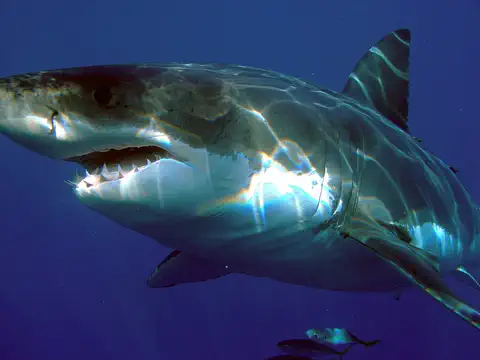
Great white shark
The great white shark is the largest of the mackerel sharks: a strong, torpedo-shaped fish with a gray back and a white belly. It hunts fish, seals and sea lions, and it is partly warm-blooded, which helps it stay active in cool water.
-
 Watch
3D
Animal
Orca
The orca, also called the killer whale, is the largest member of the dolphin family and the ocean's top predator. Orcas live in every ocean, in close family groups called pods, made up of orcas related through their mothers. Each group has its own favorite foods, hunting tricks and even its own calls, which young orcas learn from their families.
-
 Watch
Animal
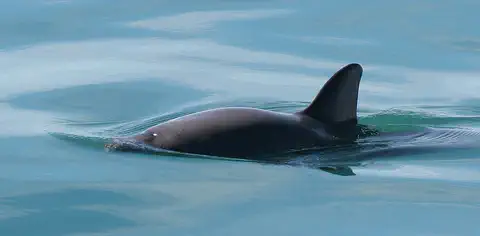
Vaquita
The vaquita is one of the smallest members of the whale, dolphin and porpoise family, and the most endangered marine mammal in the world. It lives only in the northern Gulf of California in Mexico. In 2025, survey teams saw between 7 and 10 different vaquitas and at least one new calf, and many people are working to keep them safe from fishing nets.
For parents & teachers
What children will learn
- Describe how California sea lions differ from true seals.
- Explain what sea lions eat and how they raise their pups.
- Describe how protection helped California sea lions recover.
- Know how to behave safely and kindly around sea lions.
Recommended ages: 3 to 17 · About 12 minutes
Talk about it
- Why might a pup need to recognize its mother's voice on a crowded beach?
- Why is feeding wild sea lions harmful, even if it seems kind?
- What new problems might come up when a protected animal becomes very common?
Try at home or in class
- Play a voice-matching game: blindfold one person and have them find a partner by voice alone, like a sea lion mother finding her pup.
- Compare photos of a sea lion and a harbor seal and make a chart of the differences you can see.
Key vocabulary: eared seal, pup, rookery, haul out, raft, territory
Where these facts come from
- The IUCN Red List of Threatened Species , International Union for Conservation of Nature (IUCN terms of use (no redistribution of Red List data or range maps))
- GBIF Backbone Taxonomy and GBIF Occurrence Search , Global Biodiversity Information Facility (CC0 1.0 (backbone); occurrence counts are facts derived from records under CC0, CC BY and CC BY-NC)
- California Sea Lion , NOAA Fisheries
- California Sea Lion (Zalophus californianus): U.S. Stock, stock assessment report 2018 (revised 3/18/2019) , NOAA Fisheries
- California sea lion , The Marine Mammal Center
- Harbor Seal , NOAA Fisheries
- Zalophus californianus (California Sea Lion), 2026 global assessment , IUCN Red List of Threatened Species
- Wikidata , Wikimedia Foundation (CC0 1.0)
- Wikimedia Commons , Wikimedia Foundation (Per file: Public domain, CC0, CC BY or CC BY-SA only (credited on each page))
Checked, not yet human-reviewed. Last updated October 24, 2026. Spotted a mistake? Tell us.