
Animal
Harbor seal
The harbor seal is a spotty seal. Its face looks a bit like a dog's. It rests on rocks and beaches. It swims in cool seas to catch fish.
The harbor seal lives along the northern coasts of North America, Europe and Asia, and it is one of the most common marine mammals on the east and west coasts of the United States. It has spotted fur, a dog-like face and no ear flaps, and it wriggles like a caterpillar on land. Its pups can swim within minutes of being born.
Phoca vitulina is a true seal (family Phocidae) of temperate coasts in the North Atlantic and North Pacific, reaching as far north as 78 degrees. It hauls out on rocks, beaches and glacial ice, feeds mainly on fish, and is listed by the IUCN as Least Concern, with about 315,000 mature individuals in the 2016 assessment.
Photo: Charles J. Sharp, CC BY-SA 4.0, via Wikimedia Commons
Meet the harbor seal
The harbor seal is a seal with spotty fur.
It has a round head and a nose a bit like a dog's. It has no ear flaps, just tiny holes.
The harbor seal is a 'true seal', which means it has short front flippers and no ear flaps, just a small hole on each side of its head. Adults are about 1.5 to 1.8 meters long and weigh about 82 to 129 kilograms. Males are a little bigger than females.
Harbor seals have short, dog-like snouts. Their fur comes in two main patterns: light gray, tan or silver with dark spots, or dark with light rings. The pattern varies from seal to seal. The harbor seal is also called the common seal.
Phoca vitulina belongs to the true seals (Phocidae), which have short foreflippers and lack external ear flaps; only a small opening to the ear canal shows on each side of the head. Adults reach about 5 to 6 feet (1.5 to 1.8 meters); the average adult weighs about 180 pounds (82 kilograms), and males, slightly larger than females, reach 285 pounds (129 kilograms). Seals in Alaska and the Pacific are generally larger than Atlantic seals.
The coat of short, stiff hair varies but follows two basic patterns: a light background (tan, silver or blue-gray) with dark spots or blotches, or a dark background with light rings. The snout is short and dog-like. Other names include common seal and hair seal.
Quick facts
- Group
- Mammal
- Length
- 1.5 to 1.8 m
- Weight
- 82 to 129 kg
- Lifespan in the wild
- 25 to 30 years
Where it lives
Harbor seals live along cool coasts in the north of the world.
They rest on rocks, sandy beaches and even floating ice. Some live in rivers and lakes!
Harbor seals live along the coasts of the North Atlantic and North Pacific oceans, in North America, Europe and Asia, as far north as Svalbard. In North America they are found from the Canadian Arctic to the Mid-Atlantic coast and from Baja California, Mexico, to the Bering Sea.
They stay close to shore and rest, or 'haul out', on rocks, reefs, beaches, sandbars and floating ice from glaciers. They feed in the sea and estuaries, and sometimes swim up rivers. One group in Alaska lives all year in Iliamna Lake, a freshwater lake.
Harbor seals occupy temperate coastal habitats of the North Atlantic and North Pacific, as far north as about 78 degrees. The IUCN's global assessment lists them as extant in 18 countries and territories, from the United States, Canada and Greenland to Iceland, northwestern Europe, Svalbard, Russia and Japan, and in Mexico.
They haul out on rocks, reefs, beaches, sand and mud bars and glacial ice, and most stay within 25 kilometers of land. Long considered non-migratory, they typically remain within 15 to 31 miles of their birth area, but tagging shows some travel 62 to 486 miles, often to reach seasonal food or to give birth. A freshwater population lives year-round in Alaska's Iliamna Lake.
Its habitat

Where can you find this animal?
- Lives here naturally · Countries and seas named by a scientific source
- Sightings recorded · Records of wild sightings (GBIF)
Lives here naturally · Countries and seas named by a scientific source
Cool coasts of the North Atlantic and North Pacific, from Baja California to the Bering Sea and from the Canadian Arctic to the Mid-Atlantic in North America, around Greenland and Iceland, along northwestern Europe to Svalbard, and on the coasts of Russia and Japan. Harbor seals stay near the coast.
Places: Atlantic Ocean, Pacific Ocean, Arctic Ocean, United States, Canada, Mexico, Greenland, Iceland and 11 more places.
Source: iucn-red-list · checked October 2026
Sightings recorded · Records of wild sightings (GBIF)
Counts of GBIF records of wild observations (human and machine) and preserved specimens. Records include introduced populations, vagrants, escaped or released animals and misidentifications, so a country with records is not necessarily part of the native range.
Wild sightings have been recorded in Netherlands, United States, France, Denmark, UK, Sweden, Canada, Norway and 24 more places.
Source: gbif · checked October 2026
Range maps show where scientists say an animal lives, often country by country. An animal may live in only part of a country shown, and sightings records can include animals that wandered far from home.
What it eats
Harbor seals eat mostly fish.
They also eat squid, octopus and crabs. They dive under the water to catch them.
Harbor seals eat mainly fish, plus shellfish, crustaceans, octopus and squid. They are opportunists, which means they eat whatever is plentiful at the time. In Alaska their food includes herring, cod, salmon, flounder and sand lance.
They hunt in the sea, in estuaries and sometimes in rivers and lakes. Most dives are short and shallow, less than 20 meters deep and under 4 minutes, but a harbor seal can dive as deep as 500 meters and stay underwater for over 20 minutes.
Harbor seals are opportunistic predators of fish, shellfish and crustaceans that likely exploit seasonally abundant prey. In Alaska common prey includes walleye pollock, Pacific cod, capelin, eulachon, Pacific herring, sand lance, Pacific salmon, sculpins, flatfish, octopus and squid.
They make both shallow and deep foraging dives depending on prey. Most dives are under 20 meters and 4 minutes, but they can reach 500 meters and last over 20 minutes, aided by high blood volume, reduced peripheral circulation, a slowed heart rate and high muscle myoglobin. Seals can even sleep underwater, surfacing about every 30 minutes.
Did you know?
Baby harbor seals can swim minutes after they are born.
Harbor seal pups can swim within minutes of birth and dive for up to 2 minutes when only two or three days old.
Pups are precocial: they swim within minutes and dive for up to 2 minutes at two to three days of age.
A caterpillar on land, a torpedo at sea
On land, a harbor seal wiggles along on its tummy.
It cannot walk on its back flippers. In the water it swims fast and smooth.
A harbor seal's hip bones are joined together, so it cannot turn its back flippers forward to walk the way sea lions do. On land it moves by humping its body along like a caterpillar. If you see a seal doing this, it is not hurt!
When harbor seals rest, they often lift their heads and back flippers at the same time, making a curved 'banana' shape. Their bodies are built for diving: they have a lot of blood for their size, and their hearts slow down underwater.
Fused pelvic bones prevent harbor seals from rotating the hind flippers under the body, so on land they move by undulating like a caterpillar, unlike sea lions.
Resting seals often hold the head and hind flippers raised in a 'banana' posture. Diving adaptations include high blood volume, reduced blood flow to the extremities, a lowered heart rate and abundant myoglobin, which stores oxygen in muscle. The seals molt once a year, usually in mid to late summer, for one to two months, spending more time hauled out while they do.
Pups that swim right away
A baby seal is called a pup.
A pup can swim just minutes after it is born! It drinks very rich milk from its mom for about a month.
A harbor seal mother has one pup in spring or summer. The pup weighs about 11 kilograms and can swim within minutes of being born. When it is only two or three days old it can already dive for up to 2 minutes.
The pup drinks its mother's milk, which is about 50 percent fat, for 4 to 6 weeks and may double its weight. Then it is weaned and goes off on its own. Harbor seals are grown up at 3 to 7 years old and live about 25 to 30 years.
Harbor seals mate in the water. Pregnancy lasts about 10 months, including roughly 2 months (about 11 weeks in Alaska) of delayed implantation, when the embryo pauses before attaching. A single pup of about 24 pounds (11 kilograms) is born in spring or summer; timing varies by location, and along the U.S. West Coast pups are born earlier in the south than in the north.
Pups swim within minutes, dive for up to 2 minutes at two to three days old, and nurse for 4 to 6 weeks on milk that is about 50 percent fat; by weaning, over half their body weight may be fat. Within their first month some travel more than 100 miles. Mothers sometimes form nurseries that help protect pups from predators. Maturity comes at 3 to 7 years.

Curious but careful
Harbor seals rest together on rocks and beaches.
In the water they are curious. They pop up behind boats to look around! If they feel scared on land, they slide back into the sea.
In the water harbor seals usually swim alone, but they rest together in groups of a few to thousands. Resting together helps them stay safe, because each seal needs to spend less time watching for predators.
Harbor seals are curious but shy. They often pop up close behind boats to look around. On land they move slowly, so if they feel threatened, they quickly slip back into the water. Their most common predator is the killer whale. Sharks, sea lions, wolves, bears and coyotes catch them too, and bald eagles may take newborn pups.
Harbor seals are usually solitary at sea but haul out in groups of a few to thousands, to rest, regulate body temperature, molt, socialize, give birth and nurse. Seals that haul out in groups spend less time vigilant for predators than those resting alone.
In the water they are inquisitive but elusive, often surfacing close behind boats; ashore, because they move awkwardly, they enter the water quickly when disturbed, and NOAA Fisheries warns that repeated disturbance can degrade important haul-out areas. Killer whales are their most common predator; sharks, sea lions, wolves, bears and coyotes also prey on them, and bald eagles may take newborn pups.
Did you know?
Harbor seals can sleep underwater.
Harbor seals can sleep underwater, coming up for air about every 30 minutes.
Seals can sleep submerged, surfacing to breathe roughly every 30 minutes.
Sharing the coast with seals
There are lots of harbor seals, and laws protect them.
If you see a seal resting on a beach, stay far away and let it rest. Never feed a seal.
Harbor seals are not endangered. Scientists list them as Least Concern. Long ago, bounty hunters were paid to kill harbor seals in parts of the United States, but that ended in 1960, and since a law protecting marine mammals was passed in 1972 many populations have grown.
Harbor seals can still get tangled in fishing gear and litter, be hit by boats, and be disturbed by people and boats at their resting places. Pollution can build up in their bodies. Watch seals from at least 50 yards away, and never feed them.
The IUCN's 2016 global assessment lists Phoca vitulina as Least Concern, with about 315,000 mature individuals and an unknown overall trend. In the United States, state-financed bounty hunting ended in 1960, and since the Marine Mammal Protection Act of 1972 many populations have grown, though trends differ: some Alaska stocks likely declined between 2011 and 2018, while others were stable or increasing.
Threats include entanglement in gillnets, trawls and debris, vessel strikes and disturbance, illegal feeding, habitat loss from coastal development, shrinking glacial ice in Alaska's fjords, and contaminants and microplastics that accumulate in blubber and pass to pups. NOAA Fisheries works with Alaska Native organizations on subsistence management and asks viewers to keep 50 yards away.
IUCN Red List
How is the harbor seal doing in the wild?
- Least Concern (this animal)
- Near Threatened
- Vulnerable
- Endangered
- Critically Endangered
- Extinct in the Wild
- Extinct
Least Concern
Not at risk of disappearing from the wild right now.
See the IUCN Red List assessment · The IUCN Red List of Threatened Species 2022.2
Amazing facts
-
Baby harbor seals can swim minutes after they are born.
Harbor seal pups can swim within minutes of birth and dive for up to 2 minutes when only two or three days old.
Pups are precocial: they swim within minutes and dive for up to 2 minutes at two to three days of age.
-
Harbor seals can sleep underwater.
Harbor seals can sleep underwater, coming up for air about every 30 minutes.
Seals can sleep submerged, surfacing to breathe roughly every 30 minutes.
-
Harbor seals rest in a banana shape.
Resting harbor seals often lift their heads and back flippers at the same time, making a curved 'banana' shape.
The raised head and hind flippers of a hauled-out harbor seal form a characteristic 'banana' posture.
-
Some harbor seals live in a lake.
A group of harbor seals lives all year in Iliamna Lake in Alaska, a freshwater lake.
Harbor seals in Alaska's Iliamna Lake are present year-round and are probably resident in fresh water.
Words to know
- true seal
- a seal with short front flippers and no ear flaps
- haul out
- to come out of the water to rest on land or ice
- pup
- a baby seal
- molt
- to shed old hair or skin and grow new
- blubber
- a thick layer of fat under the skin of sea mammals
- flipper
- a flat limb used for swimming
Discovery challenge
-
How does a harbor seal move on land?
How do harbor seals get around on land?
How does the harbor seal's fused pelvis make it move on land?
- It wiggles like a caterpillar
- It hops on its tail
- It walks on four legs like a dog
Show the answer
It wiggles like a caterpillar
It wiggles along on its tummy, like a caterpillar.
It humps its body along like a caterpillar, because it cannot turn its back flippers forward.
Fused pelvic bones stop the hind flippers rotating forward, so the seal undulates like a caterpillar.
-
What does a harbor seal have instead of ear flaps?
What do harbor seals have where you might expect ear flaps?
Which ear feature marks the harbor seal as a true seal?
- A tiny hole on each side of its head
- Long, floppy ears
- Ears on top of its head like a cat
Show the answer
A tiny hole on each side of its head
It has tiny ear holes, with no flaps.
True seals have no ear flaps, just a small hole on each side of the head.
No external pinnae; only a small opening to the ear canal is visible.
-
What do harbor seals mostly eat?
What is the harbor seal's main food?
What makes up most of a harbor seal's diet?
- Fish
- Grass
- Berries
Show the answer
Fish
They eat mostly fish.
They eat mainly fish, plus shellfish, crustaceans, octopus and squid.
Fish, with shellfish, crustaceans and cephalopods, taken opportunistically.
-
What should you do if you see a seal resting on a beach?
How should you behave if you find a harbor seal on a beach?
What do NOAA's viewing guidelines recommend near seals?
- Stay far away and let it rest
- Give it some of your lunch
- Push it back into the sea
Show the answer
Stay far away and let it rest
Stay far away and let it rest.
Stay at least 50 yards away and never feed it.
At least 50 yards' distance and no more than 30 minutes of viewing; feeding is illegal.
Places where you might see it
-
 Watch
 Country
United Kingdom
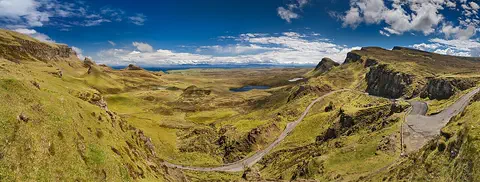
The United Kingdom, or UK, lies on islands off the northwest coast of Europe. It is made up of four parts, England, Scotland, Wales and Northern Ireland, and about 69.5 million people live there. Its capital is London.
-
 Watch
 Country
Netherlands
The Netherlands is a small, flat country in northwestern Europe on the North Sea. Its name means low-lying country: more than a quarter of it lies below sea level, protected by dunes and dikes. About 18.2 million people lived there in 2026, and its capital is Amsterdam, a city of canals.
-
 Watch
 Country
United States
The United States is a large country in North America made of 50 states, from icy Alaska to the warm islands of Hawaii. It has the Grand Canyon, the Mississippi River and Yellowstone, and about 342 million people live there.
-
 Watch
 Country
Denmark
Denmark is a country in northern Europe made of the Jutland peninsula and more than 400 islands, with the sea almost all around. It is low and mostly flat, about 6 million people live there, and its capital, Copenhagen, is full of bicycles.
Explore next
-
Watch
Country
United Kingdom
The United Kingdom, or UK, lies on islands off the northwest coast of Europe. It is made up of four parts, England, Scotland, Wales and Northern Ireland, and about 69.5 million people live there. Its capital is London.
-
Watch
Country
Netherlands
The Netherlands is a small, flat country in northwestern Europe on the North Sea. Its name means low-lying country: more than a quarter of it lies below sea level, protected by dunes and dikes. About 18.2 million people lived there in 2026, and its capital is Amsterdam, a city of canals.
-
Watch
Country
United States
The United States is a large country in North America made of 50 states, from icy Alaska to the warm islands of Hawaii. It has the Grand Canyon, the Mississippi River and Yellowstone, and about 342 million people live there.
-
 Watch
Animal
California sea lion
The California sea lion is an 'eared seal' of the west coast of North America. It is clever, playful and very noisy, with a bark like a dog's. Unlike true seals, it has ear flaps and can turn its back flippers forward to walk on land. Its numbers have grown a lot since it was protected.
-
 Watch
Animal
Leopard seal
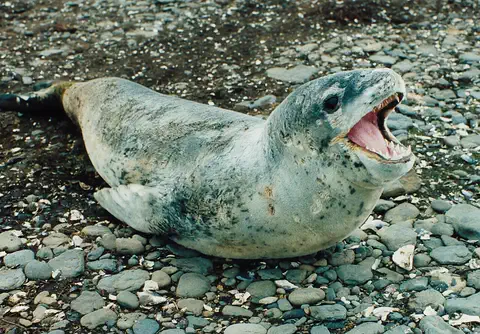
The leopard seal is a large, slender seal of the icy seas around Antarctica, named for the dark spots on its gray coat. It is a fast, powerful hunter with a big head and long teeth, and it eats everything from tiny krill to fish, penguins and young seals.
-
 Watch
3D
Animal
Walrus
The walrus is a huge Arctic sea mammal with long ivory tusks and a thick mustache of whiskers. It feels for clams on the sea floor, sucks out the soft part, and rests in big, noisy groups on sea ice and beaches.
-
 Watch
3D
Animal
Orca
The orca, also called the killer whale, is the largest member of the dolphin family and the ocean's top predator. Orcas live in every ocean, in close family groups called pods, made up of orcas related through their mothers. Each group has its own favorite foods, hunting tricks and even its own calls, which young orcas learn from their families.
-
 Watch
3D
Animal
Atlantic herring
The Atlantic herring is a small, silvery fish of the cold North Atlantic. Herring swim in enormous schools, eat tiny floating plankton, and lay their sticky eggs on the sea floor. Whales, seabirds and many fish depend on them for food, and people have fished for them for hundreds of years.
For parents & teachers
What children will learn
- Describe the harbor seal's body and how true seals differ from sea lions.
- Explain how harbor seals dive and feed.
- Describe how harbor seal pups grow up so quickly.
- Know how to watch seals safely and why it matters.
Recommended ages: 3 to 17 · About 12 minutes
Talk about it
- Why might resting in a group help a seal stay safe?
- Why do you think a seal pup needs milk that is half fat?
- What should you do if you find a seal pup alone on a beach?
Try at home or in class
- Lie on your tummy with your arms at your sides and try to move like a harbor seal, then compare it with crawling.
- Pace out 50 yards (about 46 meters) outdoors to see how far away to stay from a resting seal.
Key vocabulary: true seal, haul out, pup, molt, blubber, flipper
Where these facts come from
- The IUCN Red List of Threatened Species , International Union for Conservation of Nature (IUCN terms of use (no redistribution of Red List data or range maps))
- GBIF Backbone Taxonomy and GBIF Occurrence Search , Global Biodiversity Information Facility (CC0 1.0 (backbone); occurrence counts are facts derived from records under CC0, CC BY and CC BY-NC)
- Harbor Seal , NOAA Fisheries
- Harbor Seal Species Profile , Alaska Department of Fish and Game
- Phoca vitulina (Harbor Seal), 2016 global assessment , IUCN Red List of Threatened Species
- Wikidata , Wikimedia Foundation (CC0 1.0)
- Wikimedia Commons , Wikimedia Foundation (Per file: Public domain, CC0, CC BY or CC BY-SA only (credited on each page))
Checked, not yet human-reviewed. Last updated October 24, 2026. Spotted a mistake? Tell us.