
Animal
Chambered nautilus
The chambered nautilus is a sea animal with a striped, curly shell. It has lots of tentacles and swims by squirting water.
The chambered nautilus is a relative of octopuses and squids that lives inside a coiled shell full of sealed rooms. It moves up and down along deep reef slopes by changing how much gas and water are in its shell, and it finds food mostly by smell.
Nautilus pompilius is a cephalopod with an external, chambered shell: a mantle-built spiral of gas- and fluid-filled chambers linked by the siphuncle, which lets it adjust buoyancy. Slow-growing and late to mature, it is harvested for its shell. The IUCN Red List assessed it as Vulnerable (published 2026), and the US listed it as Threatened under the Endangered Species Act in 2018.
Photo: J. Baecker, public domain, via Wikimedia Commons
Meet the chambered nautilus
The chambered nautilus lives in the sea.
It has a round shell with brown and white stripes. Lots of tentacles poke out of the front. It is a cousin of the octopus!
The chambered nautilus is a mollusk. It belongs to the cephalopods, a word that means "head-foot," together with octopuses, squids and cuttlefish.
What makes a nautilus different from its cousins is its shell. It lives inside a hard, coiled shell with stripes on the outside, and more than 90 tentacles reach out from the opening. Inside, the shell is split into many sealed rooms called chambers.
Nautilus pompilius is a cephalopod, the molluscan class that also includes octopuses, squids and cuttlefish. Unlike those coleoid cephalopods, nautiluses keep a large external shell, which is why museums often call them "living fossils": the Australian Museum notes that nautiloids, the group they come from, date back to the Upper Cambrian, about 500 to 550 million years ago, and gave rise to all other cephalopods.
NOAA Fisheries counts seven species in two genera, Nautilus and Allonautilus, all sharing the common name chambered nautilus, though their taxonomy is poorly resolved. N. pompilius, sometimes called the emperor nautilus, is the most widely distributed. Genetic studies showed that the name covered several hidden species: in 2023, nautiluses from Fiji, Vanuatu and American Samoa were described as three new species, which the IUCN Red List now treats separately.
Quick facts
- Group
- Invertebrate
- Length
- 0.13 to 0.23 m
- Lifespan in the wild
- 15 to 20 years
Where it lives
The nautilus lives in warm seas.
It stays near steep reef walls, deep down where the water is cool. At night it swims up a little higher to look for food.
Chambered nautiluses live in the tropical Indian and Pacific Oceans, from Thailand, Malaysia, the Philippines and Indonesia to Papua New Guinea, the Solomon Islands and northern and eastern Australia. They stay close to the steep, deep slopes below coral reefs.
Most of the day they rest deep down, often hundreds of meters below the surface. At night many of them rise toward shallower water to hunt. They cannot live in water that is too warm or too deep, so each population lives in its own patch of reef slope.
The IUCN Red List (2026) describes N. pompilius from the Andaman Islands through Southeast Asia, the Philippines and Indonesia to northwestern and eastern Australia, Papua New Guinea, the Solomon Islands and the Coral Sea. The Australian Museum places it on continental shelf and slope waters next to coral reefs, from near the surface to about 750 meters. Fiji's nautiluses, long counted as N. pompilius, were described as a separate species in 2023.
Its depth range has hard limits. At Osprey Reef in the Coral Sea, Dunstan and colleagues (2011) combined tags and robot-camera dives and found animals moving between about 130 and 700 meters, bounded by warm water near the top (around 25 °C) and shell implosion near 800 meters. Because nautiluses do not cross open ocean and have no drifting larval stage, NOAA describes populations as small and isolated, separated by deep water.
Its habitats


Where can you find this animal?
- Lives here naturally · Countries and seas named by a scientific source
- Sightings recorded · Records of wild sightings (GBIF)
Lives here naturally · Countries and seas named by a scientific source
Deep slopes below coral reefs in the tropical Indo-West Pacific, from the Andaman Sea and Southeast Asia through the Philippines and Indonesia to Papua New Guinea, the Solomon Islands and northern and eastern Australia. Nautiluses live only in small, separate populations along suitable reef slopes, not across the open ocean.
Places: Pacific Ocean, Indian Ocean, Philippines, Indonesia, Papua New Guinea, Australia, Malaysia, Solomon Is. and 3 more places.
Source: iucn-red-list · checked October 2026
Sightings recorded · Records of wild sightings (GBIF)
Counts of GBIF records of wild observations (human and machine) and preserved specimens. Records include introduced populations, vagrants, escaped or released animals and misidentifications, so a country with records is not necessarily part of the native range.
Wild sightings have been recorded in Australia, Philippines, Indonesia, Papua New Guinea, Fiji, India, Solomon Is., Thailand and 29 more places.
Source: gbif · checked October 2026
Range maps show where scientists say an animal lives, often country by country. An animal may live in only part of a country shown, and sightings records can include animals that wandered far from home.
What it eats
The nautilus sniffs out its food.
It eats crabs, shrimp, fish and dead animals it finds. Its tentacles grab the food and pass it to its mouth.
The nautilus is a hunter and a scavenger. It eats shrimp, crabs, lobsters, fish and the remains of dead animals.
Its eyes are not very sharp, so it finds food mostly by smell. Special sensing cells on its tentacles pick up scents in the water. The tentacles grab the food and pass it to a hard, beak-like mouth, which tears it into pieces.
Nautiluses are nocturnal, opportunistic feeders. NOAA Fisheries lists fish, crabs and lobsters as prey, and the Aquarium of the Pacific adds shrimp, carrion and, occasionally, other nautiluses; the Australian Museum describes N. pompilius as a scavenger and opportunistic predator feeding mainly on crustaceans.
Prey is located chemically rather than by sight: chemosensors on the inner surface of the suckerless tentacles detect odors in the water. Food is passed to a beak-like jaw, and the radula, a file-like ribbon of teeth, shreds it further before swallowing. Trapping studies catch the most nautiluses on silty or muddy slopes below reef walls, which Dunstan and colleagues (2011) suggest are good places to scavenge.
Did you know?
A nautilus has more than 90 tentacles, and none of them have suckers.
A chambered nautilus has more than 90 tentacles. Instead of suckers, they have grooves and ridges that help them grip.
The Australian Museum counts up to 47 pairs of appendages in nautiluses, against 8 to 10 in other cephalopods, and none bear suckers or hooks.
A shell full of rooms
The nautilus lives in the biggest room at the front of its shell.
The rooms behind it hold gas and water. By changing them, the nautilus can float up or sink down.
A nautilus shell is divided into more than 30 chambers. The animal lives only in the last and biggest one, at the opening. As it grows, its body moves forward and it builds a new wall behind itself, sealing off an empty room.
The sealed rooms hold gas and liquid, joined by a thin tube called the siphuncle. By moving liquid in or out, the nautilus becomes lighter or heavier, a bit like a submarine filling its tanks. To swim, it squirts water out of a tube under its tentacles, so it often moves backward. When danger comes, it pulls inside and closes the door with a leathery hood.
The mantle secretes a coiled shell that grows from about four chambers in a hatchling to 38 or more in an adult (Aquarium of the Pacific). The body occupies the final chamber; each time it moves forward a septum seals the chamber behind. The closed chambers hold gas and cameral fluid, and the siphuncle, a strand of living tissue running through them, changes the fluid-to-gas ratio to set buoyancy.
Locomotion is jet propulsion: water drawn into the mantle cavity is expelled through the hyponome, a flexible funnel beneath the tentacles whose direction steers the animal forward, backward or sideways. The Australian Museum counts up to 47 pairs of suckerless appendages, which grip with grooves and ridges. A leathery hood closes the aperture when the animal withdraws. The eyes are open pinhole cups without a lens or cornea.
Growing up slowly
A mother nautilus sticks her eggs onto something hard.
The eggs take about a year to hatch. The baby already has a tiny shell. Nautiluses grow up very slowly.
A female nautilus lays only a few eggs, one at a time, each wrapped in a tough, leathery covering. She fixes each egg to a hard surface with her tentacles. The baby grows inside for about a year. When it hatches it is about 3 centimeters across and already has a shell.
Nautiluses grow slowly. NOAA Fisheries says they do not become adults until about 10 to 15 years old, and they can live 15 to 20 years or more. That is a long life for a cephalopod: most of its relatives have much shorter lives.
Much of what is known about nautilus reproduction comes from aquariums. Males transfer sperm packets with four modified tentacles (Australian Museum), and mating can last up to 24 hours. Females lay a small number of large eggs, each sealed in leathery membranes and attached to a hard surface; the Aquarium of the Pacific gives 9 to 12 months of development, and NOAA Fisheries at least a year. Hatchlings are about 3 centimeters across.
NOAA Fisheries puts maturity at around 10 to 15 years and lifespan at 15 to 20 years or more (the Aquarium of the Pacific gives 5 to 10 years to maturity). Slow growth, late maturity and few eggs make the species highly vulnerable: a fished-out population recovers very slowly.
Up and down the reef
In the day, the nautilus stays deep down.
At night it swims slowly up the reef wall. It sniffs around for food, then goes back down before morning.
Nautiluses travel up and down reef slopes rather than across the ocean. Many spend the day resting deep down and rise at night to hunt, then sink back down around sunrise.
Scientists once thought every nautilus followed the same simple pattern. When researchers tracked nautiluses with small tags and filmed them with underwater robots at Osprey Reef, off Australia, they found something more complicated: some rested around 200 meters by day while others hunted much deeper, and at night they kept moving up and down.
Daily vertical migration was long assumed to be universal: deep by day, shallow by night. Using ultrasonic transmitters on eleven N. pompilius at Osprey Reef in the Coral Sea, plus remotely operated vehicle dives, Dunstan, Ward and Marshall (PLoS ONE, 2011) found nearly continuous nightly movement between about 130 and 700 meters. By day, animals either rested at about 160 to 225 meters or foraged at 489 to 700 meters.
The authors link these patterns to food on silty slopes, avoiding daytime predators, temperature limits and buoyancy: below about 250 meters liquid seeps into the chambers, so a nautilus must return shallower to pump it out. They suggest different populations may use different strategies.
Did you know?
Scientists found that a nautilus shell breaks if it goes too deep.
A nautilus shell is strong, but not unbreakable: experiments found shells implode at depths of about 750 to 900 meters.
Shell strength sets the lower depth limit: experiments cited by the Australian Museum found living nautilus shells implode between about 750 and 900 meters.
Helping nautiluses
Some people catch nautiluses to sell their pretty shells.
Nautiluses grow up slowly, so it is hard for them to catch up. Now there are rules to protect them.
The biggest danger for the chambered nautilus is being caught for its beautiful shell. The shells are sold as souvenirs and made into jewelry and decorations. Because nautiluses grow slowly and lay few eggs, a fished area can lose its nautiluses for a very long time.
In 2016, countries agreed to control the international trade in all nautiluses under a treaty called CITES. In 2018, the United States listed the chambered nautilus as threatened, and the IUCN Red List now lists it as Vulnerable. Choosing not to buy nautilus shells helps too.
NOAA Fisheries names harvest for the international shell trade as the primary threat; shells are sold whole or cut for inlay in jewelry and decor. Its 2016 fact sheet reports declines where targeted fisheries exist or existed, including India, Indonesia, New Caledonia, the Philippines and possibly Palau, with one population's trap yields falling 97 percent in 16 years. Fishing tends to move on to new sites as each is depleted.
At CITES CoP17 in 2016 the Parties added the whole family Nautilidae to Appendix II, following a proposal by the United States, Fiji, India and Palau. NOAA Fisheries listed N. pompilius as Threatened under the Endangered Species Act in 2018. Its first IUCN Red List assessment (assessed 2023, published 2026) rates it Vulnerable (criterion A3d), with a decreasing population; within it, the Indonesian subspecies is assessed as Endangered and the Philippine subspecies as Critically Endangered, because of heavy fishing.
IUCN Red List
How is the chambered nautilus doing in the wild?
- Least Concern
- Near Threatened
- Vulnerable (this animal)
- Endangered
- Critically Endangered
- Extinct in the Wild
- Extinct
Vulnerable
At high risk of disappearing from the wild.
Amazing facts
-
A nautilus has more than 90 tentacles, and none of them have suckers.
A chambered nautilus has more than 90 tentacles. Instead of suckers, they have grooves and ridges that help them grip.
The Australian Museum counts up to 47 pairs of appendages in nautiluses, against 8 to 10 in other cephalopods, and none bear suckers or hooks.
-
Scientists found that a nautilus shell breaks if it goes too deep.
A nautilus shell is strong, but not unbreakable: experiments found shells implode at depths of about 750 to 900 meters.
Shell strength sets the lower depth limit: experiments cited by the Australian Museum found living nautilus shells implode between about 750 and 900 meters.
-
A famous submarine is called Nautilus, just like this animal.
The USS Nautilus, the world's first nuclear-powered submarine, launched in 1954, shares its name with the chambered nautilus.
According to the Aquarium of the Pacific, the USS Nautilus of 1954, the first nuclear-powered submarine, took its name from the chambered nautilus.
-
A nautilus can live for 15 to 20 years.
Most octopuses and squids live short lives, but a chambered nautilus can live 15 to 20 years or more.
NOAA Fisheries gives 15 to 20 years or more, unusually long for a cephalopod, with maturity at about 10 to 15 years.
Words to know
- cephalopod
- a sea animal whose tentacles grow from its head, such as an octopus, squid or nautilus
- chamber
- one of the sealed rooms inside a nautilus shell
- siphuncle
- a thin tube of living tissue that runs through the chambers and controls floating
- buoyancy
- how well something floats in water
- jet propulsion
- moving by pushing a stream of water or air out behind you
- scavenger
- an animal that eats dead animals it finds
Discovery challenge
-
What does a nautilus live inside?
What does a chambered nautilus live inside?
Which structure holds the gas and liquid a nautilus uses to control its buoyancy?
- A coiled shell with many rooms
- A sandy burrow
- A sea sponge
Show the answer
A coiled shell with many rooms
It lives in the front room of its curly shell.
The shell is split into many sealed chambers; the animal lives in the last and biggest one.
The older, sealed chambers of the shell hold gas and cameral fluid, adjusted by the siphuncle.
-
How does a nautilus find its food?
How does a nautilus mostly find its food?
Which sense do nautiluses mainly use to locate food?
- With very sharp eyes
- By smell
- By listening for songs
Show the answer
By smell
Its eyes see only blurry shapes, so it sniffs out its food.
Sensing cells on its tentacles pick up the smell of food in the water.
Chemosensors on the tentacles detect odors; the lensless pinhole eyes are poor at forming images.
-
How does a nautilus swim?
How does a nautilus move through the water?
What propels a swimming nautilus?
- By flapping fins
- By walking on legs
- By squirting water out of a tube
Show the answer
By squirting water out of a tube
It squirts water out to push itself along.
It pulls water in and squirts it out of a tube under its tentacles, often moving backward.
Jet propulsion: water expelled from the mantle cavity through the hyponome, which is aimed to steer.
-
Why are nautiluses caught by people?
What is the biggest danger to chambered nautiluses?
What does NOAA Fisheries name as the primary threat to the chambered nautilus?
- For their beautiful shells
- To pull boats
- To light up aquariums
Show the answer
For their beautiful shells
People sell their pretty shells. Rules now help protect them.
They are caught to sell their shells as souvenirs and decorations, and they grow too slowly to replace the ones taken.
Harvest for the international shell trade; the family has been on CITES Appendix II since 2016.
Places where you might see it
-
 Watch
 Country
Philippines
The Philippines is an island country in Southeast Asia, in the western Pacific Ocean. It has more than 7,000 islands, about 50 volcanoes and rich coral reefs, and about 112.7 million people were counted there in 2024.
-
 Watch
 Country
Indonesia
Indonesia is a country of about 17,500 islands in Southeast Asia, spread across the Equator between the Indian and Pacific oceans. It has more than 100 active volcanoes, rainforests full of wildlife, and about 286 million people (2025).
Explore next
-
 Watch
3D
Animal
Common octopus
The common octopus is a soft-bodied mollusc with eight sucker-lined arms. It lives in coastal waters, hides in a den by day, hunts snails and clams at night, and can change its color, skin texture and shape to vanish against rocks or sand. It lives only one to two years.
-
 Watch
3D
Animal
West Indian Ocean coelacanth
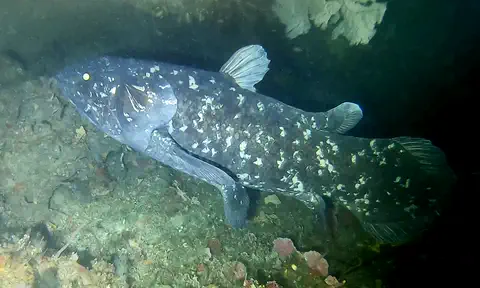
The West Indian Ocean coelacanth is a large, blue, spotted fish that lives in deep, rocky waters off eastern Africa. Its group was known only from fossils and thought to have died out about 66 million years ago, until a living one was found in South Africa in 1938.
-
Watch
Country
Philippines
The Philippines is an island country in Southeast Asia, in the western Pacific Ocean. It has more than 7,000 islands, about 50 volcanoes and rich coral reefs, and about 112.7 million people were counted there in 2024.
-
Watch
Country
Indonesia
Indonesia is a country of about 17,500 islands in Southeast Asia, spread across the Equator between the Indian and Pacific oceans. It has more than 100 active volcanoes, rainforests full of wildlife, and about 286 million people (2025).
-
 Watch
3D
Animal
Atlantic horseshoe crab
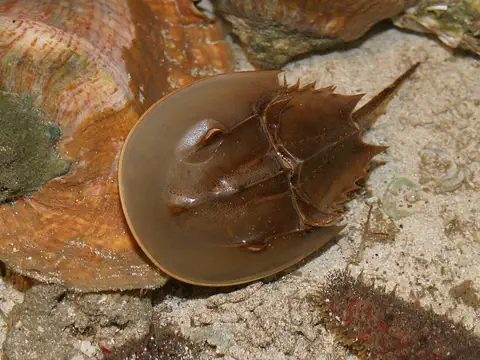
The Atlantic horseshoe crab is a living fossil: its relatives have looked much the same for hundreds of millions of years. Despite its name, it is more closely related to spiders and scorpions than to crabs. Each spring, thousands crawl onto beaches to lay eggs, feeding hungry shorebirds, and its blue blood helps keep medicines safe.
-
 Watch
Animal
Giant squid
The giant squid is one of the biggest animals without a backbone. Most of its length is two very long, stretchy feeding tentacles. It lives deep in oceans around the world, and it is so hard to find that the first photos of a living one in the wild were taken only in 2004.
-
 Watch
Animal
American lobster
The American lobster is a big crustacean that lives on the rocky sea floor of the northwest Atlantic Ocean. It has two very different claws, one for crushing and one for tearing, and it must climb out of its hard shell again and again to grow.
-
 Watch
3D
Animal
Antarctic krill
Antarctic krill are small, shrimp-like crustaceans about 6 centimeters long that live in the icy Southern Ocean around Antarctica. They gather in enormous swarms, and almost all the bigger animals of the Antarctic, from penguins to blue whales, depend on them for food.
For parents & teachers
What children will learn
- Identify the chambered nautilus as a cephalopod and name its shell, hood, eye and tentacles.
- Explain how sealed chambers and the siphuncle let a nautilus change its buoyancy.
- Describe its slow life cycle and why that makes it vulnerable to the shell trade.
- Know that international trade rules (CITES) protect nautiluses.
Recommended ages: 3 to 17 · About 15 minutes
Talk about it
- How is a nautilus shell like a submarine?
- Why might an animal that grows slowly be harmed more by fishing than one that grows fast?
- Would you buy a souvenir made from a wild animal's shell? Why or why not?
Try at home or in class
- Float an empty plastic bottle in a sink, then add water a little at a time and watch it sink: that is how a nautilus changes buoyancy.
- Draw a spiral and divide it into rooms that get bigger toward the opening, like a nautilus shell.
Key vocabulary: cephalopod, chamber, siphuncle, buoyancy, jet propulsion, scavenger
Where these facts come from
- GBIF Backbone Taxonomy and GBIF Occurrence Search , Global Biodiversity Information Facility (CC0 1.0 (backbone); occurrence counts are facts derived from records under CC0, CC BY and CC BY-NC)
- Nautilus pompilius (Chambered Nautilus), assessment 2026 (Allcock, Williams and Barord) , IUCN Red List of Threatened Species
- Chambered Nautilus , NOAA Fisheries
- Nautilus pompilius (Emperor Nautilus) , Australian Museum
- Chambered Nautilus , Australian Museum
- Chambered Nautilus , Aquarium of the Pacific
- Vertical Distribution and Migration Patterns of Nautilus pompilius (Dunstan, Ward and Marshall, PLoS ONE 2011) , PLoS ONE via PubMed Central
- CoP17 Proposal #48: Include the Family Nautilidae in CITES Appendix II (fact sheet) , NOAA Fisheries and U.S. Fish & Wildlife Service
- Wikidata , Wikimedia Foundation (CC0 1.0)
- Wikimedia Commons , Wikimedia Foundation (Per file: Public domain, CC0, CC BY or CC BY-SA only (credited on each page))
Checked, not yet human-reviewed. Last updated October 27, 2026. Spotted a mistake? Tell us.