
Animal
European garden spider
The European garden spider spins a round, sticky web in gardens and parks. It has a white cross on its back. It is harmless to people.
The European garden spider is one of the best-known web-spinning spiders. It builds a round orb web, sits in the middle and waits to feel an insect land. Look for the white cross of spots on its back. It lives across Europe and Asia and was brought to North America, and it is harmless to people.
Araneus diadematus is a Palearctic orb weaver (Araneidae), introduced to North America, and among the most familiar spiders in gardens. It rebuilds its geometric orb web daily, recycling the old silk by eating it, and its white cross is formed by guanine cells visible through the cuticle. Its venom subdues insect prey but is harmless to humans.
Photo: Ivar Leidus, CC BY-SA 4.0, via Wikimedia Commons
Meet the garden spider
The garden spider is a spider that makes round webs.
It has a round body with a white cross on top. It sits in the middle of its web and waits. It is harmless to people.
The European garden spider is also called the cross spider, because of the white cross made of pale spots and streaks on its back. Its body can be anything from pale yellow-brown or grayish brown to reddish brown or nearly black, and the cross is easiest to see on darker spiders.
It is an orb weaver, a spider that spins a round, wheel-shaped web. Females are much bigger than males, up to about 2 centimeters long, about twice the size of males. The Wildlife Trusts call it the most common orb-web spider in the United Kingdom, and it is completely harmless to people.
Araneus diadematus (Araneidae) is a large orb weaver; females measure 6.5 to 20 millimeters and males 5.5 to 13 (Animal Diversity Web). Color ranges from pale yellow-brown to nearly black. The folium carries white or yellow spots, the largest arranged lengthwise near the front, with a crosswise pair that completes the cross; the white comes from guanine cells showing through the transparent cuticle, and the cross is plainest in darker individuals.
Each leg has seven segments ending in a tarsus with three claws, and the long first legs are used as feelers. The Wildlife Trusts describe it as the UK's most common orb-web spider.
Quick facts
- Group
- Invertebrate
- Length
- 6.5 to 20 mm
- Lifespan in the wild
- up to 1 years
Where it lives
Garden spiders live in gardens, parks, fields and woods.
They live in Europe and Asia. Long ago, they traveled to North America too, and now they live there as well.
The garden spider is native to Europe and to large parts of Asia, from Turkey and the Caucasus across Russia and Central Asia to China and Japan. People accidentally brought it to North America, where it now lives in parts of Canada and the United States.
It makes its home almost anywhere with plants to hang a web on: gardens, grassland, heaths, woodland edges, farmland and coasts. It needs a bit of moisture, places to attach its web and open space for the web to hang.
The World Spider Catalog distribution, republished by the Catalogue of Life, is Europe, the Middle East, Turkey, the Caucasus, Russia (Europe to the Far East), Iran, Central Asia, China and Japan, introduced to North America. National checklists record it as native in Sweden and introduced in Canada, and the Global Register of Introduced and Invasive Species lists it for the contiguous United States. The Animal Diversity Web describes its North American range, from New England and adjacent Canada across the northern states to Washington, Oregon and British Columbia (it labels this range native, which conflicts with the catalog).
The Wildlife Trusts list grassland, heath, freshwater edges, farmland, coast, wetlands, woodland, towns and gardens; in the UK it can be seen from June to November. Webs need attachment points and vertical open space.
Continents
Its habitats


Where can you find this animal?
- Brought here by people · Countries and seas named by a scientific source
- Lives here naturally · Countries and seas named by a scientific source
- Sightings recorded · Records of wild sightings (GBIF)
Brought here by people · Countries and seas named by a scientific source
Introduced to North America: southern Canada and the northern United States, from New England to the Pacific Northwest.
Places: Canada and United States.
Source: https://api.gbif.org/v1/species/2160133/distributions · checked October 2026
Lives here naturally · Countries and seas named by a scientific source
Europe, Turkey, the Caucasus, Russia from Europe to the Far East, Iran, Central Asia, China and Japan (World Spider Catalog distribution, as republished by the Catalogue of Life). The source names Central Asia and the Middle East without listing countries: Central Asian countries with GBIF records (Kazakhstan, Uzbekistan, Kyrgyzstan) are shaded; the Middle East is not.
Places: Europe, Türkiye, Georgia, Armenia, Azerbaijan, Russia, Iran, Kazakhstan and 4 more places.
Source: https://api.gbif.org/v1/species/2160133/distributions · checked October 2026
Sightings recorded · Records of wild sightings (GBIF)
Counts of GBIF records of wild observations (human and machine) and preserved specimens. Records include introduced populations, vagrants, escaped or released animals and misidentifications, so a country with records is not necessarily part of the native range.
Wild sightings have been recorded in Netherlands, Germany, UK, United States, Canada, France, Denmark, Austria and 53 more places.
Source: gbif · checked October 2026
Range maps show where scientists say an animal lives, often country by country. An animal may live in only part of a country shown, and sightings records can include animals that wandered far from home.
What it eats
Garden spiders eat flying insects.
The insects fly into the sticky web and get stuck. The spider wraps them up in silk to eat later.
Garden spiders eat mostly insects, such as flies, that fly into their sticky webs. The spider waits in the middle of the web, feeling for the shaking of a trapped insect with its legs.
Then it rushes out and wraps its catch tightly in silk so it cannot move. Sometimes it saves the wrapped meal for later. By catching lots of insects, garden spiders help keep insect numbers down in gardens.
A. diadematus feeds mainly on arthropods, especially insects, caught in the orb. It monitors the web from the hub, or from the side while holding a signal thread, feeling vibrations through its legs; prey is wrapped in silk and bitten (Animal Diversity Web; The Wildlife Trusts).
Wrapped prey is not always eaten at once, and the number of prey attacked falls as more prey arrives and the spider becomes satiated. The Animal Diversity Web notes that by eating insects it helps reduce insect pest populations.
Did you know?
The white cross is made of tiny white spots.
The garden spider's white cross comes from special white cells that show through its see-through outer skin.
The cross is formed by guanine cells visible through the transparent cuticle, so it is clearest on dark individuals.
A web-making body
A garden spider has eight legs and a big, round body.
At the end of its body are tiny spinners. Silk comes out of them to make the web.
Like all spiders, the garden spider has eight legs and two main body parts. Its front legs are long and work like feelers. Its legs are covered with sensitive hairs that feel the tiniest shake in the web.
Silk comes out of spinnerets at the back of the abdomen. Spider silk is amazing stuff: The Wildlife Trusts say a strand long enough to wrap around the Earth would weigh less than 500 grams, about the weight of a bag of sugar.
The prosoma bears the eyes, mouthparts and eight legs; the opisthosoma holds the silk glands, which open at the spinnerets. Distal leg segments are densely covered in sensory hairs, and the long first legs probe the surroundings (Animal Diversity Web).
Vision helps too: a spider turns its body axis toward a moving object to view it with its main eyes. Its venom subdues prey, but The Wildlife Trusts note that the species is completely harmless to humans.
Egg sacs and ballooning babies
In autumn, a mother garden spider makes a soft silk bag for her eggs.
The eggs wait all winter. In spring, the babies come out. They float away on long silk threads, like tiny balloons!
Garden spiders mate at the end of summer. The female hides away for a few days, then spins a silk cocoon and lays her eggs inside, wrapping them in many layers of silk. She stays close for a few days to fix any broken threads, and then her life comes to an end.
The spiderlings develop inside the cocoon over the winter and come out in spring. Then many of them climb up high, let out fine threads of silk and are carried away by the wind. This is called ballooning. Wherever they land, they start building webs and growing up, shedding their skin as they grow.
The species breeds once at the end of the warm season (semelparous). Before laying, the female withdraws for several days, spins a basal plate, builds a cylindrical wall about 5 millimeters high in about two hours, lays her eggs and covers them with a cover plate and a looped mesh. She guards the cocoon for a few days and dies soon after (Animal Diversity Web).
Spiderlings develop for a few months inside the unchanged-looking cocoon, emerge in spring and disperse by ballooning on silk threads. Cocoon size tracks the female's size, not necessarily the number of eggs. Juveniles build webs with more radii than adults.
A new web every day
The garden spider builds a new web every day.
It even eats its old web! Then it uses the silk again to make a new one.
A garden spider's web is a wonder of engineering. Spokes, called radii, run out from the middle like the spokes of a bicycle wheel, usually 25 to 30 of them, and a sticky spiral winds around them.
The spider rebuilds its web every day. Before it builds a new one, it eats the old web, so it can reuse the silk. The middle of the web, called the hub, sits a little above the center, so the spider can run down to its prey quickly.
Webs usually have 25 to 30 radii at regular angles of 12 to 15 degrees; the hub sits slightly above center so the spider can run downward quickly, and the area near the hub carries more sticky droplets (Animal Diversity Web).
The web is rebuilt daily. Before spinning a new one, the spider eats the old web, conserving silk proteins rich in amino acids with short side chains (50 to 60 percent of the protein; Foelix, via the Animal Diversity Web). Adults are solitary and sedentary on their webs.
Did you know?
A garden spider eats its old web before making a new one.
Garden spiders eat their old webs so they can reuse the silk to build a new one each day.
Eating the old web before rebuilding conserves silk proteins (Animal Diversity Web, after Foelix).
A common garden neighbor
Garden spiders are common, and they help gardens.
You can help them by leaving some wild plants and not breaking their webs.
The European garden spider is common and widespread, and it is not in danger. Scientists have not given it an IUCN conservation status.
Gardens are important places for wildlife like garden spiders. The Wildlife Trusts say that gardens in the United Kingdom provide more space for nature than all of its National Nature Reserves put together.
Araneus diadematus has no IUCN Red List assessment (Not Evaluated) and no special legal status (Animal Diversity Web); The Wildlife Trusts list it as common in the UK. Outside its native range, it is an introduced species in North America (Catalogue of Life).
The Wildlife Trusts note that UK gardens together provide more space for nature than all the National Nature Reserves put together, and act as green corridors between areas of countryside, which matters for widespread garden species.
Did you know?
Baby garden spiders can float through the air on silk.
In spring, young garden spiders let out silk threads and float away on the wind. This is called ballooning.
Spiderlings disperse by ballooning on silk threads released from the spinnerets.
Amazing facts
-
A garden spider eats its old web before making a new one.
Garden spiders eat their old webs so they can reuse the silk to build a new one each day.
Eating the old web before rebuilding conserves silk proteins (Animal Diversity Web, after Foelix).
-
Baby garden spiders can float through the air on silk.
In spring, young garden spiders let out silk threads and float away on the wind. This is called ballooning.
Spiderlings disperse by ballooning on silk threads released from the spinnerets.
-
Spider silk is very, very light.
A strand of spider silk long enough to go around the Earth would weigh less than 500 grams, about as much as a bag of sugar.
The Wildlife Trusts note that a silk strand long enough to circle the Earth would weigh under 500 grams.
-
The white cross is made of tiny white spots.
The garden spider's white cross comes from special white cells that show through its see-through outer skin.
The cross is formed by guanine cells visible through the transparent cuticle, so it is clearest on dark individuals.
Words to know
- orb web
- a round, wheel-shaped spider web
- spinnerets
- the tiny body parts that a spider's silk comes out of
- hub
- the middle of an orb web, where the spider waits
- ballooning
- floating through the air on silk threads carried by the wind
- cocoon
- a silk case that holds a spider's eggs
- introduced
- brought by people to a place where it did not live before
Discovery challenge
-
What shape is a garden spider's web?
What kind of web does the European garden spider build?
Which web type does Araneus diadematus build?
- A round orb web
- A tube in the ground
- No web at all
Show the answer
A round orb web
It builds a round web, like a wheel.
It builds an orb web with 25 to 30 spokes and a sticky spiral.
A geometric orb with 25 to 30 radii and a sticky spiral, rebuilt daily.
-
What does the garden spider do with its old web?
What does a garden spider do with its old web before building a new one?
How does A. diadematus conserve silk when it rebuilds its web?
- Eats it
- Throws it in a river
- Gives it to a bird
Show the answer
Eats it
It eats it! Then it uses the silk again.
It eats the old web so it can reuse the silk for a new one.
It eats the old web, recycling its silk proteins.
-
How do baby garden spiders travel?
How do young garden spiders travel to new places in spring?
By what means do A. diadematus spiderlings disperse?
- They float on silk threads
- They ride on birds
- They swim
Show the answer
They float on silk threads
They float away on silk, like tiny balloons.
They let out fine silk threads and are carried by the wind. This is called ballooning.
Ballooning: wind-borne dispersal on silk threads from the spinnerets.
-
Is a garden spider dangerous to people?
What do The Wildlife Trusts say about garden spiders and people?
According to The Wildlife Trusts, what risk does A. diadematus pose to humans?
- It is harmless to people
- It chases people
- It eats people's food
Show the answer
It is harmless to people
It is harmless. It only catches insects.
Garden spiders are completely harmless to people; they catch insects.
None: its venom subdues prey but it is completely harmless to humans.
Places where you might see it
-
 Watch
 Country
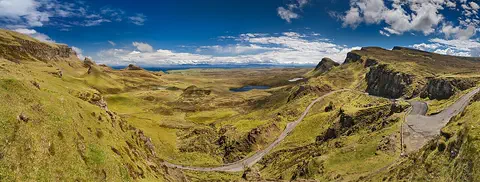
United Kingdom
The United Kingdom, or UK, lies on islands off the northwest coast of Europe. It is made up of four parts, England, Scotland, Wales and Northern Ireland, and about 69.5 million people live there. Its capital is London.
-
 Watch
 Country
Germany
Germany is a country in north-central Europe. The land rises from flat plains by the North Sea and the Baltic Sea to forested hills and, in the far south, the Alps. About 83.5 million people (2025) live there, and its capital is Berlin.
Experiments to try
Explore next
-
 Watch
Animal
Peacock spider
The peacock spider is a jumping spider from Australia, smaller than a grain of rice. The male has a rainbow-colored abdomen with flaps that unfold into a fan, like a peacock's tail. He waves the fan and his long third legs in a dance to win over a female, and he sends little vibrations through the ground at the same time.
-
Watch
Country
United Kingdom
The United Kingdom, or UK, lies on islands off the northwest coast of Europe. It is made up of four parts, England, Scotland, Wales and Northern Ireland, and about 69.5 million people live there. Its capital is London.
-
Watch
Country
Germany
Germany is a country in north-central Europe. The land rises from flat plains by the North Sea and the Baltic Sea to forested hills and, in the far south, the Alps. About 83.5 million people (2025) live there, and its capital is Berlin.
-
 Watch
Animal
Mexican red-knee tarantula
The Mexican red-knee tarantula is a large, calm spider with black legs and bright orange-red patches at its leg joints. It lives only in a small part of western Mexico, where it hides in burrows by day and waits at the entrance for food at night. Because so many were taken for the pet trade and its forest is shrinking, it is listed as Vulnerable.
- Watch What If? Lab What if there were no spiders? Spiders around the world catch an estimated 400 to 800 million tons of prey every year, mostly insects. They also spin some of the toughest materials in nature. Imagine a world with no spiders: what would happen to all those insects, and what would we lose?
-
 Watch
Animal
American lobster
The American lobster is a big crustacean that lives on the rocky sea floor of the northwest Atlantic Ocean. It has two very different claws, one for crushing and one for tearing, and it must climb out of its hard shell again and again to grow.
-
 Watch
3D
Animal
Antarctic krill
Antarctic krill are small, shrimp-like crustaceans about 6 centimeters long that live in the icy Southern Ocean around Antarctica. They gather in enormous swarms, and almost all the bigger animals of the Antarctic, from penguins to blue whales, depend on them for food.
-
 Watch
Animal
Army ant
Army ants hunt together in giant swarms and never build a permanent nest. This page is about the best-studied kind, Eciton burchellii, of Central and South American forests. Each night of its traveling phase the colony moves, and the workers link their legs to build a living camp around their queen and young.
For parents & teachers
What children will learn
- Describe how an orb web is built and how a spider uses it to catch food.
- Put a garden spider's yearly life cycle in order, from cocoon to adult.
- Explain what 'introduced species' means using the garden spider in North America.
- Understand that most spiders, including this one, are harmless and helpful.
Recommended ages: 3 to 17 · About 15 minutes
Talk about it
- Why might a spider build a new web every day instead of fixing the old one?
- How do you think a spider feels where an insect has landed in its web?
- How could a spider have traveled from Europe to North America?
Try at home or in class
- On a dewy late-summer morning, look for orb webs in a garden or park with an adult, and count the spokes without touching the web.
- Make an orb web model with a paper plate, string for spokes and a spiral of yarn.
Key vocabulary: orb web, spinnerets, hub, ballooning, cocoon, introduced
Where these facts come from
- GBIF Backbone Taxonomy and GBIF Occurrence Search , Global Biodiversity Information Facility (CC0 1.0 (backbone); occurrence counts are facts derived from records under CC0, CC BY and CC BY-NC)
- Wikidata , Wikimedia Foundation (CC0 1.0)
- Araneus diadematus (Godines) , Animal Diversity Web, University of Michigan Museum of Zoology
- Garden spider , The Wildlife Trusts
- Araneus diadematus, distribution (Catalogue of Life, from the World Spider Catalog, and national checklists) , GBIF
- Wikimedia Commons , Wikimedia Foundation (Per file: Public domain, CC0, CC BY or CC BY-SA only (credited on each page))
Checked, not yet human-reviewed. Last updated October 28, 2026. Spotted a mistake? Tell us.