
Animal
Southern stingray
The southern stingray is a flat fish shaped like a diamond. It glides over the sandy sea floor and digs up food with its wide fins.
The southern stingray is a flat, diamond-shaped ray of warm western Atlantic waters, from the eastern United States through the Gulf of Mexico and the Caribbean to South America. It spends much of its time on sandy bottoms, finding buried crabs, shrimp and fish by smell, touch and tiny electric signals.
Hypanus americanus is a coastal whiptail stingray (Dasyatidae) of the western Atlantic, from New Jersey to Amapá, Brazil, on sand flats near seagrass and reefs to about 100 meters. It locates buried prey with electroreception, bears live young nourished by uterine milk, and is caught widely in fisheries; the IUCN assessed it as Near Threatened in 2019.
Photo: NOAA CCMA Biogeography Team, public domain, via Wikimedia Commons
Meet the southern stingray
The southern stingray is flat, like a big pancake shaped like a diamond.
Its wide fins look like wings. It has a long, thin tail. It lives on the sandy bottom of warm seas.
The southern stingray is a fish, a relative of sharks with a skeleton made of cartilage. Its body is flattened into a diamond-shaped disc, made by huge side fins that join the head and body.
Its back is gray, brown or olive green, and its belly is white. Most are 50 to 80 centimeters across, and the biggest are about 1.5 meters or more. Its long, whip-like tail carries a sharp spine that the ray uses to defend itself.
Hypanus americanus (formerly Dasyatis americana) is a whiptail stingray of the class Chondrichthyes. The Florida Museum describes a diamond-shaped disc about 1.2 times as broad as long, more angular than in other rays, formed by pectoral fins that extend in front of the head and behind the pelvic region. Its back is dark gray, green or brown and its underside white; Georgia Aquarium notes an irregular row of short spines along the midline and a low keel on the tail.
The IUCN gives a maximum disc width of 150 centimeters, while the Florida Museum and Georgia Aquarium cite records of 200 centimeters and 97 kilograms. The tail can be twice as long as the body and carries a serrated, venomous spine, thought to be derived from modified scales.
Quick facts
- Group
- Fish
- Wingspan
- 0.5 to 1.5 m
- Weight
- up to 97 kg
- Lifespan in the wild
- up to 17 years
Where it lives
Southern stingrays live in warm, shallow seas.
They like sandy places near sea grass and coral reefs. Sometimes they hide under the sand.
Southern stingrays live in the western Atlantic Ocean, from New Jersey in the United States to the north coast of Brazil, including the Gulf of Mexico and the Caribbean Sea. They are especially common near Florida and the Bahamas.
They live on sandy flats near seagrass meadows and coral reefs, in lagoons, bays and estuaries, from tide pools down to about 100 meters. Because they feed on the bottom, they stay away from big walls of reef, where digging for food is hard.
The IUCN (assessed 2019) gives a range from New Jersey, USA, to Amapá, Brazil, including the Gulf of Mexico and the Caribbean, on sand flats near seagrasses and coral reefs from the surface to 100 meters. It is abundant in nearshore waters of the northeast Gulf of Mexico, especially along Florida's west coast, common in summer in estuaries along the US east coast, and common through most of the Greater and Lesser Antilles; BRUV surveys found it on 81 percent of surveyed Caribbean reefs.
The Florida Museum notes it prefers shallow coastal or estuarine sand and silt bottoms and avoids walls and large reef structures where feeding is difficult. Individuals are seen alone, in pairs and less often in large aggregations.
Its habitat

Where can you find this animal?
- Lives here naturally · Countries and seas named by a scientific source
- Sightings recorded · Records of wild sightings (GBIF)
Lives here naturally · Countries and seas named by a scientific source
Shallow sandy coasts, seagrass beds, lagoons and reefs of the western Atlantic, from New Jersey in the United States through the Gulf of Mexico and the Caribbean to Amapá in far northern Brazil (Brazil not shaded, as only its northern tip is in the range). The IUCN also lists French Guiana and many small Caribbean islands, such as Antigua and Barbuda, Barbados, Grenada, the Cayman Islands and the
Places: United States, Mexico, Bahamas, Cuba, Jamaica, Haiti, Dominican Rep., Puerto Rico and 11 more places.
Source: iucn-red-list · checked October 2026
Sightings recorded · Records of wild sightings (GBIF)
Counts of GBIF records of wild observations (human and machine) and preserved specimens. Records include introduced populations, vagrants, escaped or released animals and misidentifications, so a country with records is not necessarily part of the native range.
Wild sightings have been recorded in United States, Mexico, Bahamas, Belize, Puerto Rico, Brazil, Colombia, Honduras and 26 more places.
Source: gbif · checked October 2026
Range maps show where scientists say an animal lives, often country by country. An animal may live in only part of a country shown, and sightings records can include animals that wandered far from home.
Digging for dinner
Southern stingrays eat crabs, shrimp, clams, worms and small fish.
They flap their wide fins to blow the sand away. Then they find the hidden food underneath!
Southern stingrays feed on animals that live on or under the sea floor: bottom-dwelling fishes, crabs, shrimp, clams and worms. They flap their fins near the bottom to blow away the sand and uncover hidden prey.
Their mouths are on their undersides, and their flat teeth crush shells. They spit out the bits of shell and swallow the soft parts. Other fish often follow a feeding ray to grab any animal that escapes.
The diet is mainly large bottom-living prey: bony fishes such as scorpionfishes, toadfishes and surgeonfishes, crustaceans, mantis shrimps (stomatopods), mollusks and annelid worms (Florida Museum; Georgia Aquarium). The ray grazes slowly over sand, locating buried prey with electroreception together with smell and touch, and flaps its pectoral fins to excavate it.
Flat, crushing teeth break shells, and shell fragments are spat out. Teeth differ between the sexes: females and immature males have rounded square teeth, while mature males have low conical cusps. Other fishes often follow feeding rays to catch escaping prey.
Did you know?
Other fish follow stingrays to find food.
When a southern stingray digs for food, other fish often follow along to catch anything that escapes.
Foraging rays stir up prey that other fishes exploit, so feeding rays are often followed (Georgia Aquarium).
A body built for the sea floor
A stingray's eyes are on top of its head.
It breathes through little holes behind its eyes, so it can lie on the sand. Its mouth is underneath.
A southern stingray is built for life on the bottom. Its eyes are on top of its head, and just behind them are two openings called spiracles. Water flows in through the spiracles, so the ray can breathe while lying on the sand, and out through gill slits on its underside.
It finds food with special senses: a strong sense of smell, touch, and tiny detectors that feel the electric signals made by living animals. The spine on its tail is for defense.
The elevated head carries the eyes and spiracles, which take in water from above while the ray rests on the seabed; the gills open on the underside (Florida Museum). Electroreception, smell and touch guide feeding on buried prey.
The tail spine is round but slightly flattened, with 52 to 80 serrations on each side; its length roughly equals the distance between the outer edges of the eye orbits. Georgia Aquarium notes that the venom it carries is heat-sensitive. The Florida Museum describes the species as non-aggressive and posing little threat to people, though a ray that is stepped on will use its spine in defense. Biomedical researchers are studying the venom for possible future uses.
Live-born pups
Baby stingrays are called pups.
They grow inside their mother and are born alive. A newborn pup already looks like a tiny stingray.
Southern stingrays do not lay eggs on the sea floor. The young grow inside their mother, first feeding on a yolk sac and then on a nourishing liquid called uterine milk. After 4 to 11 months she gives birth to live pups, usually about 4 at a time, though litters can have 2 to 10.
Newborn pups are about 17 to 34 centimeters across, with long slender tails and wide fins. By about 5 and a half years old, half of the females are grown up. In the wild, southern stingrays have lived to at least 17 years.
Development is aplacental viviparity: embryos first use a yolk sac, then receive histotroph (uterine milk) secreted by the mother (Florida Museum). Gestation lasts 4 to 11 months and litters number 2 to 10, averaging 4, with larger females having larger litters; the IUCN gives annual litters of 2 to 7 pups at 17 to 19 centimeters disc width after 5 to 8 months in captivity.
Males mature at about 51 centimeters disc width and females at 75 to 80 (57.7 and 76.4 in the southern Gulf of Mexico); females reach 50 percent maturity at 5.5 years. Maximum recorded age is 17 years in the wild in southwest Florida and 26 years in captivity, giving a generation length of about 11 to 16 years.
Resting, feeding and getting cleaned
Southern stingrays often lie buried in the sand.
Sometimes they visit little fish that clean their skin, like a trip to a car wash!
Southern stingrays often stay buried in the sand during the day and come out at night to hunt, though they can feed day and night. They live alone, in pairs, or sometimes in large groups.
They visit cleaning stations, where small fish such as bluehead wrasses and Spanish hogfish pick parasites off their skin. Their main natural predators are large sharks, such as hammerheads.
Georgia Aquarium notes that southern stingrays often rest buried in sand by day and emerge at night to hunt, while the Florida Museum describes feeding by day and night. They are solitary, paired or occasionally aggregated.
They visit cleaning stations where cleaner wrasses and Spanish hogfish remove external parasites. Predators include many sharks and other large fishes, especially large sharks such as hammerheads. In the Cayman Islands, where tourists feed rays at Stingray City, researchers found changes in feeding habits, parasites, daily activity and predation risk (IUCN, citing Corcoran and colleagues 2013 and Vaudo and colleagues 2018).
Did you know?
Stingrays have a sense for tiny electric signals.
Southern stingrays can sense the faint electric signals of animals hidden in the sand.
Electroreception, combined with smell and touch, lets southern stingrays locate prey buried in sediment.
Protecting southern stingrays
Southern stingrays are still common in many places.
People help them by keeping sea grass, reefs and mangroves healthy, and by making safe areas in the sea.
The IUCN lists the southern stingray as Near Threatened, which means it could become threatened in the future. Many are caught in fishing nets and on lines, sometimes on purpose and sometimes by accident, and the seagrass, mangroves and reefs it depends on are being damaged.
In some places, like Belize, the number of southern stingrays went up between 2009 and 2018. Protected areas, rules about when rays can be caught, and limits on fishing nets all help.
The IUCN assessed the species as Near Threatened A2bd (June 2019, published 2020; nearly meeting Vulnerable), suspecting a 20 to 29 percent decline over three generations (32 years). Trends differ: baited underwater video off Belize showed a 9.6 percent annual increase from 2009 to 2018, Mexican landings were roughly stable from 2000 to 2014, a Gulf of Mexico trawl survey showed a slight decline, and in Venezuela and the Guianas, where there are no survey data, intense small-scale fisheries are suspected of causing some decline.
In Mexico it makes up 55 to 92 percent of ray catches in artisanal gillnet and longline fisheries. Protections include protected areas across the Caribbean, a ray sanctuary in Belize, seasonal no-take periods in Guatemala and state net bans in the United States. Colombia assesses it nationally as Near Threatened.
IUCN Red List
How is the southern stingray doing in the wild?
- Least Concern
- Near Threatened (this animal)
- Vulnerable
- Endangered
- Critically Endangered
- Extinct in the Wild
- Extinct
Near Threatened
Not at risk yet, but it could be soon.
See the IUCN Red List assessment · The IUCN Red List of Threatened Species 2022.2
Amazing facts
-
Stingrays have a sense for tiny electric signals.
Southern stingrays can sense the faint electric signals of animals hidden in the sand.
Electroreception, combined with smell and touch, lets southern stingrays locate prey buried in sediment.
-
Little fish clean the stingray's skin.
Southern stingrays visit cleaning stations, where small fish like bluehead wrasses pick off parasites.
Cleaner wrasses and Spanish hogfish remove ectoparasites from southern stingrays at cleaning stations.
-
Other fish follow stingrays to find food.
When a southern stingray digs for food, other fish often follow along to catch anything that escapes.
Foraging rays stir up prey that other fishes exploit, so feeding rays are often followed (Georgia Aquarium).
-
Baby stingrays drink a kind of milk before they are born.
Before birth, stingray pups are fed with uterine milk, a nourishing liquid made by their mother.
After the yolk sac is used up, embryos are nourished by histotroph (uterine milk) rather than through a placenta.
Words to know
- ray
- a flat fish related to sharks, with wide wing-like fins
- spiracle
- an opening behind a ray's eye that lets water in for breathing
- electroreception
- the ability to sense the weak electric signals made by other animals
- seagrass
- a flowering plant that grows underwater in shallow seas
- pup
- a baby ray or shark
- cleaning station
- a place where small fish or shrimp clean larger animals
Discovery challenge
-
Where does a southern stingray find its food?
Where does a southern stingray usually find its food?
Where does a southern stingray do most of its feeding?
- In and on the sandy sea floor
- In the treetops
- In the open sky
Show the answer
In and on the sandy sea floor
It digs for food in the sand.
It finds crabs, shrimp, clams, worms and fish on and under the sandy bottom.
It forages on sand flats and seagrass margins for buried benthic prey.
-
How does a stingray find food hidden in the sand?
How does a southern stingray find prey that is hidden under the sand?
Which senses does a southern stingray use to locate buried prey?
- Smell, touch and sensing electricity
- Listening for songs
- Looking with eyes on its belly
Show the answer
Smell, touch and sensing electricity
It smells, touches and feels tiny electric signals.
It uses smell, touch and its ability to sense the tiny electric signals of animals.
Electroreception together with olfaction and touch.
-
What does a stingray use its tail spine for?
What is a southern stingray's tail spine used for?
What is the main function of the southern stingray's tail spine?
- Digging holes
- Defending itself
- Catching food
Show the answer
Defending itself
Its spine is for keeping itself safe.
The spine is for defense, not for catching food.
Defense: the serrated, venomous spine is used against threats, not for feeding.
-
How are baby southern stingrays born?
How are southern stingray pups born?
What is the southern stingray's mode of reproduction?
- They hatch from eggs on a beach
- They are born alive
- They hatch from egg cases stuck to rocks
Show the answer
They are born alive
They grow inside their mother and are born alive.
Pups grow inside their mother for 4 to 11 months and are born alive.
Aplacental viviparity: yolk, then uterine milk; litters of 2 to 10.
Places where you might see it
-
 Watch
 Country
Mexico
Mexico is a large country in southern North America, between the Pacific Ocean and the Gulf of Mexico. It has smoking volcanoes, ancient cities built by the Maya and other peoples, and about 132 million people, many of them in and around Mexico City.
-
 Watch
 Country
United States
The United States is a large country in North America made of 50 states, from icy Alaska to the warm islands of Hawaii. It has the Grand Canyon, the Mississippi River and Yellowstone, and about 342 million people live there.
Explore next
-
 Watch
3D
Animal
Spotted eagle ray
The spotted eagle ray is a ray that 'flies' through warm Atlantic waters by flapping its wide, wing-like fins. Its dark back is covered in white spots, its tail is long and whip-like, and its snout looks a bit like a duck's bill, which it uses to dig for clams and other shellfish.
-
 Watch
Animal
Smalltooth sawfish
The smalltooth sawfish is a giant ray with a shark-like body and a long, flat snout edged with teeth, called a rostrum or saw. It swings the saw to stun fish and uses it to sense their tiny electric signals. Young sawfish grow up among mangroves. Once found on both sides of the Atlantic, it is now Critically Endangered.
-
 Watch
Animal
Giant oceanic manta ray
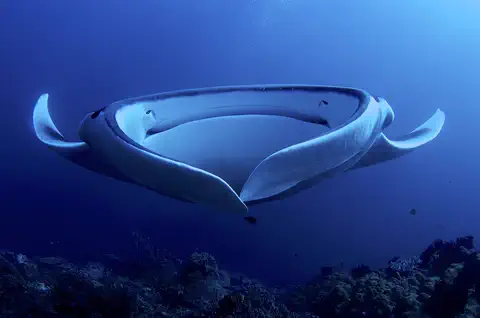
The giant oceanic manta ray is the largest ray in the world, with wing-like fins that can stretch more than 6 meters from tip to tip. This gentle filter feeder funnels plankton into its wide mouth, and it has a single pup only every two to three years.
-
Watch
Country
Mexico
Mexico is a large country in southern North America, between the Pacific Ocean and the Gulf of Mexico. It has smoking volcanoes, ancient cities built by the Maya and other peoples, and about 132 million people, many of them in and around Mexico City.
-
Watch
Country
United States
The United States is a large country in North America made of 50 states, from icy Alaska to the warm islands of Hawaii. It has the Grand Canyon, the Mississippi River and Yellowstone, and about 342 million people live there.
-
 Watch
Animal
Great hammerhead
The great hammerhead is the biggest of the hammerhead sharks. Its wide, flat head, called a cephalofoil, holds its eyes far apart and is packed with senses that help it find stingrays hiding in the sand of warm, shallow seas.
-
 Watch
Animal
Alligator gar
The alligator gar is one of the largest freshwater fish in North America. It has a broad snout lined with teeth, armor-like scales, and a swim bladder that works like a lung, so it can gulp air in warm, still water. It lives in the big rivers, swamps and bayous of the southern United States, Mexico and Central America.
-
 Watch
Animal
Arapaima
The arapaima is one of the biggest freshwater fish in the world, longer than a grown-up is tall. It lives in the warm, slow rivers and flooded lakes of the Amazon, and it must swim up to the surface to gulp air every few minutes.
For parents & teachers
What children will learn
- Describe how a stingray's flat body, spiracles and senses suit life on the sea floor.
- Explain how southern stingrays find buried prey.
- Describe live birth and uterine milk in rays.
- Explain why the species is Near Threatened and how protection helps.
Recommended ages: 3 to 17 · About 15 minutes
Talk about it
- Why might it help a bottom-living fish to have its eyes on top of its head?
- How could feeding wild rays at tourist spots change their behavior?
- Why do you think other fish follow a feeding stingray?
Try at home or in class
- Bury a few small toys in a tray of sand, then blow gently through a straw to uncover them, the way a ray flaps sand away.
- Cut a diamond shape 80 centimeters wide from newspaper to see the size of a typical southern stingray.
Key vocabulary: ray, spiracle, electroreception, seagrass, pup, cleaning station
Where these facts come from
- The IUCN Red List of Threatened Species , International Union for Conservation of Nature (IUCN terms of use (no redistribution of Red List data or range maps))
- GBIF Backbone Taxonomy and GBIF Occurrence Search , Global Biodiversity Information Facility (CC0 1.0 (backbone); occurrence counts are facts derived from records under CC0, CC BY and CC BY-NC)
- Wikimedia Commons , Wikimedia Foundation (Per file: Public domain, CC0, CC BY or CC BY-SA only (credited on each page))
- Hypanus americanus (Southern Stingray), IUCN Red List assessment 2020 , IUCN
- Southern stingray (Hypanus americanus) , Florida Museum of Natural History
- Southern stingray , Georgia Aquarium
- Wikidata , Wikimedia Foundation (CC0 1.0)
Checked, not yet human-reviewed. Last updated October 27, 2026. Spotted a mistake? Tell us.
Picture credits
- Photo: NOAA CCMA Biogeography Team, public domain, via Wikimedia Commons · source