
Animal
Virginia opossum
The Virginia opossum is a gray animal with a white face and a pink nose. It carries its babies in a pouch. It can hold on to branches with its tail.
The Virginia opossum is the only marsupial that lives north of Mexico. It is about the size of a house cat, with a white face, a pink nose and a long, bare tail that can grip branches. It comes out at night and eats almost anything, and a mother can carry a big litter of tiny babies in her pouch.
Didelphis virginiana, the only marsupial north of Mexico, ranges from Costa Rica to southern Canada and is still spreading north. A nocturnal, solitary omnivore with a prehensile tail and an opposable hind thumb, it breeds fast and lives briefly, and is listed as Least Concern (IUCN, 2016).
Photo: Cody Pope, CC BY-SA 2.5, via Wikimedia Commons
Meet the opossum
The opossum is a gray, furry animal.
It has a white face, a pink nose and black ears. Its long tail has no fur.
The Virginia opossum is a marsupial: a mammal whose babies grow in a pouch. It is the only marsupial that lives north of Mexico.
An adult's body is about 41 centimeters long, with a bare tail of about 28 centimeters, and it weighs about 2 to 3 kilograms. It has a sturdy body, short legs with sharp claws, a white face, a pink nose and dark, rounded ears. Its fur is usually whitish underneath with black tips, which makes it look gray, but colors vary from place to place.
Didelphis virginiana is the only marsupial found north of Mexico (Smithsonian's National Zoo). Average head-and-body length is about 40.6 to 40.8 centimeters, with tails of about 28 to 29 centimeters; males weigh 2.1 to 2.8 kilograms and females 1.9 to 2.1.
The body is robust and the legs short, with sharp claws. Whitish underfur tipped with black gives a grizzled gray look, though coloration varies across the range. The face is pale with a pink nose, and the long tail is hairless and prehensile.
Quick facts
- Group
- Mammal
- Length
- 40.6 to 40.8 cm
- Weight
- 1.9 to 2.8 kg
- Lifespan in the wild
- 1.5 to 2 years
Where it lives
Opossums live in North and Central America.
They like woods near water. Some live near people's houses.
Even though its name sounds like it lives only in Virginia, the Virginia opossum lives from Costa Rica, through Mexico, to much of the United States east of the Rocky Mountains and north into Ontario, Canada.
People also brought opossums to the west coast of the United States and to British Columbia, and they are still spreading north. Opossums live in many habitats, from deserts to wet meadows, but they like woodlands and thickets near water best.
The native range runs from Costa Rica through Central America and Mexico into the United States east of the Rocky Mountains and north into Ontario, Canada. Introduced populations live on the US west coast and in British Columbia, and the species is still expanding northward (Smithsonian's National Zoo).
It occupies habitats from desert to wet meadow, from lowlands to about 3,000 meters, but prefers woodland and thickets near water. It does not hibernate; in the coldest seasons it simply becomes less active.
Continent
Its habitat

Where can you find this animal?
- Lives here naturally · Countries and seas named by a scientific source
- Sightings recorded · Records of wild sightings (GBIF)
Lives here naturally · Countries and seas named by a scientific source
Woodlands, thickets and many other habitats from Costa Rica through Central America and Mexico to the United States east of the Rocky Mountains and north into Ontario, Canada. Opossums on the US west coast and in British Columbia were introduced by people. It lives in only part of the United States and Canada.
Places: Costa Rica, Nicaragua, Honduras, El Salvador, Guatemala, Belize, Mexico, United States and 1 more places.
Source: iucn-red-list · checked October 2026
Sightings recorded · Records of wild sightings (GBIF)
Counts of GBIF records of wild observations (human and machine) and preserved specimens. Records include introduced populations, vagrants, escaped or released animals and misidentifications, so a country with records is not necessarily part of the native range.
Wild sightings have been recorded in United States, Mexico, Canada, Nicaragua, Guatemala, Brazil, Honduras, El Salvador and 14 more places.
Source: gbif · checked October 2026
Range maps show where scientists say an animal lives, often country by country. An animal may live in only part of a country shown, and sightings records can include animals that wandered far from home.
Eats almost anything
Opossums eat lots of different foods.
They eat fruit, seeds, bugs and worms. Sometimes they catch mice or birds.
Opossums are omnivores and opportunists: they eat whatever they can find, and their food changes with the seasons.
They eat fruit, seeds and other plants, insects and worms, and small mammals and birds. Depending on where they live, they also catch reptiles and frogs. At the Smithsonian's National Zoo, an opossum eats fish, meat, eggs, fruit, vegetables and mushrooms.
Virginia opossums are opportunistic omnivores whose diet varies by season: small mammals, birds, insects, worms, plant material, fruits and seeds, and in some habitats reptiles and amphibians (Smithsonian's National Zoo).
This dietary flexibility, together with tolerance of many habitats, helps explain how one species can live from Central American lowlands to southern Canada. In zoos, opossums are fed fish, meat, eggs, commercial pellets, fruit, vegetables and mushrooms.
Did you know?
Young opossums sometimes lie very still when they are scared.
"Playing possum" means pretending to be dead. Young opossums do it most; adults usually hiss or run.
Death-feigning is mainly a behavior of young opossums; adults tend to threaten or flee.
Tail and thumbs
An opossum's tail can wrap around a branch.
Its back feet have a thumb, like your hand. That helps it climb.
Opossums are great climbers. Their long, hairless tail is prehensile: it can wrap around a branch to help hold on.
Each back foot has a big toe that works like a thumb, called an opposable hallux, so the opossum can grip branches with its feet as well as its hands. Sharp claws help it climb tree trunks.
The hairless prehensile tail and an opposable hallux on each hind foot give the opossum a secure grip on branches, making it an able climber (Smithsonian's National Zoo). Short legs carry sharp claws.
The opposable hallux is visible in photographs of climbing opossums as a separate, thumb-like digit on the hind foot.
Tiny babies, big litters
Baby opossums are as small as a bean.
They crawl into their mother's pouch and grow there for about two months.
Opossum babies grow inside their mother for only 12 to 13 days. Then 4 to 25 babies are born, each about 14 millimeters long, about the size of a kidney bean.
Right after birth they climb into their mother's pouch, where they stay for about two months. They stop drinking milk at about 105 days old. Opossums can have babies of their own before they are one year old, and a mother usually has two litters a year.
Mating runs from January or February into June or July. Gestation lasts only 12 to 13 days; litters number four to 25 young, each about 14 millimeters long at birth (Smithsonian's National Zoo).
Newborns climb straight into the pouch and stay about two months; weaning comes at about 105 days, though young begin eating solid food earlier. Both sexes mature within their first year. Females average two litters a year, up to three in warmer climates. Life is short: about 1.5 to 2 years in the wild and 3 or 4 in human care.
Playing dead
Opossums come out at night.
When a young opossum is scared, it may lie very still, as if it were fast asleep.
Opossums are nocturnal and live alone, coming out between dusk and dawn. They do not hibernate, but they slow down in the coldest weather.
Opossums are famous for "playing possum": pretending to be dead when they are frightened. Young opossums do this most. Adults are more likely to show their teeth, hiss, screech or run away.
Virginia opossums are nocturnal and solitary, active from dusk to dawn, and do not hibernate, though they reduce activity in the coldest seasons. The mating system is polygynous (Smithsonian's National Zoo).
Death-feigning, the origin of "playing possum", is mostly seen in young opossums. Threatened adults more often bare their teeth, hiss, screech or flee.
Did you know?
Opossums are moving farther north.
Virginia opossums are still spreading north into Canada.
The species' range continues to expand northward.
Sharing our roads
There are lots of opossums.
But cars can hit them at night. Drivers can watch out for animals.
The Virginia opossum is listed as Least Concern: it is common across a huge area. In some places people hunt or trap opossums for food or fur.
The bigger danger is cars, because opossums are out at night and often cross roads. Keeping healthy wild habitats and watching for animals when driving at night both help.
The IUCN lists Didelphis virginiana as Least Concern, with an increasing population (Perez-Hernandez and colleagues, assessed 2015, published 2016). It is hunted and trapped for food and fur in some areas, but collisions with motor vehicles are a greater threat (Smithsonian's National Zoo).
As a widespread, adaptable species that is still expanding its range, the opossum is not considered at risk; maintaining healthy habitats benefits it along with other wildlife.
IUCN Red List
How is the virginia opossum doing in the wild?
- Least Concern (this animal)
- Near Threatened
- Vulnerable
- Endangered
- Critically Endangered
- Extinct in the Wild
- Extinct
Least Concern
Not at risk of disappearing from the wild right now.
See the IUCN Red List assessment · The IUCN Red List of Threatened Species 2022.2
Amazing facts
-
A newborn opossum is about the size of a bean.
A newborn Virginia opossum is about 14 millimeters long, about the size of a kidney bean.
Neonates measure about 14 millimeters, roughly kidney-bean sized.
-
Young opossums sometimes lie very still when they are scared.
"Playing possum" means pretending to be dead. Young opossums do it most; adults usually hiss or run.
Death-feigning is mainly a behavior of young opossums; adults tend to threaten or flee.
-
An opossum's back feet have thumbs!
Each back foot has a thumb-like big toe that helps the opossum grip branches.
An opposable hallux on each hind foot aids arboreal grasping.
-
Opossums are moving farther north.
Virginia opossums are still spreading north into Canada.
The species' range continues to expand northward.
Words to know
- marsupial
- a mammal whose babies grow in a pouch on the mother's belly
- prehensile
- able to grab and hold, like an opossum's tail
- omnivore
- an animal that eats both plants and animals
- nocturnal
- active at night and asleep during the day
- litter
- a group of babies born to one mother at the same time
Discovery challenge
-
Where do opossum babies grow after they are born?
Where do newborn opossums go right after birth?
Where do newborn Virginia opossums complete their development?
- In their mother's pouch
- In a nest of eggs
- In the water
Show the answer
In their mother's pouch
In their mother's pouch.
They climb into her pouch and stay about two months.
In the pouch, for about two months after a 12 to 13 day gestation.
-
What can an opossum's tail do?
What is special about an opossum's tail?
Which trait describes the Virginia opossum's tail?
- It can wrap around branches
- It can glow
- It is used to swim fast
Show the answer
It can wrap around branches
It wraps around branches.
It is bare and prehensile: it can wrap around branches.
It is hairless and prehensile, aiding climbing.
-
Which opossums play dead most?
Which Virginia opossums most often pretend to be dead?
In which age class is death-feigning most common?
- Young ones
- Old ones
- Every opossum, every time
Show the answer
Young ones
Young opossums do it most.
Young ones; adults usually hiss, show their teeth or run.
Juveniles; adults more often threaten, vocalize or flee.
-
What is the biggest danger to opossums?
What threatens Virginia opossums most?
According to the National Zoo, what is the greatest threat to the species?
- Being hit by cars
- Too much snow
- Running out of trees in deserts
Show the answer
Being hit by cars
Cars can hit them at night.
Collisions with cars, more than hunting or trapping.
Vehicle collisions, which outweigh hunting and trapping.
Places where you might see it
-
 Watch
 Country
United States
The United States is a large country in North America made of 50 states, from icy Alaska to the warm islands of Hawaii. It has the Grand Canyon, the Mississippi River and Yellowstone, and about 342 million people live there.
-
 Watch
 Country
Mexico
Mexico is a large country in southern North America, between the Pacific Ocean and the Gulf of Mexico. It has smoking volcanoes, ancient cities built by the Maya and other peoples, and about 132 million people, many of them in and around Mexico City.
-
 Watch
 Country
Canada
Canada is the second-largest country in the world, stretching across the north of North America from the Atlantic to the Pacific and up into the Arctic. It has the Rocky Mountains, thousands of islands and about 42 million people, who speak English, French and many other languages.
Explore next
-
 Watch
Animal
Koala
The koala is a tree-living marsupial from eastern Australia. It eats almost nothing but eucalyptus leaves, sleeps up to 20 hours a day to save energy, and carries its jellybean-sized baby in a pouch that opens toward its back legs.
-
 Watch
Animal
Sugar glider
The sugar glider is a small marsupial from the forests of eastern Australia. Stretchy skin between its front and back legs works like a parachute, so it can glide up to 50 meters between trees. It comes out at night to lick sweet sap and nectar and to catch insects, and it lives in family groups that share a nest.
-
Watch
Country
United States
The United States is a large country in North America made of 50 states, from icy Alaska to the warm islands of Hawaii. It has the Grand Canyon, the Mississippi River and Yellowstone, and about 342 million people live there.
-
Watch
Country
Mexico
Mexico is a large country in southern North America, between the Pacific Ocean and the Gulf of Mexico. It has smoking volcanoes, ancient cities built by the Maya and other peoples, and about 132 million people, many of them in and around Mexico City.
-
Watch
Country
Canada
Canada is the second-largest country in the world, stretching across the north of North America from the Atlantic to the Pacific and up into the Arctic. It has the Rocky Mountains, thousands of islands and about 42 million people, who speak English, French and many other languages.
-
 Watch
Animal
Common raccoon
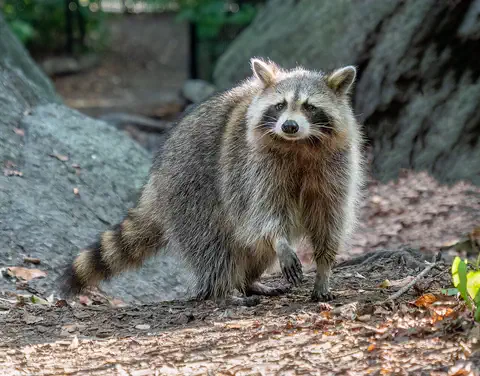
The common raccoon is a clever night-time animal from North and Central America, famous for its black mask, ringed tail and nimble, hand-like front paws. It eats almost anything and lives in forests, wetlands, farms and even big cities. People have also brought raccoons to Europe and Japan, where they now live wild.
-
 Watch
Animal
Aardvark
The aardvark is a shy night digger of African savannas. It sniffs out ant and termite nests, rips them open with its spade-like claws and laps up the insects with a sticky tongue about 30 centimeters long. Its name means 'earth pig' in Afrikaans.
-
 Watch
Animal
African buffalo
The African buffalo is a huge, cow-like grazer with heavy, curving horns. It lives in herds that can number in the thousands, and a herd will rush to protect a calf in danger. It lives across much of Africa south of the Sahara, from open savannas to rainforests.
For parents & teachers
What children will learn
- Describe what makes a marsupial different from other mammals.
- Explain how a prehensile tail and opposable toes help an animal climb.
- Locate the opossum's range from Central America to Canada.
- Discuss how people can share neighborhoods safely with nocturnal wildlife.
Recommended ages: 3 to 17 · About 15 minutes
Talk about it
- Why might having many babies help an animal that usually lives only one or two years?
- Why do you think young opossums play dead more than adults?
- What could your family or town do to help animals that cross roads at night?
Try at home or in class
- Try picking up a pencil with your toes, then think about how a thumb on each foot would help an opossum climb.
- Measure 14 millimeters on a ruler and find something that small at home: that is a newborn opossum.
Key vocabulary: marsupial, prehensile, omnivore, nocturnal, litter
Where these facts come from
- GBIF Backbone Taxonomy and GBIF Occurrence Search , Global Biodiversity Information Facility (CC0 1.0 (backbone); occurrence counts are facts derived from records under CC0, CC BY and CC BY-NC)
- The IUCN Red List of Threatened Species , International Union for Conservation of Nature (IUCN terms of use (no redistribution of Red List data or range maps))
- Virginia opossum , Smithsonian's National Zoo and Conservation Biology Institute
- Didelphis virginiana: IUCN Red List global assessment record (Perez-Hernandez et al. 2016), IUCN checklist on GBIF , GBIF
- Didelphis virginiana (Virginia Opossum), Perez-Hernandez et al. 2016, global assessment , IUCN Red List of Threatened Species
- Wikidata , Wikimedia Foundation (CC0 1.0)
- Wikimedia Commons , Wikimedia Foundation (Per file: Public domain, CC0, CC BY or CC BY-SA only (credited on each page))
Checked, not yet human-reviewed. Last updated November 1, 2026. Spotted a mistake? Tell us.