
Animal
Western gorilla
The western gorilla is a big, gentle ape. It lives in the rainforests of Africa with its family.
The western gorilla is a great ape, one of our closest animal relatives. It lives in family groups led by a big silverback male, eats leaves and fruit in the rainforests of central Africa, and is quiet and peaceful unless it feels threatened.
Gorilla gorilla, the western gorilla, includes the western lowland gorilla and the rare Cross River gorilla of the Nigeria-Cameroon border. It lives in silverback-led groups in the forests of west-central Africa and is listed by the IUCN as Critically Endangered after steep declines from hunting, disease and habitat loss.
Photo: Tuxyso / Wikimedia Commons / CC-BY-SA-4.0, CC BY-SA 4.0, via Wikimedia Commons
Meet the western gorilla
The gorilla is the biggest ape.
It has black or brown hair and a big, strong chest. Gorillas are gentle. They like to eat, play and rest with their families.
Gorillas are the largest of the great apes, the group that also includes chimpanzees, bonobos and orangutans. The western gorilla has two kinds: the western lowland gorilla, which is the most common, and the very rare Cross River gorilla.
A grown male can stand about 1.8 meters tall and weigh around 136 kilograms or more. Western lowland gorillas often look brownish and have a big brow ridge over the eyes. Like people, every gorilla has its own fingerprints, and even its own nose print.
Gorilla gorilla is one of two gorilla species; the other, the eastern gorilla, includes the mountain gorilla. The western species has two subspecies: the western lowland gorilla and the Cross River gorilla.
Sexual dimorphism is marked. The Smithsonian's National Zoo gives adult males an average of about 136 kilograms (up to about 227) and a standing height up to 1.8 meters, against 68 to 91 kilograms and 1.4 meters for females. Compared with mountain gorillas, western lowland gorillas have a wider skull, a more pronounced brow ridge, smaller-looking ears and a big toe set farther from the others.
Quick facts
- Group
- Mammal
- Height
- 1.4 to 1.8 m
- Weight
- 136 to 227 kg
Where it lives
Western gorillas live in Africa.
They live in thick, green rainforests and wet, swampy forests. They spend most of their time on the ground.
Western lowland gorillas live in the rainforests and swampy forests of the Congo Basin in central Africa, in Gabon, Cameroon, the Republic of the Congo, the Central African Republic, Equatorial Guinea and Angola. Cross River gorillas live only in a small area of hills and forests on the border of Nigeria and Cameroon.
A gorilla group usually wanders less than 1.6 kilometers a day, searching for food inside a home range of about 15 to 22 square kilometers.
The western lowland gorilla is broadly distributed through the Congo Basin forests of Gabon, Cameroon, the Republic of the Congo, the Central African Republic, Equatorial Guinea and Angola; it was once present in the Democratic Republic of the Congo but is now probably extinct there. WWF notes that important populations survive in remote swamp forests of the Republic of the Congo.
The Cross River gorilla, estimated at only 200 to 300 animals, lives in at least 11 groups in lowland montane forest and rainforest across about 7,800 square kilometers of the Nigeria-Cameroon border region. Group home ranges are about 14.5 to 22.5 square kilometers, rarely overlapping.
Continent

Where can you find this animal?
- Lives here naturally · Countries and seas named by a scientific source
- Sightings recorded · Records of wild sightings (GBIF)
Lives here naturally · Countries and seas named by a scientific source
Rainforests and swamp forests of the Congo Basin (western lowland gorilla) and the Nigeria-Cameroon border forests (Cross River gorilla).
Places: Gabon, Cameroon, Congo, Central African Rep., Eq. Guinea, Angola and Nigeria.
Source: Smithsonian's National Zoo; WWF · checked October 2026
Sightings recorded · Records of wild sightings (GBIF)
Counts of GBIF records of wild observations (human and machine) and preserved specimens. Records include introduced populations, vagrants, escaped or released animals and misidentifications, so a country with records is not necessarily part of the native range.
Wild sightings have been recorded in Gabon, Cameroon, Congo, United States, Eq. Guinea, DR Congo, Central African Rep., Nigeria and 14 more places.
Source: gbif · checked October 2026
Range maps show where scientists say an animal lives, often country by country. An animal may live in only part of a country shown, and sightings records can include animals that wandered far from home.
What it eats
Gorillas eat mostly plants.
They munch leaves, stems and juicy fruit. Sometimes they eat tiny bugs on the leaves too.
Gorillas are mostly herbivores. They eat the leaves and stems of herbs, shrubs and vines, and western lowland gorillas also eat a lot of fruit, from close to a hundred kinds of trees that fruit in different seasons.
They get a little extra protein from insects and other small animals that live on leaves and fruit. When fruit is plentiful, a group travels farther to find it. A big male eats far more than a female, about one and a half times as much.
The diet is primarily herbivorous: leaves, stems and pith of herbs, shrubs and vines, plus the fleshy fruits of close to a hundred seasonally fruiting tree species. Western lowland gorillas are more frugivorous than other gorilla subspecies, and their daily travel increases when fruit is abundant.
Invertebrates eaten along with leaves and fruit supply some protein. Adult females eat about two-thirds as much as adult males. Gorillas digest high-fiber food inefficiently, and the National Zoo notes that the occasional eating of feces seen in the wild lets them recover nutrients from undigested food.
Did you know?
A gorilla's arms are longer than its legs.
A big male gorilla's arms can stretch about 2.4 meters from fingertip to fingertip.
Adult males have an arm span of about 2.4 meters; the long forelimbs suit knuckle-walking and climbing.
A powerful body
Gorillas have very long, strong arms.
They walk on their feet and the knuckles of their hands. Grown-up males have silver hair on their backs.
A gorilla's arms are longer than its legs. A big male's arm span can reach about 2.4 meters, wider than a door. On the ground gorillas knuckle-walk, leaning on the folded fingers of their hands.
When males grow up, they get a saddle of silver-white hair on their backs and are called silverbacks. They also grow a tall, bony crest on top of the skull, which holds the huge jaw muscles they need for chewing tough plants. Babies have a small white tuft of hair on their rump until about age four.
The forelimbs are longer than the hindlimbs, giving adult males an arm span of about 2.4 meters and females about 2 meters. Gorillas knuckle-walk, bearing weight on the third and fourth digits of the curled hand. Because of their size they spend most of their time on the ground.
Mature males develop the silver saddle that gives silverbacks their name, extending to the rump and thighs in western lowland gorillas, and a large sagittal crest that anchors the jaw muscles; females have much smaller crests. Infants carry a white rump tuft until about four years old, which may help others recognize them as infants.
Growing up
A baby gorilla is tiny when it is born.
It holds on tight to its mother. Later it rides on her back. It stays close to her for years.
A gorilla mother is pregnant for about eight and a half months, almost as long as a human mother. Her baby weighs only about 2 kilograms at birth, but it can already grip her fur tightly.
In its first couple of years a baby gorilla grows twice as fast as a human baby. It starts riding on its mother's back at about 3 months and keeps riding until it is about 3 or 4 years old. A mother usually has a new baby about every four and a half years.
Gestation lasts about eight and a half months, and births are not seasonal. Infants weigh about 2 kilograms and have a strong grasp reflex. They grow about twice as fast as human infants in their first two years, ride on their mothers from about 3 months and continue until roughly 3.5 to 4 years.
Females mature at 6 to 9 years and usually first give birth at 10 or 11; with an interbirth interval of about four and a half years, a female may raise only three to six offspring in her life. Males reach full silverback status at about 13 or older. This slow reproduction is why gorilla numbers recover so slowly.
Family life
Gorillas live in family groups.
The silverback is the leader. He keeps his family safe. Every night, each gorilla makes a soft bed of leaves.
A western lowland gorilla group is small, often about five gorillas: a silverback, a few adult females and their young. The silverback decides when the group wakes up, eats and sleeps, and settles arguments.
Gorillas are quiet and peaceful. Every evening each one bends branches and leaves into a nest to sleep in. If a silverback feels his family is in danger, he stands up, beats his chest and roars, and may charge forward, but he usually runs past without touching anyone. Scientists have counted up to 22 different gorilla calls.
Groups typically contain one silverback, sometimes younger blackback males, several adult females and their offspring; western lowland groups average about five individuals. The silverback leads, mediates disputes and sets the group's range and daily schedule. Females usually leave their birth group at about eight, choosing which male to join.
Gorillas build day nests for resting and night nests for sleeping. Communication uses at least 22 recorded vocalizations, gestures, postures and odors. Threat displays (standing, chest-beating, roaring and bluff charges that usually stop short of contact) help keep order between groups without injury.
Did you know?
Baby gorillas grow twice as fast as human babies.
In their first couple of years, baby gorillas grow about twice as fast as human babies.
Infant gorillas grow at roughly twice the rate of human infants during their first two years.
Protecting gorillas
There are fewer gorillas than there used to be.
Many people are working to help them. Rangers protect the forests. Visitors who come to watch gorillas help pay for that care.
The western gorilla is critically endangered. Over about 20 to 25 years its numbers fell by more than 60 percent. Gorillas have been hunted illegally for meat, logging roads have opened up their forests, and a disease called Ebola has killed many gorillas and chimpanzees.
There is hope. A 2018 study found that more than 360,000 western gorillas still live in the forests, many more than once thought. Parks protect them, and in places such as Dzanga-Sangha in the Central African Republic, careful gorilla tourism provides local jobs that help pay to protect the forest.
The IUCN moved the western gorilla from Endangered to Critically Endangered in 2007. Commercial bushmeat hunting, the Ebola virus and logging, which fragments forest and opens access for hunters, drove declines of more than 60 percent over 20 to 25 years; WWF reports Ebola losses of over 90 percent of gorillas and chimpanzees in Gabon's Minkébé Forest.
A 2018 study estimated more than 360,000 gorillas in western equatorial Africa, but about 80 percent live outside protected areas. Scientists calculate that even if all threats stopped, recovery would take about 75 years. Responses include protected-area networks, anti-poaching work, disease monitoring and community-based gorilla tourism.
IUCN Red List
How is the western gorilla doing in the wild?
- Least Concern
- Near Threatened
- Vulnerable
- Endangered
- Critically Endangered (this animal)
- Extinct in the Wild
- Extinct
Critically Endangered
At extremely high risk of disappearing from the wild.
See the IUCN Red List assessment · The IUCN Red List of Threatened Species 2022.2
Amazing facts
-
Every gorilla has its own nose print.
Like our fingerprints, every gorilla has its own fingerprints, and even its own unique nose print.
Individual fingerprints and distinctive nose prints allow researchers and keepers to tell gorillas apart.
-
Gorillas make a new bed every night.
Every evening each gorilla over about three years old bends branches and leaves into a fresh nest to sleep in.
Gorillas over about three build both day nests and night nests; babies share their mother's.
-
Baby gorillas grow twice as fast as human babies.
In their first couple of years, baby gorillas grow about twice as fast as human babies.
Infant gorillas grow at roughly twice the rate of human infants during their first two years.
-
A gorilla's arms are longer than its legs.
A big male gorilla's arms can stretch about 2.4 meters from fingertip to fingertip.
Adult males have an arm span of about 2.4 meters; the long forelimbs suit knuckle-walking and climbing.
Words to know
- great ape
- a large ape with no tail, such as a gorilla, chimpanzee, bonobo or orangutan
- silverback
- a grown-up male gorilla with silver hair on his back
- knuckle-walking
- walking on the feet and the bent knuckles of the hands
- herbivore
- an animal that eats mostly plants
- bushmeat
- meat from wild animals hunted in the forest
- critically endangered
- at very high risk of disappearing from the wild
Discovery challenge
-
Who leads a gorilla family?
Who leads a gorilla group?
Which group member leads, settles disputes and sets the group's daily schedule?
- The silverback
- The smallest baby
- A visiting chimpanzee
Show the answer
The silverback
The big silverback leads the family.
The silverback, a grown male with a silver back, leads and protects the group.
He leads, mediates disputes and sets the group's range and daily routine.
-
What do gorillas mostly eat?
What do western gorillas mostly eat?
Which describes the western lowland gorilla's diet?
- Plants and fruit
- Fish
- Only meat
Show the answer
Plants and fruit
Gorillas eat leaves, stems and fruit.
They eat mostly leaves, stems and fruit, plus a few insects.
Mostly herbivorous and relatively fruit-rich, with some invertebrates.
-
How does a gorilla walk on the ground?
How do gorillas usually move on the ground?
How do gorillas carry their weight when they move on all fours?
- On feet and knuckles
- By hopping
- By sliding on its belly
Show the answer
On feet and knuckles
Gorillas walk on their feet and their knuckles.
They knuckle-walk, leaning on the folded fingers of their hands.
Weight is borne on the third and fourth digits of the curled hand.
-
Why are there fewer gorillas than there used to be?
Why is the western gorilla critically endangered?
Which combination drove western gorilla declines?
- Hunting, disease and logging
- Too much rain
- Too many bananas
Show the answer
Hunting, disease and logging
People hunted them, a sickness spread and forests were cut. Now many people are helping gorillas.
Illegal hunting, the Ebola disease and logging have made their numbers fall.
Bushmeat hunting, Ebola and logging-driven access caused declines of more than 60 percent.
Places where you might see it
-
 Watch
 Country
Nigeria
Nigeria is a large country in West Africa, named after the Niger River. It has rainforests in the south and dry grasslands in the north, and it is Africa's most populous country, with about 238 million people in 2025 who speak hundreds of languages.
-
 Watch
 Country
Gabon
Gabon is a country on the Atlantic coast of Africa, right on the equator. About three-fourths of it is covered by dense rainforest, home to forest elephants, gorillas and mandrills. Most people live in towns and cities, and the 2026 census counted about 3.5 million people.
-
 Watch
 Country
Central African Republic
The Central African Republic is a landlocked country in the very center of Africa, about the size of France. Grassy savannas cover the north, rainforests grow in the south, and the capital, Bangui, stands on the Ubangi River. About 5.5 million people lived there in 2025.
-
 Watch
 Country
Cameroon
Cameroon sits where western and central Africa meet. In the south are thick rainforests full of monkeys and apes, by the coast rises Mount Cameroon, an active volcano, and in the north are dry savanna plains. About 29.9 million people lived there in 2025, and French and English are both official languages.
-
 Watch
 Country
Republic of the Congo
The Republic of the Congo lies on the equator in west-central Africa. Thick rainforests cover much of it, the mighty Congo River forms its eastern border, and it has a short coast on the Atlantic Ocean. Forest elephants and gorillas live in its parks. About 6.5 million people lived there in 2025, most of them in two cities.
-
 Watch
 Country
Angola
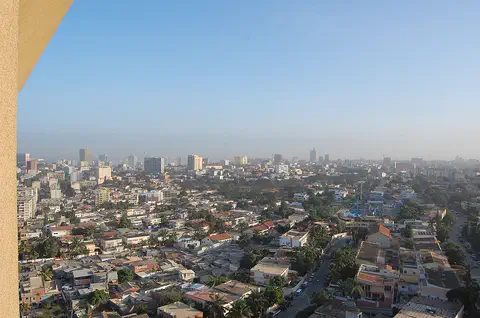
Angola is a large country in southwestern Africa, on the Atlantic Ocean. A narrow coast rises steeply to high plateaus, rivers such as the Cuanza run to the sea, and the Namib Desert reaches its far southwest. Its national statistics institute projects about 38.8 million people for 2026.
Explore next
-
 Watch
Animal
Eastern gorilla
The eastern gorilla is the gorilla of the misty mountains and forests of east-central Africa. It has two kinds: the shaggy mountain gorilla, whose numbers are slowly growing, and the big Grauer's gorilla, which has become much rarer.
-
 Watch
Animal
Bonobo
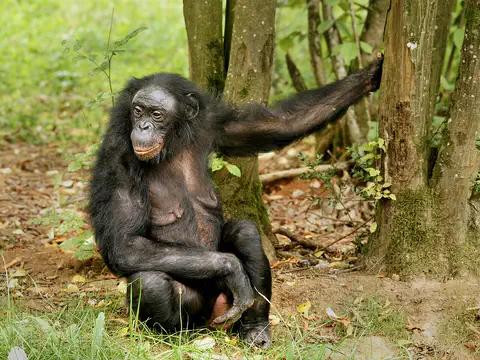
The bonobo is a great ape that looks a lot like a chimpanzee but is more slender, with a rounder head. It lives only in the rainforests south of the Congo River, in groups where females take the lead and squabbles rarely turn into fights.
-
 Watch
3D
Animal
Bornean orangutan
The Bornean orangutan is a shaggy red great ape that spends almost all its life in the treetops of Borneo's rainforests. It eats mostly ripe fruit, builds a new leafy bed every night, and lives a quieter, more solitary life than other great apes.
-
Watch
Animal
African forest elephant
The African forest elephant is a separate species from the bigger bush elephant. It lives in the rainforests of central and western Africa, eats lots of fruit and spreads the seeds of forest trees in its dung. It is Critically Endangered.
-
Watch
Country
Nigeria
Nigeria is a large country in West Africa, named after the Niger River. It has rainforests in the south and dry grasslands in the north, and it is Africa's most populous country, with about 238 million people in 2025 who speak hundreds of languages.
-
 Watch
Animal
Mandrill
The mandrill is the largest and most colorful of the Old World monkeys. Grown-up males have red noses, blue-ridged cheeks and a golden beard. Mandrills roam the rainforests of west-central Africa in huge, noisy groups called hordes.
-
Watch
Country
Gabon
Gabon is a country on the Atlantic coast of Africa, right on the equator. About three-fourths of it is covered by dense rainforest, home to forest elephants, gorillas and mandrills. Most people live in towns and cities, and the 2026 census counted about 3.5 million people.
-
Watch
Country
Central African Republic
The Central African Republic is a landlocked country in the very center of Africa, about the size of France. Grassy savannas cover the north, rainforests grow in the south, and the capital, Bangui, stands on the Ubangi River. About 5.5 million people lived there in 2025.
For parents & teachers
What children will learn
- Describe gorilla family life and the silverback's role.
- Explain how gorilla bodies suit their way of life (long arms, knuckle-walking, jaw crest).
- Explain why slow reproduction makes gorillas vulnerable.
- Describe threats to western gorillas and how communities and parks help.
Recommended ages: 3 to 17 · About 15 minutes
Talk about it
- How is a gorilla family like your family, and how is it different?
- Why might gorilla tourism help protect gorillas, and what rules should visitors follow?
- Why do you think a silverback's chest-beating display might prevent real fights?
Try at home or in class
- Measure your arm span with a tape measure, then mark 2.4 meters on the floor to compare with a big male gorilla's.
- Build a nest: with a grown-up, bend and tuck soft blankets or cushions around yourself and talk about how gorillas build a fresh nest each night.
Key vocabulary: great ape, silverback, knuckle-walking, herbivore, bushmeat, critically endangered
Where these facts come from
- The IUCN Red List of Threatened Species , International Union for Conservation of Nature (IUCN terms of use (no redistribution of Red List data or range maps))
- GBIF Backbone Taxonomy and GBIF Occurrence Search , Global Biodiversity Information Facility (CC0 1.0 (backbone); occurrence counts are facts derived from records under CC0, CC BY and CC BY-NC)
- Western lowland gorilla , Smithsonian's National Zoo and Conservation Biology Institute
- Western Lowland Gorilla , World Wildlife Fund
- Cross River Gorilla , World Wildlife Fund
- Wikidata , Wikimedia Foundation (CC0 1.0)
- Wikimedia Commons , Wikimedia Foundation (Per file: Public domain, CC0, CC BY or CC BY-SA only (credited on each page))
Checked, not yet human-reviewed. Last updated October 24, 2026. Spotted a mistake? Tell us.