
City Europe
Brussels
Brussels is the capital city of Belgium. It has a grand old market square, a giant shiny model of atoms and two languages on its street signs.
Brussels is the capital of Belgium. It began as a market where a road crossed the small Senne River, and its old name means "settlement in the marshes." Its Grand-Place, ringed by 17th-century guildhalls, is a UNESCO World Heritage Site, and the city is home to many offices of the European Union.
Brussels, capital of Belgium since 1830, grew from a 10th-century marshland settlement at the crossing of the Senne and the Rhine-Flanders trade road. Officially bilingual, it is the seat of the EU's European Commission and Council and of NATO's headquarters. The Brussels-Capital Region of 19 communes had 1,255,834 people on January 1, 2026.
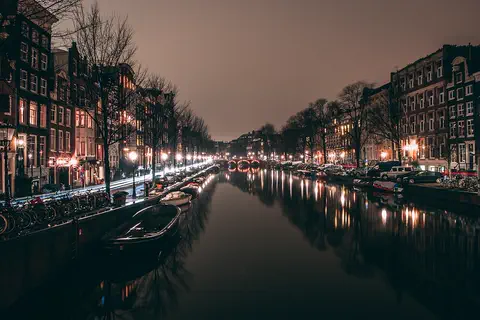
Photo: Ank Kumar, CC BY-SA 4.0, via Wikimedia Commons
Discover Brussels
Brussels is the capital city of Belgium.
People there speak French, Flemish and many other languages. From a hill in the middle of town, you can see gardens, old houses and a tall, pointy tower.
Brussels is the capital of Belgium, a small country in western Europe. It lies in the valley of the Senne, a little river. Greater Brussels is made up of 19 towns, called communes, joined together. About 1.26 million people lived in this Brussels-Capital Region at the start of 2026.
Brussels is officially bilingual: street signs and public life use both French and Flemish. Most people speak French, and many speak English too. Because the European Union has many of its main offices here, Brussels is often called "the capital of Europe."
Brussels lies in the valley of the Senne (Flemish: Zenne), a small tributary of the Schelde, on Belgium's Central Plateaus. Greater Brussels, the country's largest urban agglomeration, became the Brussels-Capital Region in 1989; its 19 communes keep their own councils, and the largest, also called Brussels, holds the historic core and the European Quarter. Statbel counted 1,255,834 people in the region on January 1, 2026; the Brussels commune had about 196,000 in 2024.
Though historically a Flemish-speaking city surrounded by Flemish territory, Brussels became mainly French-speaking; more than nine-tenths of residents speak French well, and English has overtaken Flemish as the most common second language. As seat of the European Commission, the Council of the EU and NATO's headquarters, it is called the "capital of Europe," and Britannica counts it a global city.
- Country
- Belgium (capital)
- People in the Brussels-Capital Region (2026)
- 1,255,834
- People in the City of Brussels commune (2024)
- about 196,000
- Official languages
- French and Flemish, side by side
Famous places
The Grand-Place is a big old square with fancy, decorated buildings all around.
On one side is the town hall with a tall, lacy tower. Out of town stands the Atomium. It looks like a giant model of tiny atoms, with shiny balls joined by tubes!
The Grand-Place, the old marketplace, is the city's most famous sight. Its buildings were rebuilt after a fire in 1695 as richly decorated guildhalls, the meeting houses of the city's craft workers. The Town Hall, built from 1402 to 1454, with its tall open-work steeple, fills its south side.
Nearby is the Manneken-Pis, a tiny bronze fountain statue of a boy from 1619 that is dressed in costumes for festivals. In the north of the city stands the Atomium, built for the 1958 World's Fair. It is a model of an iron crystal, the tiny building block of iron, made 165 billion times bigger.
The Grand'Place (Grote Markt), at the heart of the Old Town, is surrounded by elaborately decorated guildhalls that rose after French bombardment burned hundreds of buildings in 1695; UNESCO, which inscribed it in 1998, calls it a remarkably homogeneous body of mainly late-17th-century public and private buildings. The Brabantine Gothic Town Hall (1402–54) occupies its south side, and the King's House, almost entirely rebuilt in 1873–95, houses the Brussels City Museum. The Manneken-Pis fountain (1619) is known locally as the city's oldest "citizen."
In the upper town, the Royal Palace and the Palace of the Nation (1779–83), home of Parliament, face each other across Brussels Park, beside the Neoclassical Place Royale. East of the park, the European Commission's cruciform Berlaymont (1967–69) anchors the European Quarter. At Heysel stands the Atomium, engineer André Waterkeyn's flagship for Expo 58: an elementary iron crystal magnified 165 billion times, a cube on its tip with an atom at each corner joined by tubes.
- Grand-Place
- UNESCO World Heritage Site, 1998
- Town Hall
- 1402–54
- Atomium
- built for Expo 58; an iron crystal magnified 165 billion times
- Manneken-Pis fountain
- 1619

Settlement in the marshes
Long ago, Brussels was a little village by a marshy river.
Traders met where a road crossed the river, and a market grew. Weavers made beautiful cloth. In 1830, Brussels became the capital of a new country, Belgium.
Brussels is first mentioned in the 900s, when it was called Bruocsella, "settlement in the marshes." A market grew where the Senne River met a busy road between the Rhine River towns and Flanders. By the 1100s, walls with towers surrounded it, and its luxury cloth was sold at fairs as far away as Paris and Venice.
In the 1400s, under the dukes of Burgundy, Brussels became a center of art, famous for paintings and huge woven tapestries. After a fire in 1695 destroyed hundreds of buildings, the guildhalls of the Grand-Place were rebuilt. In 1830 Belgium became independent, and Brussels became its capital.
The oldest reference to Brussels, as Bruocsella, dates to the 10th century, in Lower Lotharingia, later the duchy of Brabant. A market grew under the dukes' protection where the north-flowing Senne met an east-west route from Cologne to Brugge and Ieper; ramparts enclosed it by the 12th century. Luxury cloth, exported to fairs in Paris, Venice and Champagne, enriched seven patrician dynasties, against which uprisings broke out in 1280, 1303, 1360 and 1421; new walls went up in 1357–79.
Under Burgundy (1430–77) Brussels became the administrative seat of the ducal Low Countries and an art center (Rogier van der Weyden, tapestries). Charles V based his councils here; the Willebroek Canal (1561) linked it to Antwerp. A French bombardment in 1695 destroyed hundreds of buildings; Austrian rule (from 1713) brought the Place Royale and Brussels Park. After French annexation and the United Kingdom of the Netherlands (1815–30), the 1830 revolution made Brussels capital of independent Belgium. The European Communities made it their headquarters in 1958, and federalization created the Brussels-Capital Region in 1989.
Getting around Brussels
Many trains meet in Brussels.
Some trains go under the city through tunnels. Fast trains zoom to other countries. People also ride the subway.
Brussels is the center of Belgium's railways, one of the densest rail networks in the world. In 1911 the city began building tunnels and bridges to join its North and South stations through an underground Central Station; the link was finished in 1956.
In 1965 Brussels began building a subway and regional train network, which now reaches every part of the region. High-speed trains run to London, Paris, Amsterdam and Cologne. The airport is at Zaventem, east of the city, and canals link Brussels with Antwerp and Charleroi.
Brussels is the focal point of one of the world's densest railway systems. From 1911 tunnels and viaducts joined the North (1841) and South (1869) stations via the underground Central Station (1952); the North-South link was completed in 1956. To ease commuter traffic, a subway and regional rail network begun in 1965 now covers the whole region, and an expanded regional network to Flemish and Walloon communities followed in the early 21st century, with high-speed links to London, Paris, Amsterdam and Cologne.
The national airport is at Zaventem, to the east; a beltway, the grande ceinture, is the hub of highways to Belgium's major cities, and canals connect the capital with Charleroi to the south and Antwerp to the north. Britannica notes that the city's automobile-friendly street plan has hindered public transport and brought noise and air pollution.
- North-South rail link
- begun 1911, completed 1956
- Subway and regional rail
- begun 1965
- Airport
- Zaventem, to the east
- High-speed trains to
- London, Paris, Amsterdam and Cologne
Weather and seasons
Brussels has mild weather.
Winters are cool, and summers are warm but not hot. Rain falls a lot, in every season. Snow is rare.
The North Sea is not far away, so Brussels has a mild climate. In January, days average about 6 °C and nights about 1 °C. In July, days average about 22 °C and nights about 14 °C.
Rain falls on more than half the days of the year, about 820 millimeters in all, and there is no dry season. Snow usually falls only two or three times a year.
Britannica describes a mild maritime climate owing to the nearby North Sea, with rain on more than half the days of the year, no discernible dry season and snow rarely more than two or three times a year. World Meteorological Organization normals for 1971–2000 give mean daily maxima and minima of 5.6 °C and 0.7 °C in January and 22.4 °C and 13.6 °C in July.
Monthly totals add up to about 820 mm; the wettest months, November and December, each bring about 79 mm, and the driest, February, 53 mm. Britannica also notes that the city's heavy car traffic makes noise and air pollution notable problems.
- January, average daily high and low
- about 6 °C and 1 °C
- July, average daily high and low
- about 22 °C and 14 °C
- Rain and snow in a year
- about 820 mm
Living in Brussels
Children in Brussels can go to school in French or in Flemish.
Families walk in a huge beech forest near the city. They visit museums, hear music at the opera and go to concerts.
Families in Brussels can choose French-language or Flemish-language public schools, and many international schools serve families from other countries. Brussels has long been a home for artists: in the late 1800s and early 1900s, it was home to Art Nouveau architects such as Victor Horta and Surrealist painters such as René Magritte.
About three-quarters of workers have jobs in services, such as government, banking, shops and tourism. For fresh air, people walk in the beech woods of the Soignes Forest, not far from the center.
Since 1989 the French- and Flemish-language communities have run parallel public school systems, and families of any language may choose either; state-subsidized religious schools and private international schools add to the mix. Higher education includes the Free University of Brussels (1834), divided since 1970 into French- and Flemish-speaking universities, the royal academies and the Royal Library.
Brussels flowered culturally under the Burgundians and again around 1900, when Art Nouveau architects Henry van de Velde and Victor Horta and Surrealist painters Paul Delvaux and René Magritte worked here. La Monnaie, the bilingual national opera, Horta's Palace of Fine Arts (1928) and the Queen Elisabeth International Music Competition anchor its music. Services employ about three-quarters of the workforce, and more than one-tenth of Belgium's jobs are tied to the Brussels economy. Waves of immigration, from Mediterranean countries in the 1950s and 1960s, from the Democratic Republic of the Congo and from EU countries, made it deeply multicultural.
- Free University of Brussels
- founded 1834
- Palace of Fine Arts
- designed by Victor Horta, opened 1928
- Jobs in services
- about three-quarters
Brussels on the map
Find Brussels on the globe.
Look for Belgium, a small country next to France. Brussels is in the middle of Belgium.
Brussels is in the center of Belgium, in western Europe. It lies just north of the invisible "language boundary" between the Flemish-speaking region of Flanders to the north and the French-speaking region of Wallonia to the south, so it is surrounded by Flanders.
The old center is shaped like a pentagon, a five-sided shape traced by a ring of tree-lined boulevards where the old city walls once stood.
Brussels lies at about 50.8° N and 4.3° E, on Belgium's Central Plateaus between the sandy lowlands and polders of the north and the Ardennes highlands of the south, a position that long made it an economic and transport hub for the Schelde, Sambre and Meuse valleys. The Brussels-Capital Region covers 161 km².
The 14th-century walls, roughly a pentagon still visible from the air, were replaced by boulevards in the early 19th century. Central Brussels remains divided between the western lower town, the merchants' district around the Grand'Place, and the eastern upper town of palaces, ministries and, beyond Brussels Park, the European Quarter.
- Latitude
- about 50.8° north
- Longitude
- about 4.3° east
- Brussels-Capital Region area
- 161 km²
Amazing facts
-
The Atomium is a giant model of tiny iron atoms.
The Atomium shows a crystal of iron made 165 billion times bigger than it really is.
The Atomium represents an elementary iron crystal magnified 165 billion times, a cube on its tip with an atom at each corner linked by tubes.
-
A tiny statue of a boy in Brussels gets dressed in costumes.
The Manneken-Pis, a small bronze fountain statue from 1619, is dressed in different costumes for festivals and holidays.
The Manneken-Pis fountain (1619), known as the city's oldest 'citizen,' is adorned in costumes throughout the year for festivals, holidays and other events.
-
A river in Brussels now flows under the streets.
In the 1860s and 1870s, the polluted Senne River was moved around the old city, and its old path through the center was covered over with boulevards.
In the 1860s and '70s the highly polluted Senne was diverted around the western edge of the historic city; its central course became part of a new sewer system, covered with apartment-lined boulevards.
-
The old center of Brussels is shaped like a pentagon.
The ring of boulevards around old Brussels follows the line of its old walls, which made a five-sided pentagon you can still see from the air.
The 14th-century fortification circuit, roughly a pentagon, is still traceable from the air; its walls were replaced by tree-lined boulevards in the early 19th century.
-
Brussels's old name means settlement in the marshes.
The oldest name for Brussels, Bruocsella, means "settlement in the marshes."
The 10th-century Frankish name Bruocsella means 'settlement in the marshes.'
Words to know
- capital
- the city where a country's government meets
- bilingual
- using two languages
- guildhall
- a building where members of a craft or trade group met
- commune
- a town or district with its own local council
- tapestry
- a heavy cloth with a picture woven into it
- Art Nouveau
- a style of art and building from around 1900 with flowing, curvy lines
- crystal
- a solid whose tiny particles are arranged in a regular, repeating pattern
Discovery challenge
-
Which country is Brussels the capital of?
Brussels is the capital of which country?
Since 1830, Brussels has been the capital of which country?
- Belgium
- Netherlands
- Luxembourg
Show the answer
Belgium
Belgium! Brussels is in the middle.
Belgium, a small country in western Europe.
Belgium, after the revolution of 1830.
-
What does the Atomium look like?
The Atomium is a giant model of what?
What does the Atomium, built for Expo 58, magnify 165 billion times?
- An iron crystal
- A snowflake
- A honeycomb
Show the answer
An iron crystal
Tiny iron atoms, made giant!
A crystal of iron, 165 billion times bigger.
An elementary iron crystal.
-
What is the Grand-Place?
The Grand-Place, a World Heritage Site, is what kind of place?
UNESCO inscribed which Brussels site, surrounded by late-17th-century guildhalls, in 1998?
- An old market square
- A ski slope
- A beach
Show the answer
An old market square
A big old square with fancy buildings!
The old marketplace, ringed by decorated guildhalls.
The Grand'Place, the medieval marketplace at the heart of the Old Town.
-
Which two languages are on signs in Brussels?
Brussels is officially bilingual. Which two languages does it use?
In all spheres of public life, Brussels uses which two languages side by side?
- French and Flemish
- Spanish and Italian
- English and German
Show the answer
French and Flemish
French and Flemish!
French and Flemish. Most people speak French.
French and Flemish; English is now the most common second language.
-
What does the old name of Brussels mean?
Brussels's old name, Bruocsella, means what?
What does the 10th-century Frankish name Bruocsella mean?
- Settlement in the marshes
- Castle on the hill
- City of bridges
Show the answer
Settlement in the marshes
Settlement in the marshes! The land was wet.
Settlement in the marshes, beside the Senne River.
'Settlement in the marshes.'
Nearby places
-
 Watch
City
Amsterdam
Amsterdam is the capital of the Netherlands. It began as a fishing village beside a dam on the Amstel River, which gave the city its name. Today about 942,000 people live among its rings of canals, hundreds of bridges, houseboats and bicycles.
-
 Watch
City
Paris
Paris is the capital of France. It grew from an island in the Seine River into a city of about 2.1 million people (2023), with the Eiffel Tower, Notre-Dame, the Louvre and a subway that has run since 1900.
-
 Watch
Landmark
Louvre Museum
The Louvre in Paris began as a castle in 1190, grew into a royal palace and became a museum in 1793. About 30,000 works of art are on show, including the Mona Lisa. Since 1989, visitors have entered through a glass pyramid; 9 million came in 2025.
-
 Watch
Landmark
Notre-Dame de Paris
Notre-Dame de Paris is the cathedral of Paris, a Catholic church begun in 1163 on an island in the Seine River. Its towers are 68 meters tall. In 2019 a fire destroyed most of its roof and its spire, and after five years of work it reopened in December 2024.
-
 Watch
Landmark
Arc de Triomphe
The Arc de Triomphe is a huge stone arch at the top of the Champs-Élysées in Paris. Napoleon ordered it in 1806, but it took 30 years to finish. It is about 50 meters high and 45 meters wide, covered in giant carvings, and under it lies France's Tomb of the Unknown Soldier, with a flame that is rekindled every evening.
-
 Watch
Landmark
Musée d'Orsay
The Musée d'Orsay in Paris was built as a grand train station for the World's Fair of 1900. After the trains stopped, it was turned into a museum, which opened in 1986. Today about 3.7 million people a year come to see its art from 1848 to 1914, including famous Impressionist paintings.
-
 Watch
Landmark
Eiffel Tower
The Eiffel Tower in Paris was built in just over two years for the 1889 World's Fair. Its 18,038 iron parts are held together by 2.5 million rivets. It was meant to stand for 20 years; today it is 330 meters tall and millions of people visit every year.
-
 Watch
Landmark
Palace of Versailles
The Palace of Versailles began as a small royal hunting lodge. King Louis XIV turned it into a vast palace, and from 1682 it was the center of the French government. Today it has 2,300 rooms, the famous Hall of Mirrors and enormous gardens.
Explore next
-
Watch
 Country
Belgium
Belgium is a small, busy country in northwestern Europe, low and flat near the North Sea and hilly in the forested Ardennes. About 11.9 million people live there, speaking mainly Dutch in the north and French in the south, and its capital, Brussels, hosts the European Union.
-
Watch
City
Amsterdam
Amsterdam is the capital of the Netherlands. It began as a fishing village beside a dam on the Amstel River, which gave the city its name. Today about 942,000 people live among its rings of canals, hundreds of bridges, houseboats and bicycles.
-
Watch
City
Paris
Paris is the capital of France. It grew from an island in the Seine River into a city of about 2.1 million people (2023), with the Eiffel Tower, Notre-Dame, the Louvre and a subway that has run since 1900.
-
 Watch
City
London
London, the capital of the United Kingdom, began as a Roman town almost 2,000 years ago. About 8.8 million people lived in Greater London in 2021. It has the Tower of London, Big Ben, Tower Bridge and the Tube, an underground railway that opened in 1863.
- Watch Geography Villages, towns and cities A place where people live together is called a settlement. A village is a small settlement, often in the countryside. A town is bigger than a village but smaller than a city. A city is a large place with many people, buildings, roads and jobs. In 2025, the United Nations reported that 45 percent of the world's people live in cities.
-
 Watch
City
Athens
Athens is the capital of Greece and one of the oldest cities in the world. Above it rises the Acropolis, a rocky hill crowned by the marble Parthenon, built about 2,500 years ago. Ancient Athens was home to early democracy, great thinkers and theater.
-
 Watch
City
Barcelona
Barcelona, the capital of Catalonia in northeastern Spain, lies on the Mediterranean between mountains and the sea. It is famous for the buildings of the architect Antoni Gaudí, including the Sagrada Família, a giant church begun in 1882. About 1.7 million people live in the city (2025).
-
 Watch
City
Belgrade
Belgrade, the capital of Serbia, stands where the Sava River flows into the Danube. Its name, Beograd, means "white city", probably because of the white limestone walls of its old fortress above the rivers. At the 2022 census, about 1.2 million people lived in the city itself and about 1.7 million in the wider City of Belgrade.
For parents & teachers
What children will learn
- Locate Brussels in the center of Belgium.
- Explain how a market at a river crossing grew into a capital.
- Describe what it means for a city to be officially bilingual.
- Name some of Brussels's landmarks, from the Grand-Place to the Atomium.
Recommended ages: 3 to 17 · About 15 minutes
Talk about it
- Brussels uses two languages on its signs. What would be easy or hard about that?
- The Senne River was covered over because it was polluted. What else could a city do with a dirty river?
- The Atomium shows atoms 165 billion times bigger. What tiny thing would you like to see made giant?
Try at home or in class
- Build a model of the Atomium with modeling clay balls and straws: make a cube and balance it on one corner.
- Make a two-language sign for your bedroom door, with words in English and another language.
Key vocabulary: capital, bilingual, guildhall, commune, tapestry, Art Nouveau, crystal
Where these facts come from
- Wikidata , Wikimedia Foundation (CC0 1.0)
- Natural Earth vector data , Natural Earth (NACIS) (Public domain)
- Brussels , Encyclopaedia Britannica
- Brussels: City layout , Encyclopaedia Britannica
- Brussels: Economy , Encyclopaedia Britannica
- Brussels: Administration and society , Encyclopaedia Britannica
- Brussels: History , Encyclopaedia Britannica
- La Grand-Place, Brussels , UNESCO World Heritage Centre
- The shape of the Atomium , Atomium
- Population on January 1st 2026 (by region and age group) , Statbel, Belgian statistical office
- Brussels: climatological information , World Meteorological Organization, World Weather Information Service
- Wikimedia Commons , Wikimedia Foundation (Per file (public domain, CC0, CC BY or CC BY-SA); see each media record)
Checked, not yet human-reviewed. Last updated October 27, 2026. Spotted a mistake? Tell us.