
City Europe
Dubrovnik
Dubrovnik is an old walled town by the sea in Croatia. Its houses have bright orange roofs.
Dubrovnik is a walled town on the Dalmatian coast of Croatia, beside the Adriatic Sea. UNESCO calls it the 'Pearl of the Adriatic' and says it became an important sea power from the 13th century. Its Old City is a World Heritage site. Croatia's 2021 census counted 26,922 people in the town.
Dubrovnik, a fortified town on the Dalmatian coast (Universalis), grew rich on sea trade as the Republic of Ragusa. Its Old City has been on the World Heritage List since 1979. Census 31 August 2021: 26,922 in the settlement of Dubrovnik.
Photo: Zysko serhii, CC BY-SA 4.0, via Wikimedia Commons
Discover Dubrovnik
Dubrovnik is a town in Croatia, next to the sea.
A thick stone wall goes all the way around its old town.
Dubrovnik is a fortified town on the Dalmatian coast of Croatia, on the Adriatic Sea. UNESCO calls it the 'Pearl of the Adriatic' and says it became an important sea power in the Mediterranean from the 13th century onward.
The Old City has been a World Heritage site since 1979. Croatia's census of 31 August 2021 counted 26,922 people in the town of Dubrovnik.
UNESCO (Old City of Dubrovnik, inscribed 1979; significant boundary modifications 1994; minor modification 2018): the 'Pearl of the Adriatic', on the Dalmatian coast, became an important Mediterranean sea power from the 13th century onwards.
Universalis: a fortified town on the Dalmatian coast, formerly Ragusa. Censuses via City Population (settlement of Dubrovnik): 41,864 (1981), 47,348 (1991), 30,436 (2001), 28,434 (2011), 26,922 (2021); Dubrovnik-Neretva county 115,564 (2021).
- Country
- Croatia (Dubrovnik-Neretva county)
- People in Dubrovnik (census, 31 August 2021)
- 26,922
- Nickname
- the 'Pearl of the Adriatic' (UNESCO)
- World Heritage
- Old City of Dubrovnik, inscribed in 1979
Walls around the old town
In this picture you can see lots of orange roofs inside thick stone walls. Little boats float in the harbor, and the deep blue sea is all around.
This photo, taken from high above on 22 July 2018, shows the old city packed with orange-roofed buildings inside its thick stone walls. A small harbor full of boats sits beside the walls, and a round stone tower stands at its entrance. More houses climb the hillside beyond, and the dark blue Adriatic Sea stretches away.
Wikidata lists the Walls of Dubrovnik as a defensive wall, and the Stradun as the town's main street.
Commons: 'The walls of the fortress and View of the old city. panorama', own work by Zysko serhii, CC BY-SA 4.0, 22 July 2018; uploaded for Wiki Loves Monuments (Croatian heritage ID N-1); categories include panoramics of the old city of Dubrovnik.
Wikidata (from the city point Q1722): Walls of Dubrovnik (Q931733, defensive wall) 0.04 km SW; Stradun (Q1818100, main street) 0.13 km N.
- Photo
- the walls and the old city, 22 July 2018
- Walls of Dubrovnik
- a defensive wall (Wikidata)
- Stradun
- the main street of Dubrovnik (Wikidata)
A trading republic by the sea
Dubrovnik is very old. Long ago it was its own little country, and its ships sailed far away to trade.
Universalis says the town, once called Ragusa, was built in the 6th century by settlers who came from Epidaurus. As the Republic of Ragusa it wrote its own constitution, grew its shipping and became very wealthy through trade, with an intense cultural and artistic life.
An earthquake badly damaged Dubrovnik in 1667, but UNESCO says the town kept its beautiful Gothic, Renaissance and Baroque buildings and fountains.
Universalis: built in the 6th century by a colony of refugees from Epidaurus; as the Republic of Ragusa it drew up its constitution, developed its maritime traffic and knew great prosperity; it later traded widely across the Mediterranean and the Atlantic, and an intense cultural and artistic life developed. The Rector's Palace, the town's most important monument, was begun in 1438 and remodeled in 1464 by the Florentine Michelozzo.
UNESCO: although severely damaged by an earthquake in 1667, Dubrovnik preserved its Gothic, Renaissance and Baroque churches, monasteries, palaces and fountains.
- Beginnings
- built in the 6th century by people who came from Epidaurus (Universalis)
- Republic of Ragusa
- grew rich on sea trade and built up its shipping (Universalis)
- 1667
- an earthquake caused severe damage, but many fine buildings survived (UNESCO)
Walking the main street
In the old town, people walk along stone streets. The biggest street is called the Stradun. Boats come into a little harbor by the walls.
Inside the walls, the Stradun is Dubrovnik's main street, Wikidata says. A small harbor full of boats lies just outside the walls, as the photo shows.
Long ago, Universalis says, the ships of the Republic of Ragusa carried its trade across the Mediterranean and out into the Atlantic Ocean.
Wikidata: Stradun (Q1818100), 'main street in Dubrovnik, Croatia', 0.13 km N of the city point. Commons photo: a small harbor with many boats beside the walls and a round tower at its entrance.
Universalis: from 1526 Ragusa intensified its trade with the East and its maritime activity in the Mediterranean and the Atlantic.
- Stradun
- the main street, about 130 m from the city's Wikidata point (Wikidata)
- Sea trade
- the republic's ships sailed the Mediterranean and the Atlantic (Universalis)
- Old harbor
- a small harbor beside the walls, seen in the photo (Commons)
Warm, dry summers and rainy winters
Dubrovnik has hot, sunny summers. Winters are mild, and that is when most of the rain falls.
In the World Meteorological Organization's table for Dubrovnik, the average daily high is 28.7 °C in August and 12.2 °C in January. Winter nights stay mild, with an average low of about 6.4 °C in the coldest month.
About 1,037 millimeters of rain fall in a year, mostly from October to April. November is the wettest month, with 141.9 millimeters, and July the driest, with only 24.1.
WMO World Weather Information Service, Dubrovnik (42.65° N, 18.07° E; Croatian Meteorological and Hydrological Service); the table gives no averaging period (every period field is blank): mean daily maximum 12.2 °C (January) to 28.7 °C (August); mean daily minimum 6.4 °C (February) to 21.7 °C (August). Precipitation sums to 1,036.6 mm; November (141.9 mm) is the wettest month, July (24.1 mm) the driest; the monthly rain-day counts add up to about 110.
- Average daily highs (WMO, Dubrovnik)
- 12.2 °C (January) to 28.7 °C (August)
- Average daily lows (same table)
- 6.4 °C (February) to 21.7 °C (August)
- Rain in a year (sum of the monthly averages)
- about 1,037 mm
Art, learning and old buildings
Dubrovnik has very old stone buildings and pretty fountains. Long ago, the town was full of art and culture.
Universalis says the Republic of Ragusa had an intense cultural and artistic life, and its buildings show close links with Venice and Italy, especially in the 1400s and 1500s. The Rector's Palace, begun in 1438, is the town's most important monument.
UNESCO counts Dubrovnik's old fountains among the Gothic, Renaissance and Baroque works that survived the 1667 earthquake.
Universalis: an intense cultural and artistic life developed in Ragusa; the architecture of its monuments reflects its ties to Venice and Italy, especially in the 15th and 16th centuries; the Rector's Palace, the most important monument, begun in 1438, was remodeled in 1464 by the Florentine Michelozzo.
UNESCO: Dubrovnik preserved its beautiful Gothic, Renaissance and Baroque churches, monasteries, palaces and fountains, and is the focus of a major restoration program coordinated by UNESCO.
- Culture
- the republic had an intense cultural and artistic life (Universalis)
- Rector's Palace
- begun in 1438; the town's most important monument (Universalis)
- Fountains
- among the Gothic, Renaissance and Baroque works that survived (UNESCO)
Dubrovnik on the map
Find Italy on the globe. Across the sea to its east is Croatia. Dubrovnik is on Croatia's coast, by the water.
Dubrovnik lies at about 42.6° north and 18.1° east, on the Dalmatian coast of Croatia, beside the Adriatic Sea.
The city's center point on Wikidata sits right in the old town: the Walls of Dubrovnik are only about 40 meters away, and the Stradun about 130 meters to the north.
Dubrovnik lies at about 42.64° N and 18.11° E (Wikidata point Q1722; the Natural Earth/sheet point is 2.68 km NNW of it). From the Wikidata point: Walls of Dubrovnik (Q931733) 0.04 km SW; Stradun (Q1818100) 0.13 km N. The WMO station point (42.65° N, 18.07° E) is 3.32 km WNW of the Wikidata point.
- Latitude
- about 42.6° north
- Longitude
- about 18.1° east
- Coast
- the Dalmatian coast of the Adriatic Sea (UNESCO)
Amazing facts
-
Dubrovnik has a nickname: the Pearl of the Adriatic!
UNESCO calls Dubrovnik the 'Pearl of the Adriatic'.
UNESCO: the 'Pearl of the Adriatic', on the Dalmatian coast, became an important Mediterranean sea power from the 13th century.
-
Long ago, Dubrovnik was its own little country, with its own rules.
As the Republic of Ragusa, Dubrovnik wrote its own constitution and grew rich on sea trade, Universalis says.
Universalis: the Republic of Ragusa drew up its constitution, developed its maritime traffic and knew great economic prosperity.
-
In Dubrovnik, July hardly gets any rain at all.
In the WMO table, Dubrovnik's November rain (141.9 mm) is almost six times July's (24.1 mm).
WMO table for Dubrovnik: November 141.9 mm, July 24.1 mm, a ratio of about 5.9.
-
A big palace in Dubrovnik was started almost 600 years ago!
Universalis says the Rector's Palace, Dubrovnik's most important monument, was begun in 1438.
Universalis: the Rector's Palace, begun in 1438, was remodeled in 1464 by the Florentine architect Michelozzo.
Words to know
- fortified
- protected by strong walls, towers or forts
- republic
- a state governed by leaders chosen from among its people, not by a king or queen
- harbor
- a sheltered stretch of water where boats can stay safely
- Renaissance
- a time of new art and learning in Europe, about 1400 to 1600
- earthquake
- a sudden shaking of the ground
- census
- an official count of all the people in a country
Discovery challenge
-
Dubrovnik is a town in which country?
Dubrovnik is on the coast of which country?
The Old City of Dubrovnik is a World Heritage site in which country?
- Croatia
- Spain
- Norway
Show the answer
Croatia
Croatia!
Croatia.
Croatia.
-
What is Dubrovnik's nickname?
UNESCO calls Dubrovnik the 'Pearl of the' what?
Complete UNESCO's nickname for Dubrovnik: the 'Pearl of the …'.
- Adriatic
- Desert
- Mountains
Show the answer
Adriatic
The Pearl of the Adriatic!
The Adriatic.
The 'Pearl of the Adriatic'.
-
What goes all the way around Dubrovnik's old town?
What surrounds Dubrovnik's old city?
Wikidata classes Dubrovnik's famous old town boundary as which kind of structure?
- Stone walls
- A river
- A forest
Show the answer
Stone walls
Stone walls!
Stone walls.
A defensive wall.
-
When did a big earthquake hit Dubrovnik?
In which year did an earthquake badly damage Dubrovnik?
According to UNESCO, in which year did an earthquake severely damage Dubrovnik?
- 1667
- 1967
- 1367
Show the answer
1667
1667!
1667.
1667.
-
Which month is the rainiest in Dubrovnik?
In the WMO table, which month gets the most rain in Dubrovnik?
WMO table for Dubrovnik: which month has the highest precipitation, 141.9 mm?
- November
- July
- May
Show the answer
November
November!
November.
November (141.9 mm).
Nearby places
-
 Watch
Landmark
Stari Most
Stari Most, the Old Bridge, crosses the Neretva River in Mostar, Bosnia and Herzegovina, with a single stone arch. It was built in the 16th century, when the town was an Ottoman frontier town, and the town is even named after it. The bridge was rebuilt in 2004, and since 2005 its old town has been a World Heritage Site.
-
 Watch
City
Podgorica
Podgorica is the capital of Montenegro, on a plain where the valleys of the Morača and Zeta rivers meet. From 1946 to 1992 it was called Titograd. Montenegro's 2023 census counted 179,505 people in the Capital City of Podgorica, the country's most populated municipality.
-
 Watch
City
Sarajevo
Sarajevo is the capital of Bosnia and Herzegovina, built in a valley ringed by mountains, along the Miljacka River. It grew from an Ottoman town founded in the 1400s around a market, the Baščaršija. An official estimate gives 270,608 people in the City of Sarajevo in mid-2026, and in 1984 the city hosted the Winter Olympics.
-
 Watch
Landmark
Mehmed Paša Sokolović Bridge
The Mehmed Paša Sokolović Bridge crosses the Drina River at Višegrad, in eastern Bosnia and Herzegovina. The architect Sinan built it between 1571 and 1577. It is about 180 meters long, with eleven stone arches, and it has been a UNESCO World Heritage Site since 2007.
-
 Watch
City
Split
Split is a port on Croatia's Adriatic coast. Larousse says the city was born inside the huge walls of a palace that the Roman emperor Diocletian built around the year 300. Its historic center has been a World Heritage Site since 1979, and Croatia's 2021 census counted 149,830 people in Split.
-
 Watch
Landmark
Amphitheater of Durrës
The Amphitheater of Durrës is a Roman amphitheater in the center of the coastal city of Durrës, in Albania. It could hold 15,000 to 20,000 spectators. It lay hidden under the city until 1966, when it was found by chance.
-
 Watch
City
Tirana
Tirana is the capital and largest city of Albania, on a plain about 27 kilometers from the Adriatic Sea. Founded in the early 1600s, it became the capital in 1920. About 389,000 people lived in the city in 2023.
-
 Watch
Natural wonder
Adriatic Sea
The Adriatic Sea is a long, narrow part of the Mediterranean Sea, about 800 km long and 200 km wide. Its northern part is shallow, but its south drops to about 1,200 meters. In winter, strong bora winds make the densest water in the whole Mediterranean, which flows south and refreshes the deep sea.
Explore next
-
 Watch
 Country
Croatia
Croatia is a crescent-shaped country in southeastern Europe. Its long coast on the Adriatic Sea is fringed by more than 1,100 islands, limestone mountains rise behind it, fertile plains lie in the north, and about 3.87 million people lived there in mid-2025.
-
Watch
City
Zagreb
Zagreb is the capital of Croatia, between the Sava River and Medvednica mountain. It grew from two old hilltop towns, Kaptol and Gradec, which joined in 1850. The 2021 census counted 767,131 people in the City of Zagreb, and its blue trams have run since 1891.
-
Watch
City
Sarajevo
Sarajevo is the capital of Bosnia and Herzegovina, built in a valley ringed by mountains, along the Miljacka River. It grew from an Ottoman town founded in the 1400s around a market, the Baščaršija. An official estimate gives 270,608 people in the City of Sarajevo in mid-2026, and in 1984 the city hosted the Winter Olympics.
-
Watch
City
Split
Split is a port on Croatia's Adriatic coast. Larousse says the city was born inside the huge walls of a palace that the Roman emperor Diocletian built around the year 300. Its historic center has been a World Heritage Site since 1979, and Croatia's 2021 census counted 149,830 people in Split.
-
 Watch
City
Amsterdam
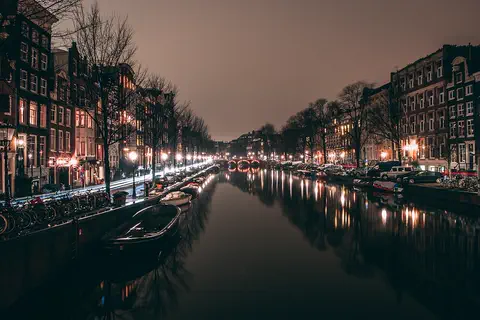
Amsterdam is the capital of the Netherlands. It began as a fishing village beside a dam on the Amstel River, which gave the city its name. Today about 942,000 people live among its rings of canals, hundreds of bridges, houseboats and bicycles.
-
 Watch
City
Antwerp
Antwerp is a city in Belgium on the Scheldt river, and Universalis calls it the second port of continental Europe, after Rotterdam. Belgium's statistics office estimated 565,615 people in the city on 1 January 2026. In the 1500s it was one of Europe's great trading cities.
-
 Watch
City
Athens
Athens is the capital of Greece and one of the oldest cities in the world. Above it rises the Acropolis, a rocky hill crowned by the marble Parthenon, built about 2,500 years ago. Ancient Athens was home to early democracy, great thinkers and theater.
-
 Watch
City
Barcelona
Barcelona, the capital of Catalonia in northeastern Spain, lies on the Mediterranean between mountains and the sea. It is famous for the buildings of the architect Antoni Gaudí, including the Sagrada Família, a giant church begun in 1882. About 1.7 million people live in the city (2025).
For parents & teachers
What children will learn
- Locate Dubrovnik on the Dalmatian coast of Croatia, beside the Adriatic Sea.
- Explain how sea trade made a small town rich and important.
- Describe why towns built walls and what walls tell us about the past.
- Read a Mediterranean climate table with dry summers and wet winters.
Recommended ages: 3 to 17 · About 15 minutes
Talk about it
- Why do you think a town by the sea might become a trading power?
- How can people protect old buildings after an earthquake?
- What would it be like to live inside a town with walls all around it?
Try at home or in class
- Walled town: draw a town inside a wall with a harbor, a main street and a palace.
- Rain chart: make a bar chart of Dubrovnik's monthly rain and color the dry summer months.
- Age line: on a strip of paper, mark 1438, 1667, 1979 and today. How old is the Rector's Palace?
Key vocabulary: fortified, republic, harbor, Renaissance, earthquake, census
Where these facts come from
- Wikidata , Wikimedia Foundation (CC0 1.0)
- Natural Earth vector data , Natural Earth (NACIS) (Public domain)
- Old City of Dubrovnik (World Heritage List) , UNESCO World Heritage Centre
- Dubrovnik , Encyclopædia Universalis
- Croatia: Counties and Major Cities , City Population (Thomas Brinkhoff), from the Croatian Bureau of Statistics
- Dubrovnik: climatological information , World Meteorological Organization, World Weather Information Service
- File:The walls of the fortress and View of the old city. panorama.jpg (Zysko serhii, July 2018) , Wikimedia Commons
- Wikimedia Commons , Wikimedia Foundation (Per file (public domain, CC0, CC BY or CC BY-SA); see each media record)
Checked, not yet human-reviewed. Last updated November 1, 2026. Spotted a mistake? Tell us.